Château de Gaujacq: A Historic Castle in Southwestern France



Visitor Information
Google Rating: 4.1
Popularity: Low
Official Website: chateau.de.gaujacq.free.fr
Country: France
Civilization: Medieval European
Site type: Military
Remains: Castle

History
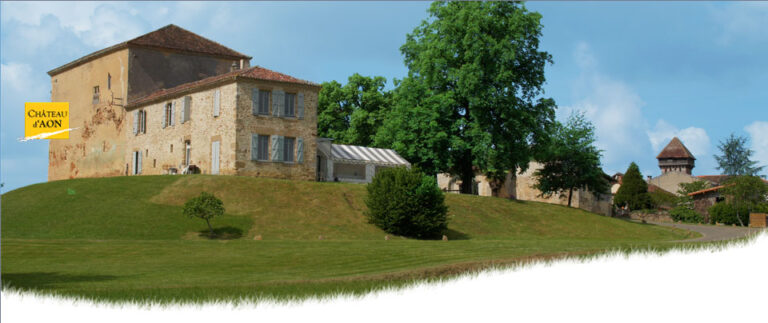
The Château de Gaujacq, also known as the Castle of Lacataye, is situated in the commune of Gaujacq within the Landes department of southwestern France. This region, part of the historical province of Gascogne, has seen human occupation since ancient times, with the château built on a site that hosted a protohistoric camp and later a Gallo-Roman settlement.
In medieval times, the location was fortified with a fortress owned by the Caupenne family, early local lords who established their presence there. This medieval stronghold was destroyed during the Fronde, a series of civil wars in France during the mid-17th century, leaving only a fragment of its walls intact.
The current château was constructed in 1686 by François de Sourdis, a lieutenant general under King Louis XIV and descendant of Jean d’Escoubleau de Sourdis. The design was commissioned from Jules Hardouin-Mansart, the king’s architect, who drew inspiration from ancient Greek and Italian Renaissance styles. The château’s low height reflected political restrictions on tall buildings in Gascogne at the time.
Historically, the site is linked to King François I, who is said to have passed nearby after his captivity in Madrid. The château remained a seigneurial residence and was classified as a Monument historique in 2002, with further inscription in 2019. Since 1960, it has been owned by the Casedevant family. The gardens were developed from 1985, emphasizing plants suited to the local environment.
Remains
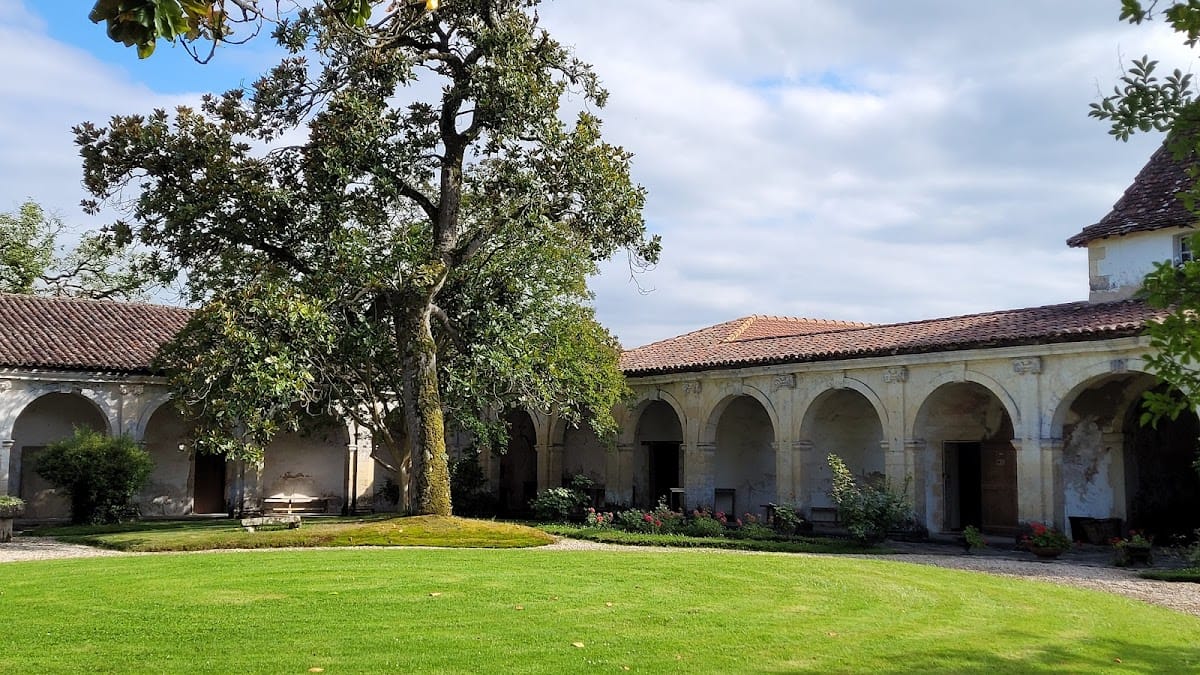
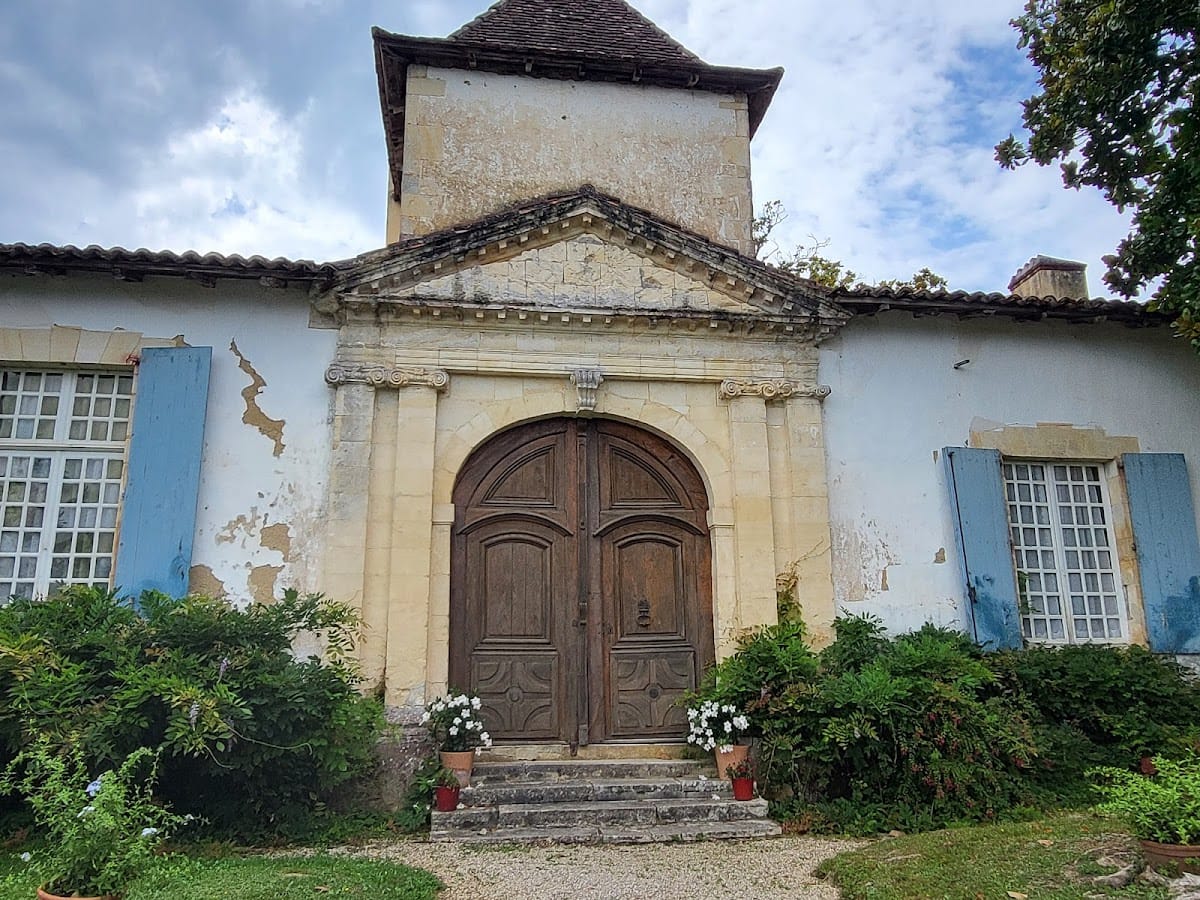
The Château de Gaujacq is a single-story building arranged around a central courtyard and an Italian Renaissance-style garden known as the “garden of delights.” The garden is enclosed by a cloister-like gallery, which, despite its appearance, was never intended for religious use.
The château’s layout is square and symbolically aligned with the sun and the four classical elements: wind and rain are represented by Athena’s head above the northwest entrance; earth by the Gorgon Medusa on the southwest side; fire by Apollo on the southeast; and air by Hercules on the northeast. These sculptures serve as symbolic markers within the design.
Inside, the château contains furnished apartments from the 17th and 18th centuries, decorated with wood paneling and painted panels. The courtyard and garden feature notable botanical specimens, including magnolia trees over two centuries old, a rare persimmon tree (plaqueminier), and a photinia serrulata, one of the earliest exotic trees introduced in France.
The château offers views of the Pyrenees mountains, visible from the 17th-century pleasure garden. The building materials and decorative details reflect a restrained and balanced aesthetic inspired by classical antiquity and Italian Renaissance principles, consistent with the architectural style of Hardouin-Mansart.
Nearby sites