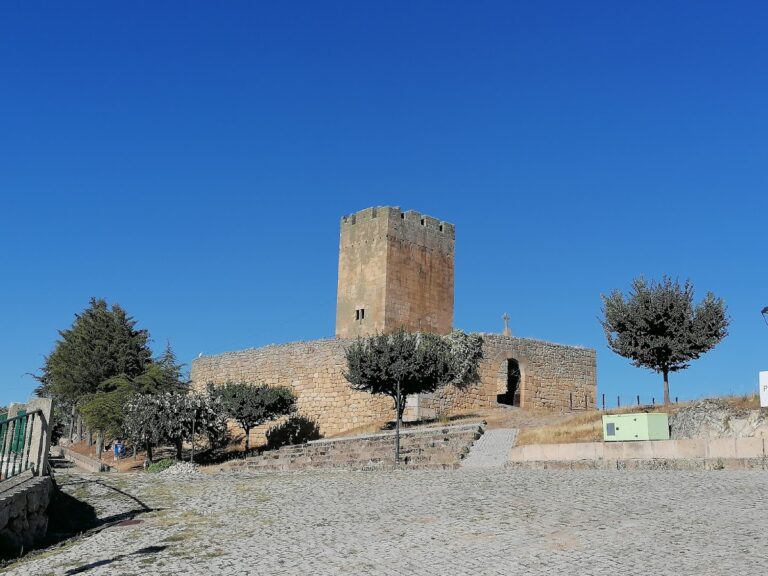
Castle of Castelo Rodrigo: A Medieval Fortress in Portugal

Visitor Information
Google Rating: 4.6
Popularity: Medium
Google Maps: View on Google Maps
Official Website: www.cm-fcr.pt
Country: Portugal
Civilization: Unclassified
Remains: Military

History
The Castle of Castelo Rodrigo stands within the municipality of Figueira de Castelo Rodrigo in Portugal. It was constructed by the Kingdom of León as a medieval fortification during the Christian Reconquest of the Iberian Peninsula.
Although earlier traditions linked the site’s origins to the ancient Turduli people around 500 BCE and suggested use as a Roman fortified settlement, archaeological investigations have found no definite evidence supporting those claims. Neither Sueves nor Visigothic occupations have been confirmed, while the only remaining structure from the period of Muslim control is a cistern featuring a horseshoe-arched doorway, characteristic of Islamic architecture.
The castle’s initial medieval construction dates back to the reign of Alfonso IX of León (1188–1230), who built it as part of an extended defensive line in the Ribacôa region. This line included several other fortresses guarding the borderlands between León and the territory of present-day Portugal. The settlement was granted its first formal charter, known as a foral, in 1209. Its name derives from Count Rodrigo Gonçalves Girão, credited with repopulating and defending the area during this formative stage.
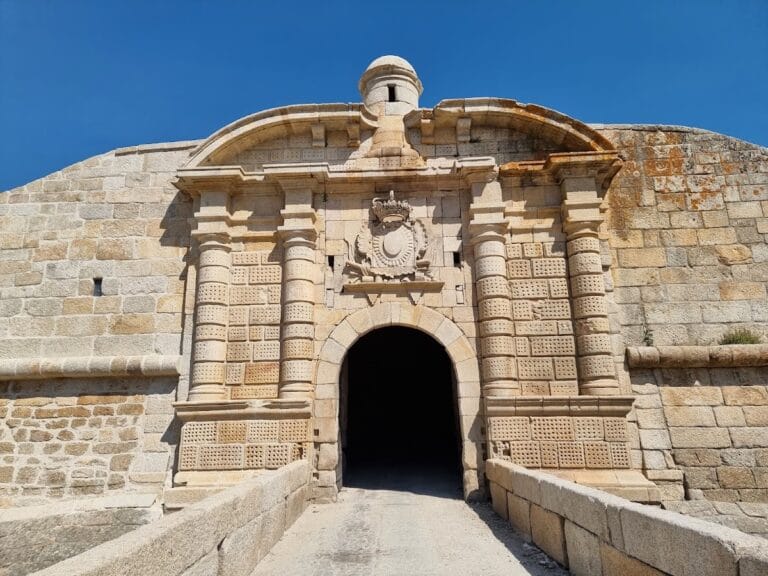
For decades thereafter, the territory around Castelo Rodrigo was disputed by both León and Portugal. The Treaty of Alcañices in 1297 resolved these conflicts, affirming Portuguese sovereignty. Under King Dinis (1279–1325), the castle’s defenses were strengthened extensively. Enhancements during his reign included work on the keep tower, the addition of a moat and barbican (an outer defensive structure), and reinforcement of the walls. The main gate, flanked by two square towers displaying his royal coat of arms, was constructed at this time.
Later in the 14th century, King Fernando granted a market charter in 1373, likely contributing to the settlement’s growth and security improvements. During the political upheaval of 1383–1385, known as the Portuguese crisis of succession, the castle successfully resisted assault by forces loyal to the Master of Avis. However, the castle’s governor remained loyal to Beatriz and her husband King John I of Castile. As a consequence of this allegiance, the village’s coat of arms was displayed inverted as a form of punishment, and administratively it was subordinated to the neighboring town of Pinhel.
At the start of the 16th century, King Manuel I issued a new foral in 1508 and initiated an evaluation of the castle’s fortifications. During this period, the castle appears in the Livro das Fortalezas (Book of Fortresses) by Duarte de Armas, an important reconnaissance manuscript, which illustrates its crenellated walls, towers, main gate, and keep tower.
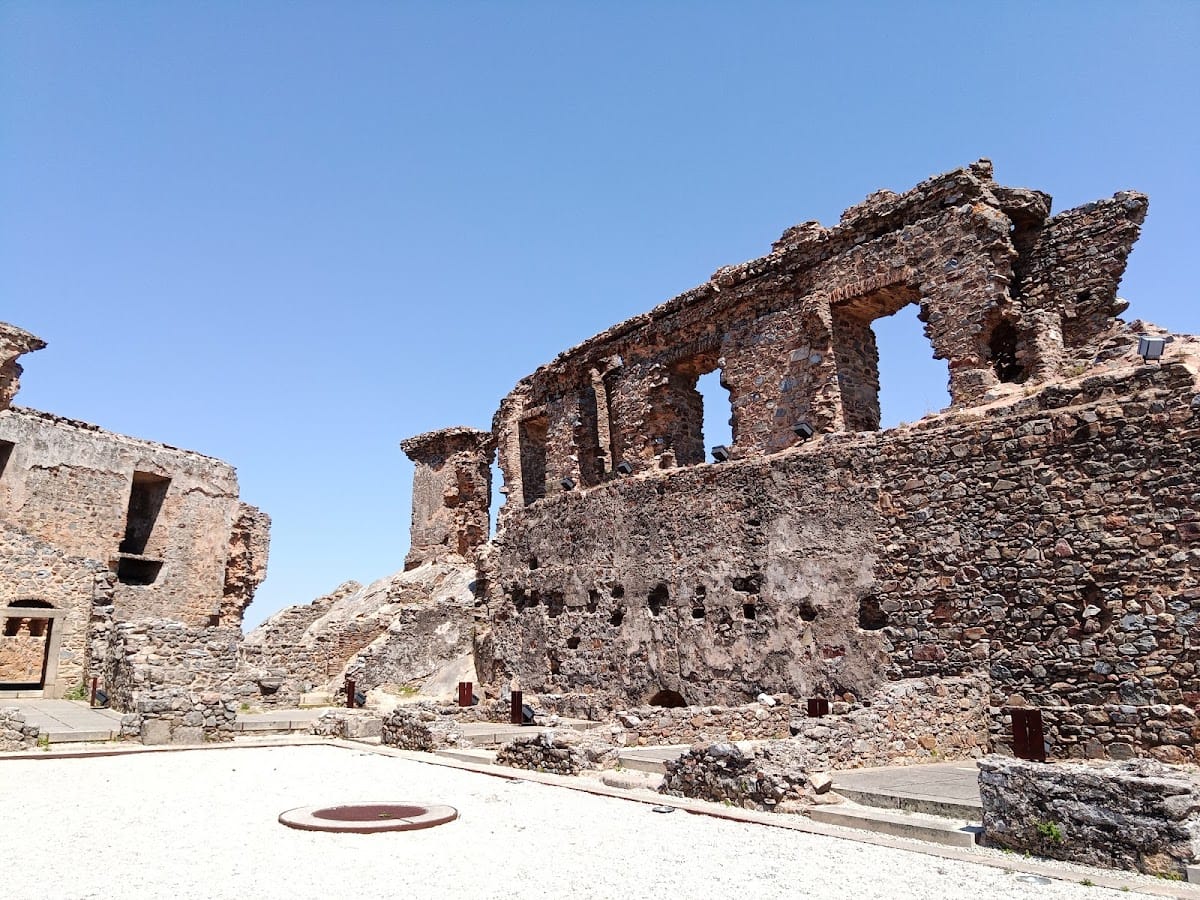
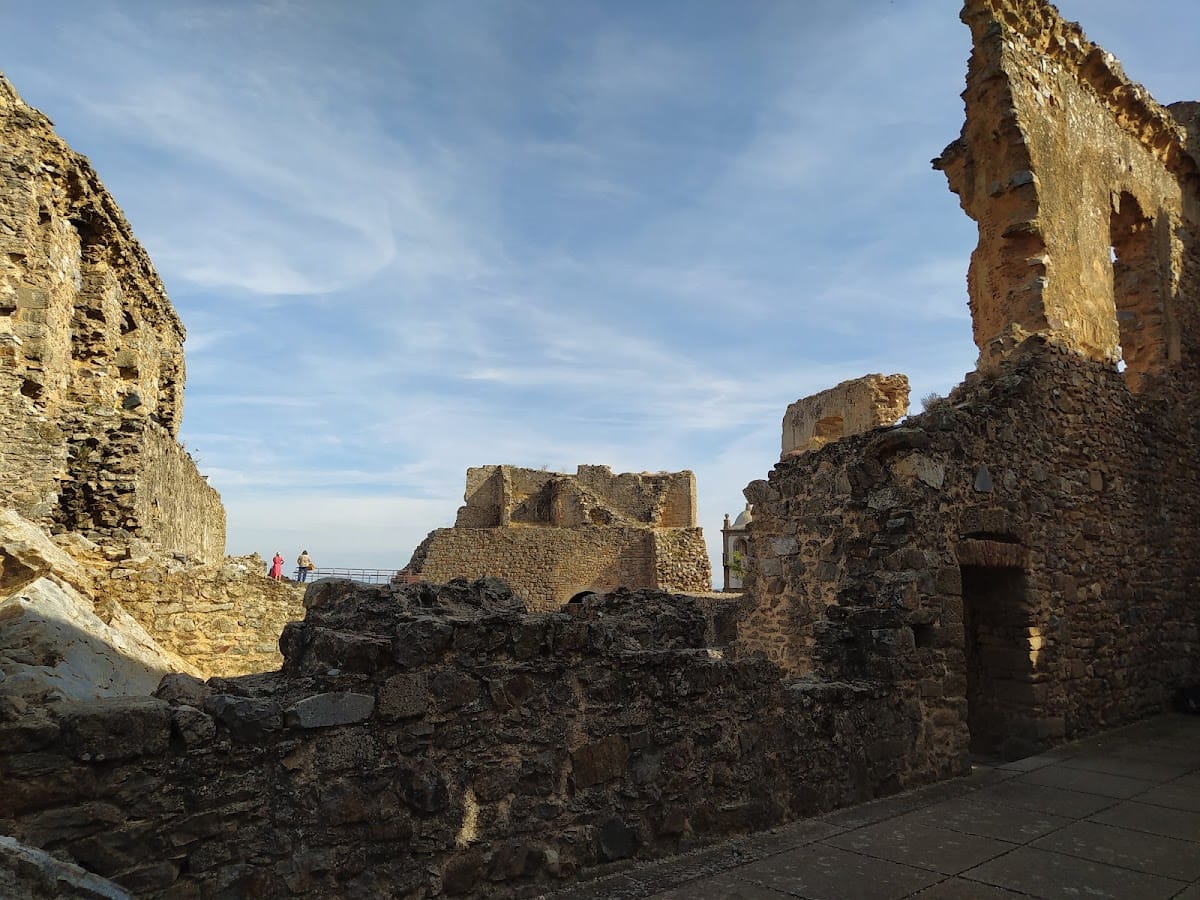
In the late 16th century, during the Spanish-controlled Philippine Dynasty, Philip II elevated Castelo Rodrigo to a county, appointing Cristóvão de Moura as its first count. Moura established a palace within the castle grounds, built on the site of the former alcáçova, or central fortress, and surrounded it with walls and turrets. This palace featured a Gothic-style entrance. After Portugal’s Restoration of Independence in the 17th century, the local population set fire to the palace, leaving it in ruins.
The castle played an active military role during the Restoration War when it endured a siege by 3,000 Spanish troops defended by 150 men. Local tradition holds that notable Spanish commanders escaped disguised as monks. It would face occupation again in 1762 during the Seven Years’ War.
By the 19th century, Castelo Rodrigo had lost its strategic importance, and the municipal seat was moved to Figueira de Castelo Rodrigo in 1836 by royal decree. Recognized for its cultural importance, the castle was declared a National Monument in 1922. It underwent partial restoration in the 1940s and later comprehensive conservation efforts in recent times.
Remains
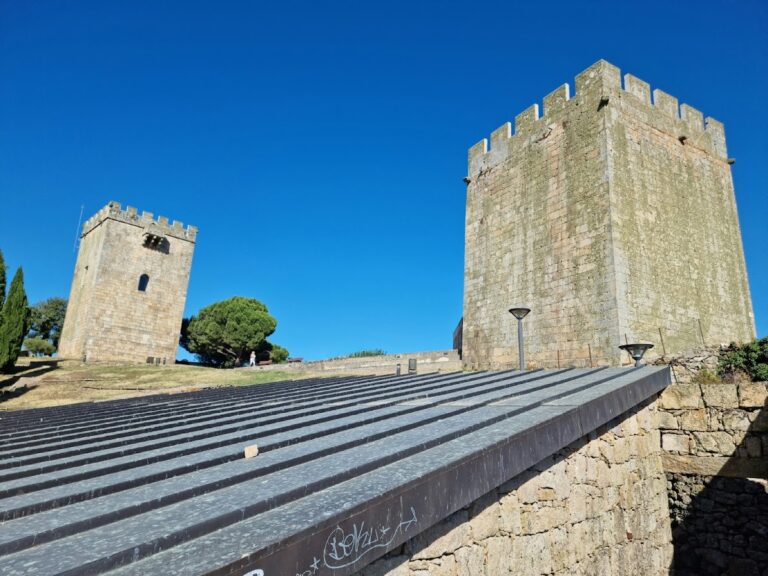
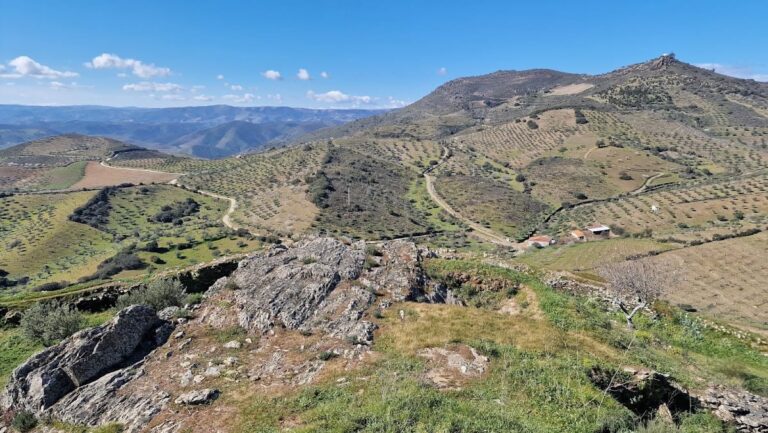
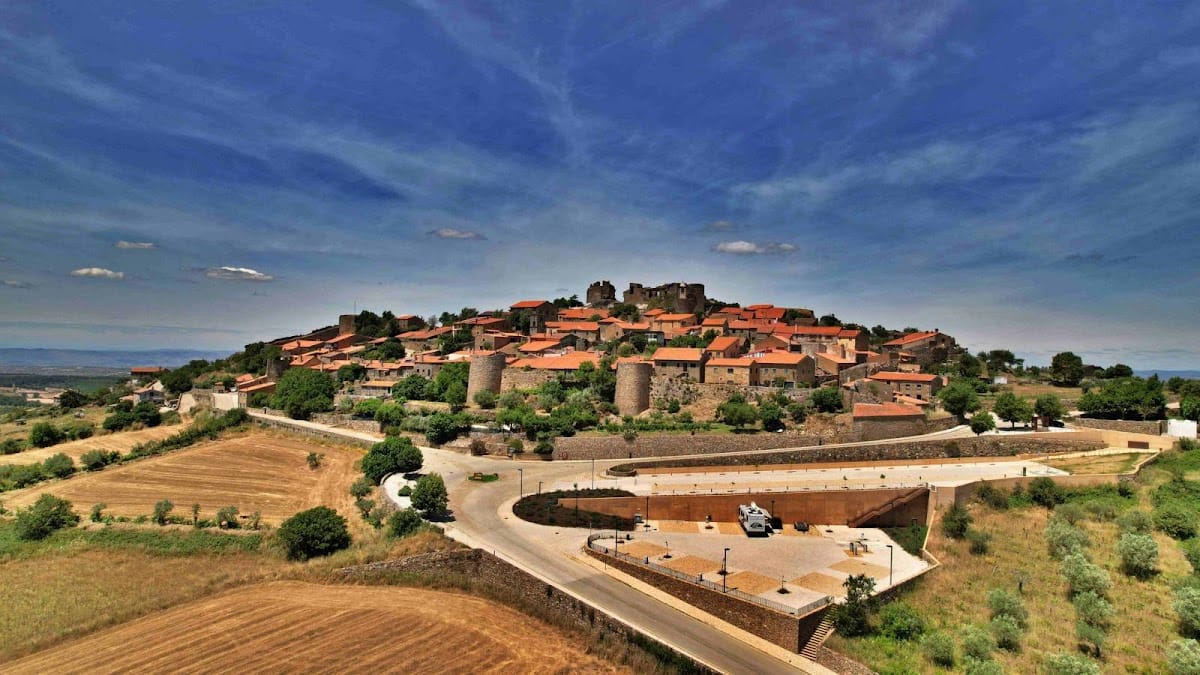
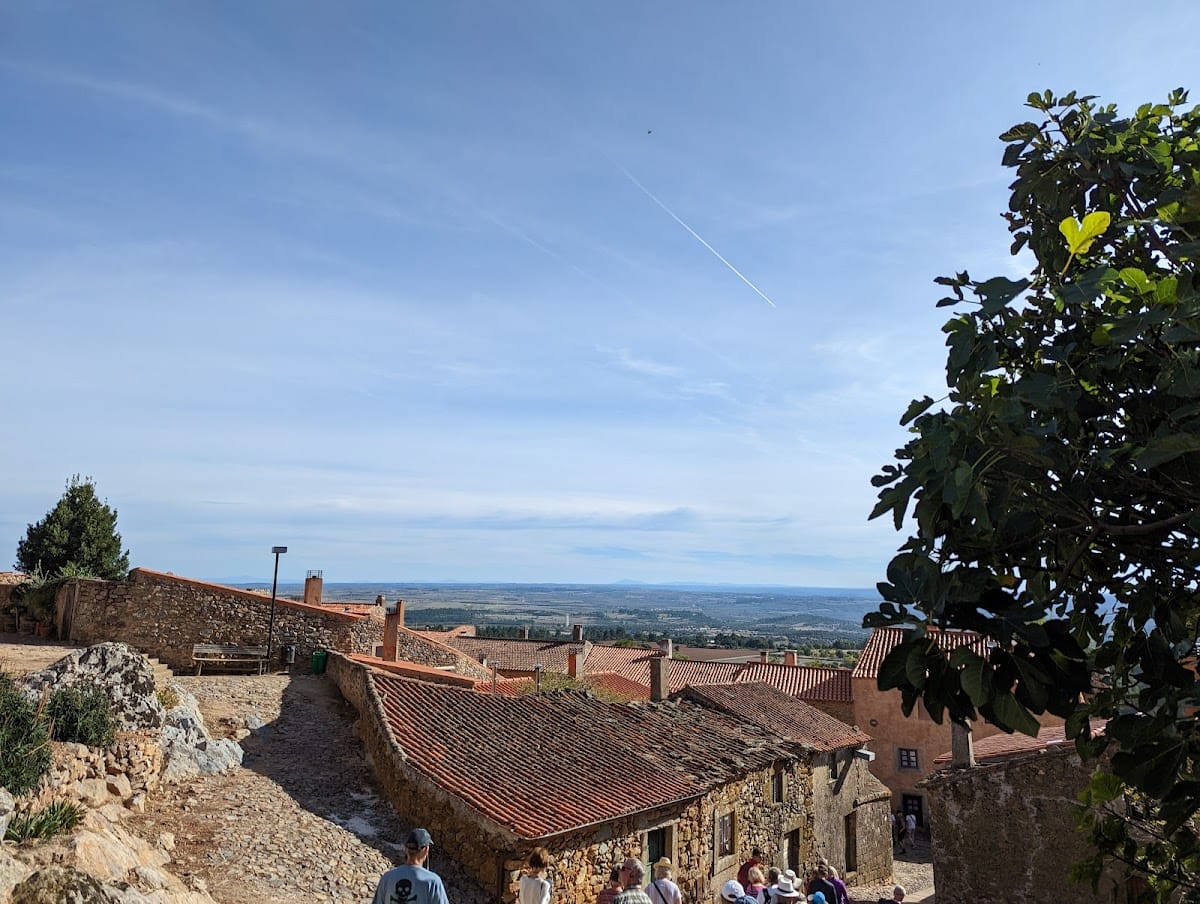
Positioned at 810 meters above sea level, the Castle of Castelo Rodrigo rests on rocky schist outcrops and follows an irregular oval shape. Its surviving architecture reflects two principal phases: the Romanesque constructions from the late 12th and early 13th centuries of León, and extensive 14th-century modifications under King Dinis.
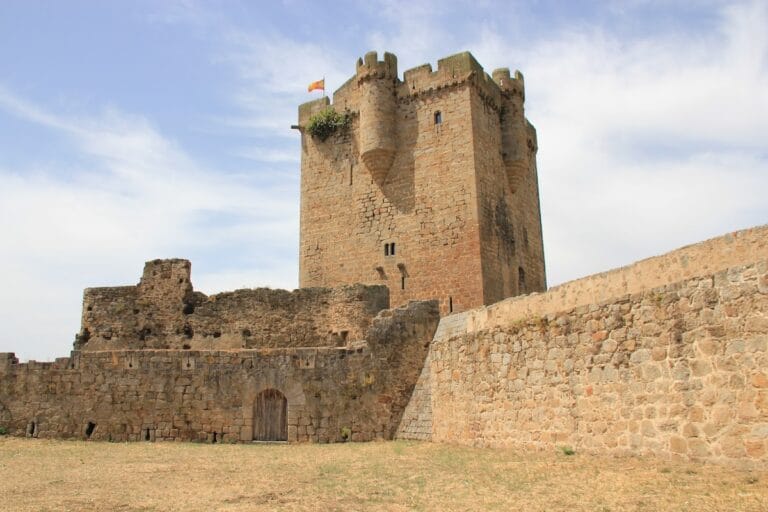
Circular towers dating from the initial Leonese phase remain standing. These towers contrast with those of contemporary Portuguese castles, which commonly feature square designs. Among the former structures was an albarrã tower, notable for standing detached from the main curtain wall and located farther north than comparable examples in Portugal; this tower no longer exists but was documented in the early 1500s by Duarte de Armas.
King Dinis’s phase introduced significant defensive improvements, including the main gate characterized by a pointed arch and a machicolation balcony, designed to allow defenders to drop projectiles on attackers below. While only the supporting elements of this balcony survive, the gate remains flanked by two quadrangular towers that proudly display the royal coat of arms. The square-plan keep tower prominently projects outward from the castle’s wall facing the village side and contains six windows, each equipped with balconies.
Other features from this period include the crenellated outer walls, parts of which are still visible, as well as the moat and barbican that formed additional defensive barriers. The castle’s enclosure connects seamlessly with the village’s fortified walls, which are themselves crenellated and strengthened with semicircular towers. Notably, three gates into the village remain: the Porta do Sol (facing east), Porta da Alverca (north), and Porta da Traição.
From the Philippine era, the entrance to Cristóvão de Moura’s palace still stands. This entrance is approached by a staircase and set within thick schist masonry walls of uneven shape. The doorway itself is a dressed-stone portal framed by two pilasters bearing voussoirs (wedge-shaped stones forming the arch), capped by a triangular pediment centered with a coat of arms.
Close to this palace entrance on the western side lies an ancient cistern used for water storage. Constructed with finely worked ashlar blocks, this deep well reaches about 13 meters below ground. Access to the cistern involves descending a granite staircase, worn smooth from centuries of use. The cistern has two doors: one features a horseshoe arch in the Mudéjar style, a fusion of Islamic and Christian artistic influences, and the other is designed in Gothic style, illustrating the blend of cultural elements present throughout the castle’s history.
Nearby sites