Castle of San Felices de los Gallegos: A Medieval Palace-Fortress in Spain


Site at a Glance
- Rating
- 4.5
- Popularity
- Low
- Country
- Spain
- Primary era
- Medieval
- External website
- Open
- Eras represented
- Medieval, Early Modern
- Civilizations
- Crown of Castile, Portuguese, Spanish
- Site type
- Military
- Remains
- Castle
On this page9 sections
History
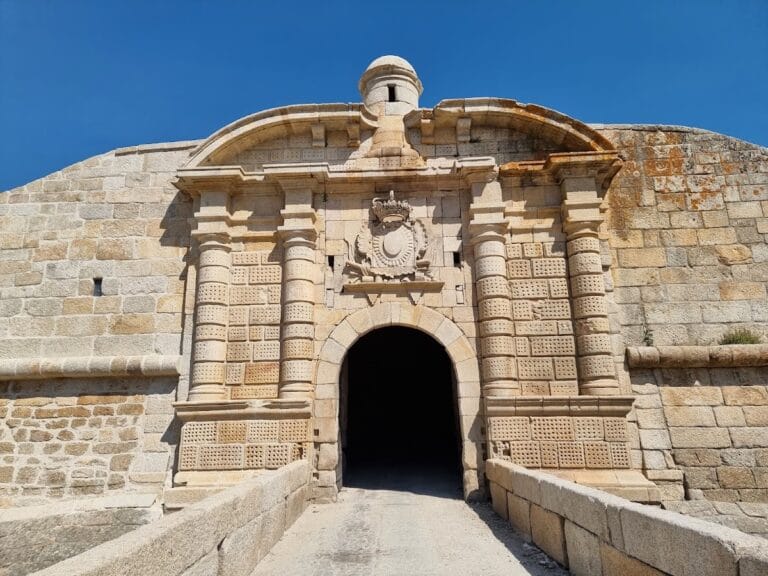
The Castle of San Felices de los Gallegos is a medieval fortress in Spain, established in the thirteenth century at the frontier between Castile and Portugal. Its origins reflect the disputes between the two kingdoms over control of the surrounding territory, while its later development gave it the character of a palace-fortress combining courtly and defensive functions.
Foundation and Castilian-Portuguese rivalry
Chronicles attribute the castle’s construction to Don Dinis, the medieval king of Portugal, who also built the defensive walls of the town. The fortress acquired its definitive form in the fifteenth century, after the frontier disputes of the preceding centuries had continued to shape San Felices.
During the fourteenth century, tensions over the border continued between Don Dinis and his son-in-law, Ferdinand IV, king of Castile. San Felices returned to the Castilian Crown, to which it had belonged for more than a century. An understanding between the two royal families was helped by the marriage of Maria of Portugal to the new Castilian king, Alfonso XI.
A royal residence on the frontier
In 1374, Beatriz of Portugal and Leonor, respectively the widow and daughter of Sancho of Castile, settled in the castle with their courts. Its position near the frontier allowed the two princesses to remain in contact with both sides of their family.
Later military use and conservation
The castle continued to serve military purposes during the seventeenth and eighteenth centuries. Troops were stationed there during the Portuguese revolt against Philip IV, the seventeenth-century king of Spain, and about a century later during the War of the Spanish Succession, an early eighteenth-century European conflict over the succession to the Spanish throne.
During the nineteenth century, the fortress gradually fell into neglect and deteriorated. Several renovations in the second half of the twentieth century conserved its structure and resulted in its very good state of preservation. The keep now contains a museum and interpretation centre devoted to the castle’s technical and construction features and to the wider history of the town’s defensive structures.
The castle was declared a protected cultural property in 1949, a legal heritage status involving conservation measures. Since 1965, it has formed part of a protected historic-artistic ensemble with the rest of San Felices de los Gallegos, covering the town’s historically and architecturally significant urban area.
Remains
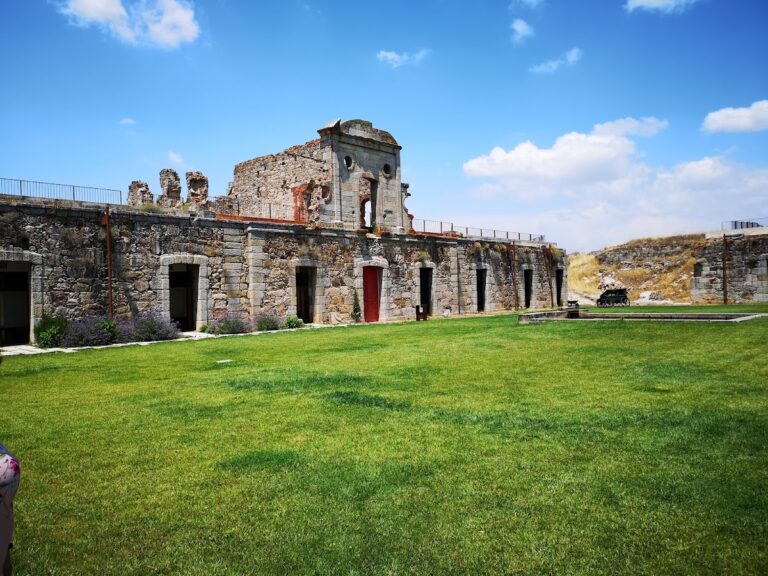
The castle occupies one end of the town’s built-up area and follows an irregular plan shaped by the terrain. Its surviving defenses include the remains of a moat, the old enclosure wall, eighteenth-century bastioned fortifications associated with the War of Independence, and two artillery barriers, one within the enclosure and another outside it. Together, these elements show the development of the fortress from a medieval stronghold into a position adapted to artillery warfare.
Enclosure and artillery defenses
Moat and enclosure wall
Remains of the moat, a defensive ditch around or partly around a fortification, survive with sections of the old enclosure wall. These features form part of the castle’s outer defensive system and follow the irregular ground on which the fortress was built.
Bastioned defenses and artillery barriers
The fortification retains bastioned defenses from the eighteenth century. Bastions are projecting sections designed to support defensive fire and reduce vulnerable angles. Two artillery barriers also survive, one inside the enclosure and one outside it, preserving the arrangement of defensive lines intended for the deployment and operation of artillery.
The keep
The well-preserved keep, the principal fortified tower of a castle, was created by remodeling the earlier Tower of Don Dinis in 1476. Its present form belongs to the fifteenth-century transformation that gave the fortress its definitive character. The tower houses the museum and interpretation centre, whose displays explain the construction and technical aspects of the castle as well as the defensive history of the town.