Castle of Bominaco: A Medieval Fortress in Italy

Visitor Information
Google Rating: 4.5
Popularity: Low
Google Maps: View on Google Maps
Official Website: www.comunecaporciano.aq.it
Country: Italy
Civilization: Unclassified
Remains: Military

History
The Castle of Bominaco is situated in the small settlement of Bominaco, part of the municipality of Caporciano in Italy. This fortress was originally built in the 12th century by medieval inhabitants aiming to oversee and protect the surrounding Navelli plateau.
The initial structure was erected above notable religious sites, specifically the church of Santa Maria Assunta and the oratory of San Pellegrino, suggesting a close relationship between spiritual centers and feudal authority during this period. In the early 15th century, the castle suffered destruction during a military conflict. In either August 1423 or 1424, the renowned mercenary leader Braccio da Montone launched an assault that ended with the castle’s demolition and the death of the feudal lord at the time, Castellano della Rosa.
Following this violent episode, the castle was rebuilt under the direction of Cipriano da Forfona, whose father Jacobuccio had held lordship over Bominaco. This reconstruction gained official approval from Pope Martin V, highlighting the role of papal authority in legitimizing local rule and fortification efforts during the late medieval era. The castle thus resumed its defensive and administrative functions in the region under the renewed control of its feudal family.
Remains
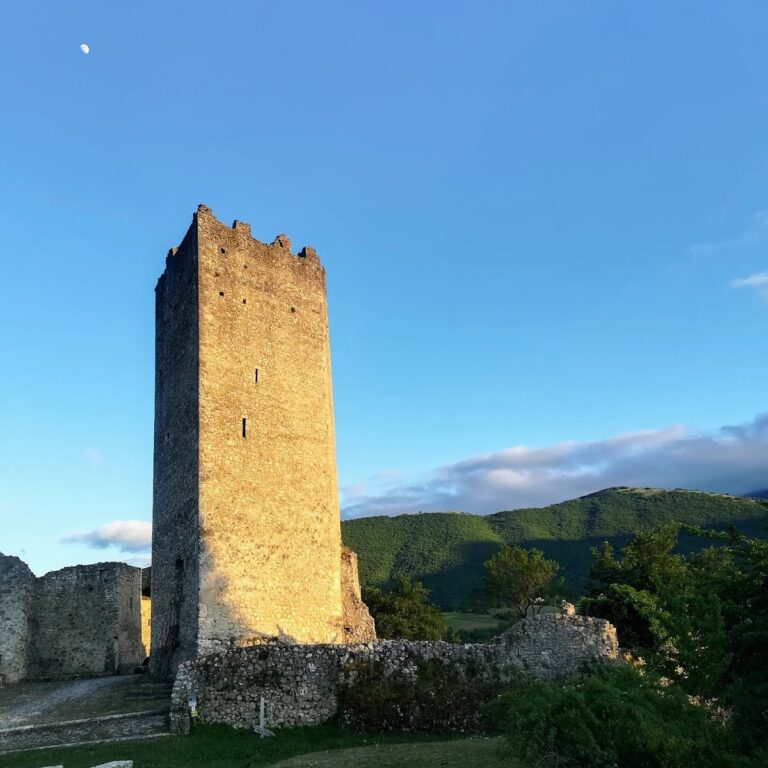
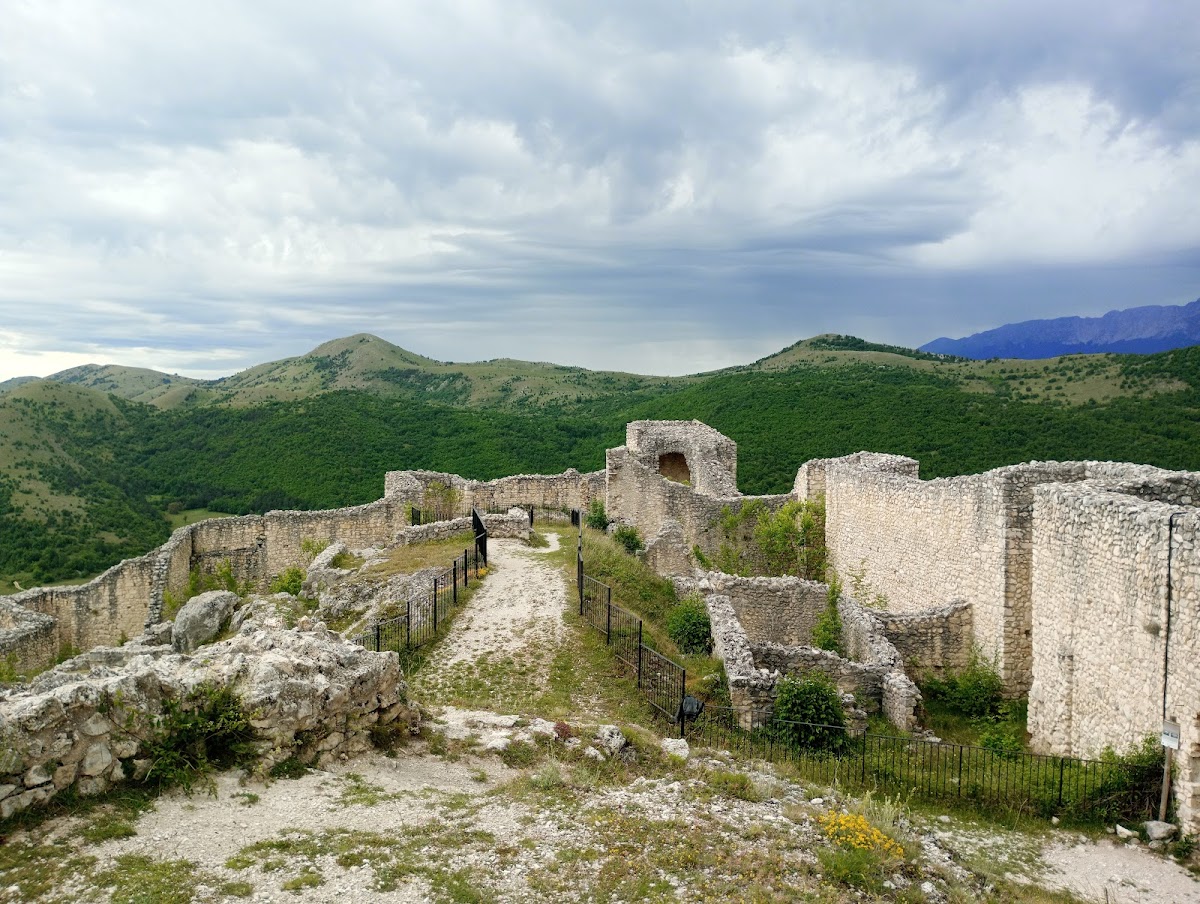
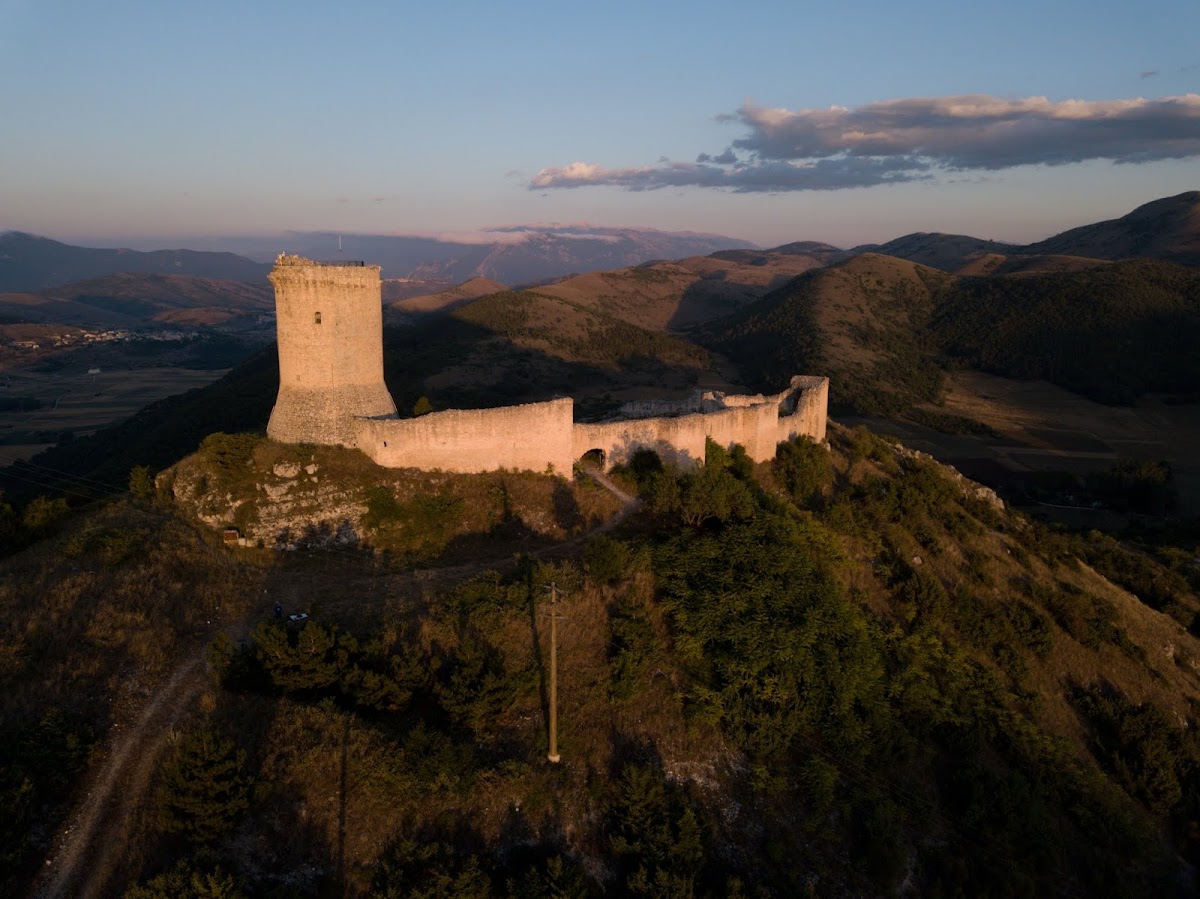
The castle’s remains reveal a trapezoidal outer wall, an enclosure formed with a strong defensive intent. This wall is punctuated by square towers at intervals, each serving as a bastion to guard against attackers. The polygonal shape and presence of multiple towers reflect a planned defense system typical of medieval fortifications designed to cover all approaches.
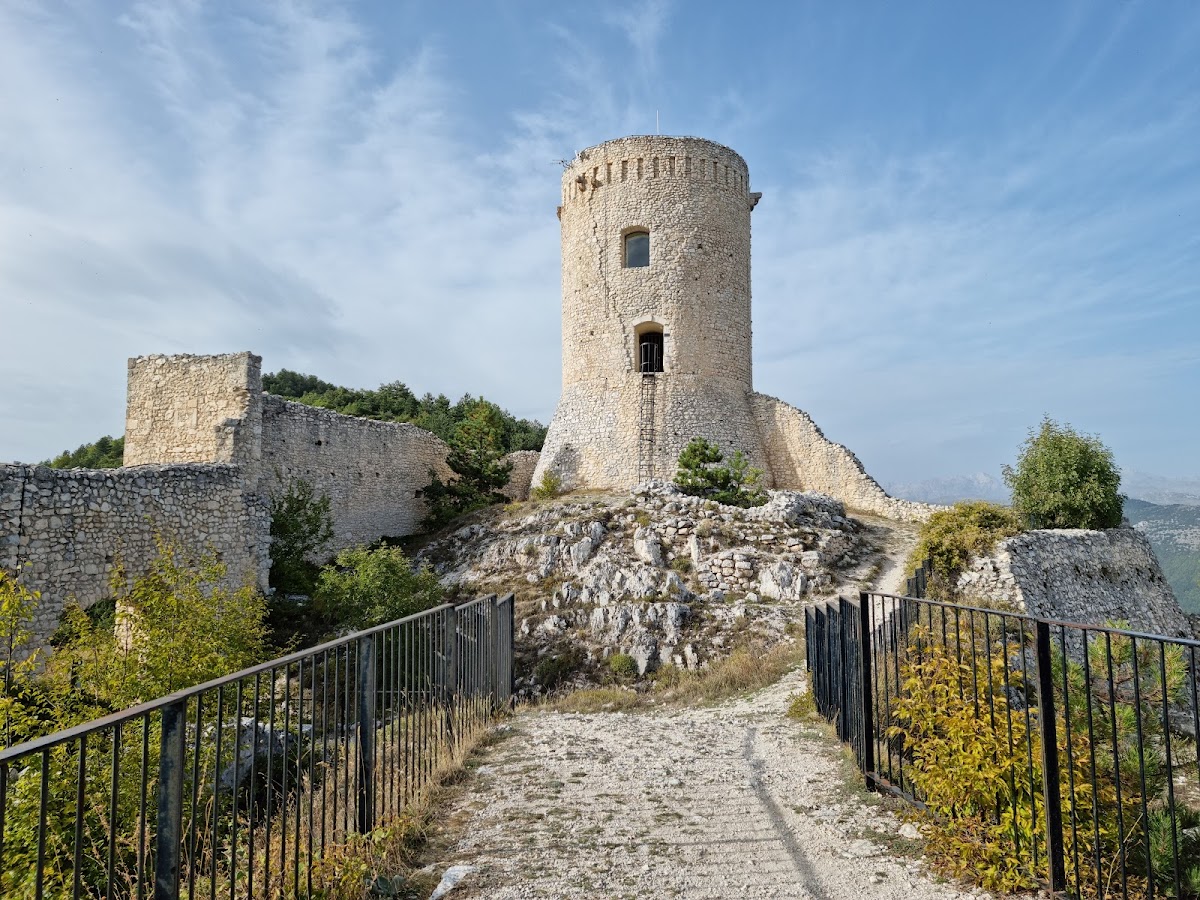
At the highest point within the enclosure stands a prominent cylindrical keep, known as a mastio, which functioned as the last refuge in case of siege. This keep features a base that slopes sharply outward—a design called a scarp—that made undermining or scaling the walls more difficult. Its upper edge is marked by a projecting battlement, offering defenders protected spaces from which to observe and repel assailants.
Within the castle walls, traces of former buildings can still be seen. These masonry remains once formed the residential quarters and functional spaces necessary to support life and defense inside the fortress. While only partial ruins remain, they provide a tangible link to the castle’s medieval occupation and its role as both home and stronghold. The visible structures maintain the footprint of a complex adapted to both daily living and military readiness.
Nearby sites