Castle of Barisciano: A Medieval Refuge Fortress in Italy
Site at a Glance
- Rating
- 4
- Popularity
- Very Low
- Country
- Italy
- Primary era
- Medieval
- Eras represented
- Medieval, Early Modern
- Civilizations
- Kingdom of Naples, Kingdom of Sicily
- Site type
- Military
- Remains
- Castle
On this page6 sections
History
The Castle of Barisciano is a thirteenth-century medieval refuge fortress above Barisciano in Italy, built on Mount Costa Castello to protect the local population during periods of danger. Its position overlooked the Navelli plateau and the approach to Gran Sasso, giving the settlement a strategic defensive setting.
Settlement and the Foundation of L’Aquila
Barisciano developed around the eighth century, before the enclosed castle was constructed. The fortress later participated in the foundation of the city of L’Aquila, linking its history to the political and military organization of the surrounding highland communities.
During the siege of L’Aquila on 23 April 1424, the castle was attacked and destroyed by Braccio da Montone, an Italian condottiero, or professional military commander. Barisciano remained part of L’Aquila until 1529, when the castle and its territory became a fief held by various aristocratic families.
Abandonment and Earthquake Damage
By around the sixteenth century, the castle had lost its defensive function and was abandoned. Its stones were subsequently taken for building work in Barisciano. The 1703 L’Aquila earthquake caused further damage, and the 2009 earthquake inflicted severe additional destruction, including the collapse of the west tower and the bell tower associated with the Church of San Rocco.
The Church of San Rocco was built beside a castle tower toward the end of the sixteenth century. It commemorated the 1526 epidemic and served as a votive offering connected with a miracle attributed to Saint Roch during the pestilence. Saint Roch is traditionally associated with protection against plague. The castle is now a ruin owned by the Municipality of Barisciano.
Remains
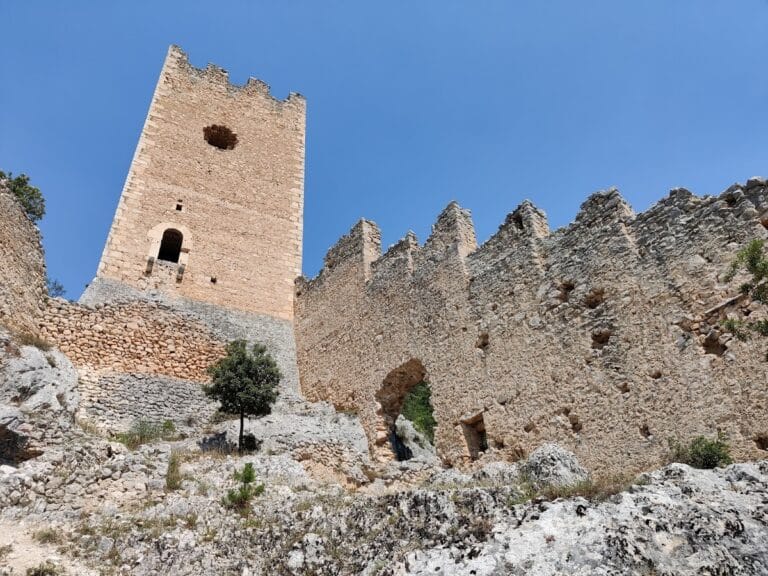
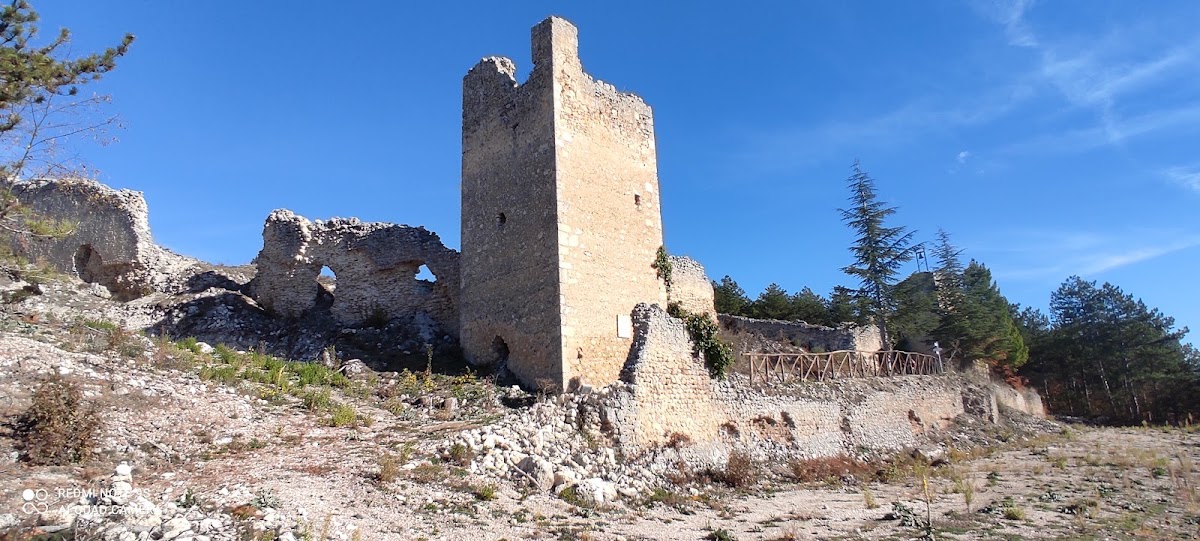
The surviving fortress occupies approximately 1,094 metres above sea level on Mount Costa Castello. Built in rubble stone, it formed a rectangular enclosed castle, or castello-recinto, with a perimeter of about one kilometre. This type of castle was designed chiefly as a fortified refuge for the surrounding population rather than as a permanently occupied aristocratic residence.
Fortified Enclosure
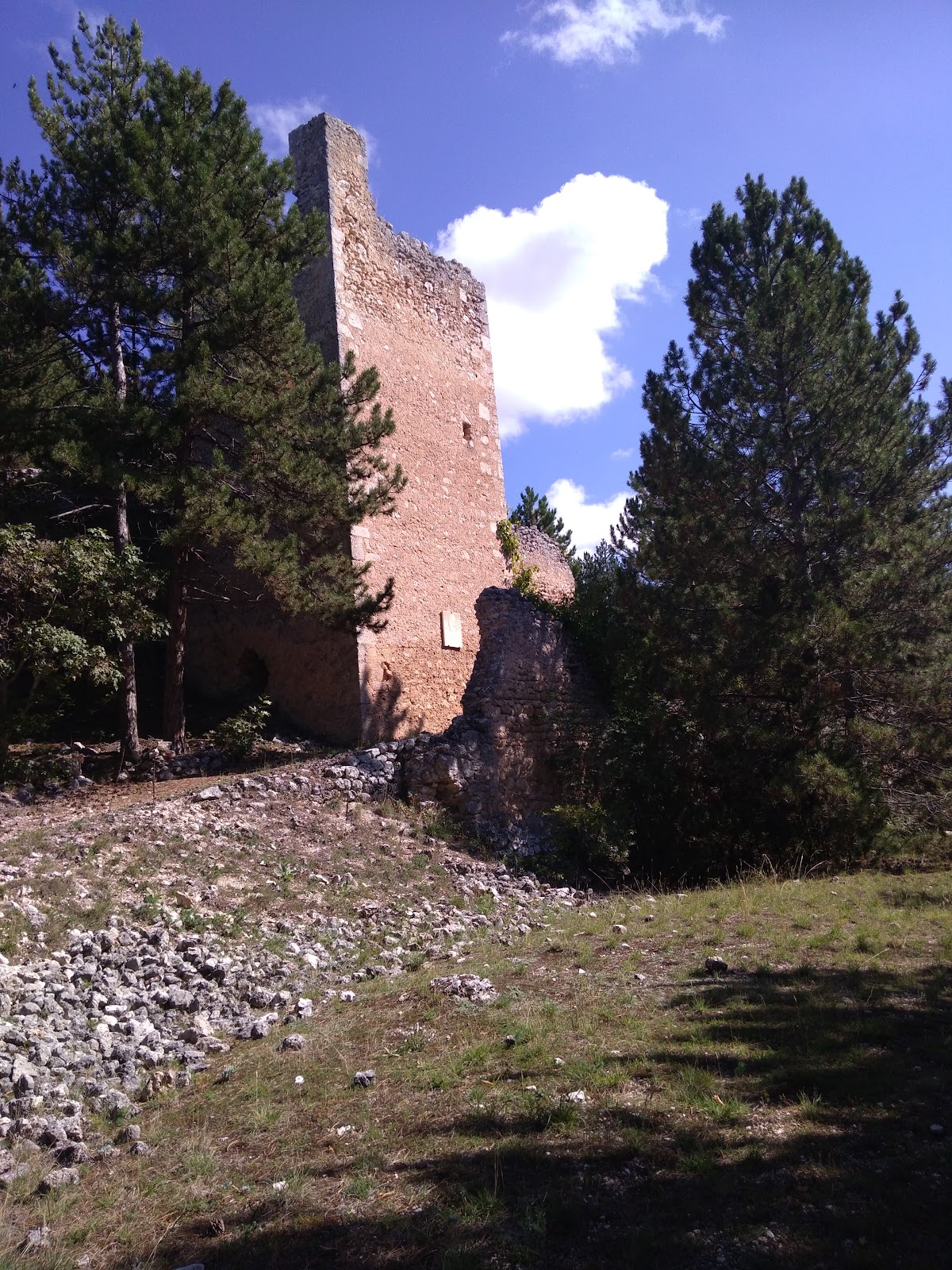
A pentagonal main tower, or mastio, stood at an upper corner of the enclosure. As the principal and strongest tower, it occupied a defensible position within the fortification. Additional towers flanked the curtain wall, bringing the total to eight towers. Remains of other buildings survive inside the enclosure, although the structures appear not to have been permanently inhabited.
Church of San Rocco
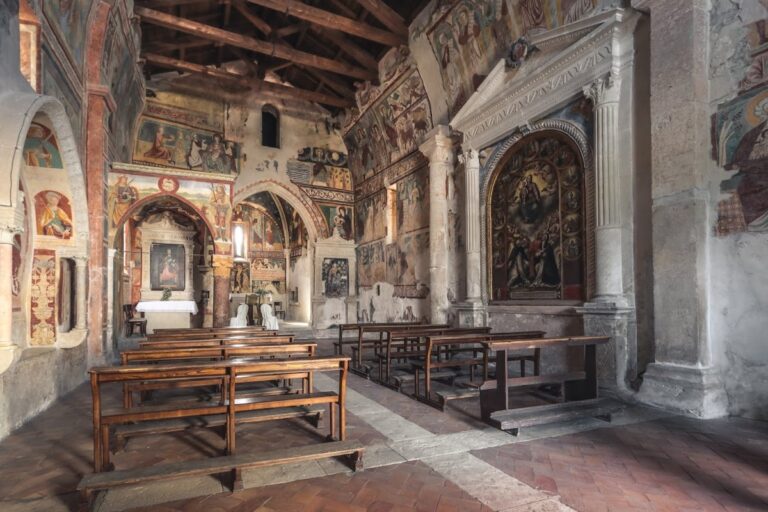
The Church of San Rocco stands beside one of the castle towers, which also served as its bell tower. The church has a simple single-room interior covered by a barrel vault, a pitched roof, and a small bell gable. Its facade has been poorly restored and retains few artistic elements, while sixteenth-century frescoes showing episodes from the life of Saint Roch survive inside. A wooden statue of the saint is also preserved there.