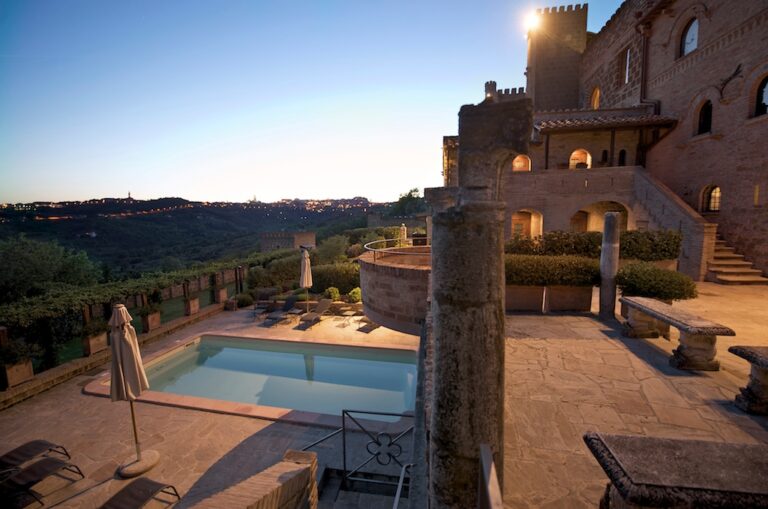
Castle of Antognolla: A Medieval Fortress in Italy


Visitor Information
Google Rating: 4.3
Popularity: Very Low
Google Maps: View on Google Maps
Country: Italy
Civilization: Unclassified
Remains: Military

History
The Castle of Antognolla stands within the municipality of San Giovanni del Pantano in Italy and was originally established by inhabitants of the medieval period. Its history is closely connected with the noble Antognolla family, an influential lineage recorded in Perugia from the 12th century onward, after whom the site is named.
The earliest documentation of the location dates to 1174, when a Benedictine monastery dedicated to Saint Peter was present at the site. This monastic settlement included a church and associated structures serving religious functions. Over time, the settlement evolved from its spiritual origins into a fortified military site. By the mid-13th century, Antognolla had transformed into a castrum, or fortified castle, reflecting the shifting needs and political landscape of the region. During this period, ownership belonged to the Antognolla family, who secured the stronghold as part of their noble holdings.
In 1399, Pope Boniface IX granted the territory of Antognolla feudal status, rewarding Ruggero di Antognolla and his descendants for loyal services rendered to the papacy. This elevation formalized the lordship of the castle and surrounding lands, embedding the family’s influence further within the feudal hierarchy of the Holy See.
Ownership of the castle passed to Cornelio Oddi in 1628, who was already a proprietor of several neighboring castles such as Murlo, Valenzina, and Procoio, indicating a consolidation of local estates within prominent families. Later, in 1836, the estate came into the possession of Giovanni Battista Guglielmi from Rome, who undertook extensive restoration efforts, maintaining the castle’s condition and prestige. The Guglielmi family adopted the title “Guglielmi d’Antognolla” during their tenure, which lasted until 1921 when the property was sold due to the absence of male heirs.
Throughout the 20th century, the castle underwent several ownership changes. Eventually, it entered the holdings of a company connected to the Agnelli family. Its current owner is Andrey Yakunin, a Russian businessman and son of oligarch Vladimir Yakunin. Today, the castle remains a significant landmark atop Monte Tezio’s northern slopes, reflecting centuries of layered history from its early monastic origins to its feudal and noble phases.
Remains
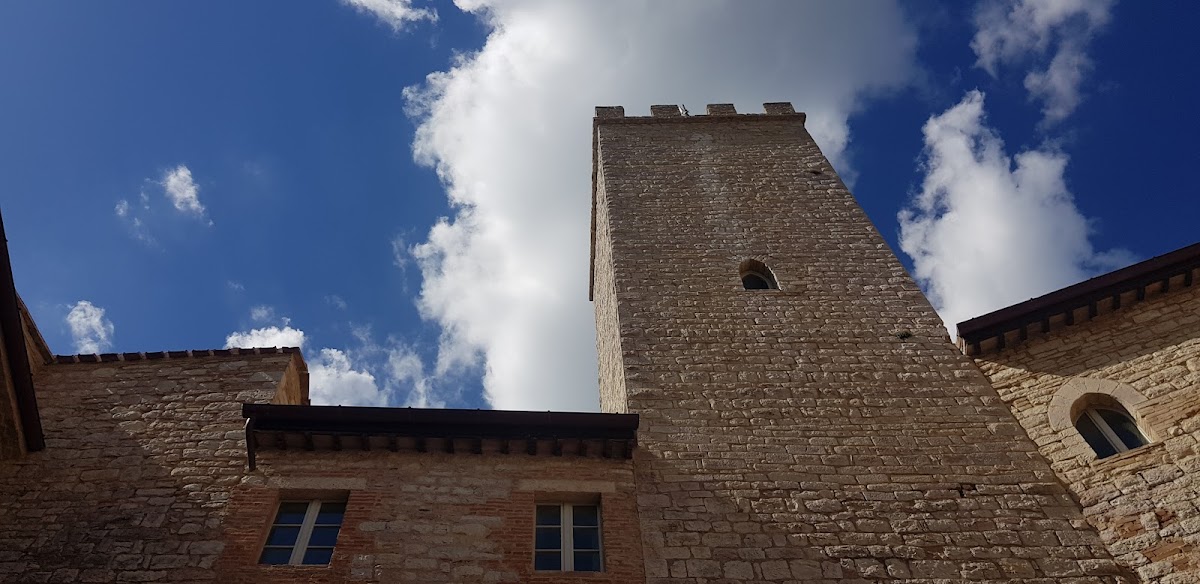
The Castle of Antognolla comprises an imposing fortified complex positioned on the northern hillside of Monte Tezio, though detailed descriptions of its layout are not recorded in surviving sources. The site’s architectural evolution mirrors its shift from religious to military use.
The most ancient and archaeologically confirmed element at the location is the crypt of the church dedicated to Saint Agatha. This crypt dates back to the original Benedictine monastic period, established before the castle’s military transformation in the 13th century. It represents the only surviving fragment from the earlier ecclesiastical phase of the site. The crypt’s preservation offers direct evidence of the religious activities once centered here and suggests continuity of sacred space despite subsequent fortification.
Beyond the crypt, the castle’s fortified structures reflect its later role as a defensive stronghold. While precise details about construction methods, materials, or specific architectural components are not provided, the overall character of the site as a castrum indicates typical medieval military architecture adapted to the terrain of Monte Tezio’s slopes. Later restorations, particularly in the 19th century, aimed to conserve and maintain the fortress, though descriptions of these interventions remain general.
The castle’s condition today acknowledges both its historical layers and modern stewardship, with the crypt standing as a tangible link to its monastic past amidst the enduring fortified walls that define its medieval heritage.
Nearby sites