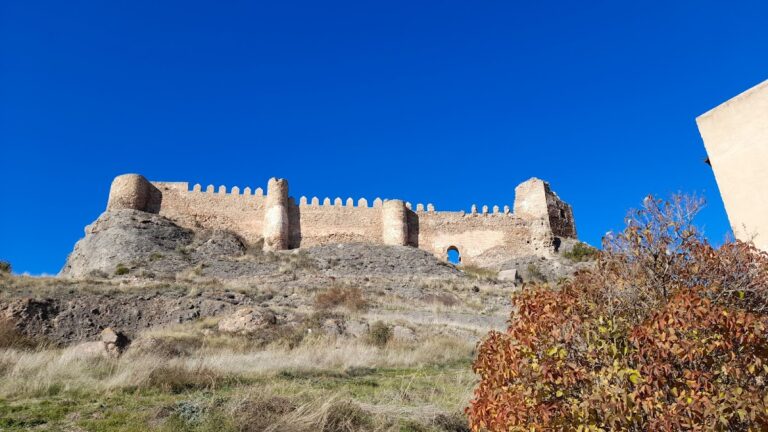
Castillo de Yanguas: A 14th-Century Medieval Fortress in Spain



Visitor Information
Google Rating: 4.3
Popularity: Low
Google Maps: View on Google Maps
Country: Spain
Civilization: Unclassified
Remains: Military

History
The Castillo de Yanguas, located in the town of Yanguas in Spain, is a medieval fortress whose origins date back to the 14th century and reflects the architectural and political influences of that era. It was constructed by the descendants of Navarrese royalty, specifically Don Pedro and Don Diego de Jiménez, who played a significant role in establishing control over this strategic area.
Over the centuries, ownership of the castle shifted through prominent noble families. After the Jiménez lineage, the fortress came under the Duke of Abrantes. From 1366, it was granted to Don Juan Ramírez de Arellano, known as the lord of the Cameros, a title held by his descendants for years. Notable among these were Don Carlos and Doña Juana de Zúñiga, who bore the titles of Counts of Aguilar and sustained lordship over Yanguas.
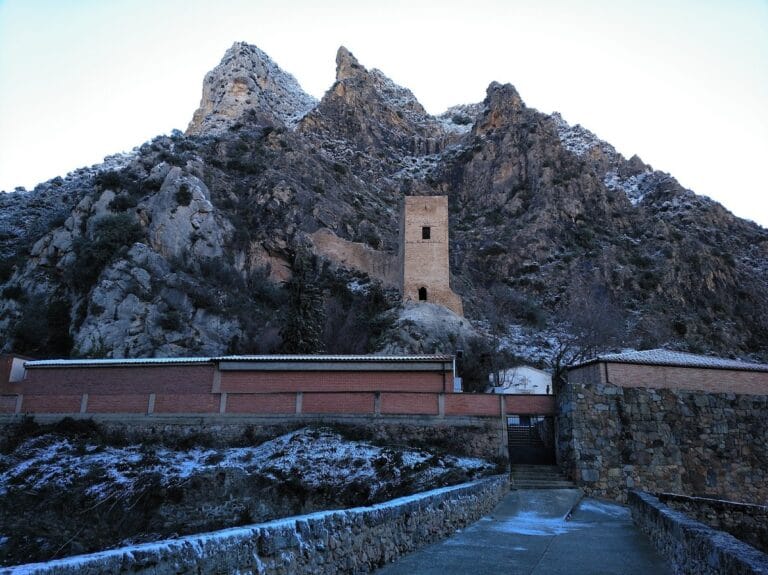
The castle’s location was carefully chosen for military defense, overseeing a natural passage that connects into the Ebro basin. Throughout the Middle Ages, it served an important defensive role in local territorial conflicts. During the French invasion, known locally as the “francesada,” the Castillo de Yanguas suffered damage by fire. In the centuries that followed, features such as decorative coats of arms adorning the balconies were lost, reflecting changing times and conditions.
Beginning in 2001, preservation efforts have aimed to stabilize the fortress’s remaining structures. Archaeological work during this period uncovered a wealth of historical material, advancing knowledge of the castle’s layout and use within the regional history of medieval Spain.
Remains
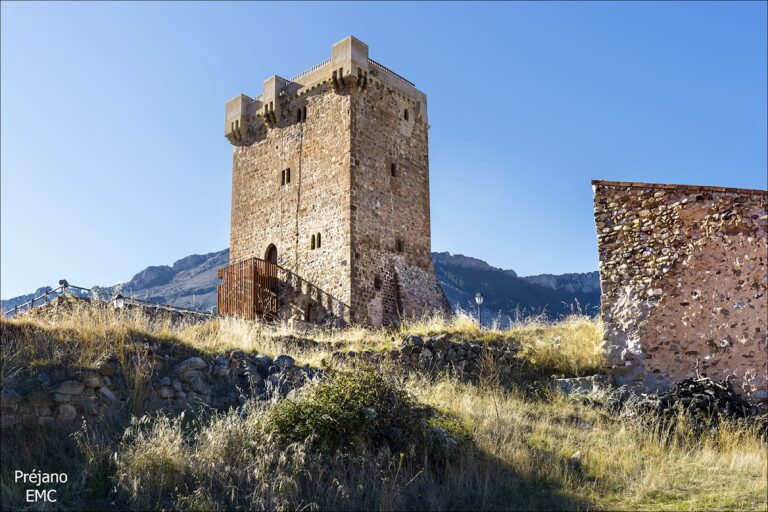
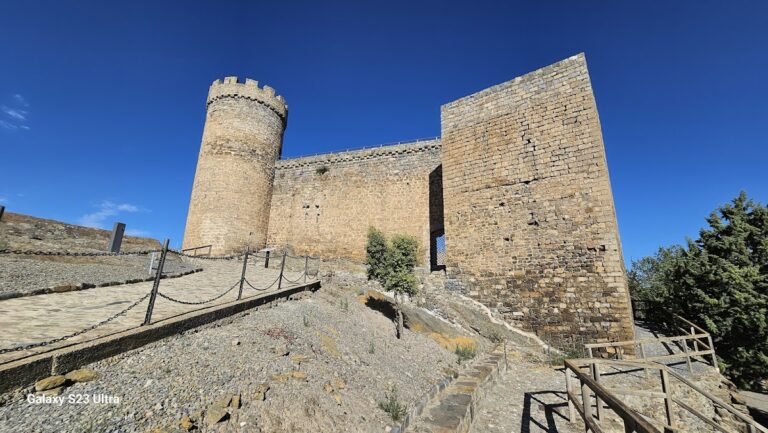
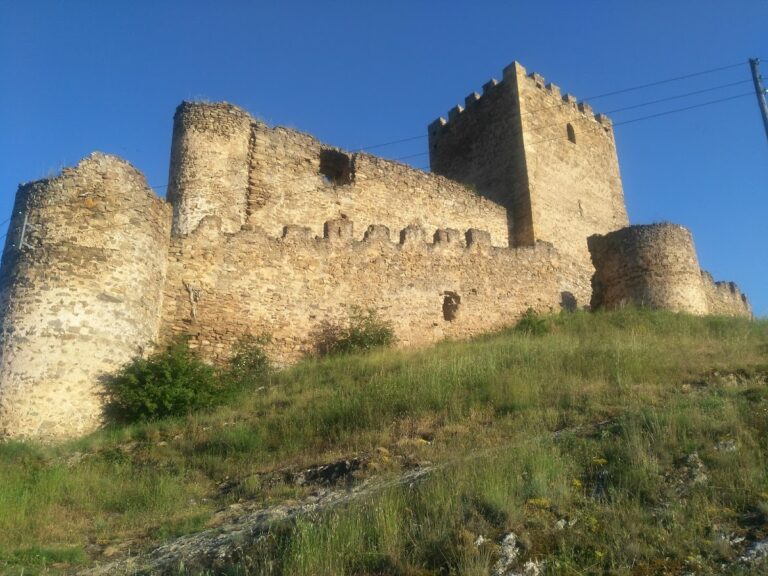
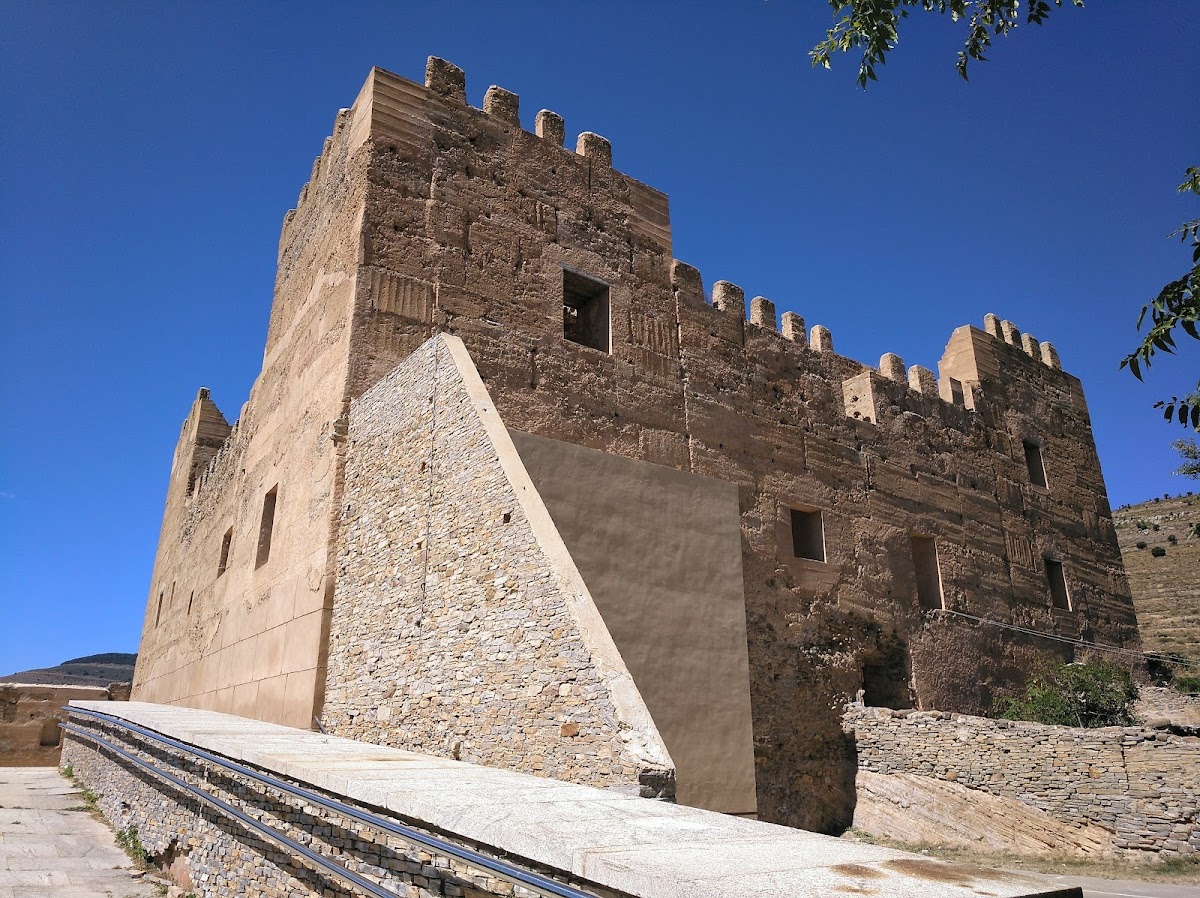
The Castillo de Yanguas stands as a robust example of 14th-century fortress architecture, primarily constructed using a technique known as rammed earth, or “tapia,” which derives from Muslim building traditions. Its layout is nearly square, enclosed by walls built with this compacted earth method, and fortified with four square towers projecting slightly beyond the connecting walls. Among these, one tower with a broader base functions as the main keep, often called the Torre del Homenaje.
The fortress features battlements crowning the connecting walls and towers, a characteristic defensive element designed to protect defenders during attacks. Surrounding the primary enclosure, an outer defensive boundary once offered additional protection. While this enclosing barrier has deteriorated significantly, remnants remain visible in several locations, revealing the extent of the original fortification.
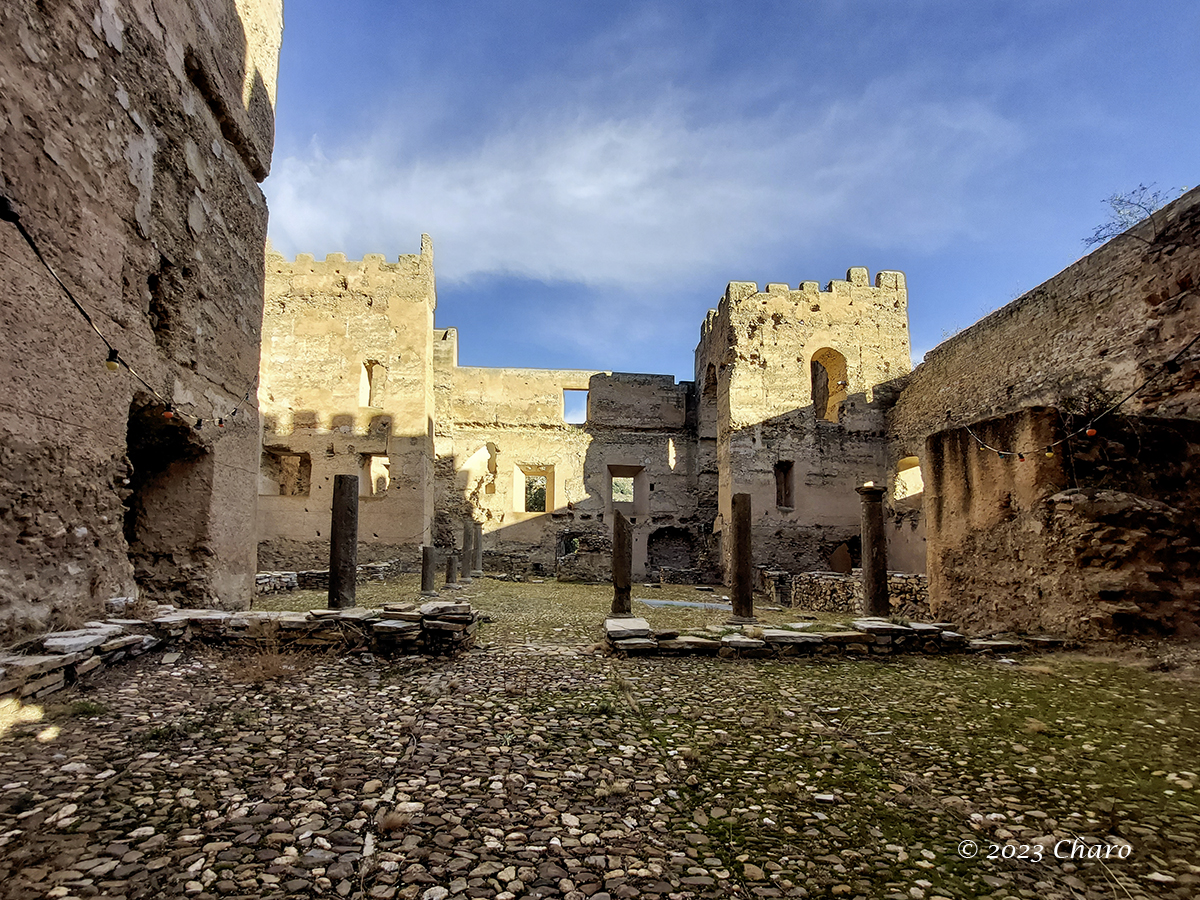
Within one rammed earth opening, two original coats of arms have survived, offering insight into the castle’s noble associations and asserting its historical identity. Excavations carried out during recent rehabilitation revealed a remarkable number of columns arranged around the interior courtyard, indicating a once richly structured space. Complementing these, researchers uncovered cobblestone paving beneath the courtyard, shedding light on both architectural style and daily functions within the enclosed area.
Restoration has involved careful stabilization of the ancient walls and the removal of later constructions that were not part of the original design, particularly on the fortress’s east façade and the barbican located on the west side. Plans to repurpose one tower as an area to receive visitors shifted substantially after these archaeological discoveries. Priority was given to continuing excavation and study of the courtyard’s structural remains to preserve and understand all original elements uncovered.