Castle of Clavijo: Medieval Fortification in La Rioja, Spain



Site at a Glance
- Rating
- 4.5
- Popularity
- Medium
- Country
- Spain
- Primary era
- Medieval
- Eras represented
- Medieval
- Civilizations
- Unclassified
- Site type
- Military
- Remains
- Castle
On this page8 sections
History
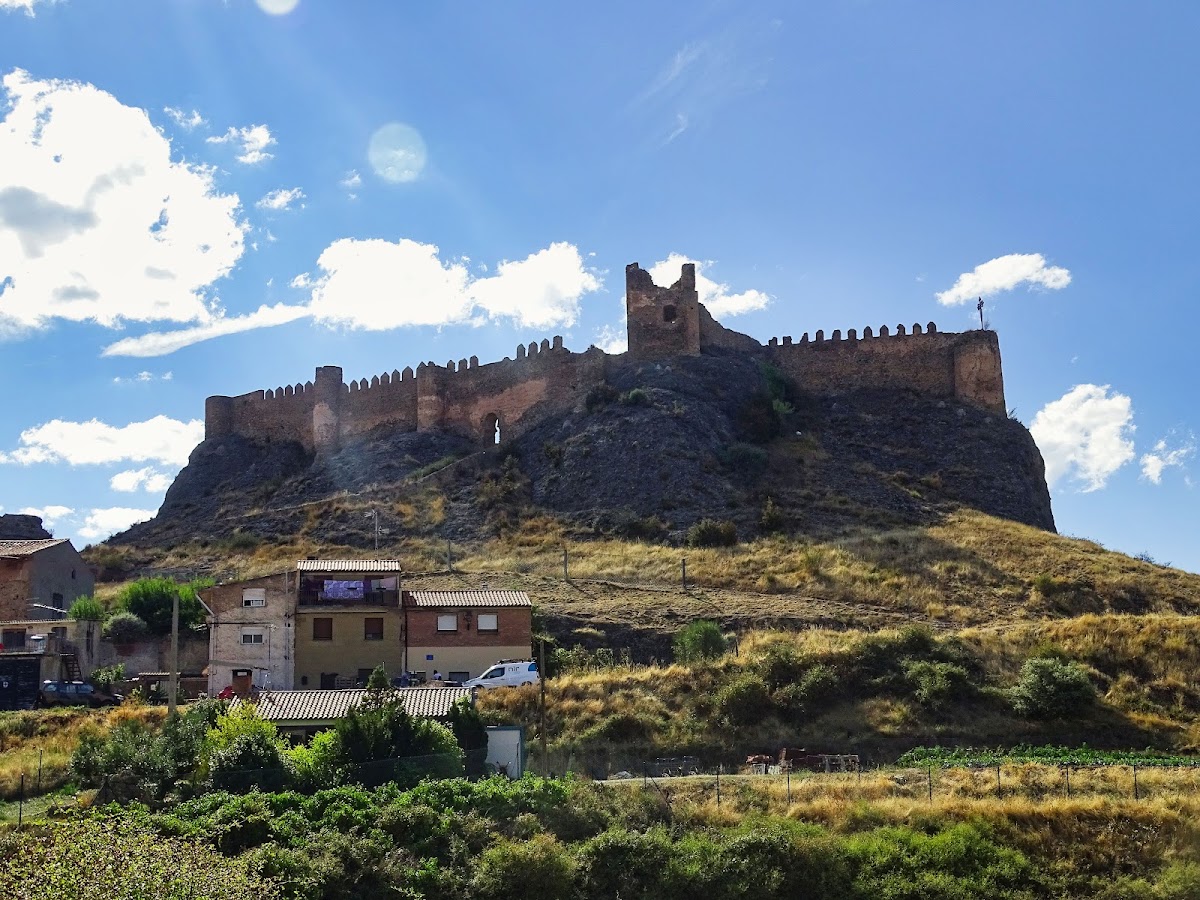
Castle of Clavijo is a medieval fortification at Clavijo in La Rioja, Spain, built during a period when Christian and Muslim forces contested control of the Iberian Peninsula. Its date and authorship remain uncertain. It has been described as an eleventh-century castle, while architectural interpretation places the keep in the ninth century and the surrounding walls in the first third of the tenth century. The fortress may have been constructed by Christian or Muslim forces.
Early records and changing ownership
The earliest recorded notice of the castle dates to 960, when Fernán González, a tenth-century count associated with the consolidation of Castilian power, was imprisoned there. Sancho el Mayor, king of Navarre, later ceded the fortress to the Monastery of Albelda. By 1177, it belonged to the Crown. During the fourteenth century, Diego López de Zúñiga, a Castilian nobleman, owned the castle and gave it to his son as a wedding gift.
The Battle of Clavijo tradition
The fortress is linked to the Battle of Clavijo, which was said to have taken place at the foot of the rock during the Reconquista, the long medieval process of Christian expansion and Muslim-Christian warfare in the Iberian Peninsula. According to the tradition, the forces of Ramiro I of Asturias, commanded by Sancho Fernández de Tejada, fought the troops of Abd al-Rahman II, emir of Córdoba, after Ramiro refused to continue paying tribute to Muslim rulers.
Later accounts say that the Christian forces withdrew to Mount Laturce near Clavijo after being surrounded near Nalda and Albelda. Saint James the Apostle, known in Iberian Christian tradition as Santiago, was said to have appeared and helped them win the battle. The battle is now regarded as legendary because evidence for it emerged only centuries later. Its story also helped justify the Vow of Santiago, a religious and political tradition associated with tribute and support for the apostle, which was supposedly established by Ramiro I after the conflict.
Protection and conservation
The Castle of Clavijo is owned by the Government of La Rioja and has been protected as an Asset of Cultural Interest in Spain since 1931. Restoration of the access route began in February 2025, with work intended to improve the approach from the village, consolidate sections of the walls, and replace ornamental lighting with more efficient alternatives.
Remains
Layout and construction
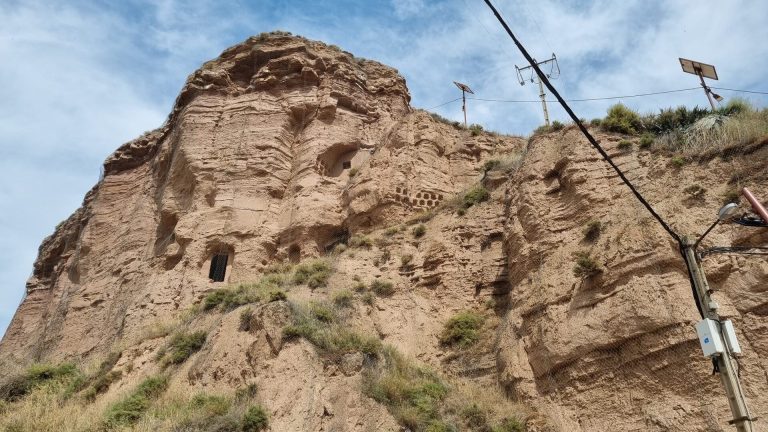
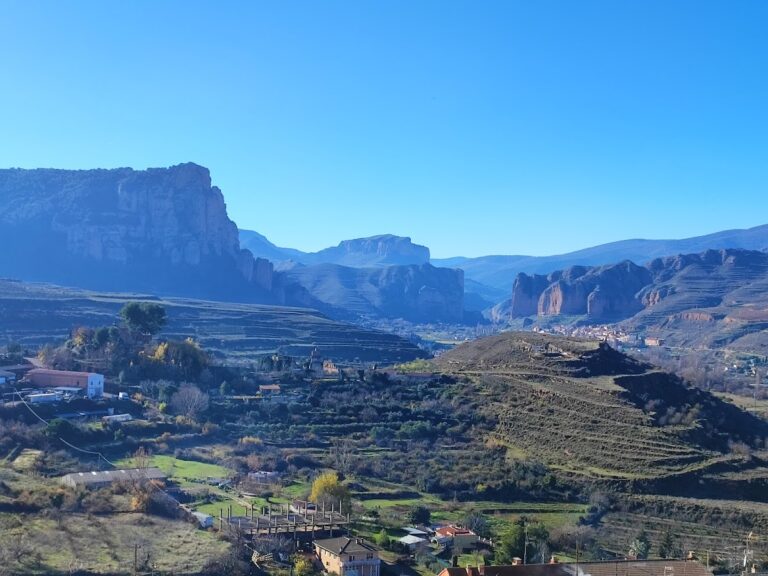
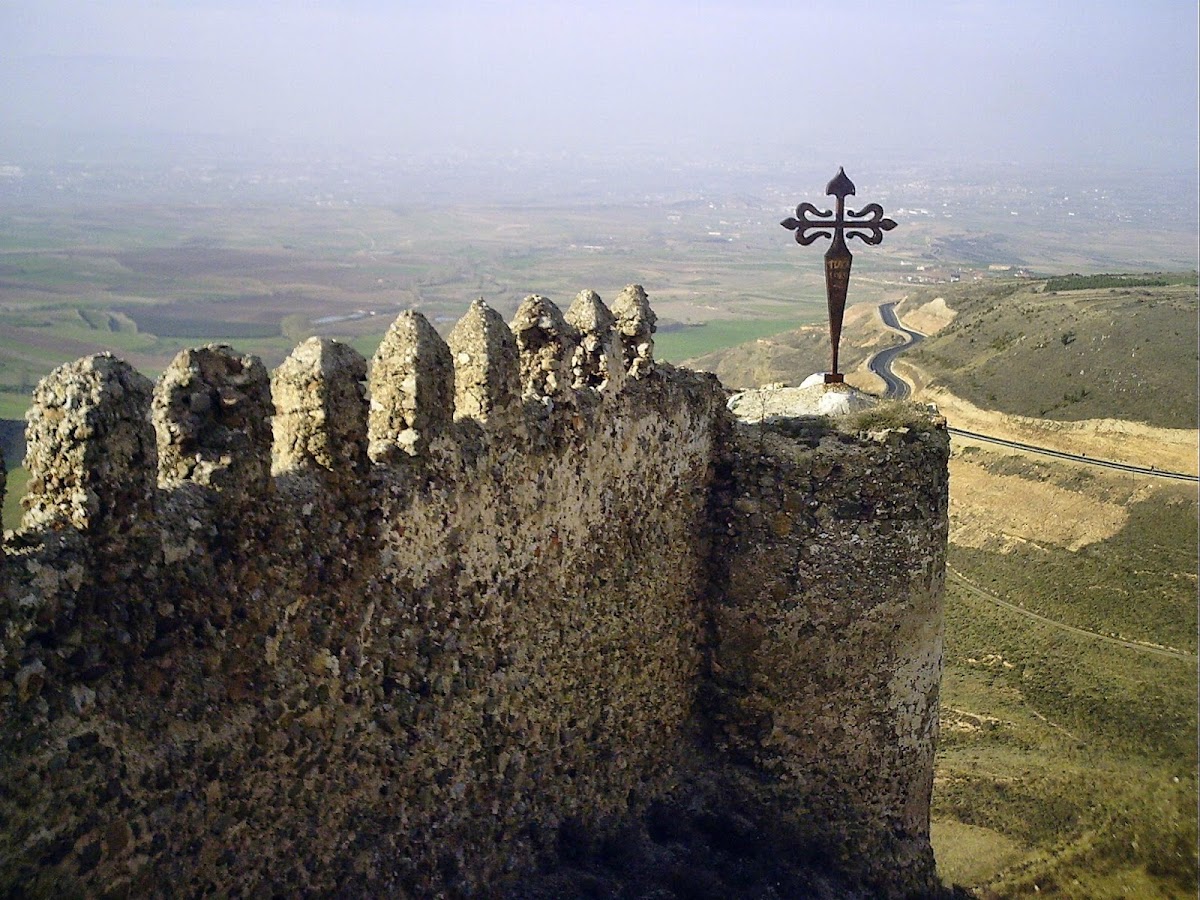
The castle occupies the summit of a prominent rocky formation and an adjoining escarpment beside Clavijo. Its elongated plan follows the hill’s shape and overlooks the surrounding land. A masonry wall extended across the rocky formation and enclosed the village. Locally obtained stone forms the principal building material, with the pieces only minimally worked before being set into the masonry.
Entrance and surviving buildings
Approach and keep
Access from the side facing the village follows a steep path. The keep stands beside the entrance, and its doorway is topped by a horseshoe arch. An architectural interpretation places the tower later than the adjacent walls. The keep is now severely deteriorated, but rooms arranged close to it survive, including a courtyard and a small chamber.