Castillo de San Juan de las Águilas: A Historic Coastal Fortress in Spain



Visitor Information
Google Rating: 4.4
Popularity: Medium
Google Maps: View on Google Maps
Official Website: www.aguilas.es
Country: Spain
Civilization: Unclassified
Remains: Military

History
The Castillo de San Juan de las Águilas stands near the town of Águilas in Spain, originating as a military installation built by the Spanish Crown. Its origins trace back to the late 16th century when it was first established as a watchtower named San Juan.
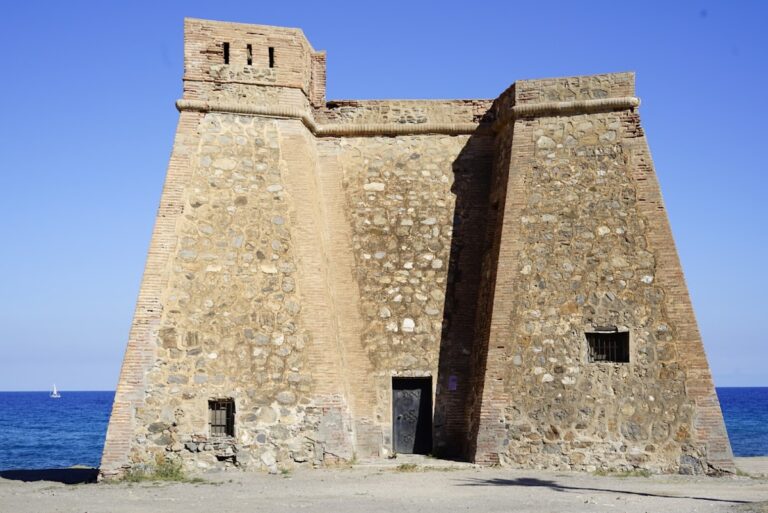
Constructed in 1579 during the reign of Philip II of Castile, the initial tower was part of a comprehensive coastal defense network aimed at protecting the shoreline from frequent raids by Barbary pirates. This early structure, overseen by Vespasiano I Gonzaga, shared design characteristics with the nearby Torre de Cope and functioned primarily as a lookout point. Its role was to signal the troops of Lorca about incoming sea-based threats.
The tower suffered damage from a significant earthquake in 1596. Despite repairs, it faced destruction in 1643 when Barbary pirates launched a successful attack. News of this loss reached King Philip IV that same year, prompting concern over coastal defenses. Responding to this, in 1652 the king directed the local council of Lorca to carry out reconstruction efforts, aiming to restore the tower’s defensive capabilities.
By the mid-18th century, the once-rebuilt structure had fallen into disrepair once again. Around 1751, under the rule of Ferdinand VI, Sebastián Feringán, an engineer associated with the Cartagena Arsenal, proposed replacing the deteriorated tower with a more robust fortress. The construction of the present-day castle commenced in 1759 during the reign of Charles III, reflecting an updated approach to coastal defense. Records indicate it reached completion near 1766.
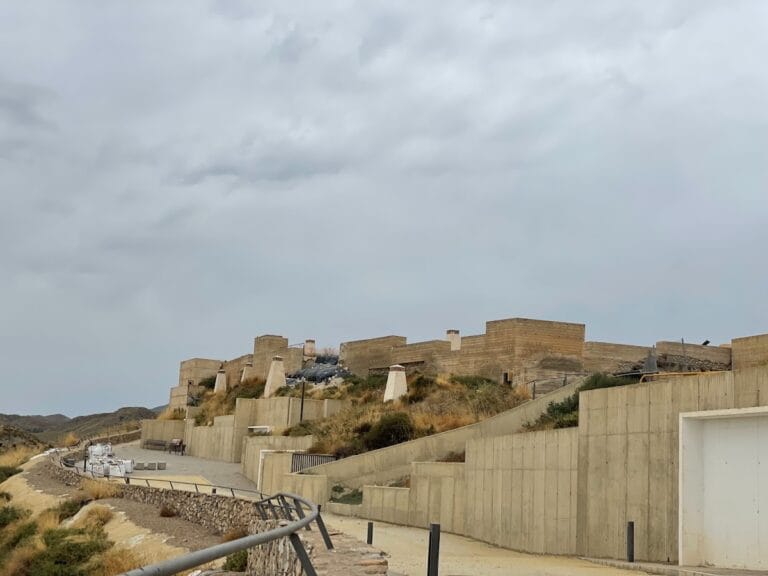
In recent times, the castle has undergone restoration to preserve its historical integrity and remains accessible to the public. Recognizing its cultural and historical importance, it was officially designated a Bien de Interés Cultural, a status granted in 1982 that marks it as a protected site of cultural interest.
Remains
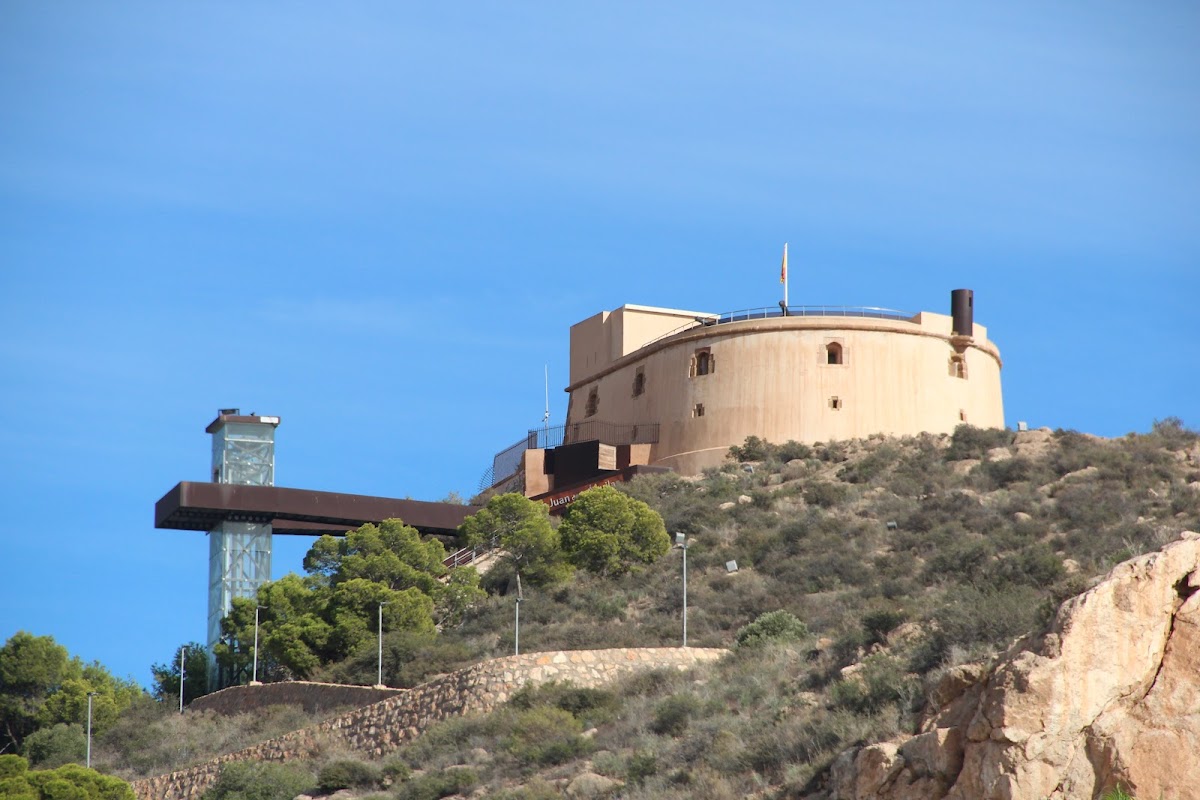
The current structure of the Castillo de San Juan de las Águilas occupies a promontory reaching about 45 meters above sea level, strategically positioned near the southeastern coastline of Spain. Its location allowed for broad visibility over the sea and surrounding terrain, which rises in mountainous formation to the north and flattens toward the southwest.
Although details regarding the precise architectural layout and measurements are not extensively documented, the castle is known to have evolved from the earlier watchtower that influenced its design inspiration. The original tower resembled the Torre de Cope, suggesting a simple and functional lookout form that served early defensive needs.
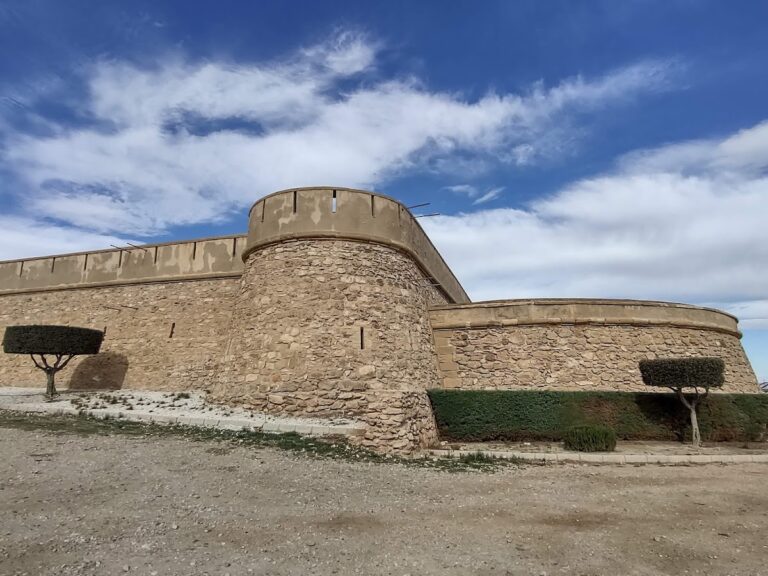
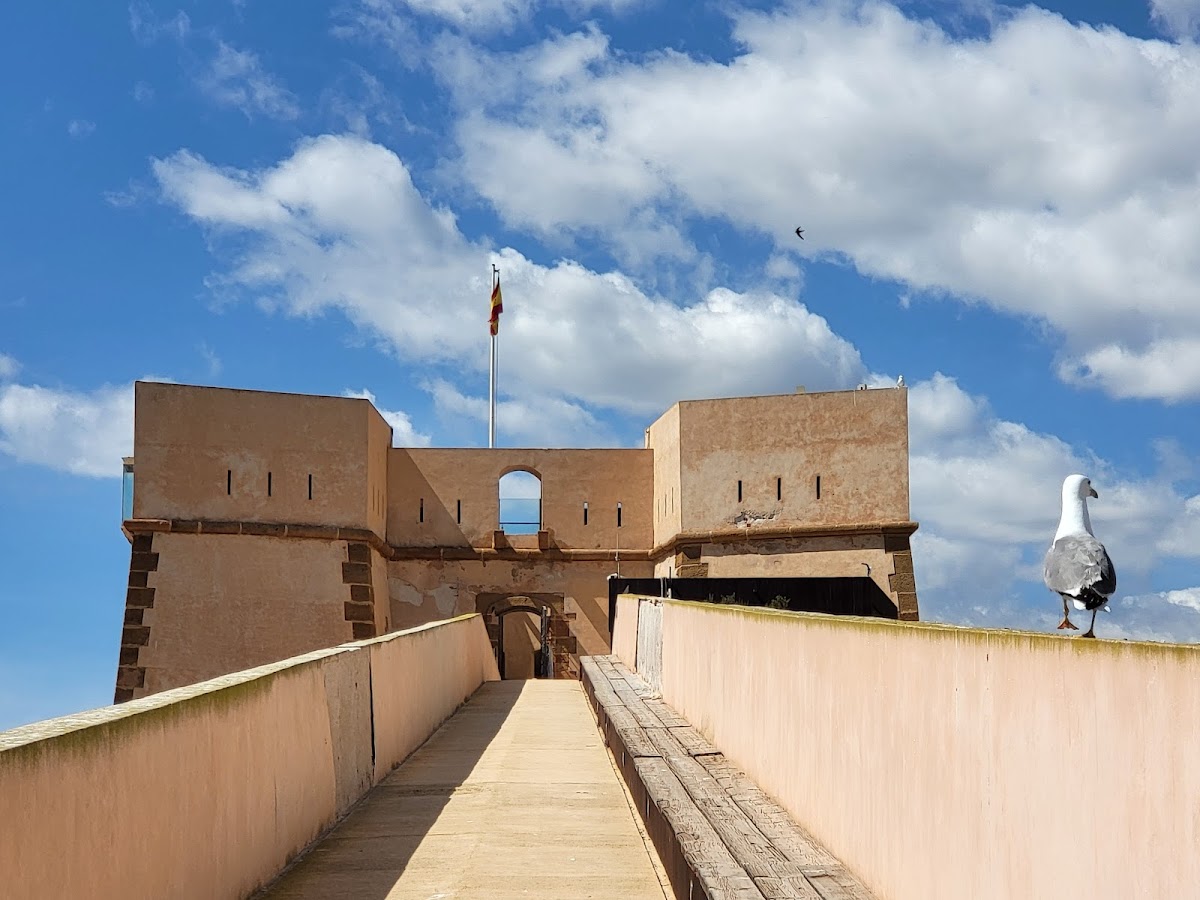
The existing fortress, built during the mid-18th century, reflects military engineering approaches of that period tailored to coastal defense. Constructed primarily to replace the ruined predecessors, its sturdy build aimed to withstand attacks similar to those that led to the destruction of the original tower by pirates in the 17th century.
In modern times, the castle has been restored sufficiently to maintain its structural stability and to enable visitation. Its conservation ensures the fortress remains an enduring feature of the landscape, though specific ornamental details or inscriptions have not been reported. The site stands today as a testament to the region’s historical efforts to secure its coastline from external threats.
Nearby sites