Castle of Guardamar del Segura: A Fortified Hilltop Settlement


Site at a Glance
- Rating
- 4.1
- Popularity
- Medium
- Country
- Spain
- Primary era
- Medieval
- External website
- Open
- Eras represented
- Iron Age, Medieval, Early Modern
- Civilizations
- Crown of Aragon, Crown of Castile, Iberian, Spanish
- Site type
- Military
- Remains
- Castle
On this page9 sections
History
The Castle of Guardamar del Segura is a fortified hilltop site in Spain, with Arab origins and archaeological evidence of an earlier fortified settlement dating to the Levantine Iron Age, around the fourth century BC. The upper castle belongs to the first half of the twelfth century, while the site later became an important military and administrative centre on the coast beside the Segura River.
Early fortification and royal control
The enclosure contains remains linked to an earlier oppidum, or fortified settlement associated with pre-Roman and early historic communities. The upper castle was established in the first half of the twelfth century. In 1271, Alfonso X of Castile, known as Alfonso the Wise, ordered the castle and settlement to be built and populated them with Castilians. In 1296, James II, king of Aragon, took control and incorporated Guardamar into the Crown of Aragon.
During the early fourteenth century, the castle served as the principal fortification overseeing the local coast and harbour. Its position made it useful for watching the sea and the mouth of the Segura River, where trade was conducted. Moorish forces burned the castle in 1331.
War between Castile and Aragon
During a conflict between Castile and the Crown of Aragon, a Castilian fleet of twelve galleys commanded by Peter I of Castile appeared before Guardamar. Six Genoese galleys, led by Egidi Boccanegra, supported the attack. The town was captured, but the castle remained under the defence of Bernat de Cruïlles. A storm then destroyed the invading fleet, forcing Peter I to withdraw by land.
In the following year, Castilian forces captured Guardamar again during an expedition supported by the Kingdom of Granada, Genoa, and Portugal. The wider campaign failed to take Valencia, Barcelona, and Ibiza. Peter IV of Aragon later punished Guardamar for its weak opposition to the Castilian troops by removing its status as a royal town and ending its autonomy. The settlement became subordinate to Orihuela.
Decline and destruction
Guardamar’s subordinate position left it exposed to corsairs, bandits, and smugglers. A later attempt to repopulate the settlement with Moriscos, Muslims who had been converted to Christianity, often under compulsion, did not succeed. The castle was destroyed by the severe earthquake of March 1829. The disaster led to the relocation of the settlement from the hill to the nearby plain and waterfront, where the modern town of Guardamar del Segura developed.
The ruins were declared a Cultural Property of Interest on 25 June 1985 and form part of Alicante province’s cultural heritage. Partial rehabilitation has taken place, while archaeological excavations continue to clarify the site’s earlier and medieval phases.
Remains
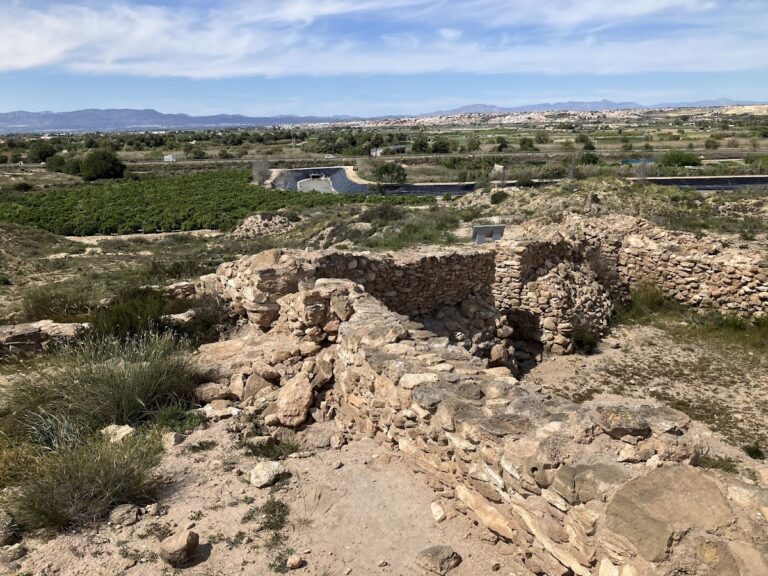
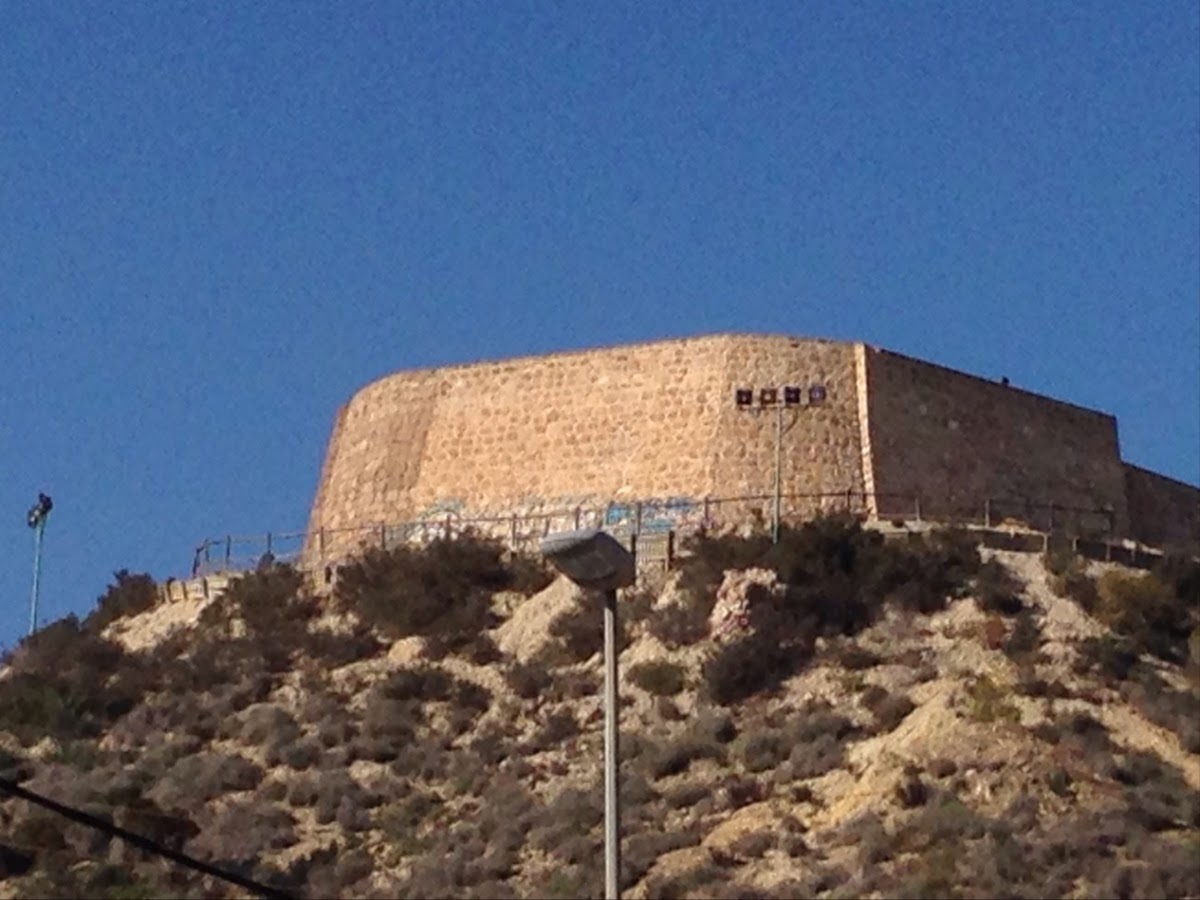
The castle occupies the summit of a rocky hill beside Guardamar del Segura. Its elevated position provided wide views over the sea and the mouth of the Segura River. The elongated enclosure is divided into an upper section, containing the castle proper, and a larger lower section surrounded by a defensive wall.
Upper castle and medieval enclosure
Upper castle
The upper castle has a polygonal plan and dates to the first half of the twelfth century. Only very limited remains survive after the destruction caused by the 1829 earthquake, but the upper position within the enclosure reflects its role as the central fortified area.
Lower defensive section
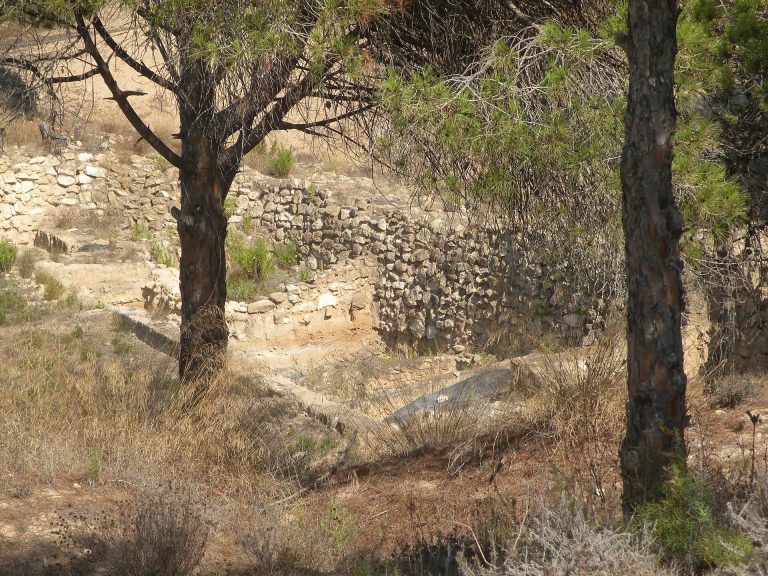
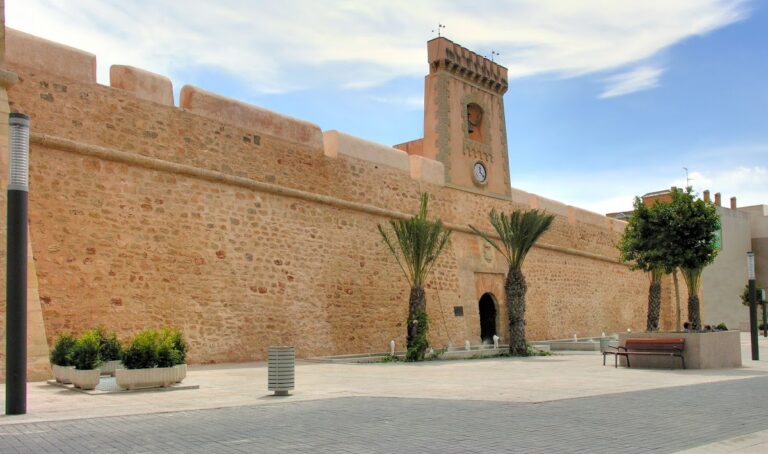
The larger lower section is enclosed by a Gothic wall that was substantially modified during the sixteenth century. Its medieval defensive system was adapted to more advanced forms of warfare, and the medieval towers were lowered. Sections of massive walls, the bases of several towers, auxiliary buildings, and isolated ruins survive across the enclosure.
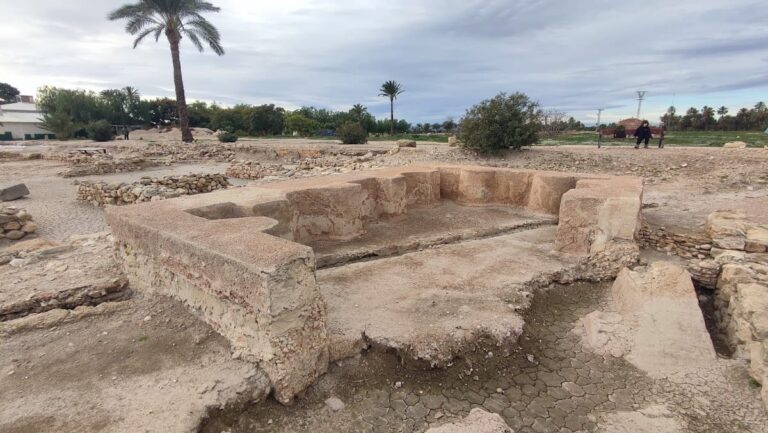
Archaeological remains
The Baluard de la Pólvora, or Powder Bastion, is identified as the site’s most archaeologically valuable area. The earthquake damaged the defensive wall, which has since been renovated. Excavations have also recovered a small number of medieval remains, while old cannons placed at the site illustrate its later military character.