Mow Cop Castle: An Ornamental Folly near Stoke-on-Trent
Site at a Glance
- Rating
- 4.6
- Popularity
- Medium
- Country
- United Kingdom
- Primary era
- Early Modern
- External website
- Open
- Eras represented
- Early Modern
- Civilizations
- British
- Site type
- Domestic
- Remains
- Elite Residence
On this page7 sections
History
Construction and earlier landscape
Mow Cop Castle is an ornamental folly in the United Kingdom, near Stoke-on-Trent, built in 1754 in the eighteenth-century landscape tradition. Randle Wilbraham, an English landowner associated with nearby Rode Hall, commissioned it as a summerhouse and recreational structure. Its design imitated the ruins of a medieval fortress, helping enhance the landscape visible from Rode Hall, about 5 kilometres away.
The hill and its surroundings also preserve evidence of much earlier activity. Mow Cop was nationally known for quarrying high-quality millstones, the large grinding stones used in mills, including watermills. Excavations recovered Iron Age querns, smaller stones used for grinding grain or other materials, while traces of a prehistoric camp were found in the area.
Religious, cultural, and modern history
Mow Cop became associated with Primitive Methodism, a nineteenth-century Methodist movement known for open-air preaching, camp meetings, and revivalist gatherings. In 1937, more than 10,000 Methodists assembled on the hill to commemorate the first Primitive Methodist camp, held there in 1807. That same year, the castle was given to the National Trust, which now owns and manages the site.
The folly has continued to carry cultural associations. On New Year’s Eve in 1999, a flaming beacon was lit at Mow Cop as one of hundreds across the United Kingdom marking the beginning of the new century. Mow Cop and the castle are also central images in Alan Garner’s novel Red Shift, reflecting the English novelist’s use of Cheshire landscapes, archaeology, and folklore. The castle is a Grade II listed building, a structure recognized in England as having special architectural or historic interest. Its listing on the National Heritage List for England is dated 6 June 1952.
Remains
Folly and rocky setting
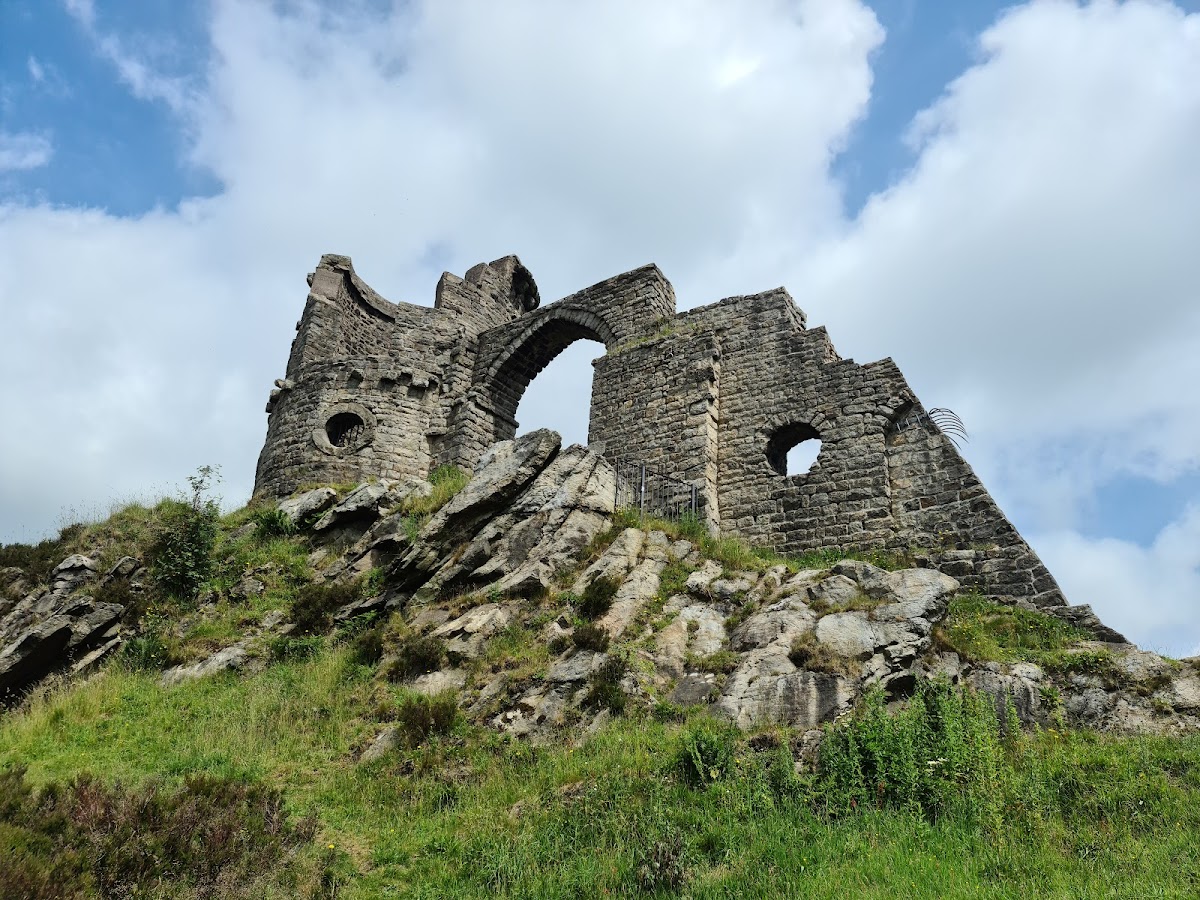
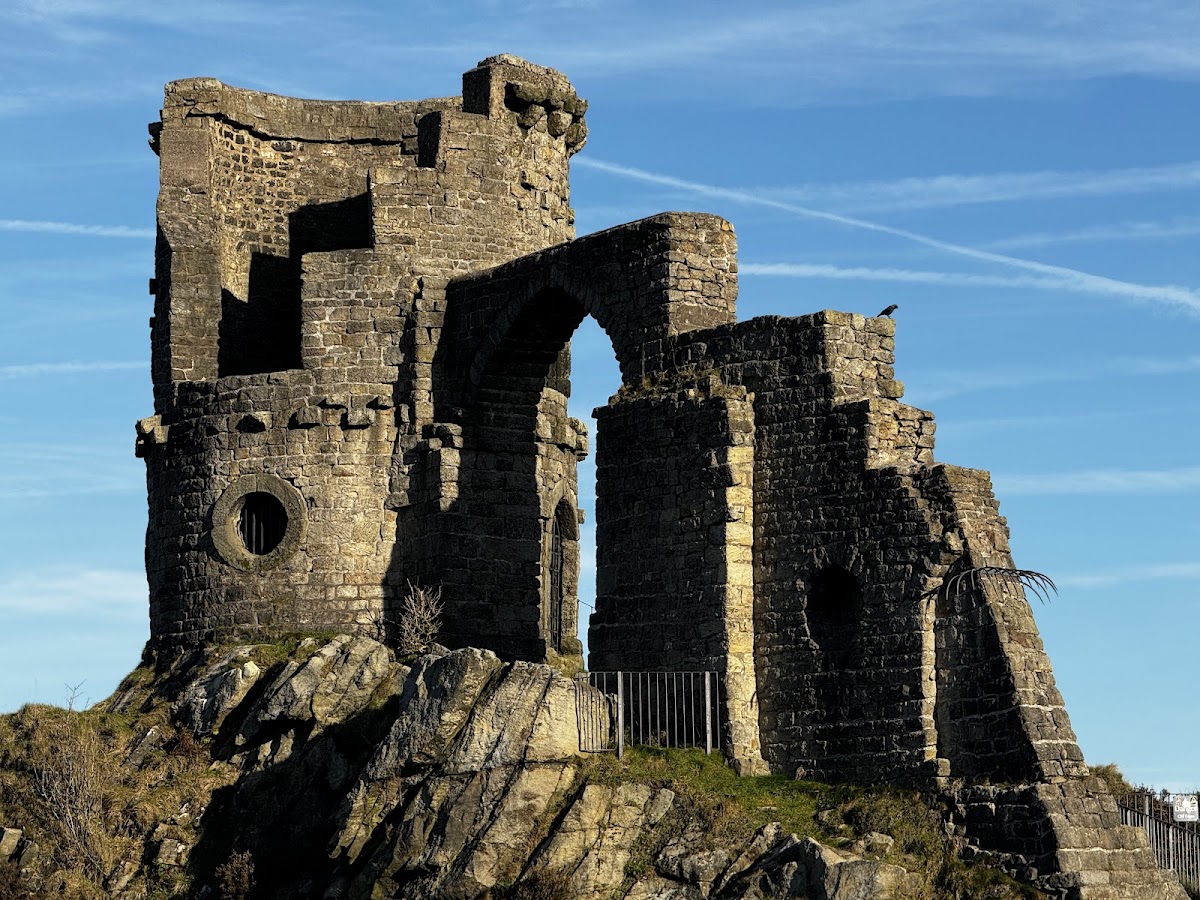
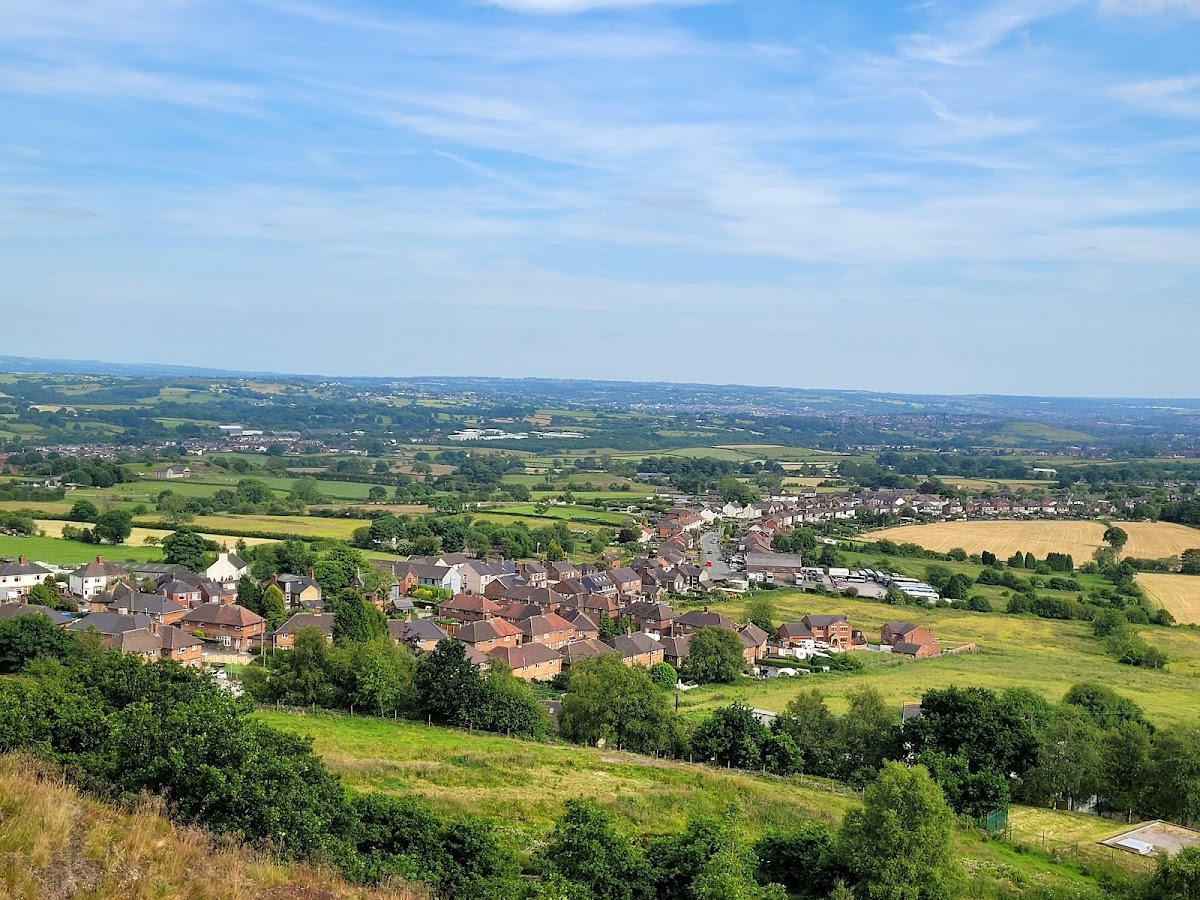
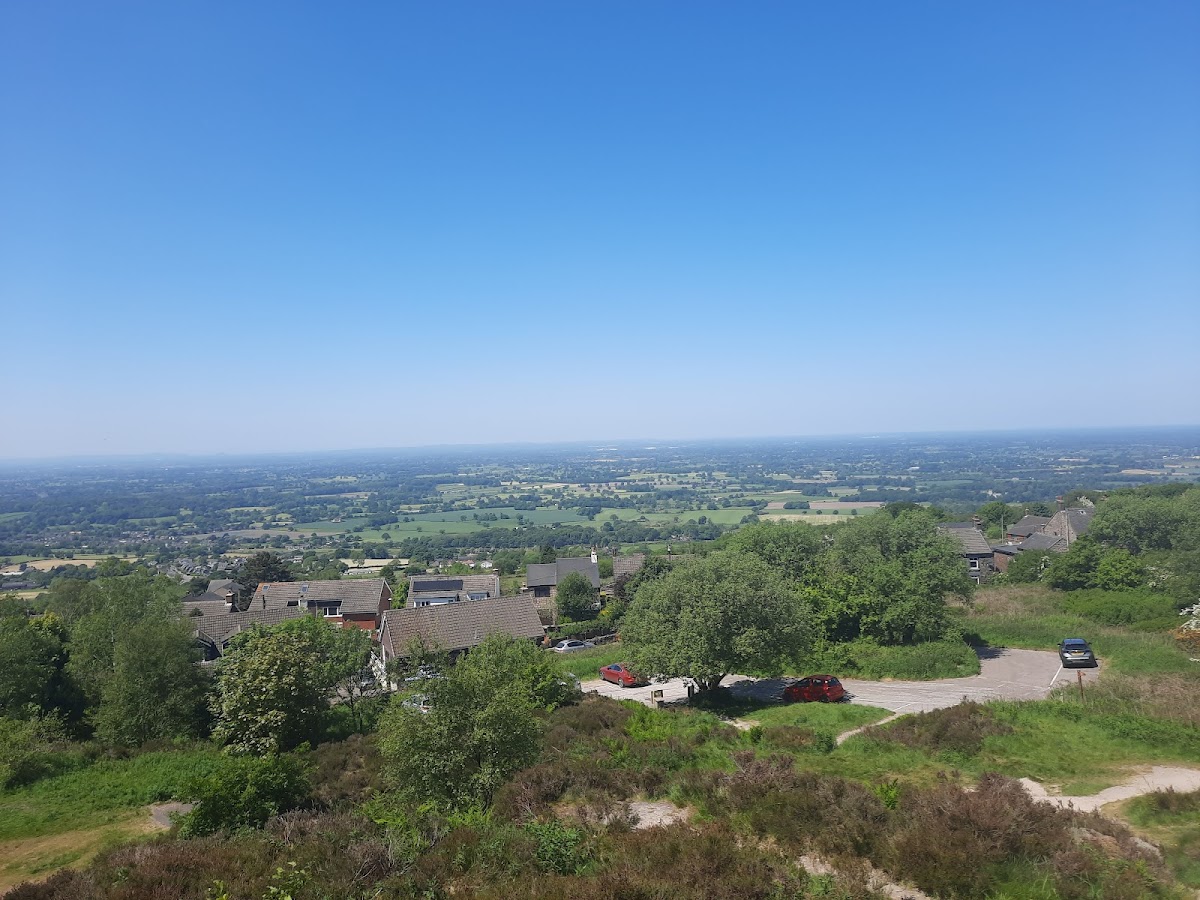
Mow Cop Castle stands on a rocky sandstone promontory at Mow Cop, on a ridge that forms the boundary between Cheshire and Staffordshire. The ridge also lies between the dioceses of Chester and Lichfield and between the ecclesiastical provinces of Canterbury and York. The structure was conceived as a picturesque imitation of a ruined fortress rather than as a genuine defensive building, and its form combines an elaborate summerhouse with a circular tower.
Summerhouse
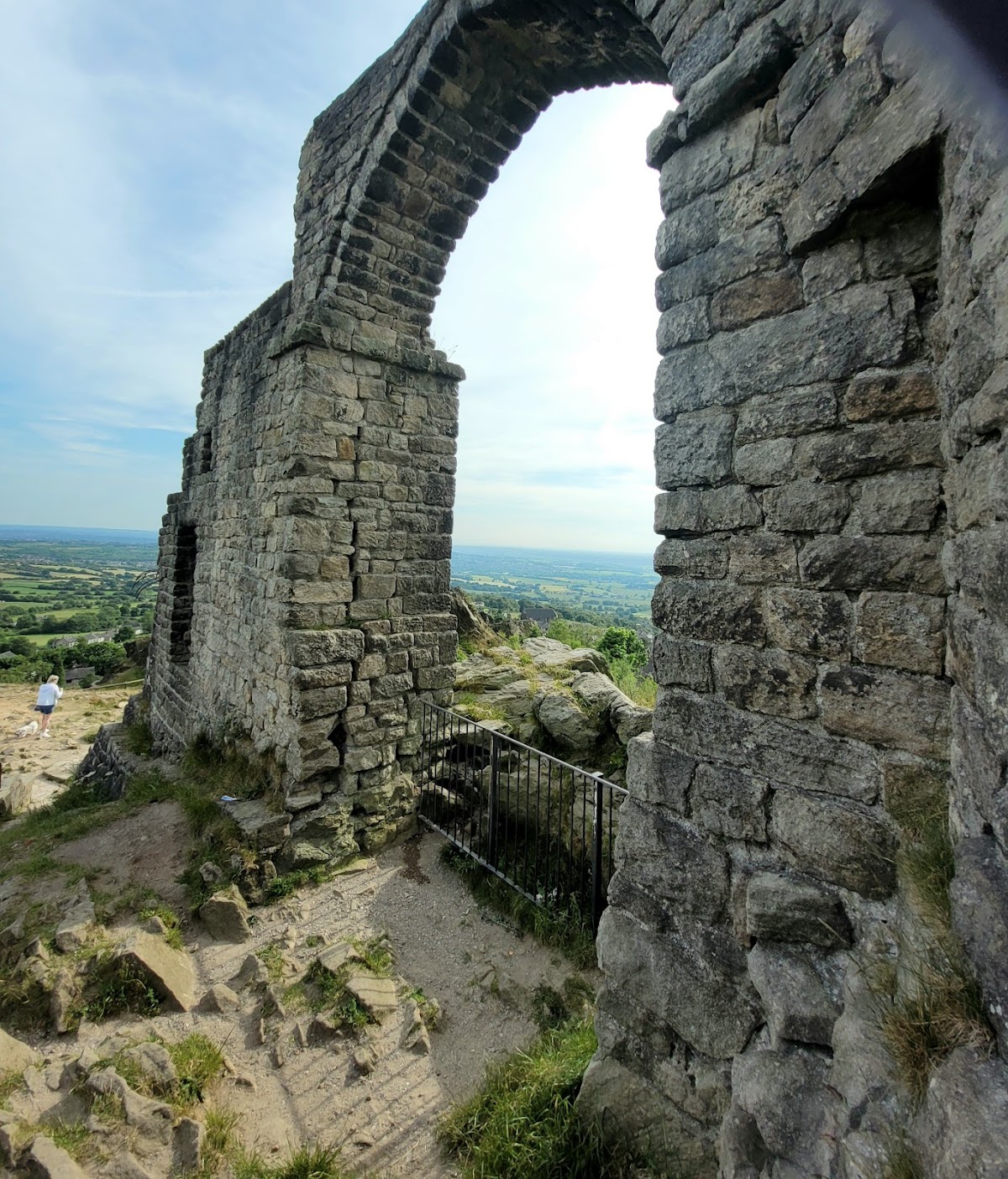
The elaborate summerhouse forms part of the folly’s ornamental composition. Its purpose was recreational, and its historic appearance was created to resemble a medieval ruin. Together with the tower, it shaped the designed view from Rode Hall and survives as the central architectural feature of the site.
Circular tower
The circular tower was constructed to simulate a surviving fragment of a medieval fortress. Entry was once permitted, but access is now blocked by a locked metal gate. The gate still allows views into the folly. The surrounding area is fenced because the crag has been associated with several suicide attempts and a suicide, forming part of the site’s present physical management.