Castello di Sorci: A Historic Medieval Fortress in Anghiari, Italy


Visitor Information
Google Rating: 4.2
Popularity: Low
Google Maps: View on Google Maps
Official Website: www.castellodisorci.it
Country: Italy
Civilization: Unclassified
Remains: Military

History
Castello di Sorci stands in the municipality of Anghiari, Italy, and was originally constructed during the 12th century by medieval builders as a small fortress. Its earliest recorded mention appears in a 1111 document issued by Emperor Henry V, where the site is identified as the location of a monastery linked to the nearby Abbey of San Bartolomeo di Anghiari.
From the early 13th century, beginning in 1234, the fortress became the summer residence for the influential Tarlati di Pietramala family, known for their allegiance to the Ghibelline faction, until this line ended in 1388. During the 14th century, the castle also served as the center of a local universitas—a community association safeguarding residents’ rights. Upon the Tarlati branch’s extinction, the condottiero Baldaccio Bruni acquired the castle around 1400, making it his family home. Bruni lived there until his assassination in 1441, after which his widow, Annalena Malatesta, chose to retire at Sorci as a Dominican nun following the death of their son.
In 1443, the noble Pichi family from the nearby town of Sansepolcro took possession of the castle after contesting Bruni’s ownership. They transformed the stronghold into a residence-farm and expanded its agricultural estate. One notable enhancement came in 1532 under Taviano Pichi, who constructed a mill to support the estate’s production. Earlier, in 1520, the parish territory of Sorci was transferred from the jurisdiction of the Diocese of Città di Castello to that of Sansepolcro by decree of Pope Leo X.
During the 17th century, reflecting regional conflicts and outbreaks of disease, the Pichi family increased the castle’s fortifications and upgraded its defenses. In 1647, Pope Innocent X honored Francesco Pichi with the title of Marquis of Sorci. However, following protests from the nearby town of Anghiari, this feudal lordship was revoked, leaving the title purely noble without governing rights. From the mid-1600s onward, the castle entered a period of decline due to insufficient upkeep. Ownership later passed through several families—the Giachetti, Zampa, Bonservizi, and finally the Barelli family, who carried out careful restorations respecting the site’s historical character.
Over time, the castle acquired a reputation for ghostly phenomena, stories frequently involving the spirit of Baldaccio Bruni. In the late 20th century, specifically in 1984, the castle served as a filming location for parts of the movie “Non ci resta che piangere,” by Roberto Benigni and Massimo Troisi.
Remains
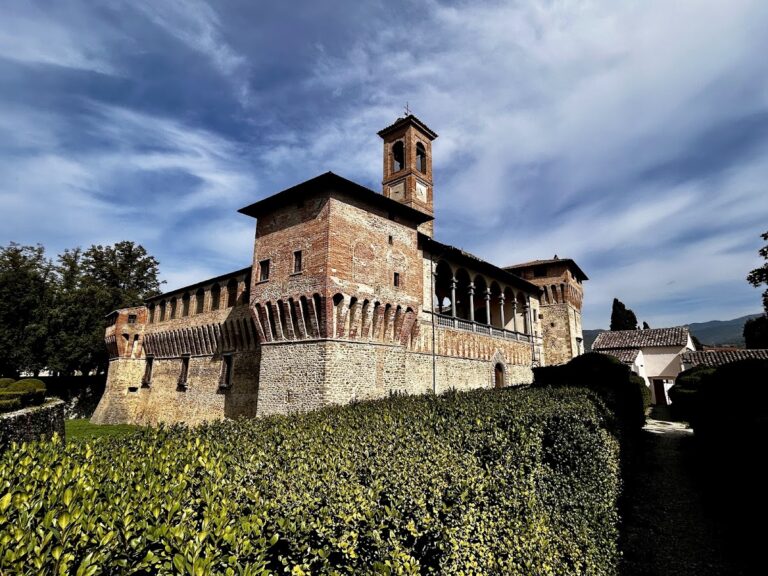
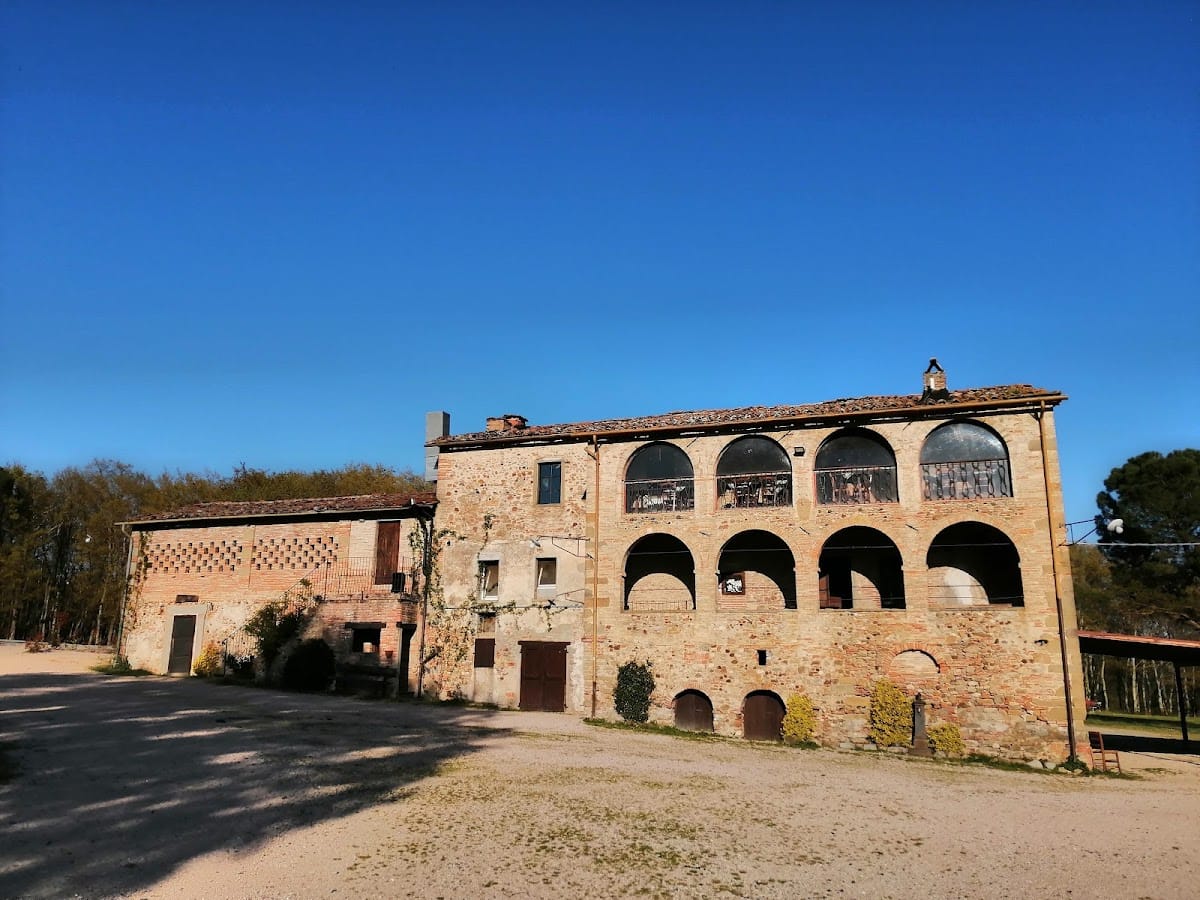
The Castello di Sorci comprises two interconnected buildings, with the southern side featuring a truncated square tower that integrates seamlessly into the main structure. Around 300 meters from this core, a small temple and a distinctive building with a portico—today known as the locanda—were constructed, complementing the castle’s ensemble.
Visitors enter the castle through a main gate adorned with the Pichi family’s coat of arms, which also appears in various other parts of the complex. Within, the 16th-century courtyard stands out for its harmonious design and houses a family chapel dedicated to Saint Lorenzo. Access to the former noble apartments is gained via a staircase, where another Pichi coat of arms is carved onto the fireplace, marking the family’s influence inside the residence.
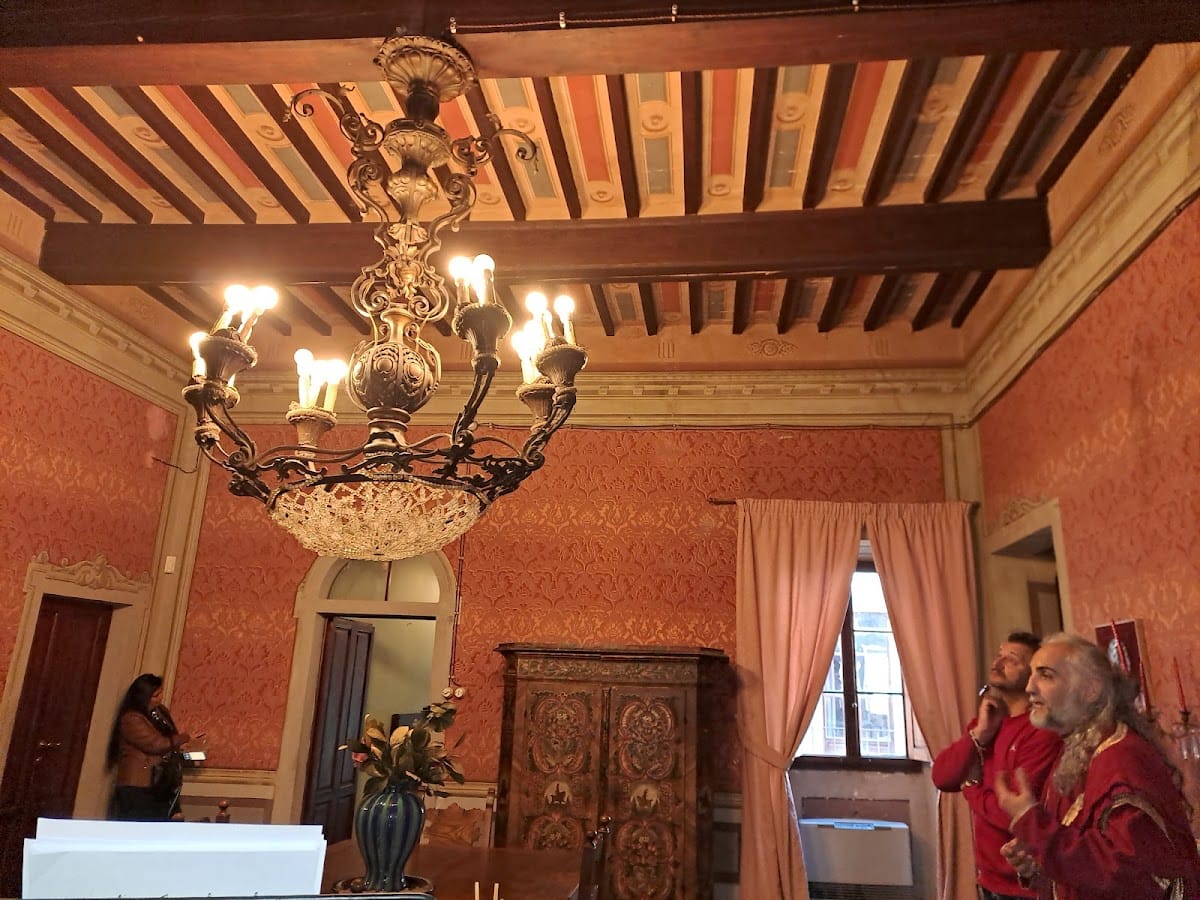
Architectural modifications during the Renaissance altered the castle’s appearance, introducing Florentine-style windows and decorative elements reflecting the period’s artistic trends. Among the interior spaces, several notable rooms remain identifiable: the chamber associated with Baldaccio Bruni, a hall of mirrors, an armory, a billiard room, a large kitchen, and dungeons. These features portray the dual residential and defensive functions maintained over centuries.
The Pichi family’s tenure saw significant expansions and enhancements, including strengthened fortifications and improved soldier accommodations in response to the 17th-century conflicts. The castle has continuously maintained its connection to the surrounding agricultural estate, an economic role established during the Pichi period and still relevant today, linking the historic complex to its rural setting.
Nearby sites