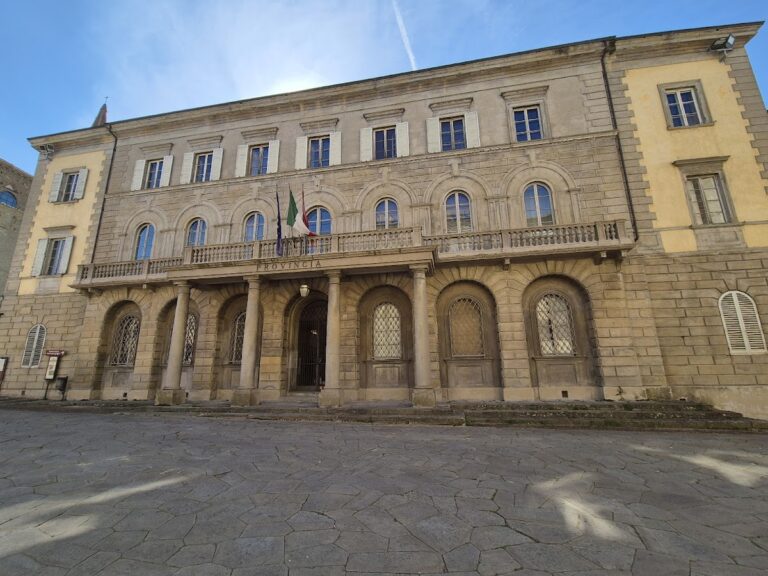
Gaio Cilnio Mecenate National Archaeological Museum: Arezzo’s Roman and Etruscan Collections

Site at a Glance
- Rating
- 4.4
- Popularity
- Low
- Country
- Italy
- Primary era
- Classical
- External website
- Open
- Eras represented
- Iron Age, Classical
- Civilizations
- Etruscan, Roman
- Site type
- Museum
On this page17 sections
History
The Gaio Cilnio Mecenate National Archaeological Museum in Arezzo, Italy, is an archaeological museum established in 1936 and housed since 1937 in the medieval monastery of Monte Oliveto. The monastery stands over the remains of a Roman amphitheater built in the second century AD, linking the museum to the largest public building of ancient Arezzo. Its collections trace the history of the city and its territory from prehistory and the Villanovan period, an early Iron Age culture preceding Etruscan urban society, through the Etruscan and Roman periods to late antiquity.
Foundation and development
The museum grew from the public Museum of Natural History and Antiquities, founded in 1823 by the Fraternita dei Laici. Its holdings increased through private collections and archaeological excavations in Arezzo and the surrounding territory. The later institution was named for Gaio Cilnio Mecenate, known in English as Maecenas, a Roman aristocrat and supporter of artists during the reign of Augustus. His name gave rise to the word “patron,” meaning a person who supports artistic and cultural production.
The museum became state property in 1973. From 2014 it was managed through the Polo museale della Toscana, and from 2019 through the Direzione regionale Musei della Toscana. The museum and the amphitheater now form a state archaeological museum and archaeological area under the regional museum administration of the Italian Ministry of Culture.
The monastery and museum reorganization
Monte Oliveto was refurbished in 1951, with repairs that addressed damage caused during the Second World War. The displays were rearranged most recently in the 1990s. The collections formed by prominent citizens of Arezzo, including Bacci, Gamurrini, and Ceccatelli, remain part of the museum’s historical character alongside objects recovered through excavation.
Remains
Monastery and amphitheater
Monte Oliveto monastery
The museum occupies the medieval monastery of Monte Oliveto, whose plan follows an unusual curve. Its galleries extend across two floors and contain 26 rooms. The ground floor is arranged topographically, allowing the displays to follow the history of Arezzo and its territory, while the upper floor is organized by themes and private collections. The monastery’s fabric incorporates the remains of the Roman amphitheater beneath it.
Roman amphitheater
The amphitheater dates to the first half of the second century AD, or more broadly to the second century AD. Its complete circuit can be followed through the museum’s ground floor, basement, and external archaeological area. Surviving structures lie both within the museum complex and beyond it, preserving the physical relationship between the medieval building and the earlier Roman monument.
Etruscan and pre-Roman collections
Sanctuaries, tombs, and sculpture
The ground-floor displays begin with Arezzo’s Etruscan foundation and continue through late antiquity. They include material from the Villanovan period through Hellenistic times. Etruscan objects from the Poggio del Sole necropolis include jewelry, while a large polychrome fronton decoration from Piazza San Jacopo shows combat scenes and dates to 480 BC.
The museum also preserves portrait heads and votive busts from Via della Società Operaia, dating to the second and first centuries BC. Material from the sanctuary of Castelsecco includes decorative slabs, a stone altar, terracotta votive statuettes of swaddled infants, and an inscribed pebble used for divination. Finds from local necropolises include the torso of Marciano, an Archaic Etruscan funerary sculpture of a male figure in fetid stone from the late sixth century BC.
Painted pottery
Among the objects from the territory is an Attic amphora from Casalta, a large Greek vessel, depicting Pelops and Hippodamia. It was produced in the school of the Meidias Painter and dates to 420–410 BC. The Bacci collection contains another major Greek vessel, an Attic volute krater with an Amazonomachy, an artistic scene of combat between Greeks and Amazons. This red-figure masterpiece is attributed to Euphronios and dates to 510–500 BC.
Roman collections and religious objects
Urban and funerary material
The Roman section brings together mosaics, small bronzes, sculptures, inscriptions, funerary monuments, portraits, grave goods, and other objects from Roman Arezzo. A burial assemblage belonging to a young girl was found at the locality of Puglia. Other notable pieces include a portrait of Livia, a Hellenistic terracotta head possibly representing an Amazon, recovered from a temple pediment, and a terracotta head of a young man.
Roman and Etruscan material also includes funerary urns, bronze objects, goldwork, and vessels. A terra-sigillata stamp from the workshop of the Arezzo potter Rasinius dates approximately to 20 BC–AD 15 and came from Piazza del Popolo. Bronze statuettes from the lararium, or household shrine, of the domus of San Lorenzo date to AD 1–50.
Mithraic sculpture
A permanent display presents the sculptural group of Mithra from Cavriglia, together with material concerning the worship of Mithra, an eastern god, in the urban center of Arezzo. The group forms part of the museum’s presentation of religious practices in the Roman period.
Ceramics, coins, and rare techniques
Arezzo-made tableware
The museum preserves the world’s richest collection of Arezzo-made terra sigillata, fine Roman tableware with a red surface and molded or applied relief decoration. Known in antiquity as Arretina vasa, these vessels were produced in Arezzo from the middle of the first century BC to the middle of the first century AD. The ceramic collections also include sixth-century BC bucchero, the distinctive black pottery of the Etruscans, as well as Roman and Etruscan vessels.
Large denominations and gold on glass
The numismatic section contains a large quinipodium, a Roman monetary denomination of which only one other example is known worldwide. It also preserves a third-century BC Etruscan quincussis from Stroppiello near Arezzo. The coin measures 11.3 centimetres in diameter and weighs 748.55 grams.
Among the museum’s rare works is a male portrait in chrysography, the technique of applying gold decoration to glass. It dates to the third century AD and is described as one of the rarest and most refined examples of this technique.
Prehistory, paleontology, and private collections
The upper floor contains the prehistoric and paleontological sections, along with thematic displays devoted to ceramics, bronzes, precious objects, and coins. It also houses collections donated or assembled by citizens of Arezzo, including the holdings associated with Bacci, Gamurrini, and Ceccatelli. Together with the Etruscan and Roman galleries, these materials extend the museum’s account of the region beyond the remains of the amphitheater and into the wider archaeological history of Arezzo.
Nearby sites