Castello di Foglizzo: A Historic Castle in Italy


Visitor Information
Google Rating: 4.4
Popularity: Very Low
Google Maps: View on Google Maps
Country: Italy
Civilization: Unclassified
Remains: Military

History
Castello di Foglizzo is located in the municipality of Foglizzo in modern-day Italy. The origins of the site date back to the late ancient period, possibly constructed during the late Roman era, initially serving strategic purposes due to its elevated position overlooking the village and the surrounding plains.
In the early medieval period, the castle became an important defensive fortress. In 1140, the German Emperor Conrad III granted the castle and its lands to Guido III Biandrate, a commander within the imperial militias stationed in Novara. Later, in 1234, Pietro I Biandrate, Guido’s grandson, established a distinct branch of the family based at Foglizzo. Under Pietro’s leadership, the Biandrate family acquired control not only of Foglizzo but also of nearby Balangero and Mathi, as officially sanctioned by the Marquess of Montferrat. During this time, the family rebuilt the fortress’s fortifications, constructing a strong defensive perimeter wall. Alongside this wall, houses were built to create a “ricetto,” or fortified shelter for villagers, a feature that lasted until its removal in the 18th century.
The castle saw architectural transformations over several centuries. In the 14th century, modifications included the addition of a northwest wing reinforced with brick corbels that enhanced its defensive capability. The following century brought the construction of a three-story northeast building featuring a loggia, an open-sided gallery, which was later enclosed in the 19th century. The 16th century marked a significant shift in style when Guido Biandrate “the Senior” and his nephew remodeled the castle into a Renaissance residence. This transformation reflected the growing preference for noble comfort over military functionality.
During the 17th and 18th centuries, the castle’s southern wing was added, integrating two older towers into its structure. By this period, the Biandrate family had mostly settled in Turin, and the castle transitioned from a military stronghold to a noble countryside home. Eventually, the Biandrate family sold the estate to a merchant family from Turin. In 1855, the municipality of Foglizzo purchased the castle, repurposing it as an administrative center. It housed schools up to 1970 and today accommodates municipal offices, the local library, and health facilities, preserving its role as a focal point in the community.
Remains
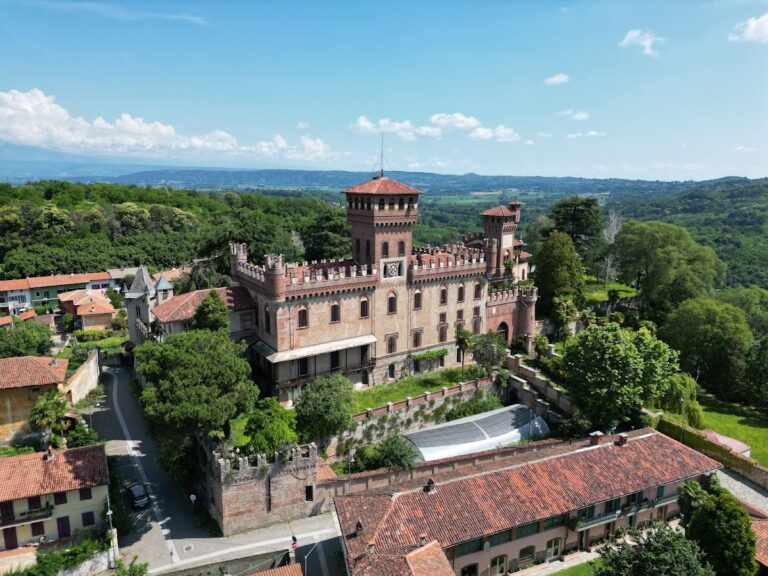
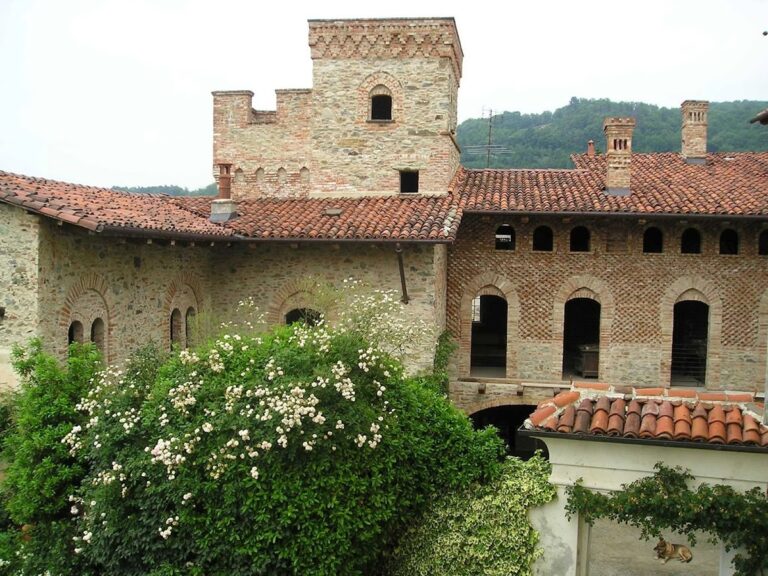
The Castello di Foglizzo presents a complex of brick and stone buildings arranged to reflect its medieval and later Renaissance phases. The most prominent surviving medieval element is the northwest wing, dating from the 14th century, notable for its brick corbels—projecting supports that once helped defend the structure and provide architectural strength. This wing stands as a visible reminder of the castle’s original defensive purpose.
On the northeast side, a three-story building was added in the 15th century. It originally included a loggia, or open gallery, which was later enclosed during 19th-century renovations. This enclosure transformed the space to better suit evolving residential needs while preserving the original structure’s vertical emphasis and layout.
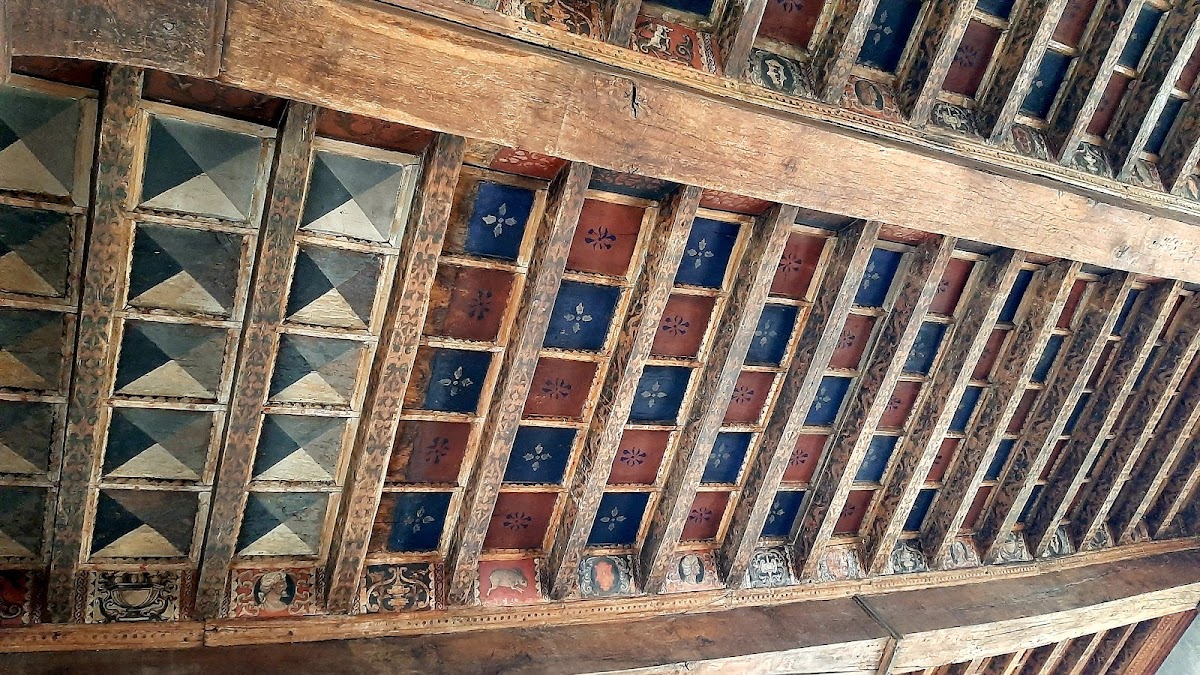
The 16th-century conversion into a Renaissance residence introduced more refined interior spaces, including a large hall designed for gatherings, which today serves as the municipal council chamber. The hall and other interior rooms are richly decorated with frescoes, coats of arms, and emblematic motifs, alongside coffered and vaulted ceilings adorned with painted embellishments. These artistic features illustrate the shift from fortress to noble dwelling.
A southern wing was built during the 17th century, incorporating two older medieval towers. This addition helped to expand the living quarters while blending older defensive elements into a more palatial setting, reflecting the castle’s changing function over time.
Formerly, the castle was associated with a “ricetto,” a fortified village shelter comprising houses built against the defensive wall to protect inhabitants during threats. This feature was removed in the 18th century and replaced by a garden, closing off one chapter of the castle’s communal defense system.
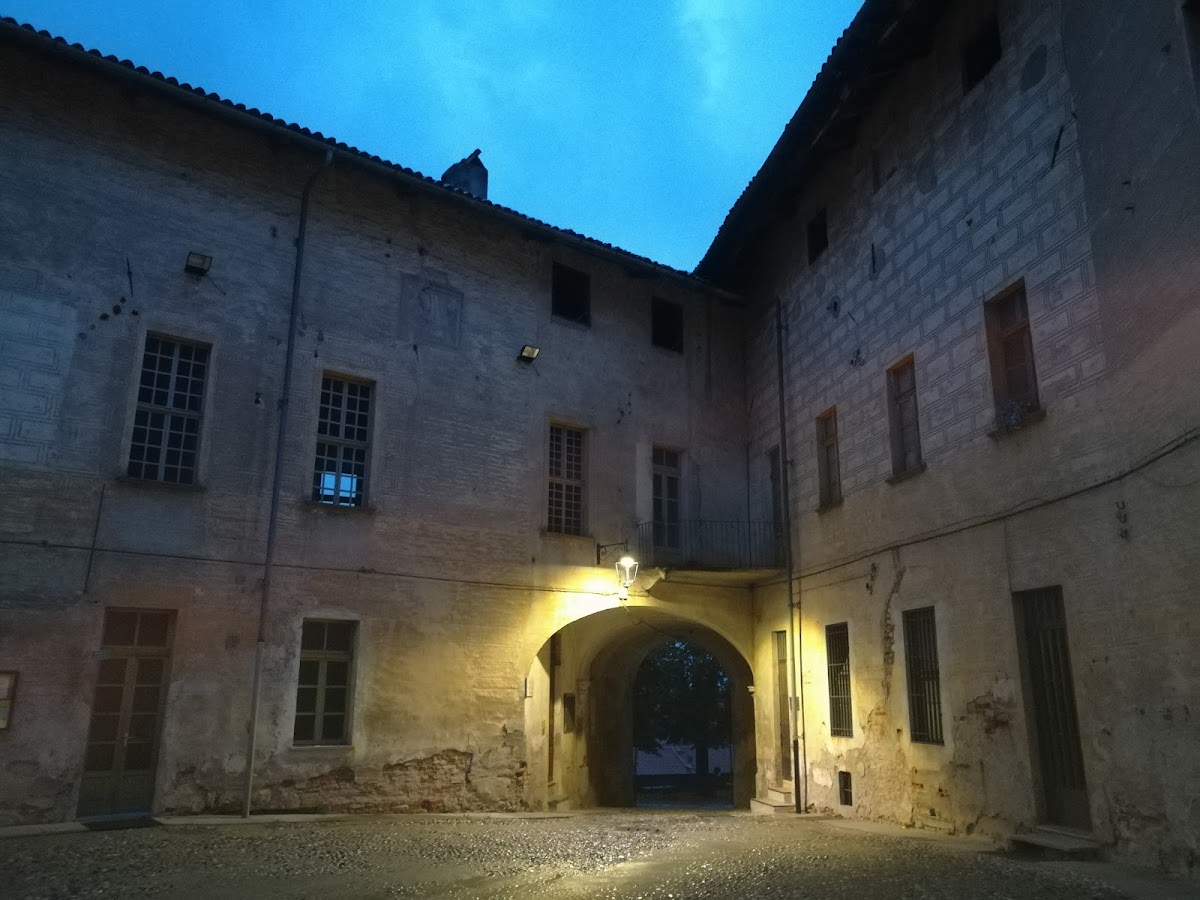
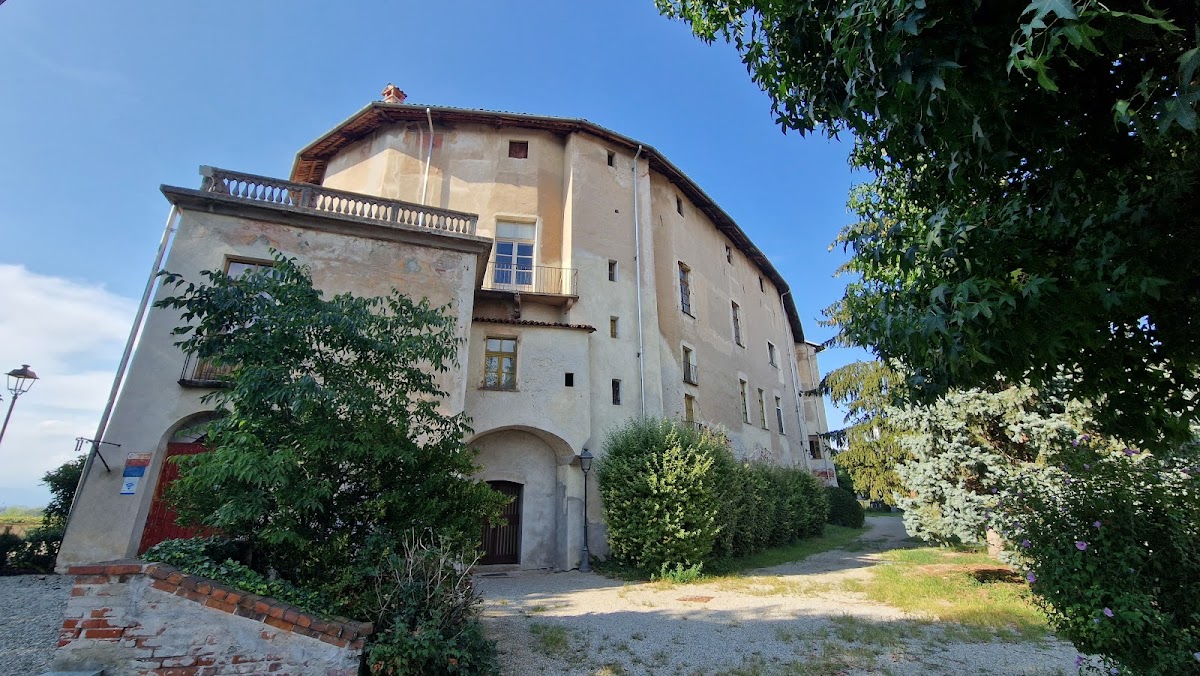
Today, the castle’s courtyard and interior spaces remain preserved, with photographic documentation illustrating the castle’s layered architectural history and decorative elements. The balance of brick and stone construction and Renaissance detailing capture the evolution of Foglizzo Castle from a medieval fortress into a noble countryside residence and, later, a civic building.
Nearby sites