Castello di Moncrivello: A Medieval Castle and Noble Residence in Italy

Site at a Glance
- Rating
- 4.3
- Popularity
- Low
- Country
- Italy
- Primary era
- Medieval
- External website
- Open
- Eras represented
- Medieval
- Civilizations
- Duchy of Savoy, Holy Roman Empire
- Site type
- Domestic
- Remains
- Castle
On this page9 sections
History
Castello di Moncrivello is a medieval castle in Italy whose history is traced to around AD 1000. By the thirteenth century, Moncrivello had a fortified stronghold that had been sold to the commune of Vercelli but remained under the jurisdiction of the Diocese of Vercelli, the ecclesiastical authority governing the area.
Medieval lordship and revolt
In 1243, the castle passed to the Marquises of Monferrato. The Bishops of Vercelli reconquered it during the fourteenth century and granted it as a fief to the Fieschi counts, members of a powerful Genoese noble family. Their control became unpopular, and in 1399 the inhabitants of the village revolted, seized the stronghold, and pledged allegiance to Amadeus VIII, Duke of Savoy.
At that time, the fortress served primarily a military purpose. Its allegiance to Amadeus VIII, a fifteenth-century Duke of Savoy, placed it within the political orbit of the Savoyard state.
Yolande of France and the Savoyard court
During the fifteenth century, Yolande of France, also known as Yolande of Savoy or Yolande of Valois, transformed the fortress into a noble residence. Yolande was a duchess of Savoy, the wife of Amadeus IX, Duke of Savoy, and the daughter of Charles VII, King of France. Castello di Moncrivello became her preferred residence, and she died there in 1478.
After the renovation was completed, the castle hosted the wedding of Charles I of Savoy and Bianca of Monferrato. Bianca later became regent of the Savoyard state after she was widowed in 1490 at the age of eighteen. Charles III of Savoy, known as “the Good,” subsequently gave the castle to his wife, Beatrice of Portugal.
Military conflict, decline, and restoration
The castle’s period of greatest splendour ended under Beatrice. Conflicts between France and Spain brought the building into the hands of military men, and during the seventeenth century several Piedmontese noble families contested its possession. In 1692, it passed definitively to the Del Carretto family.
The Del Carretto family retained the castle until a devastating fire dated to 1817 or 1825. A long period of decline followed. Castello di Moncrivello was officially recognized as a national monument in 1908. Private owners reconstructed it in 1972, followed by restoration in the late twentieth century. It is now a restored private residence used for cultural initiatives, events, and private ceremonies.
Remains
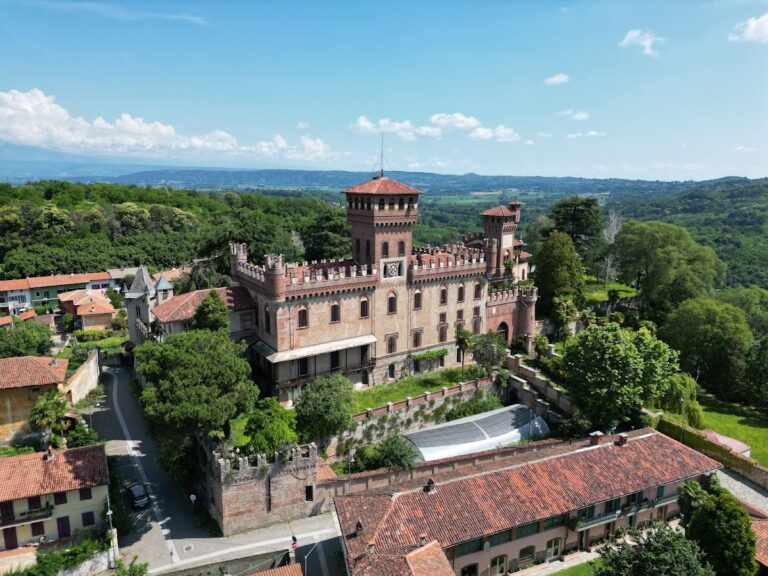
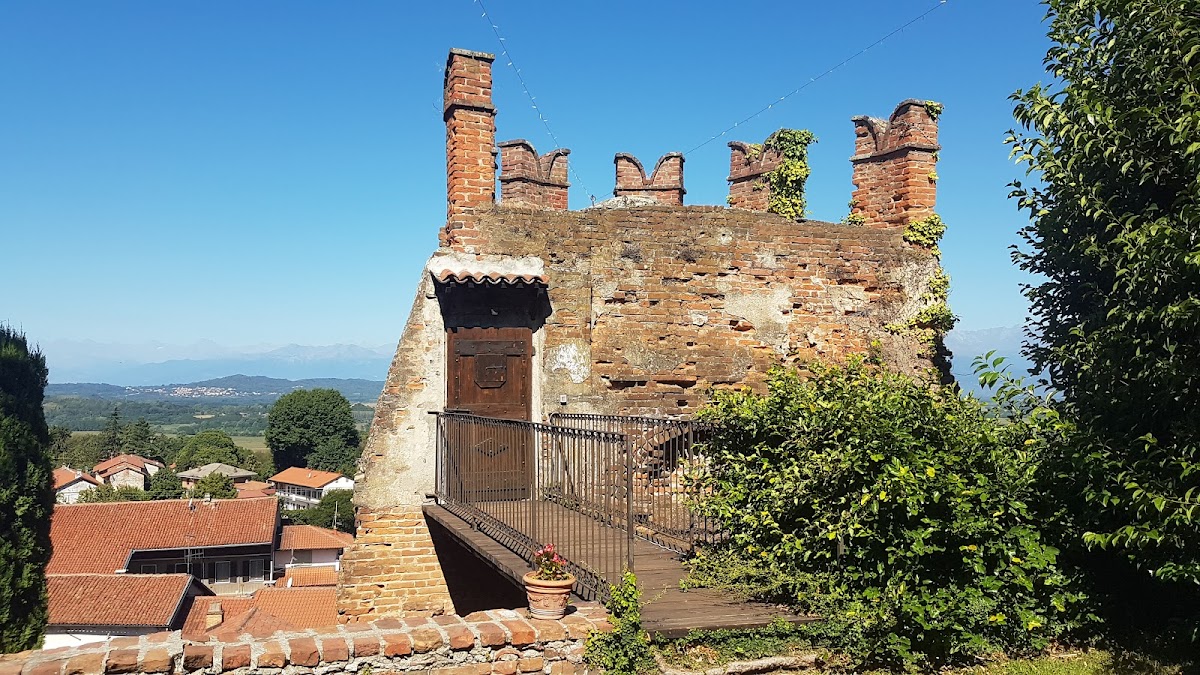
The surviving castle occupies an area of 500 square metres and combines elements of the medieval fortress with features introduced when it became a noble residence. Its large quadrangular tower forms the principal surviving medieval component, while the enclosing walls and interior features preserve evidence of the building’s defensive and residential phases.
Medieval defensive structures
Quadrangular tower
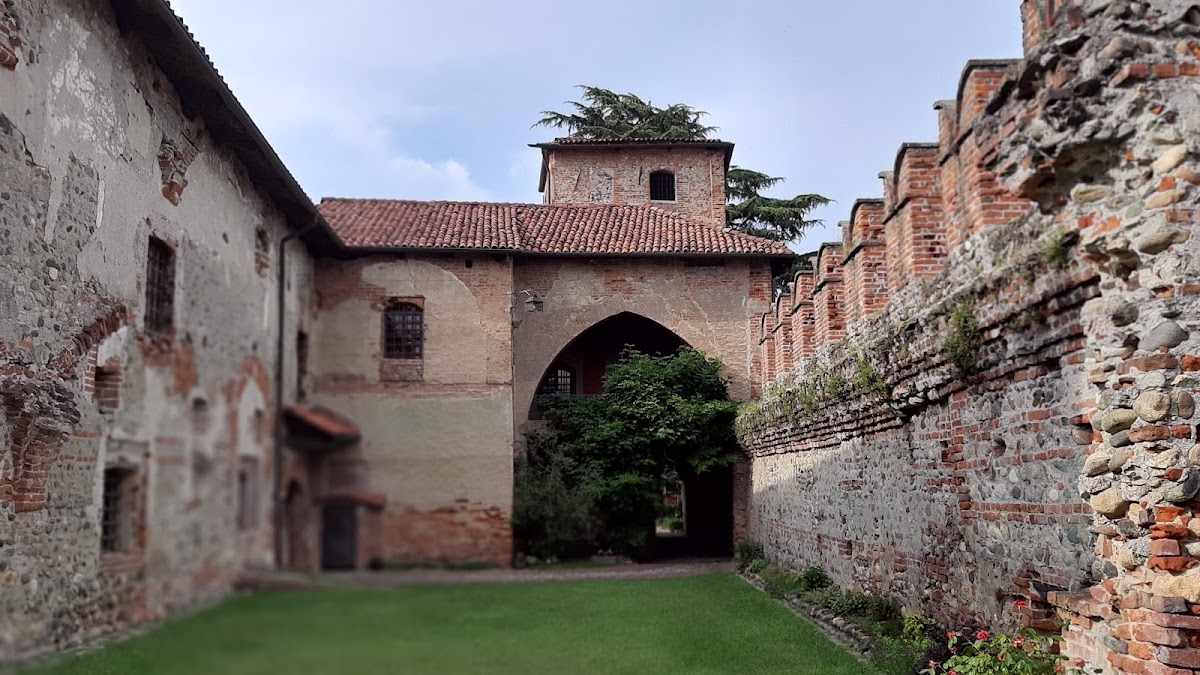
The large quadrangular tower belonged to the medieval fortress. Terracotta ornament decorates its windows, and machicolations, projecting openings used to observe or attack enemies below, reinforce its defensive character. A carriage passage runs through the tower and leads into the castle courtyard.
Enclosing walls
The enclosing walls are crowned with swallowtail merlons, battlements with forked, V-shaped tops associated with Ghibelline medieval architecture. These features contribute to the surviving defensive outline of the castle.
Noble-residence interiors
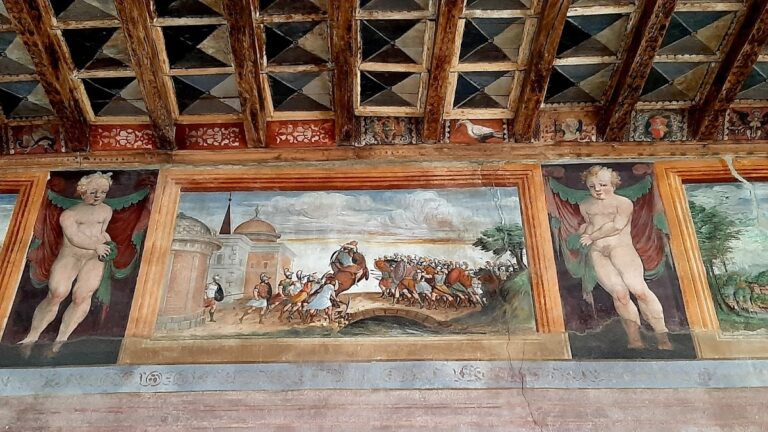
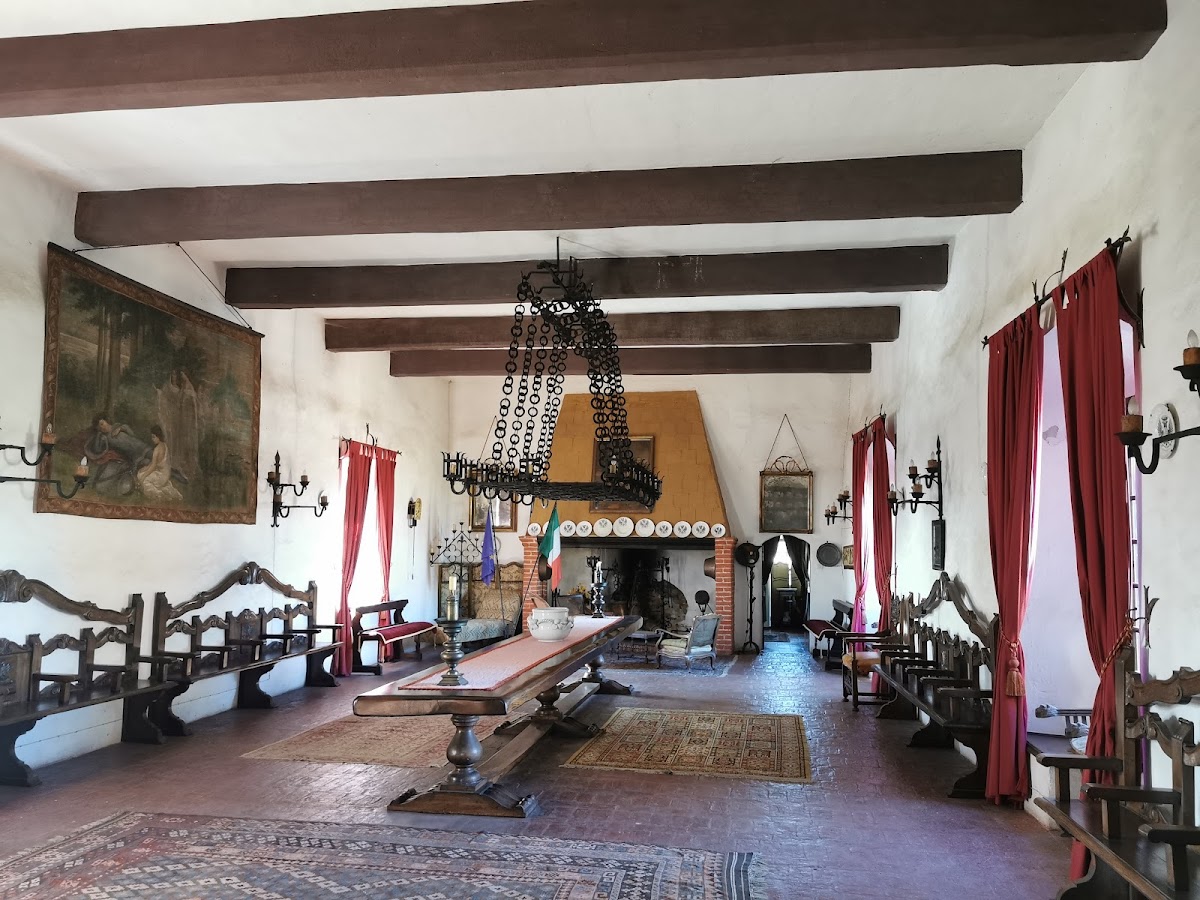
The fifteenth-century residential transformation introduced a helical staircase, coffered ceilings, and fireplaces decorated with terracotta. These features reflect the change from a stronghold serving primarily military purposes to a residence suited to a noble court. The castle remains in a restored condition.