Çandarlı Castle: A Historic Fortress in Turkey

Visitor Information
Google Rating: 4.5
Popularity: Medium
Google Maps: View on Google Maps
Official Website: www.izmir-dikili.bel.tr
Country: Turkey
Civilization: Unclassified
Remains: Military

History
Çandarlı Castle is located in the town of Çandarlı within the Dikili district of modern-day Turkey. Its origins date back to the 6th century BC when it was built to protect the ancient port settlement known as Pitane. Pitane was an important maritime center during the Kingdom of Pergamon, which ruled the region between 282 and 129 BC.
After the era of the Kingdom of Pergamon, the area continued to hold strategic importance as a port through successive periods, including Roman and Byzantine rule. During these times, the site maintained its role in regional trade and defense, preserving its military significance along the coast.
In the 14th century, the castle underwent significant transformation following the Genoese capture of the nearby city of Phocaea (present-day Foça). The Genoese, a formidable maritime power from about the 12th to the early 19th century, reshaped the castle’s design, indicating their influence over regional fortifications during their dominance.
By the 15th century, the castle had fallen into ruin. With the area’s incorporation into the Ottoman Empire under Sultan Murad II, the grand vizier Çandarlı Halil Pasha initiated a rebuilding project to restore the fortress. This reconstruction returned the castle to a functional defensive state, marking its integration into the Ottoman defensive network along the Aegean coast.
In the 21st century, starting in 2009, a comprehensive restoration effort was carried out to preserve and stabilize the structure. This work was completed in 2014. Recognizing its layered history, Çandarlı Castle was included on the UNESCO World Heritage Tentative List in 2013 as part of a collection of castles and walled settlements linked to Genoese trade routes between the Mediterranean and Black Seas.
Remains
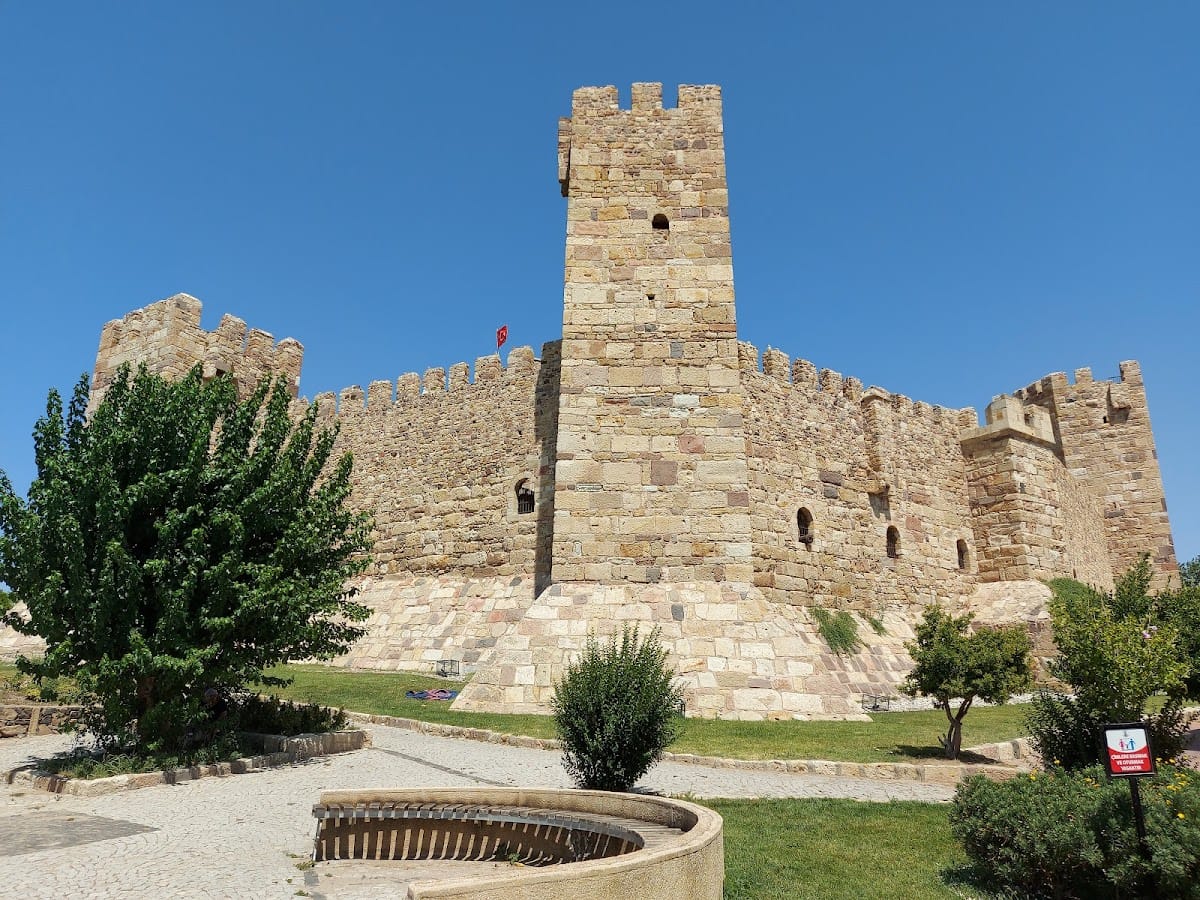
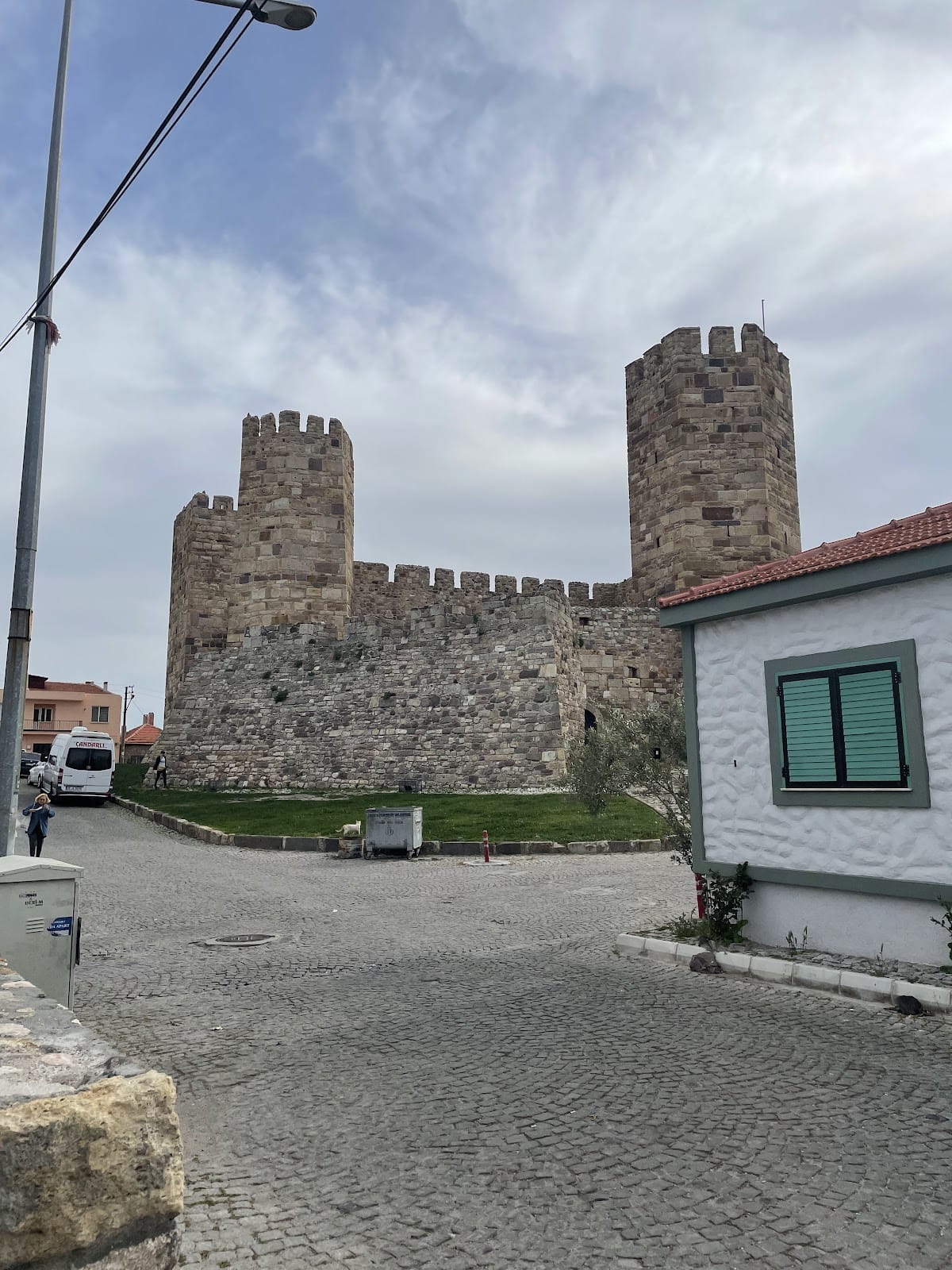
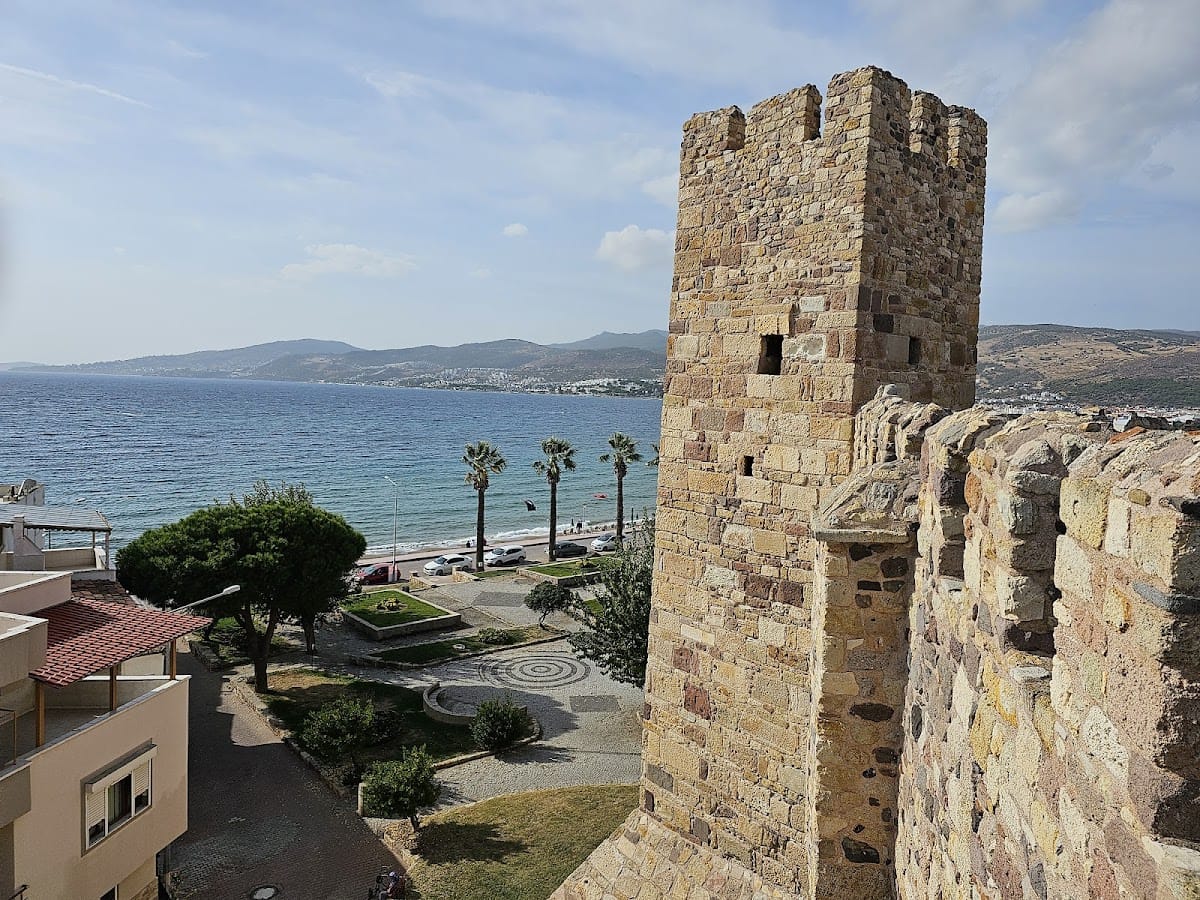
The castle occupies a rocky terrain sloping from east to west near the narrow land connecting the peninsula on which it stands. Covering roughly 2,230 square meters, its compact layout reflects considerations of the natural landscape and defensive needs. The fortress’s perimeter is fortified by battlemented walls designed to provide protection and vantage points for defenders.
Five towers punctuate the castle’s walls, serving as lookout and defense points that enhance the overall security of the fortification. The main gate stands out with a noteworthy inscription featuring faint verses from the Al-Fath Surah, a chapter of the Qur’an related to conquest, highlighting a religious and cultural aspect of the castle’s historic occupants.
Excavations within the courtyard have revealed remains from the Byzantine period, including wall fragments and floors that exist at several different levels, suggesting multiple phases of construction or repair over time. Among these finds is a cistern used for storing water, dating from between 667 BC and 330 AD, which underscores the castle’s long-standing role in sustaining its occupants through various historical eras.
Recent restoration work has strengthened the castle’s physical condition, preserving its historical elements while allowing detailed study of its structure. Many features stand in good repair due to these efforts, providing insight into the layered architectural history spanning ancient, medieval, and early Ottoman periods.
Nearby sites