Archaeological Museum of Mytilene: A Museum of Lesbos’s Ancient Heritage


Site at a Glance
- Rating
- 4.5
- Popularity
- Low
- Country
- Greece
- Primary era
- Classical
- Eras represented
- Stone Age, Bronze Age, Classical
- Civilizations
- Ancient Greek, Roman
- Site type
- Museum
On this page6 sections
History
The Archaeological Museum of Mytilene in Greece was established in 1935, when the American School of Classical Studies, a scholarly institution devoted to archaeological and historical research in Greece, financed its first building. The museum’s collections trace the history of Lesbos from the Neolithic period, the later prehistoric era associated with settled communities and early pottery, through the late Roman period. Its creation provided a permanent setting for archaeological material from across the island.
From the first museum to the Bournazos mansion
Geological problems weakened the original museum building in 1963, forcing the temporary relocation of its collections. In 1965, the antiquities were transferred to the Bournazos family mansion, a two-storey villa built in 1912. The Greek state acquired the property that year, and in December the transfer was advanced by Ioannis Kontis, then Director-General of Antiquities.
Vasileios Petrakos, then ephor of antiquities, a senior regional official responsible for archaeological heritage, established an exhibition in the former mansion in 1967. The display was reduced to two rooms in 1974. After the Ministry of the Aegean occupied the building in 1985, the antiquities were moved to its basement. The building returned to the Ministry of Culture in August 1990, and the exhibition was restored there.
Expansion and modern museum use
Construction of a new museum building began in 1984 and ended in 1995. The project responded to the growing number of finds from excavations on Lesbos. The old building was renovated in 1990, and its present exhibition was established in 1991. A permanent exhibition in the new building opened in 1999, concentrating on Hellenistic and Roman Lesbos. The Hellenistic period followed the conquests of Alexander the Great, while the Roman period refers to the era when Lesbos formed part of the Roman world.
The museum has since operated through two buildings a short distance apart, near Mytilene Castle and the harbour. The old building has been closed since 2014 because of severe deterioration. Its exhibition covers the island’s history from the Neolithic period to the Roman era, while the newer museum examines political, economic, religious, and everyday life from the Hellenistic period through the Roman period. The new building also serves as a cultural and intellectual centre.
Remains
The old museum mansion
The old museum occupies the former Bournazos family mansion on Argyris Eftaliotis Street. Designed by the Smyrna-born architect S. Vafeiadis, the two-storey villa was built in 1912 in the Neoclassical style. Its rooms organize material from different periods of Lesbos’s past.
The lower floor contains Neolithic and Bronze Age objects, including material from the so-called Cave of Saint Bartholomew and finds from the Bronze Age settlement at Thermí. The upper floor presents objects dating approximately from the tenth century BC to the fourth century AD, chiefly from excavations at ancient Mytilene and Antissa and from private collections. Figurines, jewellery, and ceramic objects form part of these displays.
The courtyard brings together sculptures, large-scale sculptures, architectural members, inscriptions, funerary stelae, altars, and other architectural elements. A funerary stela is an upright stone monument associated with burial or commemoration. The courtyard also contains distinctive Aeolian capitals from the Archaic temples of Klopédi. These capitals, associated with the Aeolian region of the northeastern Aegean, developed before the widespread adoption of the classical Greek orders.
The new museum building
The new museum is a multi-level structure in the Kioski area, designed specifically for museum use. Its facilities include permanent-exhibition spaces, rooms for temporary exhibitions, archaeologists’ offices, storage areas, a conference room, and conservation facilities with laboratories for ceramics and metals.
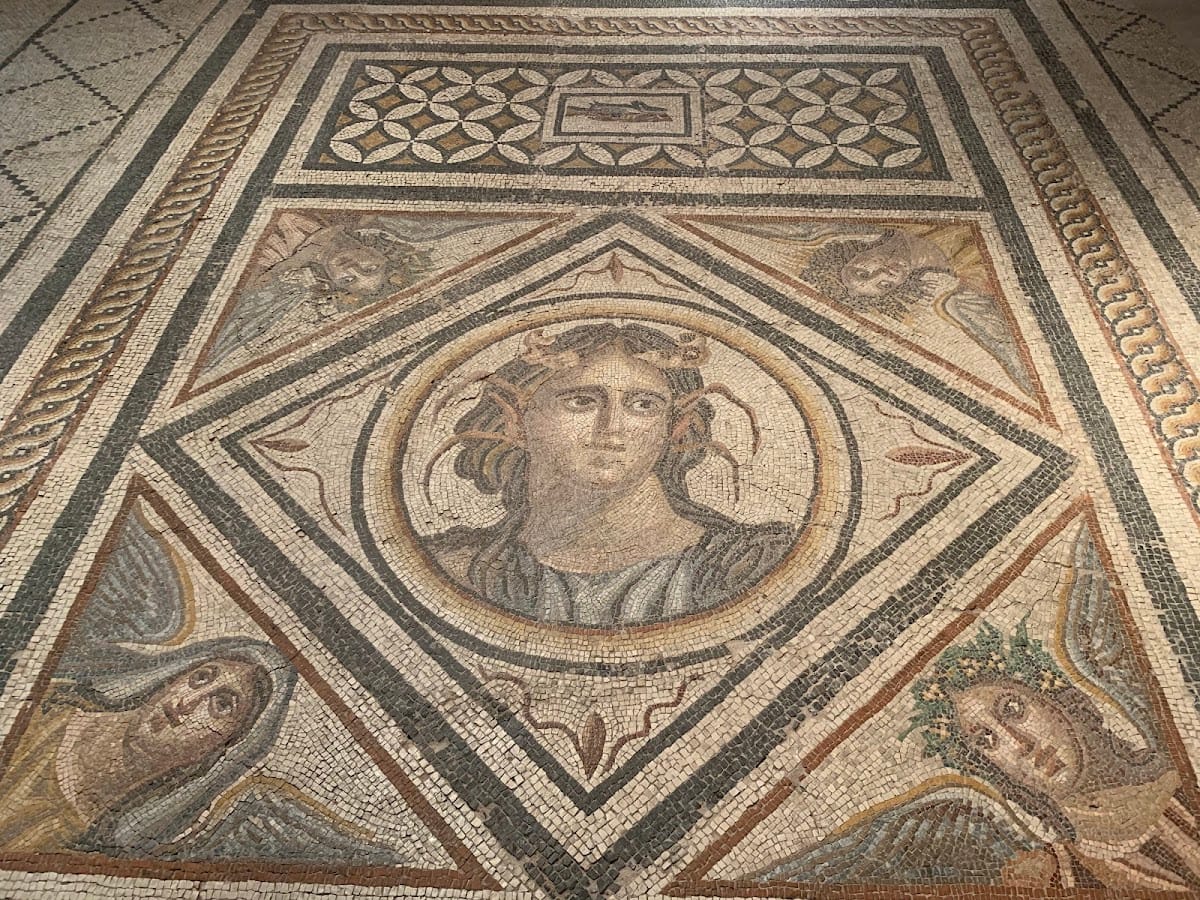
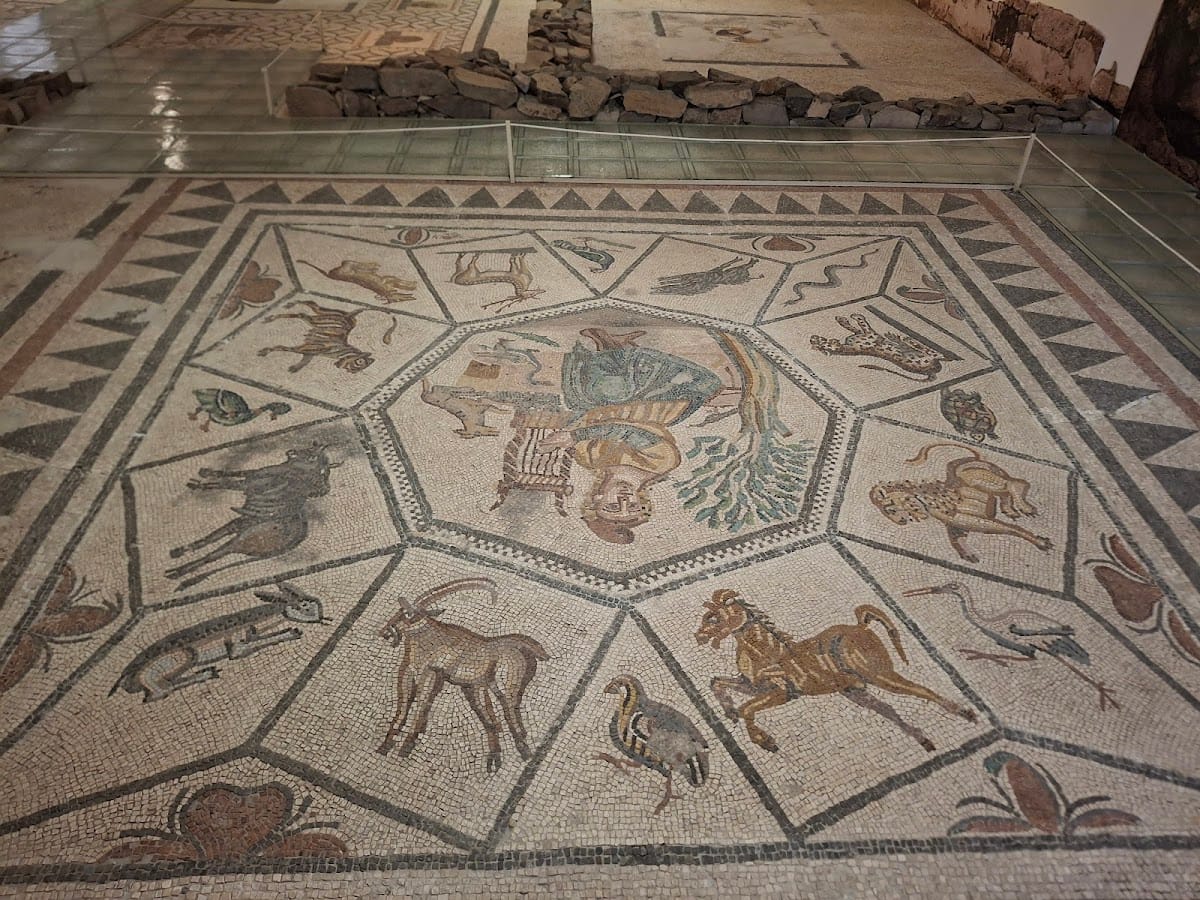
Its permanent exhibition contains mosaic pavements, wall paintings from Hellenistic and Roman buildings, sculptures, and varied terracotta objects. Roman-period floor mosaics and other finds come from the so-called Villas of Menander, Telephus, and Euripus. The collections also include funerary and votive reliefs, sculptures of deities and notable figures, and objects associated with Roman-period symposia. Votive reliefs are carved offerings dedicated to a deity or sacred place, while a symposium was a formal ancient gathering centered on shared drinking, conversation, and entertainment.
The exhibition presents evidence for religious practices, daily life, and economic activity on Lesbos from the third century BC to the fourth century AD. Through these architectural remains, artworks, inscriptions, and everyday objects, the building provides the physical setting for interpreting the island’s Hellenistic and Roman history.