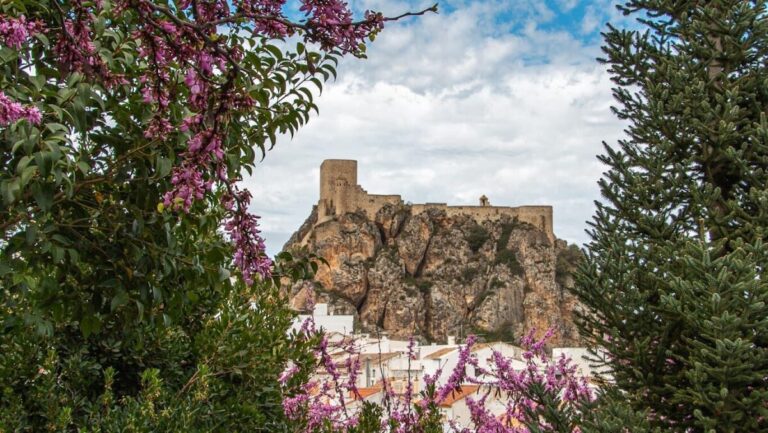
Acinipo: An Ancient Roman Settlement Near Ronda, Spain


Visitor Information
Google Rating: 4.3
Popularity: Medium
Google Maps: View on Google Maps
Official Website: www.juntadeandalucia.es
Country: Spain
Civilization: Roman
Remains: City

History
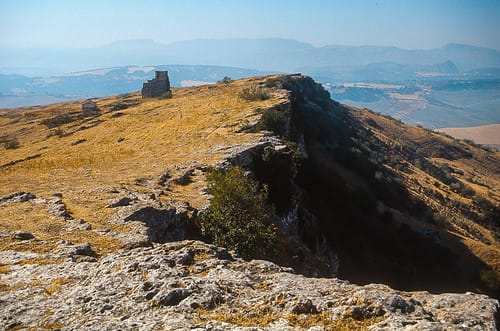
Acinipo is an ancient settlement built by the Romans near the modern town of Ronda in Spain. The site occupies a prominent limestone elevation that offered strategic advantages and fertile land, attracting human occupation well before Roman times.
Evidence shows that people lived at Acinipo from as early as the Neolithic period, with archaeological finds from the Copper and Bronze Ages. In these early phases, inhabitants constructed circular huts typical of protohistoric communities, marking a long sequence of habitation through prehistoric times into the Roman era.
The city’s main development took place during the Roman period from the late 1st century AD onwards. Acinipo flourished as a fortified town granted the uncommon right to mint its own coins, a sign of local autonomy and economic activity. This period saw large-scale Roman construction projects that shaped much of the archaeological footprint visible today.
Historical references to Acinipo appear in classical sources such as the geographer Ptolemy and the naturalist Pliny the Elder. The city’s name is confirmed on coins and inscriptions, as well as in records from the Council of Iliberri, establishing its recognized status in antiquity. Academic interest in the site dates back to the 16th century, with the Roman theater identified in 1650 by the scholar Fariña del Corral.
During Roman times, Acinipo coexisted with the nearby city of Arunda, now modern Ronda. Contrary to earlier assumptions, Acinipo was not Arunda’s predecessor but rather a contemporary settlement. In the 3rd century AD, the city began to decline. By the 4th century, its importance waned as Arunda rose to dominance in the region.
Archaeological findings of ceramics suggest that Acinipo continued to be inhabited until approximately the 7th century, when it was eventually abandoned. Over the centuries, the site became known locally as “Ronda la Vieja,” meaning Old Ronda, a name that reflects its historical connection with the neighboring city.
Remains
Acinipo is built on a steep hillside, which determined a distinctive stepped or terraced layout for its buildings. This approach allowed the settlement to adapt to the natural slope of the limestone outcrop, integrating construction with the landscape.
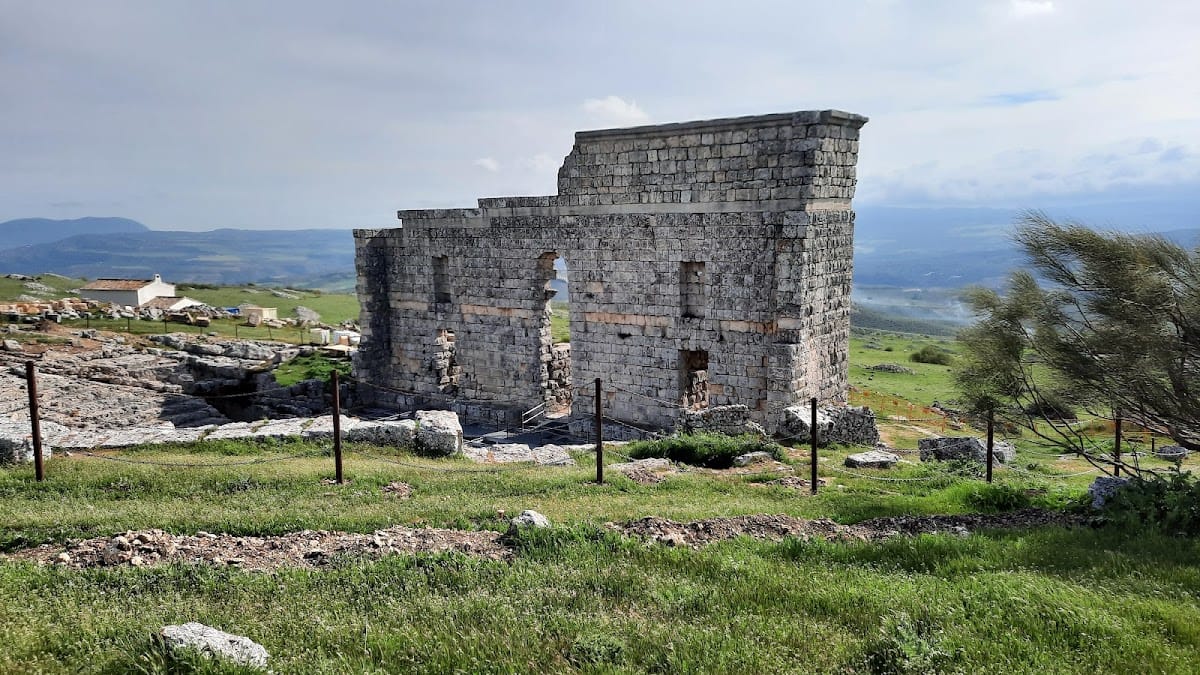
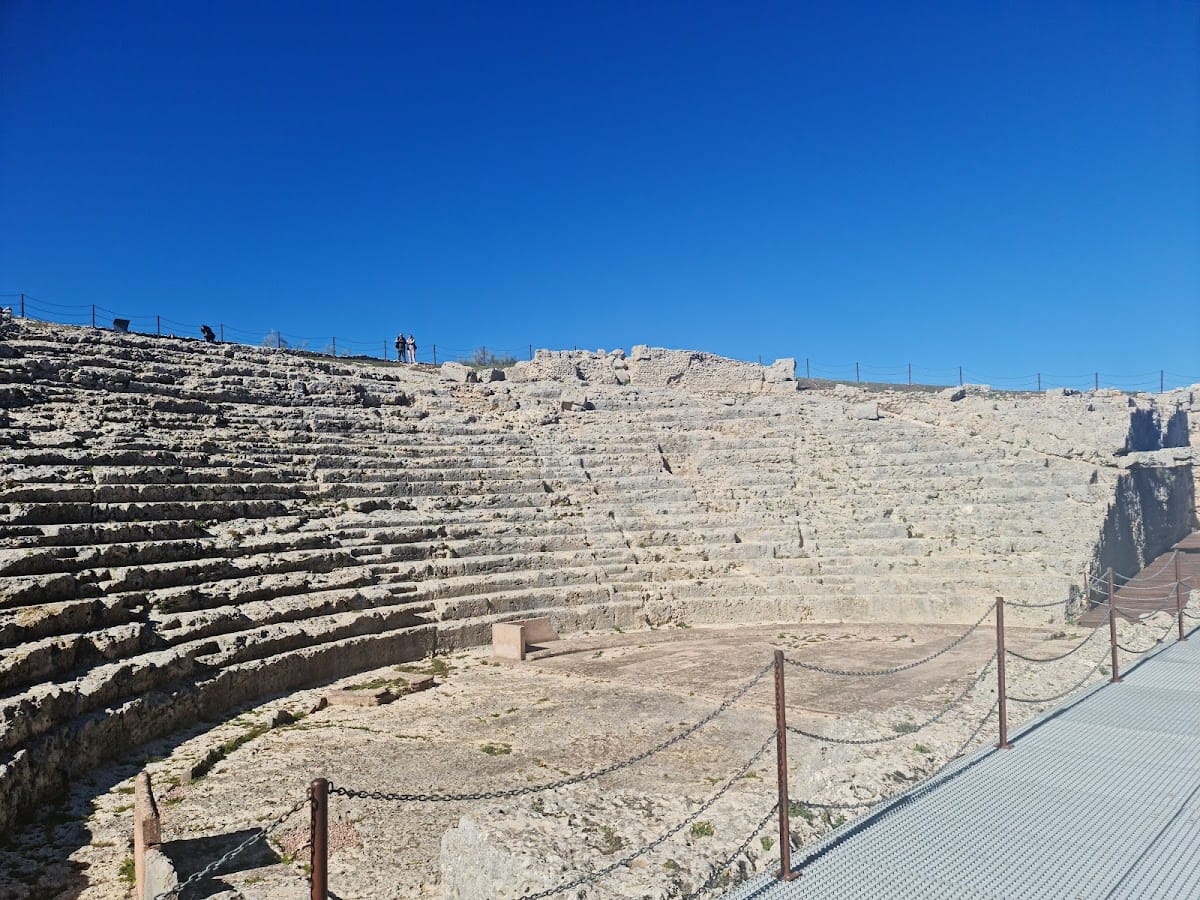
The most well-preserved monument is the Roman theater, designed to use the natural incline for its seating area. The cavea, or seating tiers, were carved directly into the rock, while the stage wall was assembled using stones left from the excavation of these seats. Although many decorative elements have not survived, the stage wall itself remains largely intact. Originally, the theater included two side entrances, known as vomitoria, which permitted audience access. It was also surrounded by a perimeter wall that no longer stands.
Another important feature within the lower section of the city is the thermal baths dating from the 1st century AD. Recent excavations have revealed key spaces such as the caldarium, or hot bath, and the tepidarium, the warm bath, alongside water channels and standing columns. These components indicate a sophisticated bathing complex, typical of Roman social and hygienic practices.
Fragments of a city wall can still be traced around the settlement, with preserved surface remains outlining the fortification’s extent. The wall included circular towers, of which only a minimal section of one tower rises above the current ground level, hinting at the town’s defensive measures.
Numerous coins discovered on site provide physical evidence of Acinipo’s authority to produce its own currency. These finds complement inscriptions and confirm the city’s role as an active administrative and economic center during the Roman era.
Nearby sites