Ocuri Archaeological Site: A Roman Settlement in Spain

Site at a Glance
- Rating
- 4.9
- Popularity
- Medium
- Country
- Spain
- Primary era
- Classical
- External website
- Open
- Eras represented
- Classical
- Civilizations
- Roman
- Site type
- City
On this page8 sections
History
Ocuri Archaeological Site is a Roman settlement in Spain, located at Salto de la Mora in Ubrique, Cádiz Province, Andalusia. Its position above natural routes toward Benaocaz, the Manga de Villaluenga, and the southern exit from the Sierra suggests that it was probably a municipium, a town incorporated into the Roman state with its own civic administration and often Roman citizenship for its inhabitants. This strategic setting indicates that Ocuri was a settlement of considerable importance.
Occupation Before and After Rome
The layers at Salto de la Mora extend from the Bronze Age through the period of al-Andalus, the name for Muslim-ruled territories in the Iberian Peninsula during the medieval period. They show that several cultures used the hill before and after the Roman settlement. Coins minted at Ocuri also indicate that the town possessed a local mint.
Rediscovery and Archaeological Work
Juan Vegazo is regarded as the first authentic discoverer of the Roman site in the Ubrique area. In 1793, this wealthy farmer bought the land containing the settlement and excavated it in the hope of finding the “Pompeii of Ocuri.” He wrote down his discoveries, but most of the objects he recovered, including valuable statues and coins, were later lost. His work nevertheless brought the remains to wider attention.
Manuel Cabello Janeiro, a schoolteacher, played a fundamental role in the site’s recognition through his work in the 1970s. Excavations by the archaeologist Salvador de Sancha Fernández showed that Salto de la Mora had been occupied by several cultures. An inscription associated with Ocuri is preserved in the Museum of Cádiz.
Protection and Interpretation
The Archaeological Route of the White Villages project brought consolidation, interpretation, and improvements to access, including an interpretation centre, fencing, and signs identifying the structures. The site has also suffered vandalism. Since 2022, Ocuri has held the Spanish designation bien de interés cultural, a formal status for a protected site or cultural property recognized for its heritage value.
Remains
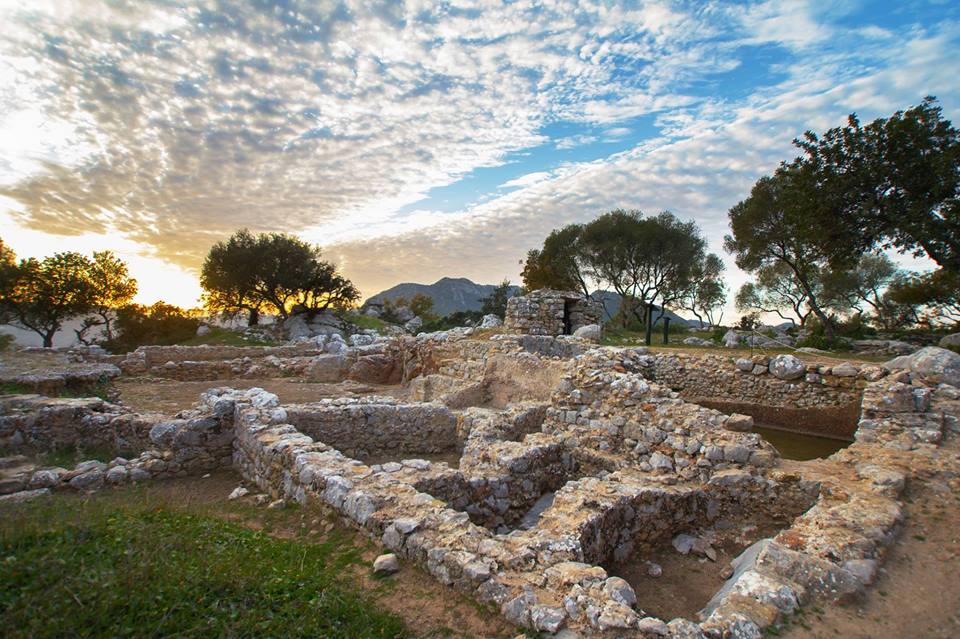
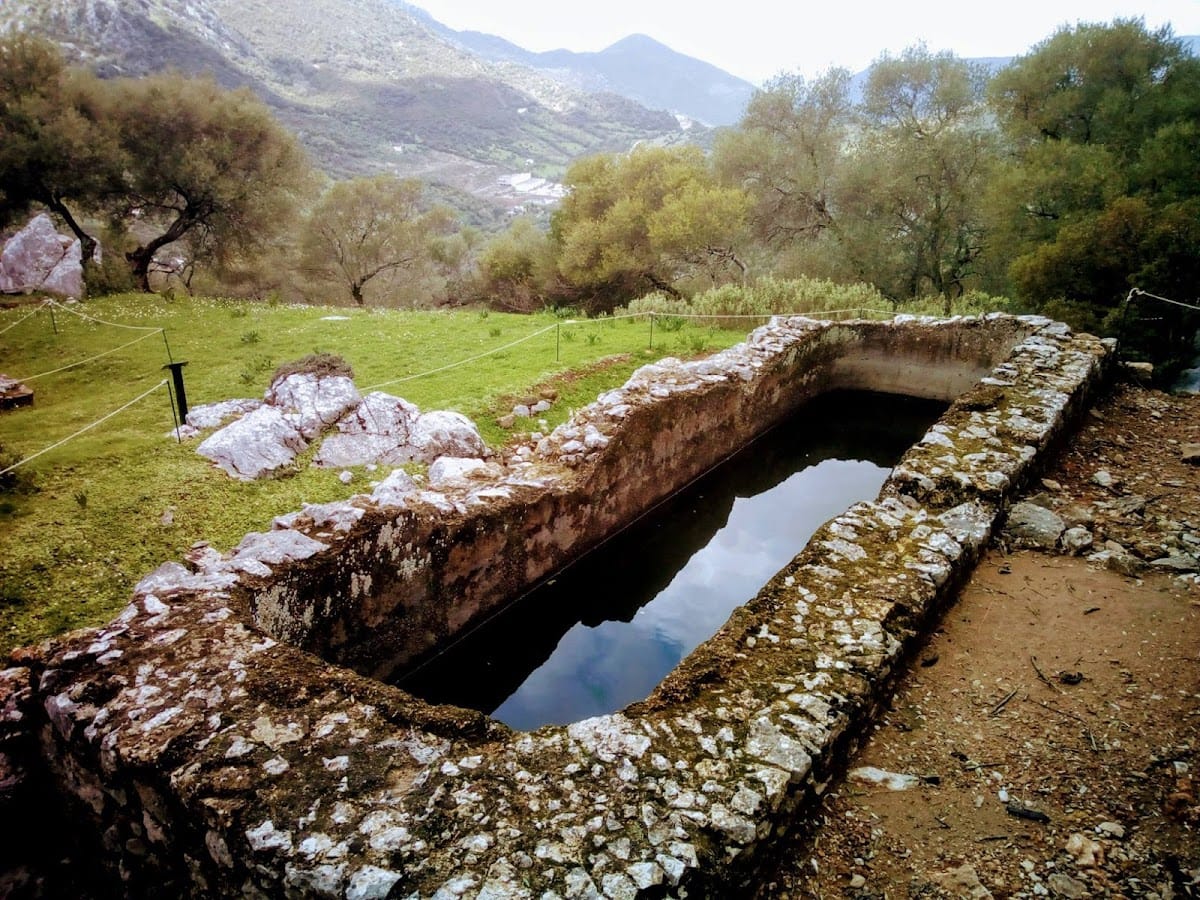
Ocuri occupies the hill of Salto de la Mora, whose position commands the natural passage toward Benaocaz and the Manga de Villaluenga, as well as the route south from the Sierra. The surviving settlement includes traces of the city wall and a group of public, domestic, and funerary structures. Among the principal remains are a so-called mausoleum, a cyclopean wall built from very large, roughly fitted stones, extensive baths, the forum, and several cisterns belonging to private houses.
Public and Domestic Structures
The baths form one of the site’s extensive surviving features, while the domestic cisterns preserve evidence of water storage in private houses. Both the baths and the household cisterns have been included in the “Know Your Springs” inventory project. The forum remains identifiable as part of the city’s public area. A wild olive tree more than 700 years old grows there and is listed in the Catalogue of Singular Trees and Groves of Cádiz.
Entrance and Funerary Building
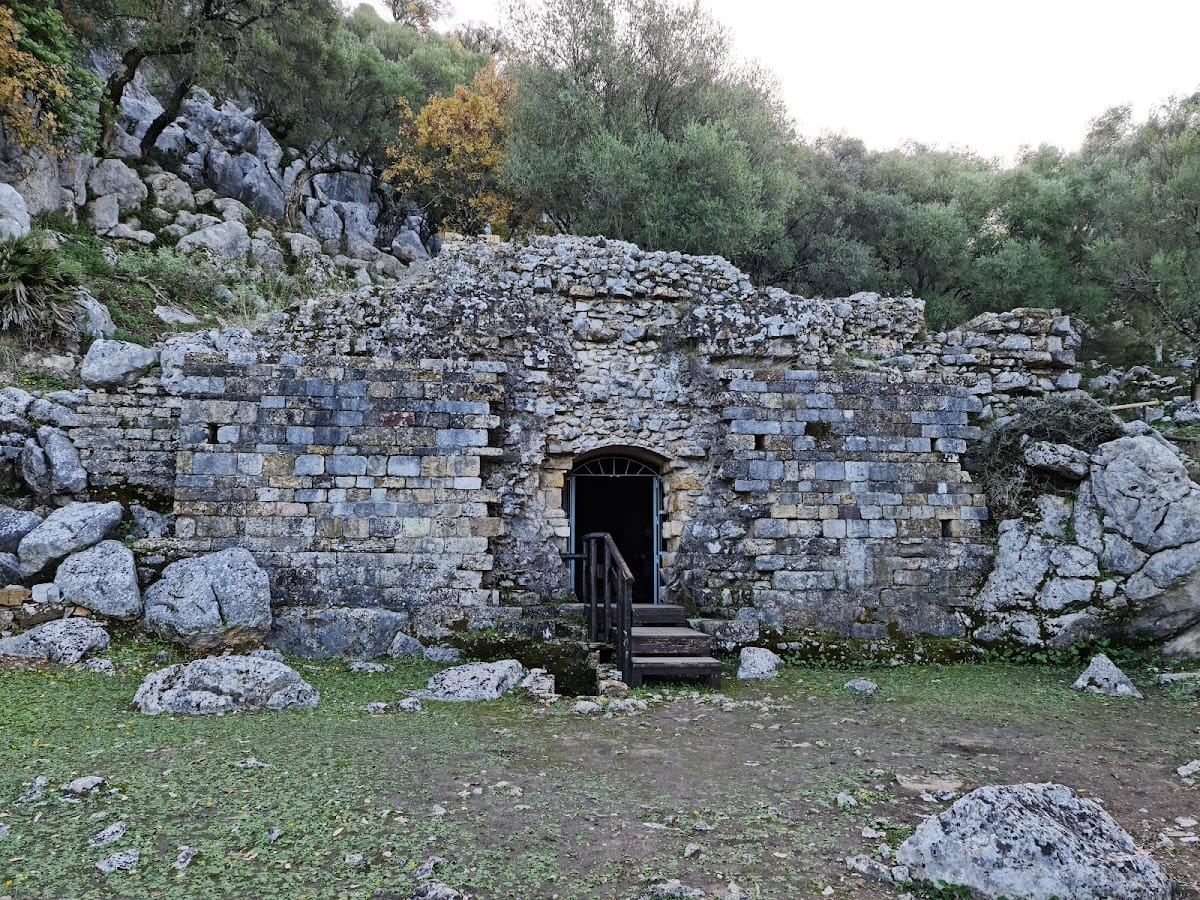
Beside the main entrance stands the building known as the Columbarium. A columbarium is a funerary structure containing niches for cremation urns or other burial remains. This building has large recesses in its walls together with smaller niches. The neoclassical architect Miguel de Olivares Guerrero first drew its plans in 1801.
Coins and Inscription
Coins found at Ocuri provide evidence that the settlement minted money locally. Most of the coins recovered during Vegazo’s excavations were lost. The surviving inscription associated with the site is preserved at the Museum of Cádiz.