Castle of Zahara de la Sierra: A Nasrid Frontier Fortress in Spain

Site at a Glance
- Rating
- 4.6
- Popularity
- Medium
- Country
- Spain
- Primary era
- Medieval
- External website
- Open
- Eras represented
- Medieval
- Civilizations
- Crown of Castile, Nasrid
- Site type
- Military
- Remains
- Castle
On this page9 sections
History
The Castle of Zahara de la Sierra is a Nasrid-period fortress in Zahara de la Sierra, Spain, built in the fifteenth century by the Nasrids, the Muslim dynasty that ruled the Kingdom of Granada, the last Islamic kingdom in the Iberian Peninsula. Its position placed it on the frontier of Granada and made it part of the struggles between Nasrid and Castilian powers.
Frontier encounters and changing rule
In 1282, the castle hosted a meeting between Alfonso X of Castile and León, known as Alfonso the Wise, and Abu Yusuf Yaqub ibn Abd al-Haqq, sultan of the Marinids, a North African Muslim dynasty involved in medieval Iberian affairs. The meeting took place before the fortress’s fifteenth-century construction date and reflects Zahara’s position within a contested frontier landscape.
Juan II of Castile conquered Zahara in 1407, bringing the site under Christian control. The town and fortress returned to Nasrid rule in 1481, but Christian forces captured them definitively two years later, in 1483. Rodrigo Ponce de León, Marquis of Cádiz, took Zahara for Isabella I of Castile and Ferdinand II of Aragon, the Catholic Monarchs whose joint rule later completed the Christian conquest of Granada in 1492.
The emir of Granada sacked the town in 1410. In response to that event, the infante Fernando, a member of the Castilian royal family who later became Ferdinand I of Aragon, captured Antequera. Zahara’s frontier role therefore formed part of wider military campaigns between the Christian kingdoms and Granada.
Later military use and protection
The castle was used militarily for the last time during the Spanish War of Independence, the early nineteenth-century conflict in which Spain resisted Napoleonic French rule. French forces commanded by General Soult occupied the fortress, while the Spanish offensive was led by Pedro de Pineda.
The castle now forms part of the Zahara Archaeological Site. Spain has protected it as a Monument of Cultural Interest since 1985, preserving its place within the historical landscape of Zahara de la Sierra.
Remains
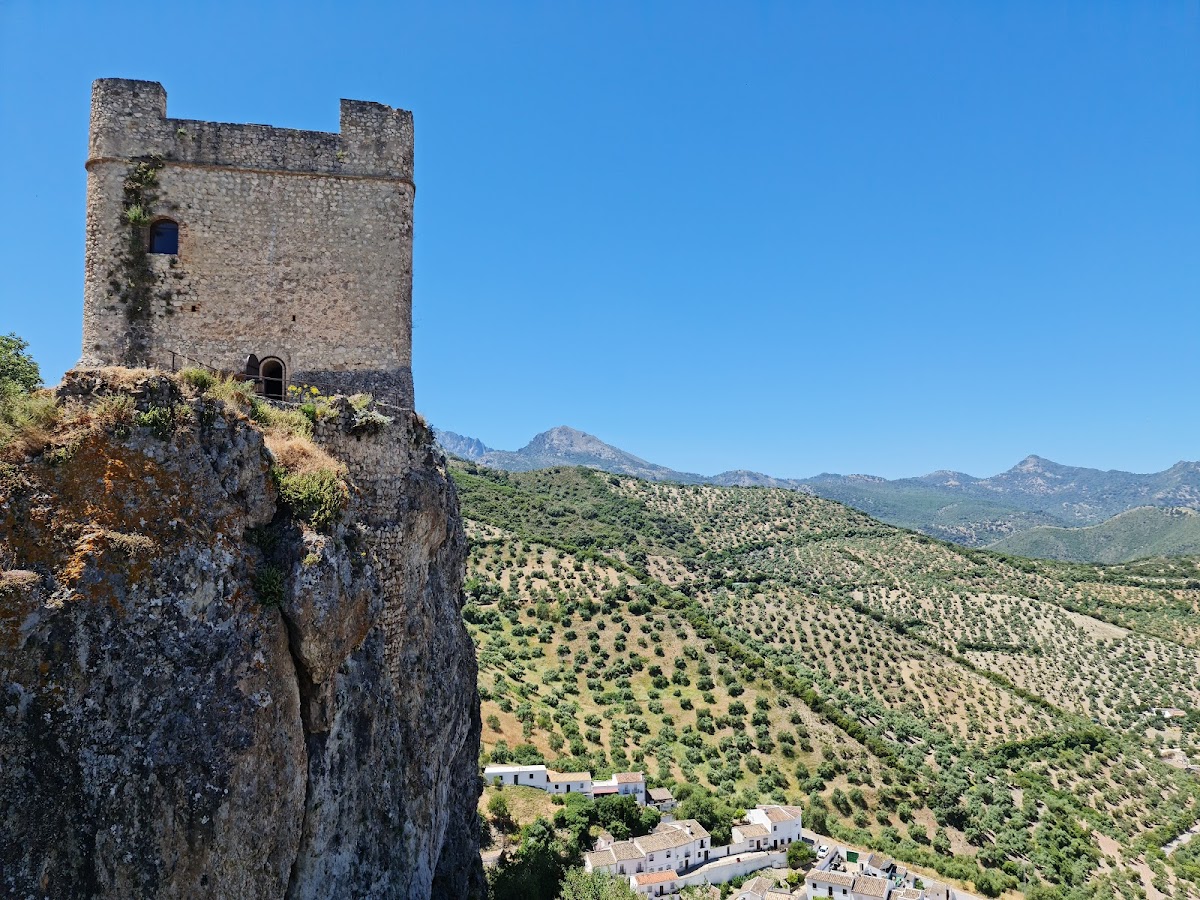
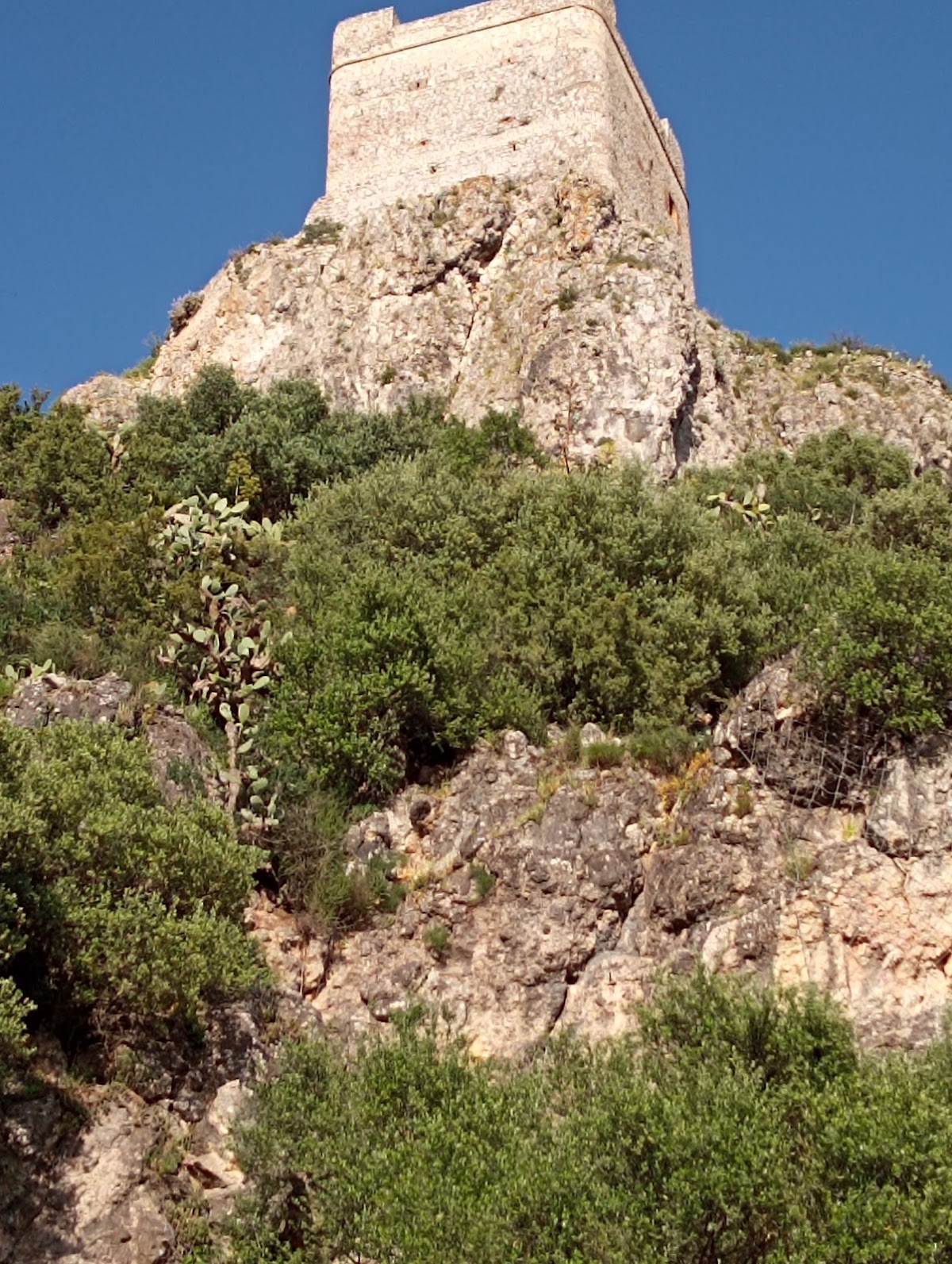
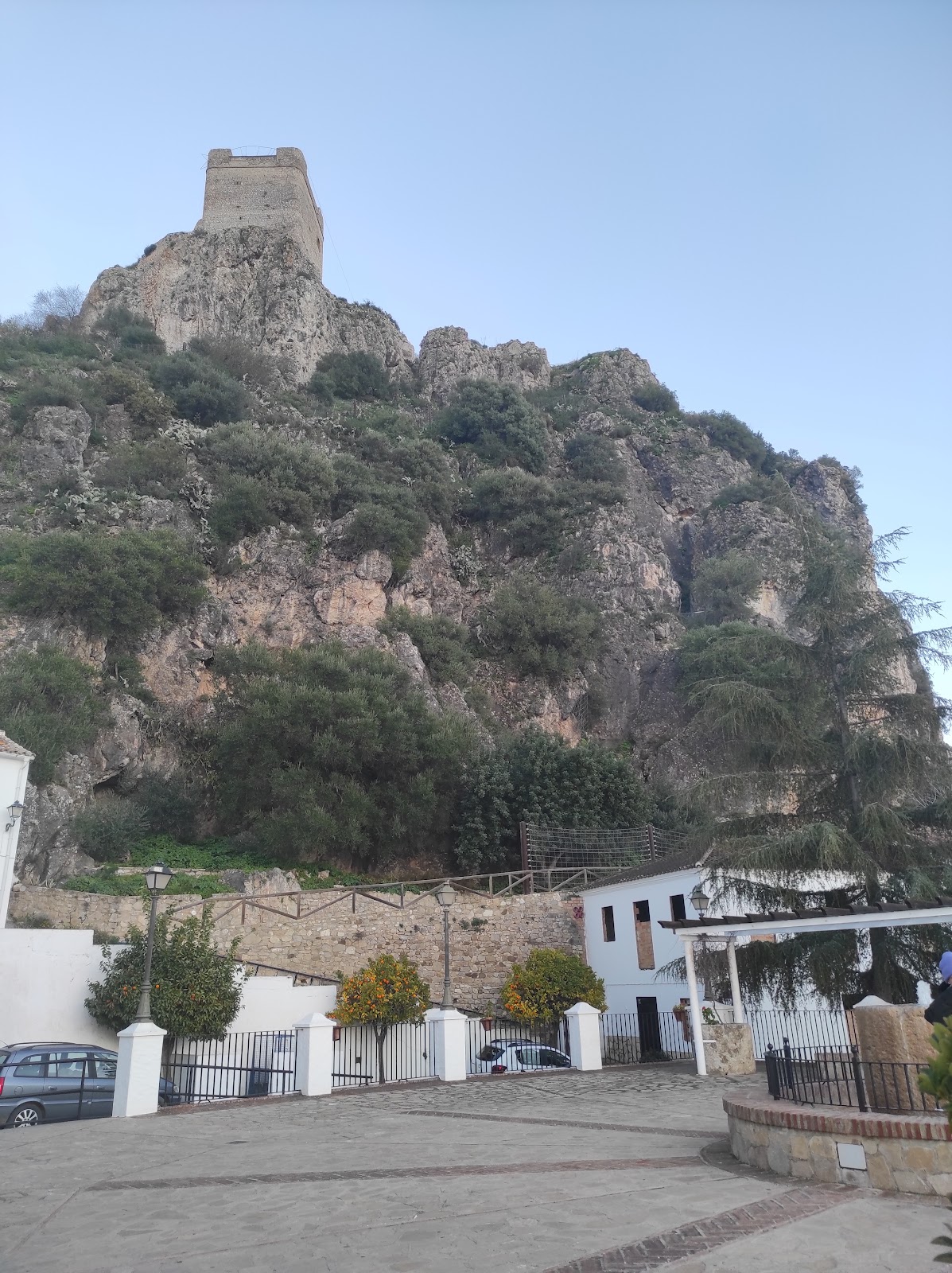
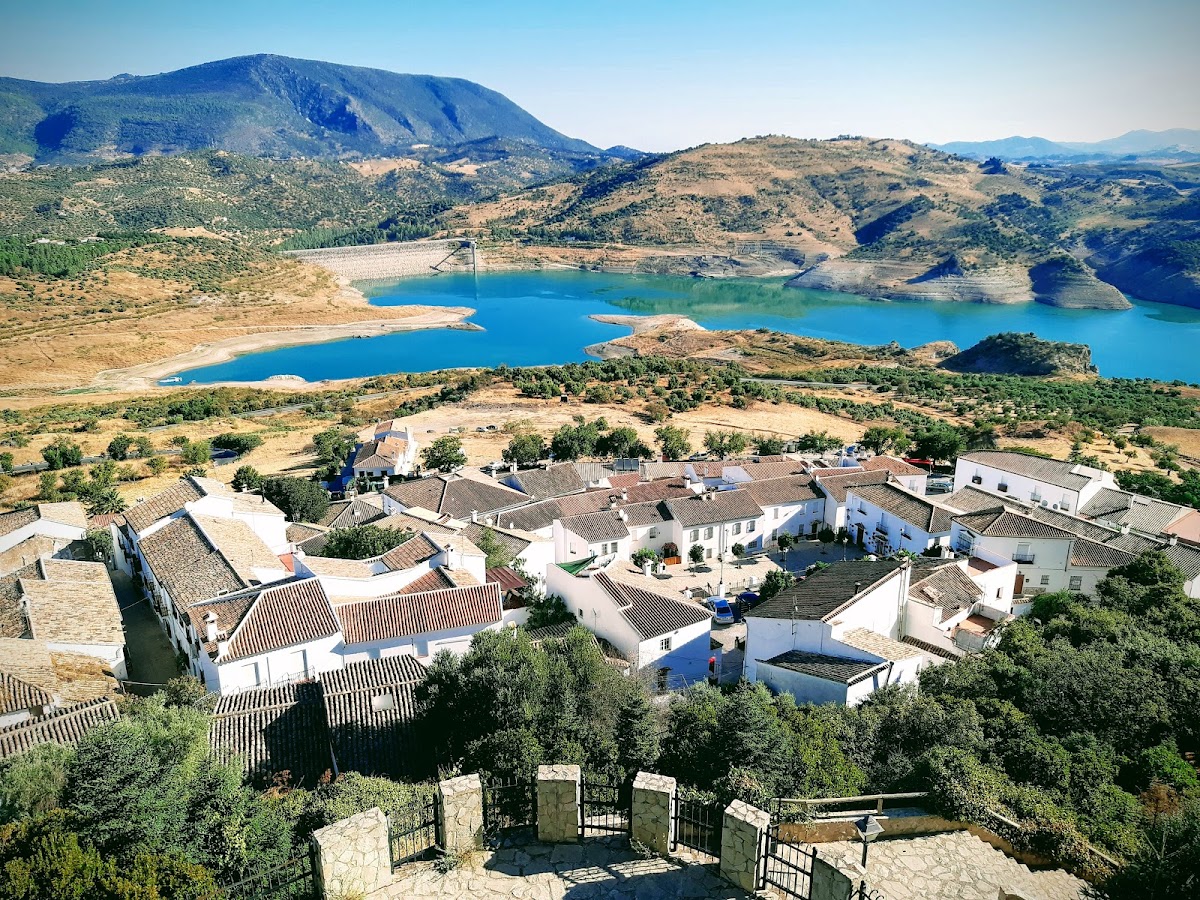
At approximately 600 metres above sea level, the castle occupies a high position in Zahara de la Sierra between the Zahara Reservoir and the Sierra de Grazalema Natural Park. The surviving remains consist chiefly of sections of the fortress walls, a tower, and an Islamic cistern beneath that tower.
Fortification remains
Nasrid and Christian walls
Fragments of walls from both the Nasrid and Christian periods survive at the site. Together, these sections reflect the fortress’s successive phases under Muslim and Christian control, although the surviving fabric is only partial.
Surviving tower
The remaining tower forms the principal standing feature of the castle. It can be climbed and provides views across Zahara, the reservoir, and nearby towns including Algodonales and Olvera.
Water storage
Islamic cistern
An aljibe, or cistern designed to collect and store water, lies beneath the tower. This underground water store is part of the castle’s Islamic remains and illustrates the practical infrastructure incorporated into the fortified site.