Burgruine Lichtenegg, Wartberg im Mürztal: A Medieval Hilltop Castle Ruin



Site at a Glance
- Rating
- 4.7
- Popularity
- Very Low
- Country
- Austria
- Primary era
- Medieval
- External website
- Open
- Eras represented
- Medieval
- Civilizations
- Habsburg, Holy Roman Empire
- Site type
- Military
- Remains
- Castle
On this page8 sections
History
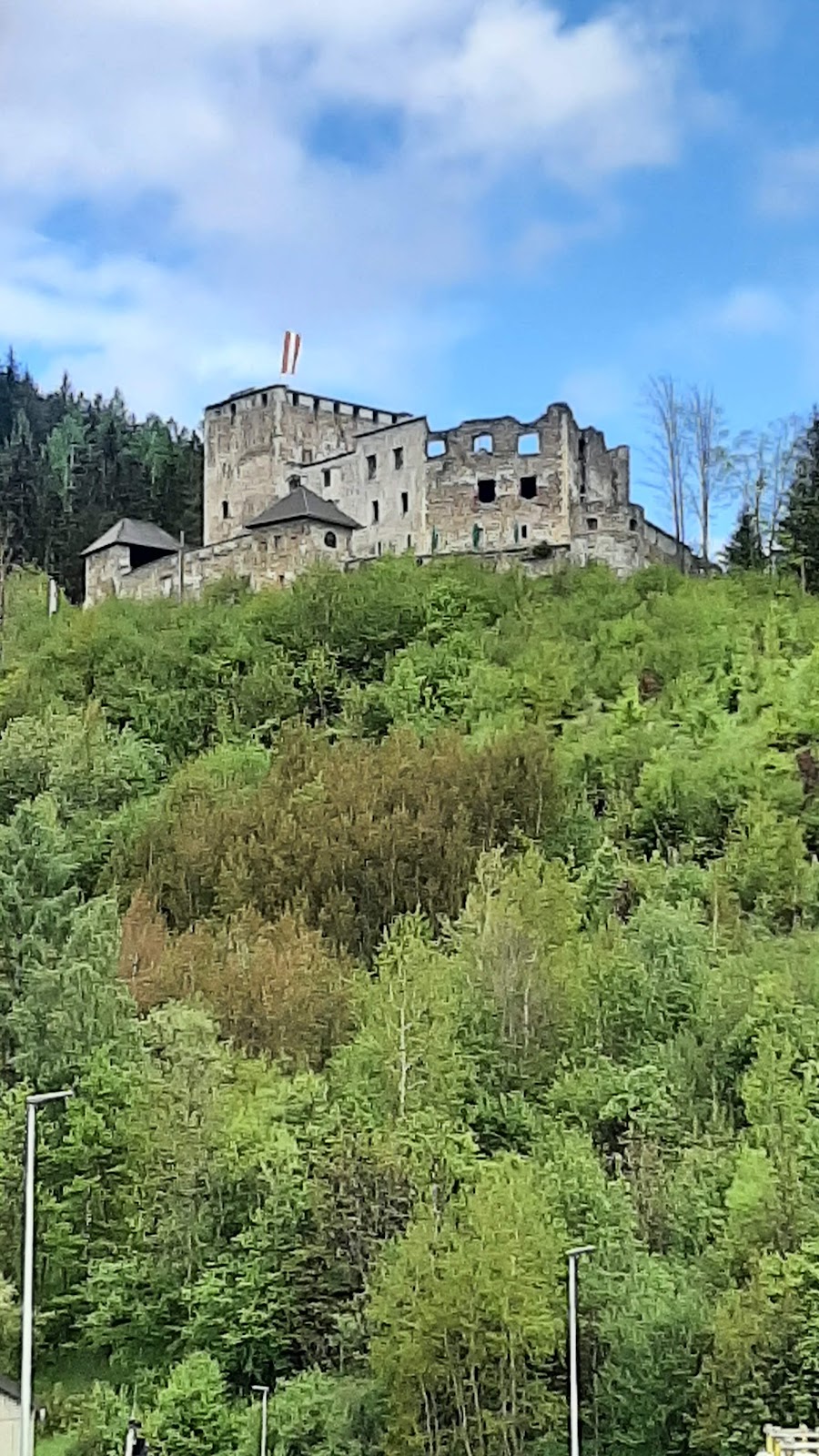
Burgruine Lichtenegg, Wartberg im Mürztal, is a hilltop castle ruin in Austria, above Wartberg in the municipality of St. Barbara im Mürztal. Around 1290, at the beginning of the Late Middle Ages, the site probably held a minor nobleman’s residence or a farmhouse whose owner owed dues to the lordship of Kindberg. In 1395, permission was granted to expand the residence into a fortified castle, creating a stronghold that secured access through the Scheibsgraben toward the Aflenz Basin.
The Liechtenecker Castle
Hans Liechtenecker owned the property in 1346. His grandson, also named Hans Liechtenecker, belonged to the lower nobility and received authorization in 1395 to enlarge the residence or manor. The Liechtenecker family died out in 1425, after which their relative Albrecht of Aflenz took control.
In 1443, the sons of Ulrich Reisacher received the castle from King Frederick III. This was an enfeoffment, meaning that a superior granted control of land or a lordship in return for recognized obligations. Inheritance disputes later led to the sale of the lordship to the Stadler family during the first quarter of the sixteenth century.
Changing Ownership and Decline
The castle was not besieged during the Ottoman war of 1529, although the surrounding area was destroyed and inhabitants were abducted. Later owners included the mining entrepreneur Sebald Pögl, who invested in the castle’s defences, and, after 1600, Leopold, Baron von Herberstein. At that time, the lordship covered about 200 hectares and included approximately 150 subjects.
After Leopold von Herberstein was forced to leave Styria for religious reasons, he sold the castle to Anna Catherina Eggsin. Her daughter, Anna Catharina, Baroness von Prankh, sold Lichtenegg in 1677 to Johann Ferdinand Zehentner von Zehentgrub. His widow sold it in 1692 to Johann Rudolf, Baron von Stadl, and Maria Regina von Stubenberg acquired it later.
By this period, the medium-sized castle was occupied only by administrators. The lordship had moved its principal administrative centre into the valley, and the castle was no longer the main residence. In the eighteenth century, its owners included Carl Josef Anton von Crollolanza and, from 1757, Count Anton Inzaghi. Inzaghi transferred the administration to Oberkindberg, leaving Lichtenegg uninhabited and allowing it to decay.
Damage and Preservation
After a town fire at Bruck in 1792, Inzaghi allowed local residents to take parts of the castle for building material during reconstruction. Although few people accepted the offer, the castle fabric was reduced. An earthquake caused further damage in 1855, and the property passed to the Counts of Attems in 1857.
Burgruine Lichtenegg is protected as a listed monument in Austria. A castle association has been responsible for its preservation since 1932, with particularly intensive responsibility since 1958, and is also the owner. The ring wall was demolished in 1953. Between 1980 and 1990, a local-history museum was established in the keep.
Remains
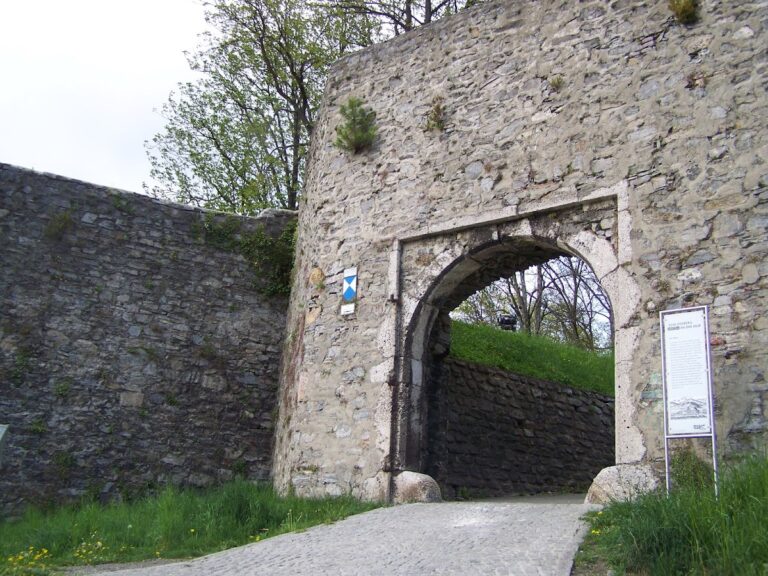
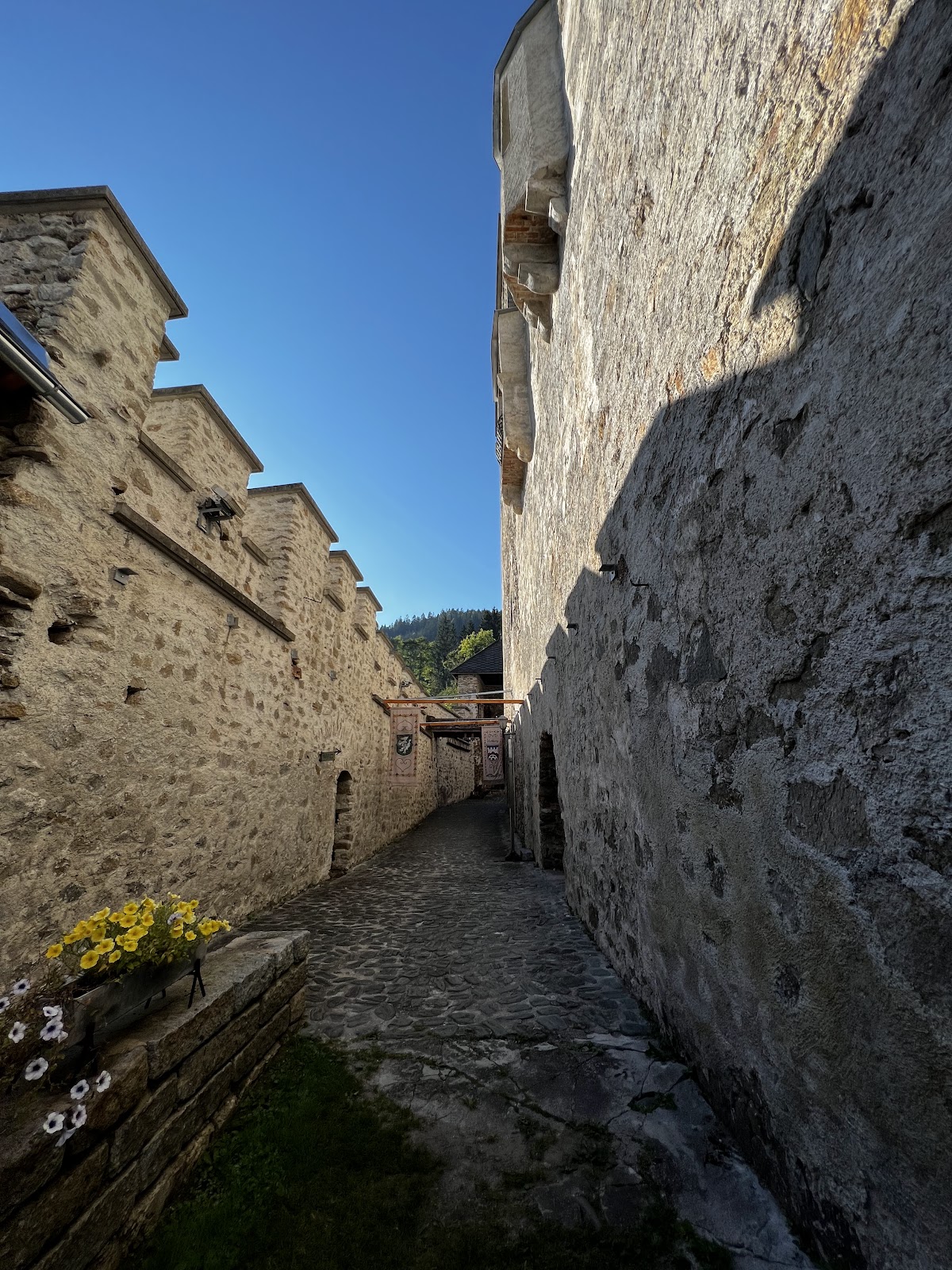
Burgruine Lichtenegg survives as the remains of a hilltop castle above Wartberg. The complex included a defensive ring wall enclosing the castle and a keep, the principal fortified tower used for residence, defence, or administration. The site is now ruinous, and its physical fabric reflects both later removal for building material and earthquake damage.
Enclosure and Tower
Ring Wall
The castle’s ring wall formed the defensive enclosure around the complex. It was demolished in 1953, after earlier losses caused by the removal of building material following the 1792 fire at Bruck. These interventions reduced the surviving fabric of the castle.
Keep
The keep remains the principal identified tower of Lichtenegg. Between 1980 and 1990, it was adapted to house a local-history museum. The surviving tower belongs to a castle complex whose remains were further damaged by the earthquake of 1855.