Oberkapfenberg Castle: A Medieval Seat and Renaissance Fortress in Austria
Site at a Glance
- Rating
- 4.5
- Popularity
- Medium
- Country
- Austria
- Primary era
- Medieval
- External website
- Open
- Eras represented
- Medieval, Early Modern
- Civilizations
- Duchy of Styria, Habsburg, Holy Roman Empire
- Site type
- Military
- Remains
- Castle
On this page14 sections
History
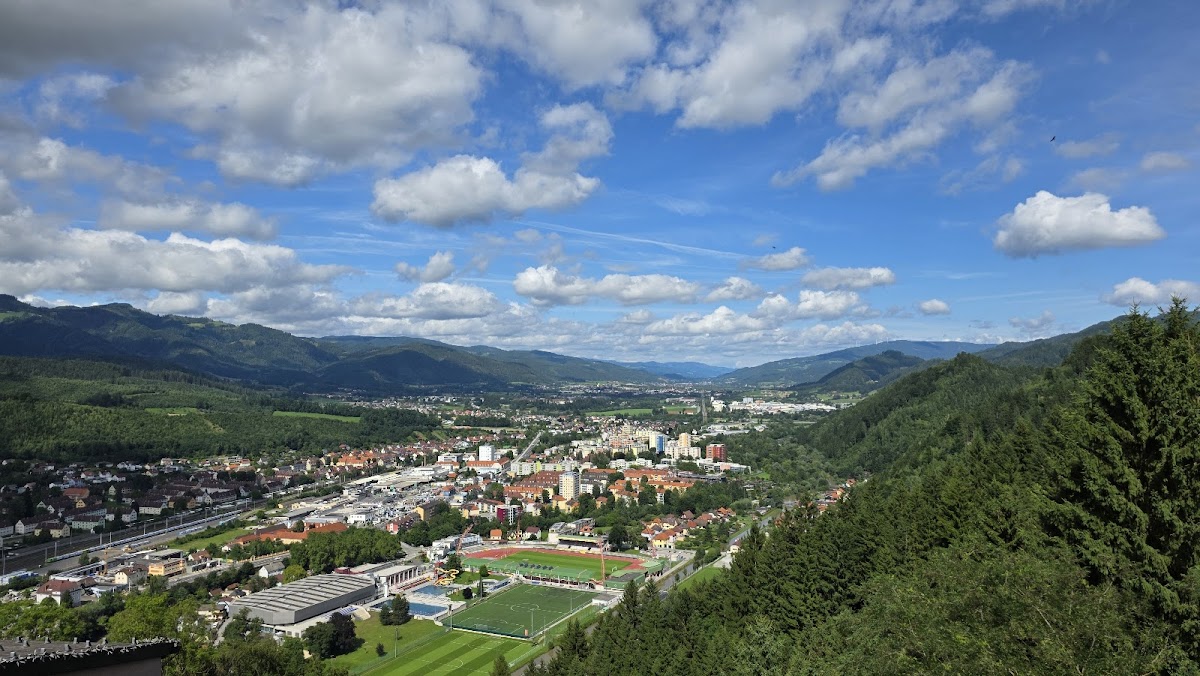
Oberkapfenberg Castle is a medieval hill castle in Austria, above the town of Kapfenberg in Styria. First mentioned in 1173 as Burg Chaffenberch, meaning a castle on the lookout mountain, it developed into a residential and administrative seat for the Lords of Stubenberg before being remodelled as a Renaissance fortification in the sixteenth century.
Origins and Stubenberg Rule
The castle named Chaffenberch was associated with the earlier stronghold of Altkapfenberg. In the thirteenth century, the Lords of Stubenberg expanded the site into a residence and centre of administration. At that time, the family served as ministerials, dependent military and administrative servants of Styrian margraves who could rise into the nobility. The Stubenbergs later became one of Austria’s most important noble families.
Political conflict brought the castle under Habsburg control in 1292. Troops of Duke Albert I held it until 1294 because Friedrich von Stubenberg had joined a conspiracy against him. Albert later became King of the Romans, the medieval title for the elected ruler of the Holy Roman Empire before imperial coronation.
Confiscation, Occupation, and Renaissance Rebuilding
In 1470, Friedrich III confiscated Oberkapfenberg after Hans von Stubenberg participated in a rebellion against him. Friedrich III became Holy Roman Emperor in 1452 and ruled until 1493. Hungarian forces serving Matthias Corvinus, the fifteenth-century king of Hungary, soon seized the castle and retained it until 1491. The Stubenbergs then recovered their property.
The Ottoman Turkish threat gave the castle a new defensive role. Oberkapfenberg became one of the warning stations used to report enemy attacks. In 1541, Wolf von Stubenberg commissioned Antonio Balin de Comoze, an Italian builder, to reconstruct the castle as a Renaissance fortress. The work was completed in 1550. Renaissance fortifications adapted defensive arrangements to the growing use of gunpowder artillery.
Abandonment, Reconstruction, and Archaeology
In 1739, the Stubenbergs moved their residence to Schloss Wieden an der Mürz. Oberkapfenberg was abandoned and began to decay. Its deterioration accelerated late in the eighteenth century after Joseph II ordered the roofs dismantled.
Count Franz von Stubenberg began rebuilding the ruins in 1953, working within the surviving fabric of the old castle and adapting it as a castle hotel. After the hotel’s lessee became bankrupt in 1985, the castle again stood empty and deteriorated. The municipality of Kapfenberg acquired it in 1992 and established an association to support restoration. A castle restaurant and hotel opened in 1994.
Later cultural use included exhibitions and demonstrations connected with medieval warfare, as well as a birds-of-prey show. An exhibition of historical weapons, including a section on torture methods and instruments, ran from 2003 to 2008. The exhibition Grenzgänge – Eine Zeitreise mit Kreuzrittern und Alchemisten opened in April 2009. A landslide in autumn 2011 revealed material associated with “Stubenberg’s kitchen,” including cooking pots, bone remains, and children’s toys. These finds were presented in a special exhibition at the castle in 2012. An annual medieval festival has been held at the castle in June.
Remains
Oberkapfenberg occupies the Schlossberg above Kapfenberg at approximately 592 metres above sea level, overlooking the Mürz valley northeast of Bruck an der Mur. The hilltop complex combines remains of the earlier upper castle with the thirteenth-century residential and administrative complex and its later Renaissance fortress arrangements. Surviving elements include a courtyard, residential buildings, other building remains, defensive features, and exhibition and event spaces.
Earlier Upper Castle
Altkapfenberg Core
Below the Loreto Chapel are the remains of the earlier upper castle, identified with the Chaffenberch mentioned in 1173. Loreto chapels are Catholic chapels associated with the Holy House of Loreto, traditionally connected with the house of the Virgin Mary. The surviving lower remains preserve the relationship between the early stronghold and the later castle complex.
Courtyard and Defensive Works
Gate Passage
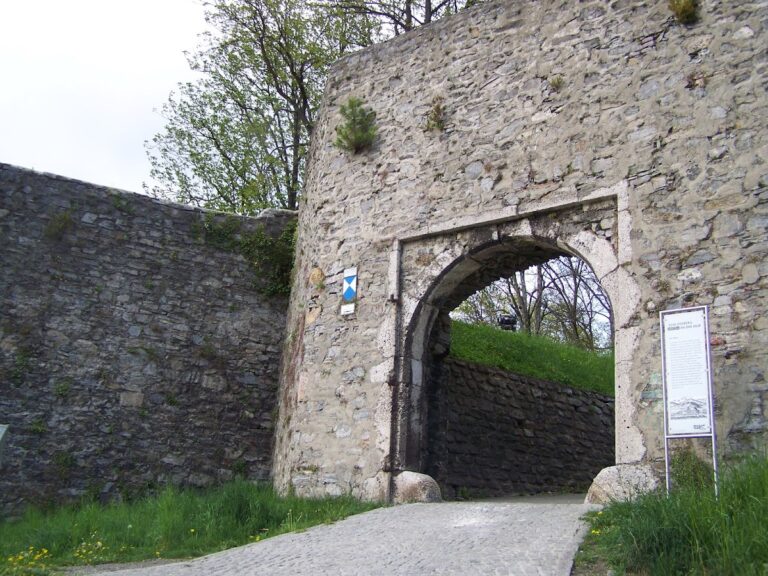
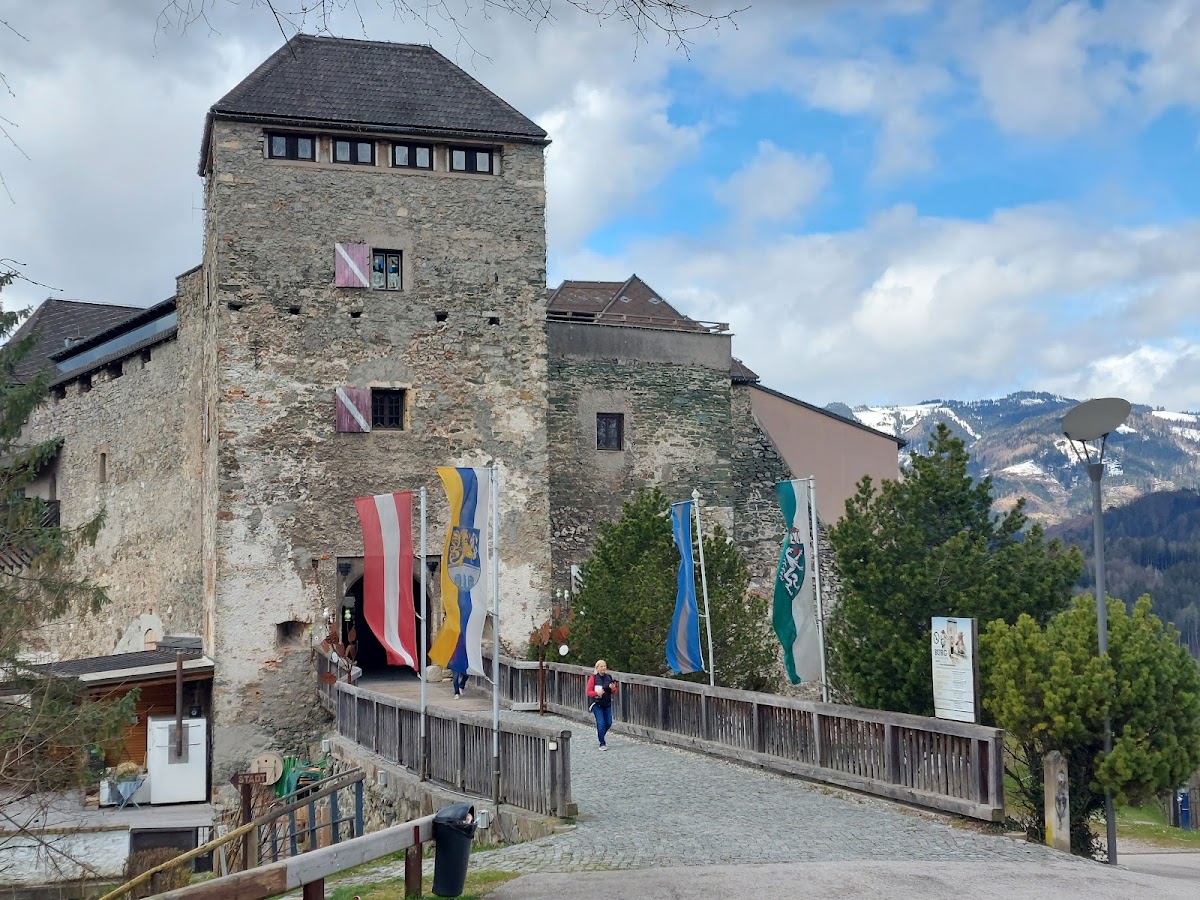
A vaulted gate passage provides access into the complex, with a vaulted corridor above it. The gateway incorporated offset gates and a chamber for the gatekeeper. These features formed part of the controlled entrance arrangement within the fortified hilltop site.
Outer Defences
The recorded plan includes a drawbridge and a zwinger, an outer defensive enclosure or passage between fortification walls. A stairway descended from the zwinger, while a steep drop along the castle hill added to the site’s defensive setting. A stone spiral staircase was still preserved in 1885.
Residential Buildings and Surviving Features
Castle Buildings
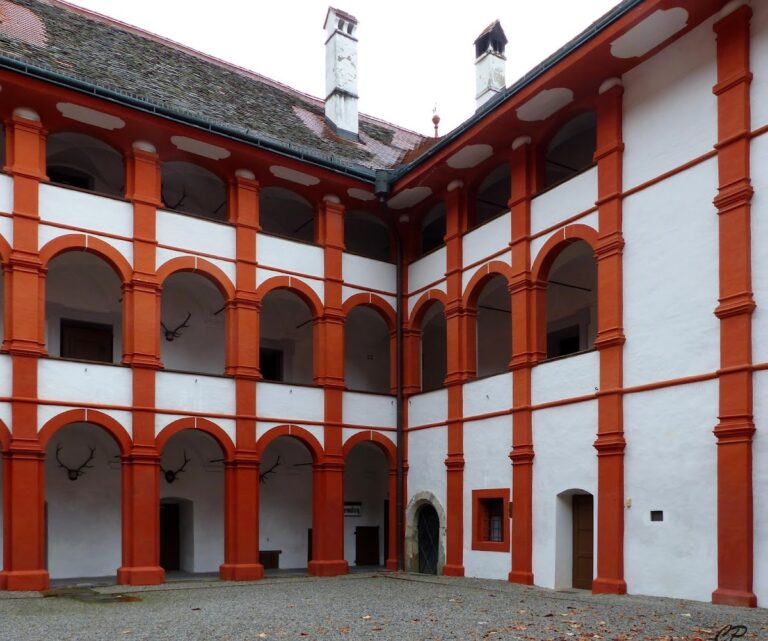
The surviving complex contains residential buildings, a castle courtyard, and further building remains from its development as a Stubenberg residence and administrative seat. The site was remodelled around 1550 as a Renaissance fortress, and substantial parts of the historic complex have been preserved despite the long period of abandonment and decay.
Kitchen Finds
Material exposed by the 2011 landslide came from the former kitchen area associated with “Stubenberg’s kitchen.” Cooking pots, bone remains, and children’s toys provide archaeological evidence connected with the use of that part of the castle and were presented in the 2012 exhibition.
Falconry and Exhibition Areas
The castle includes a falconry facility as well as rooms used for exhibitions and events. These spaces occupy and interpret parts of the preserved castle complex, linking its surviving fabric with presentations about medieval warfare, historical weapons, crusaders, alchemy, and the archaeological finds from the former kitchen area.