Waxenegg Castle Ruins: A Double Castle in Austria
Site at a Glance
- Rating
- 4.5
- Popularity
- Very Low
- Country
- Austria
- Primary era
- Medieval
- External website
- Open
- Eras represented
- Medieval, Early Modern
- Civilizations
- Habsburg, Holy Roman Empire
- Site type
- Military
- Remains
- Castle
On this page7 sections
History
Waxenegg Castle Ruins is a double castle in Austria, located in Naintsch on a spur of the Hohe Zetz in Styria. The upper castle, Alt-Waxenegg, was built at the beginning of the thirteenth century, followed soon afterward by Neu-Waxenegg, a lower castle constructed on a terrace below it. Waxenegg became a base for settlement in the upper Feistritz Valley and held a regional court jurisdiction extending from Anger to the border of Lower Austria.
Origins and expansion
Waxenegg, also known as Wachsenegg, first appears in written evidence in 1217 under the name “Wesseneck.” This is the earliest documentary reference to a settlement in the wider area around Anger and the upper Feistritz Valley. At that time, the land belonged to the Prince-Archbishopric of Salzburg, an ecclesiastical principality in which the archbishop exercised both religious and secular authority.
The first castle was built as a spur castle, a fortified settlement positioned on a projecting ridge and protected partly by the surrounding slopes. A lower castle was soon added approximately 100 metres to the east and 50 metres below the upper site. In the mid-sixteenth century, Alt-Waxenegg was enlarged into a residential castle, while Neu-Waxenegg was abandoned.
Changes in lordship and preservation
In 1571, the lordship of Waxenegg was divided, and the territory that later formed part of the new lordship of Birkenstein was separated from it. Birkenstein had its seat at Birkfeld. In 1723, administration of the Waxenegg lordship was transferred to the market town of Anger.
The castle began to decay at the start of the nineteenth century. Ownership changed several times before Ferdinand, Imperial Baron von Gudenus, acquired it in 1806. The property remains with the Gudenus family. Static investigations and conservation proposals were prepared in 1999 with the Styrian state conservator, including plans to secure the upper castle and adapt it for cultural activities. Extensive conservation work has been carried out since 2021 by the Association of the Mystical Underworlds and Upper Worlds of the Anger Region.
Remains
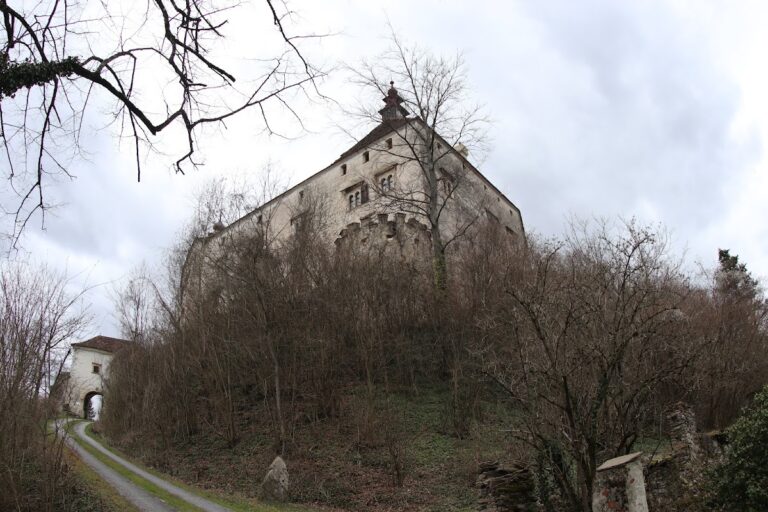
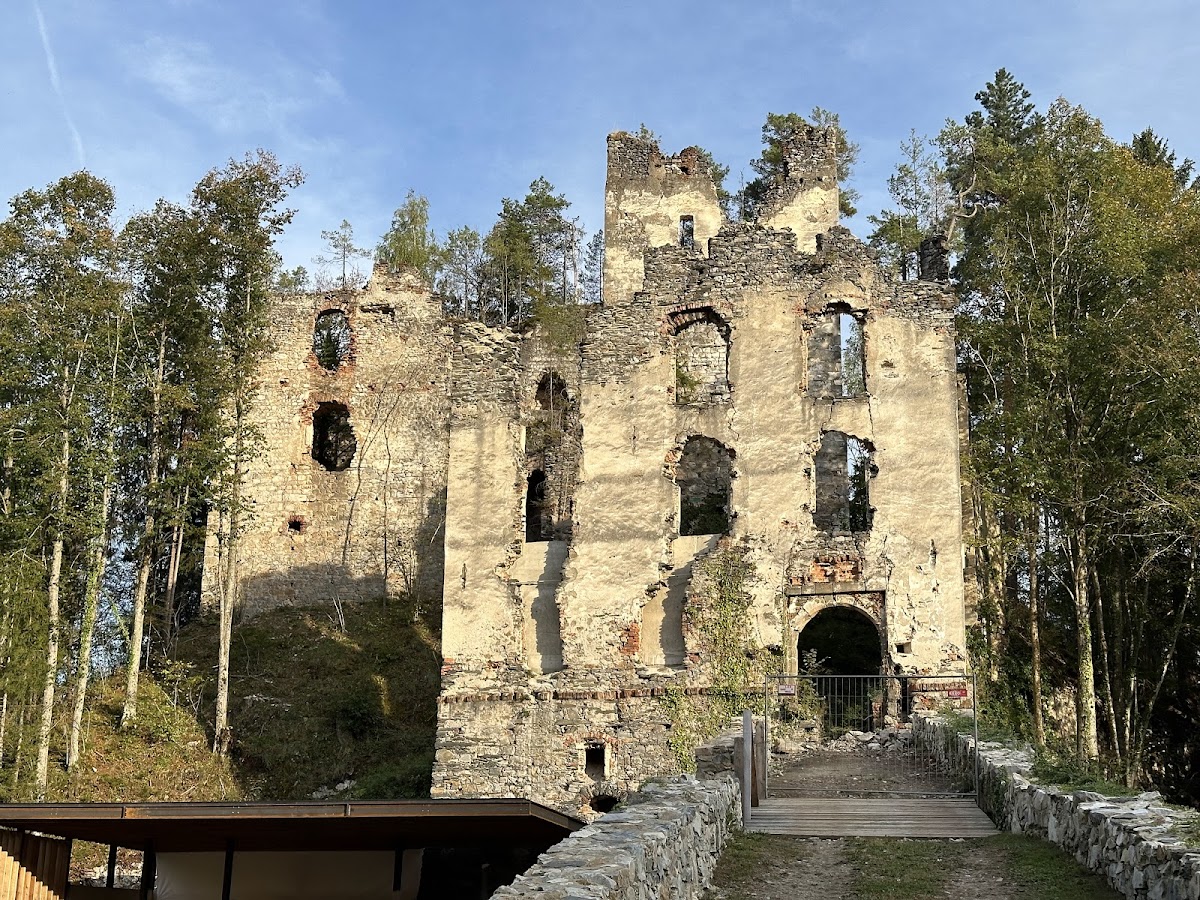
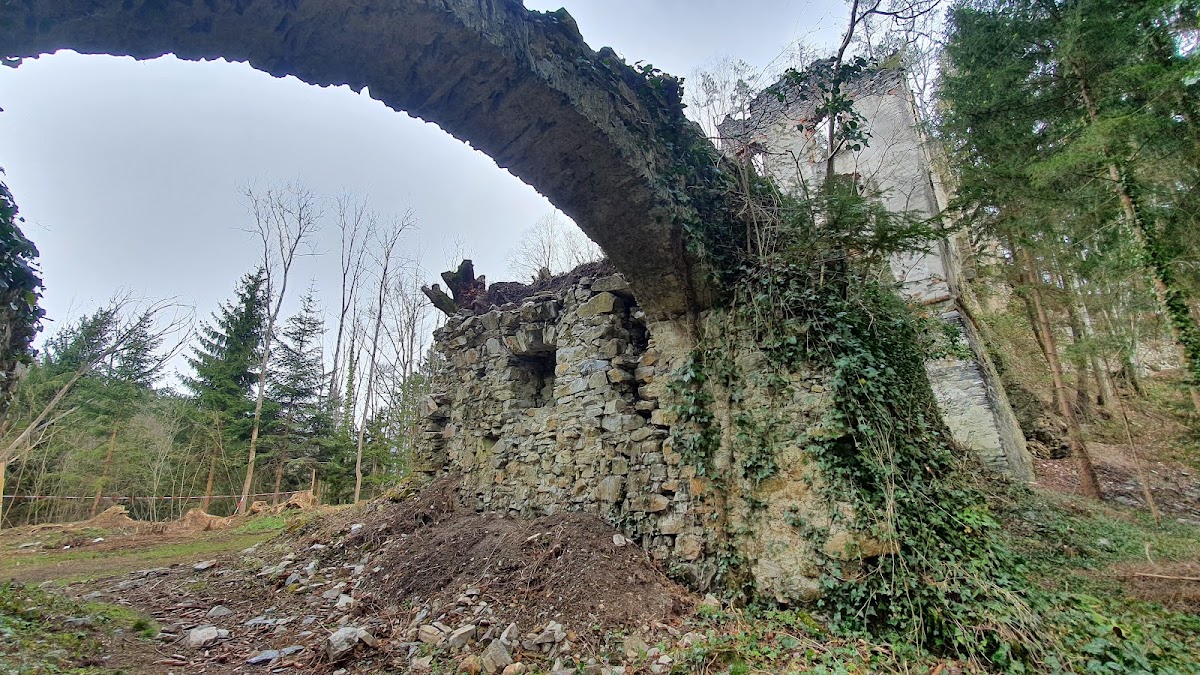
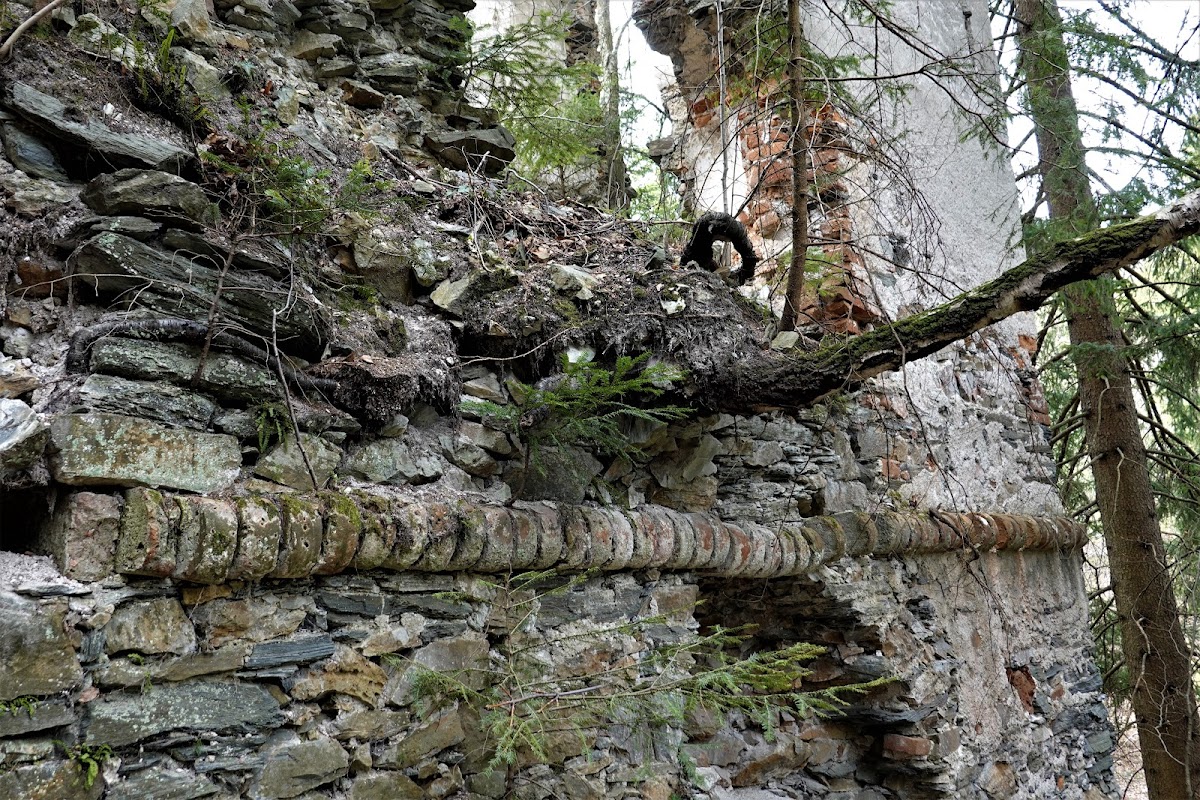
Waxenegg consists of two castle sites arranged on different levels of the same landscape. Alt-Waxenegg occupies the projecting spur, while Neu-Waxenegg stood on a natural terrace about 100 metres to the east and 50 metres lower. Woodland surrounds the upper castle, and the surviving remains include parts of its keep, residential buildings, and a substantial entrance structure from the sixteenth-century expansion.
The upper and lower castles
Alt-Waxenegg
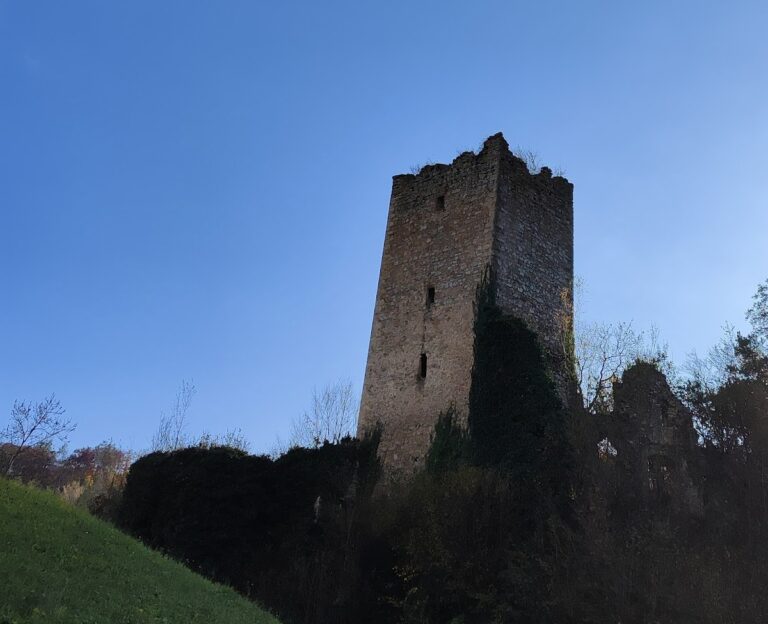
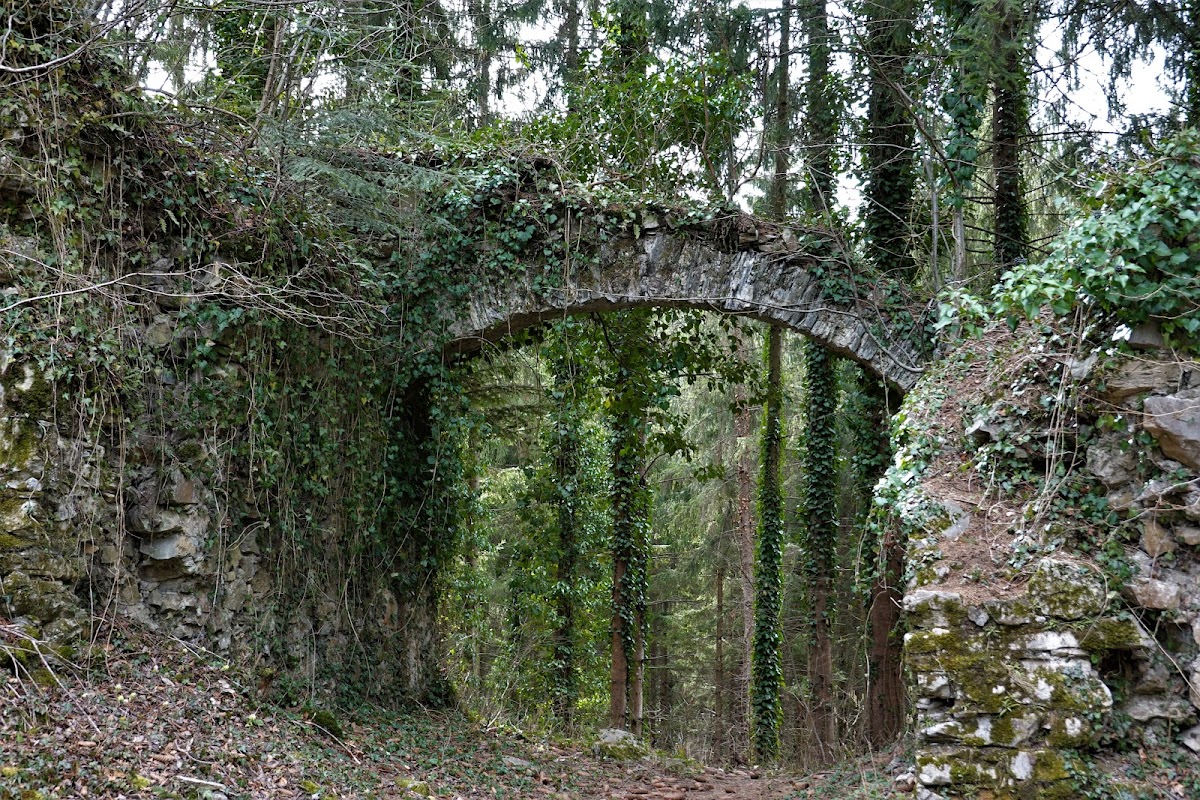
The upper castle retains sections of the keep and several residential buildings. Its sixteenth-century gate structure includes a tower and a ramp for a drawbridge, features associated with the period when the castle was expanded as a residence. The remains occupy the projecting spur and are surrounded by woodland.
Neu-Waxenegg
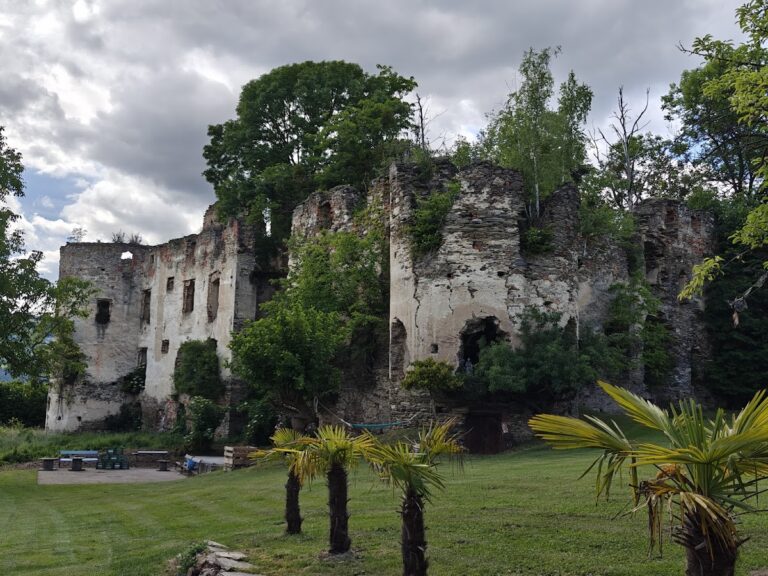
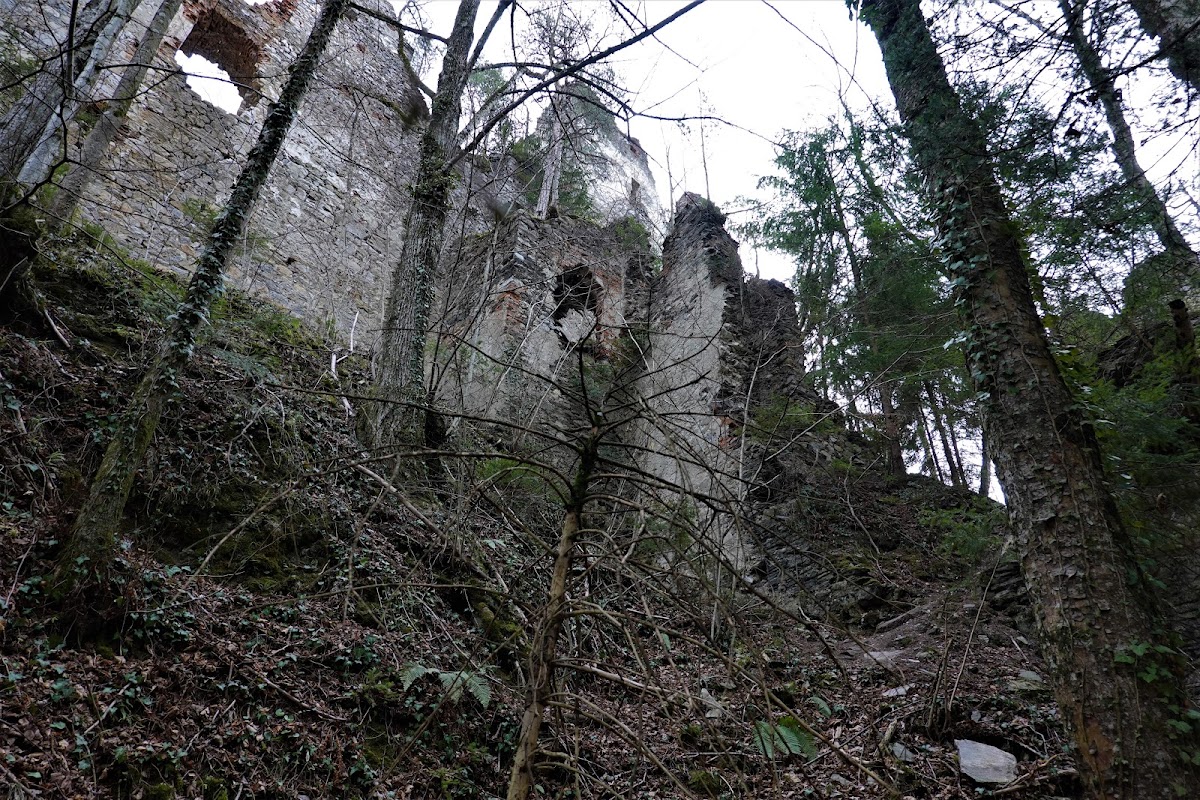
The lower castle preserves substantial wall remains on the natural terrace below the upper site. The ruin is completely overgrown, but its surviving walls mark the second part of the former double-castle complex.
Nearby sites