Rocca di San Giorgio: A Fortified Aristocratic Residence in Italy

Site at a Glance
- Rating
- 4.1
- Popularity
- Very Low
- Country
- Italy
- Primary era
- Early Modern
- External website
- Open
- Eras represented
- Early Modern, Modern
- Civilizations
- Duchy of Parma and Piacenza, Italian
- Site type
- Military
- Remains
- Castle
On this page7 sections
History
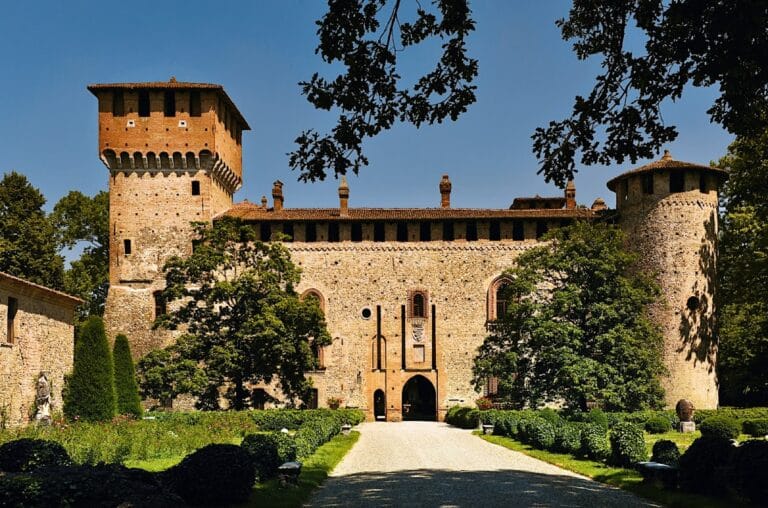
Rocca di San Giorgio is a fortified residence in San Giorgio Piacentino, Italy, built in the final years of the sixteenth century for a member of the San Giorgio branch of the Anguissola family. Its design is sometimes attributed to Giacomo Barozzi da Vignola, a leading Italian architect of the sixteenth century associated with the development of late Renaissance architecture. The building combines military protection with aristocratic domestic use and is regarded as a distinctive example in the Piacenza area, described by the architect Carlo Perogalli as being of “rare balance.”
Anguissola and Farnese ownership
The Anguissola family retained the fortification until 1630, when its ownership ended after the death of Cesare Albano. Control then passed to the Farnese ducal administration, which managed property belonging to the Farnese rulers of the Duchy of Parma and Piacenza. In 1631, the administration leased the building to Alessandro Bacchini, a captain serving Odoardo I Farnese. The lease expired in 1635, returning the rocca to the Farnese estate.
In 1637, the fief of San Giorgio, including the rocca, was granted to the marquis Fabio Scotti di Castelbosco for 12,000 lire. A fief was a territorial holding granted by a superior ruler in return for allegiance or service, together with associated rights and properties. After receiving the title of count of San Giorgio, Fabio Scotti restored the building and adapted it as his summer residence.
The Scotti succession dispute
A dispute over the fief and its properties began in 1676 between Annibale Scotti, Fabio’s son, and Antonio Maria Scotti, Fabio’s nephew. Judges appointed to settle the case ruled in 1740 that half of the fief belonged by right to Antonio Maria’s descendants. His heirs, the counts Scotti della Scala di Zerro, finally took possession of the rocca and its dependencies in 1762.
Alterations and later ownership
During the final years of the eighteenth century, the Piacenza architect Lotario Tomba altered the building. He added roof elements intended to create movement in keeping with contemporary taste, although these changes were considered inconsistent with the balance of the original design. His nephew Antonio Tomba later carried out further alterations to the rocca and nearby buildings.
In the nineteenth century, the property belonged to Count Paolo Scotti, who commissioned the enclosing outer wall and established a park within it. After his death, the complex passed to his daughter Clelia and then to her husband, General Ferdinando Negri della Torre. Their daughter later brought the property as a dowry to Count Guido Gazzola di Settima. The Gazzola family has owned the complex since the beginning of the twentieth century. Rocca di San Giorgio is recognized as Italian national heritage and has been restored.
Remains
Main fortification
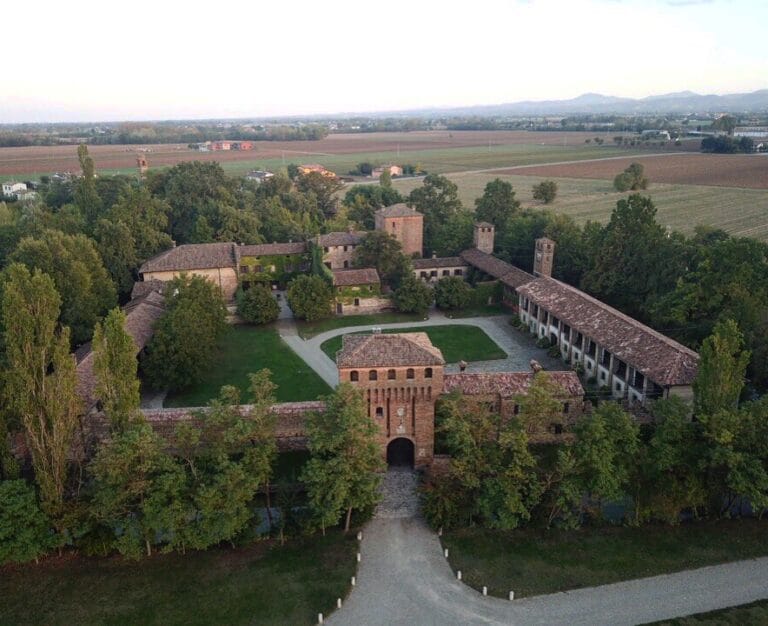
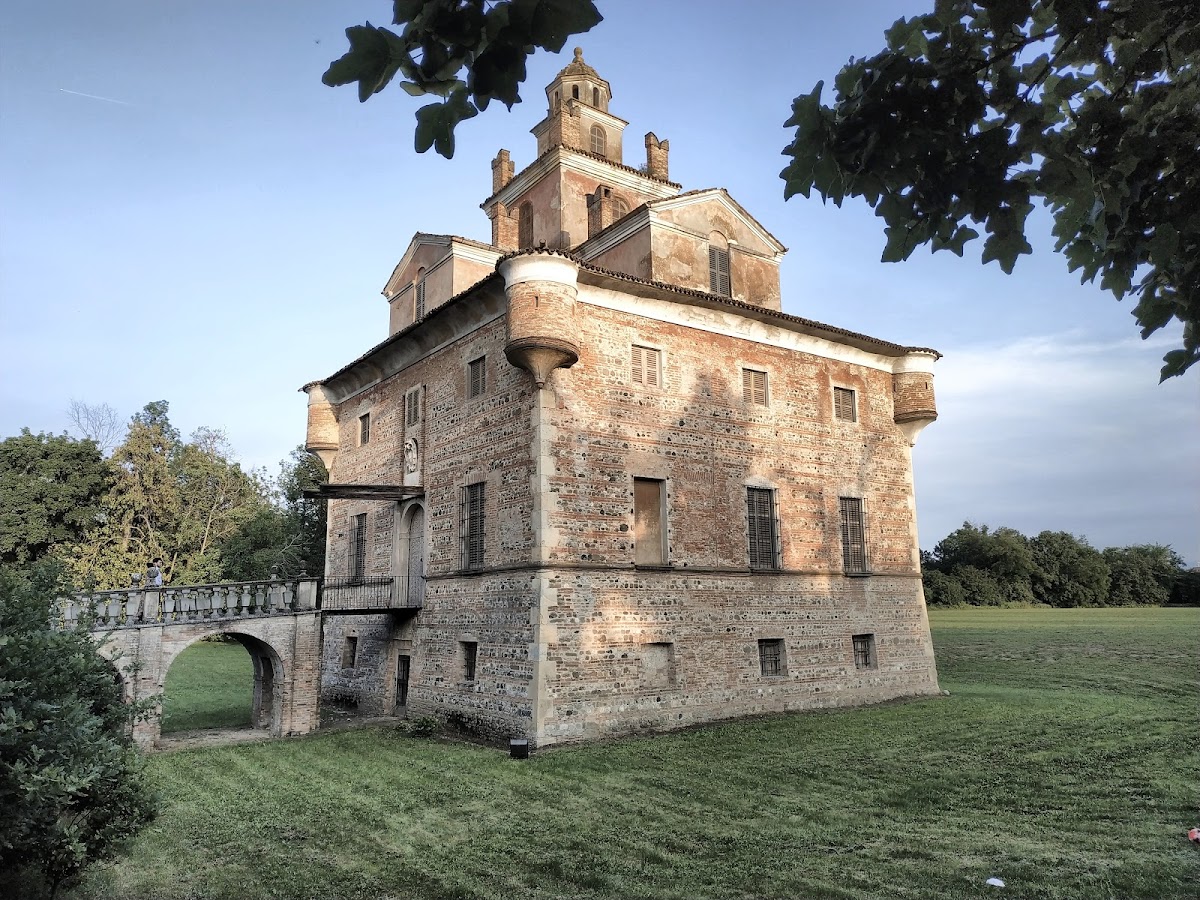
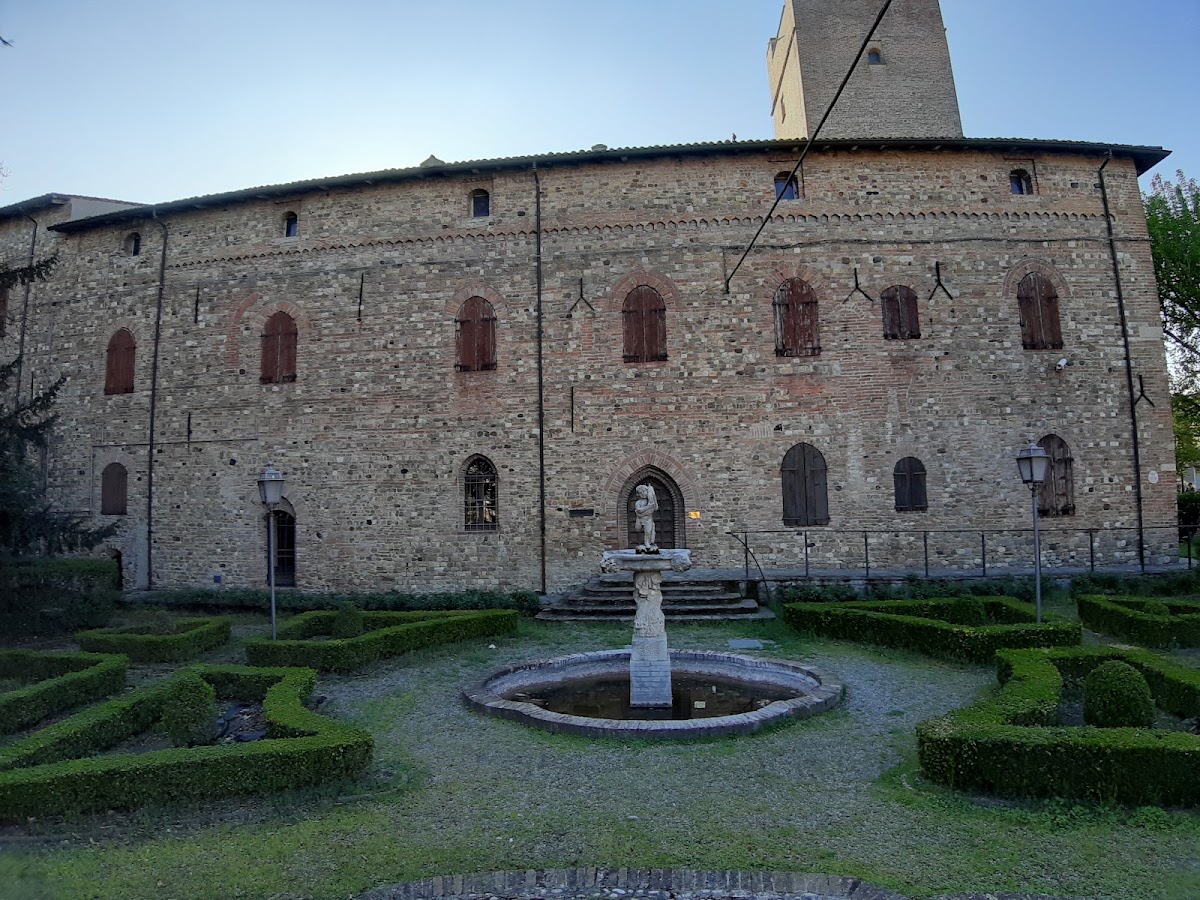
The main building has a square plan, with each side measuring approximately 15 metres. Its form joins castle-like defensive elements to those of a noble residence. The entrance occupies the northwest façade at a higher level than the forecourt. A drawbridge connects it with a small masonry bridge, while the external walls are built of brick and stone and slope slightly inward at the base. This battered lower section originally bordered a moat, which was later filled in.
Four round watch turrets stand at the corners of the complex immediately below the roofline. They rest on masonry corbels and, together with the dome lantern, were originally covered with sheets of copper and lead. The dome is topped by an octagonal masonry lantern, a raised windowed structure that admits light and provides ventilation, with one window on each side.
A 1637 description places a spiral staircase at the centre of the building. It had stone steps and an iron balustrade, and connected every floor, including the underground levels, while also providing access to the dome. Several reception rooms retain frescoes by Felice Biella, a painter from Milan. The rocca is described as being in excellent present condition.
Service buildings and grounds
Agricultural buildings formerly stood beside the rocca. In 1830, Antonio Tomba remodelled them as barchesse, service or agricultural buildings commonly associated with Italian villas and often arranged around a long portico. He also added two greenhouses, one to the east and one to the west of the complex. An English-style garden dates from the same period as these agricultural and garden works, and the entire estate is enclosed by the wall commissioned by Count Paolo Scotti.
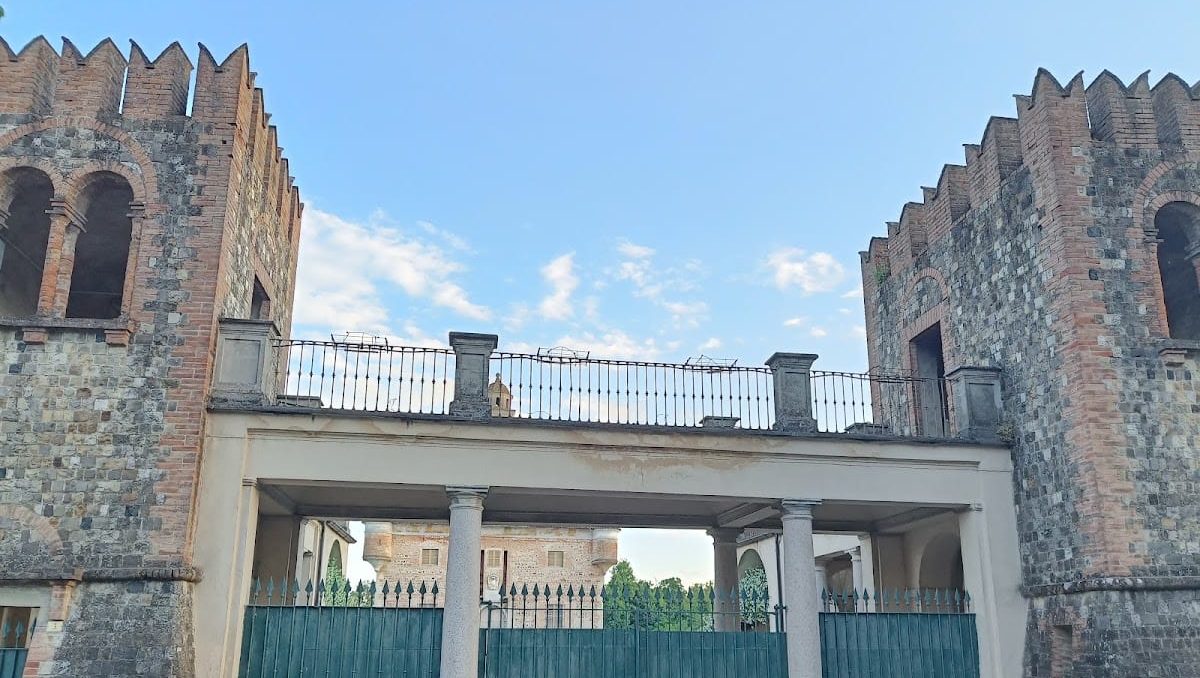
The entrance area includes a pair of Neo-Gothic turrets installed in 1890 on the terraces of the two barchesse. These additions form part of the later appearance of the estate, alongside the nineteenth-century garden, greenhouses, and enclosing wall.