Carmona: A Roman Necropolis and Amphitheatre in Spain


Site at a Glance
- Rating
- 4.6
- Popularity
- Very Low
- Country
- Spain
- Primary era
- Classical
- Eras represented
- Classical
- Civilizations
- Roman
- Site type
- City
On this page17 sections
History
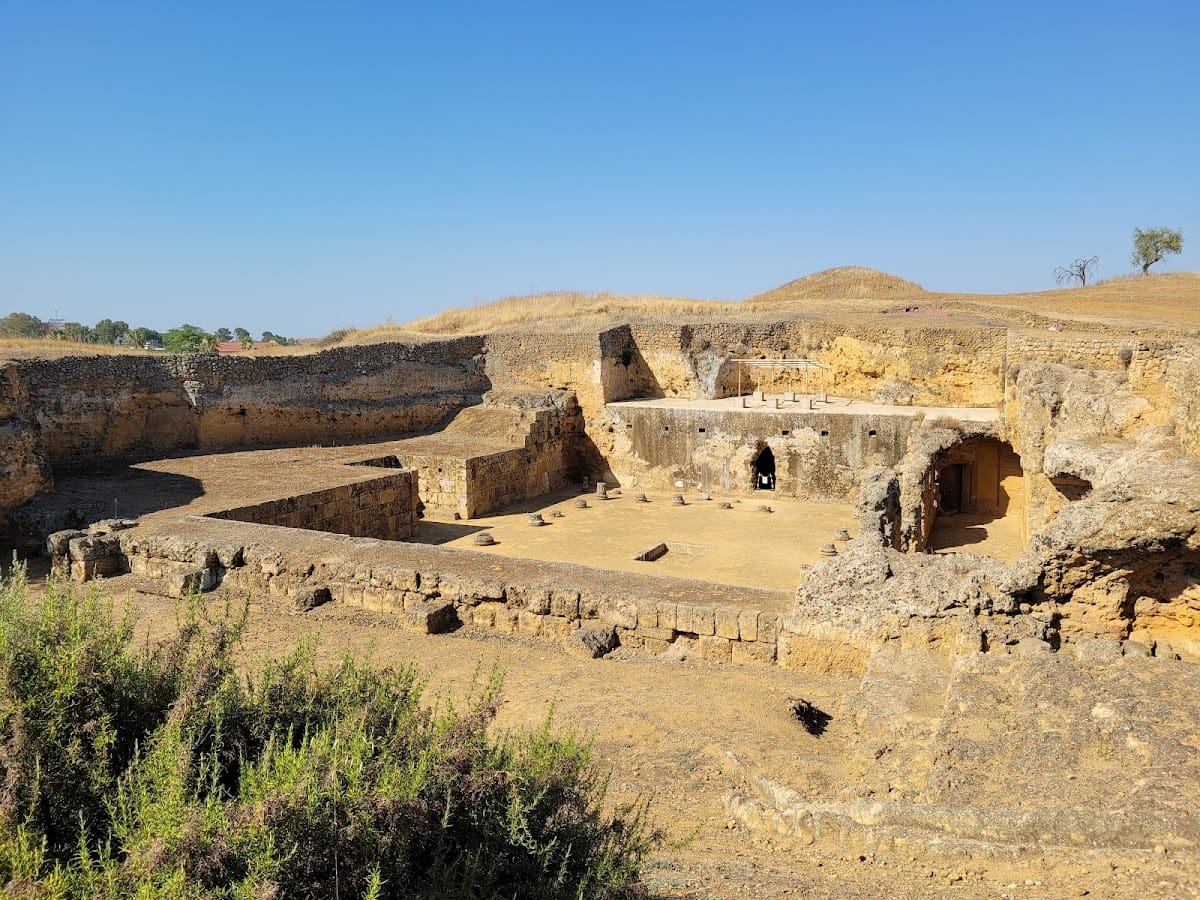
Carmona in Spain is a Roman archaeological ensemble comprising a necropolis and amphitheatre dating from the first and second centuries AD. Located outside the western side of the city, it preserves one of the Iberian Peninsula’s largest and best-preserved Roman funerary complexes, as well as an amphitheatre considered the first built in Spain.
Discovery and archaeological management
The necropolis was discovered accidentally in 1868 while the Camino del Quemadero was being levelled. Looting followed the discovery, threatening the archaeological remains until Juan Fernandez Lopez and George Bonsor began a survey project in 1881 and acquired the land.
Fernandez Lopez and Bonsor founded the Archaeological Society of Carmona in 1885 to manage the site, and the Roman necropolis was officially inaugurated that year. In 1930, the two investigators donated it to the state. A decree issued on 3 June 1931 declared the necropolis a Historic-Artistic Monument and incorporated it into the National Artistic Treasure.
War, excavation, and public administration
During the early years of the Spanish Civil War, a conflict fought in Spain from 1936 to 1939, Juan Lafita, director of the Seville Archaeological Museum, took possession of the Roman Necropolis of Carmona on the instructions of the Burgos government. The action occurred in October 1938 and was officially ratified in 1941. Afterward, directors of the Seville Archaeological Museum managed the ensemble.
Excavations resumed during the Civil War period and led to the discovery of the amphitheatre. Responsibility for cultural matters passed from the state to the autonomous community of Andalusia in 1984. In 1992, management by the directors of the Seville Archaeological Museum ended, and the Carmona Archaeological Ensemble became an administrative unit under the Provincial Delegation of the Andalusian Culture Department in Seville. The ensemble has retained protection as a Historic-Artistic Monument since 1931 and was declared an Asset of Cultural Interest as an archaeological zone in 2003.
Remains
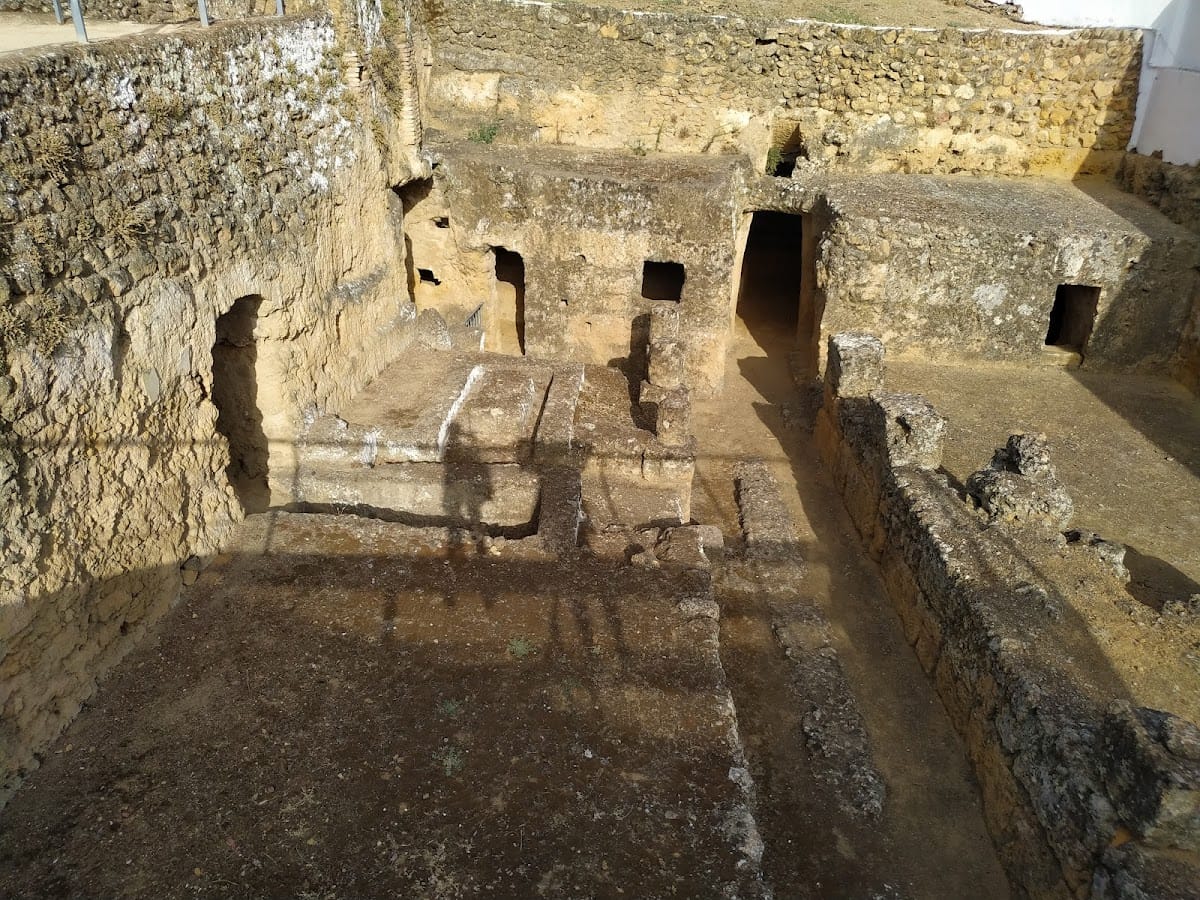
The ensemble covers approximately eight hectares in western Carmona, outside the city. Its principal remains are the Roman necropolis and amphitheatre. Within the necropolis, rock-cut chambers, ashlar-built structures, courtyards, passages, benches, niches, paintings, sculptures, and cremation features reveal a varied funerary complex.
Principal archaeological areas
Roman necropolis
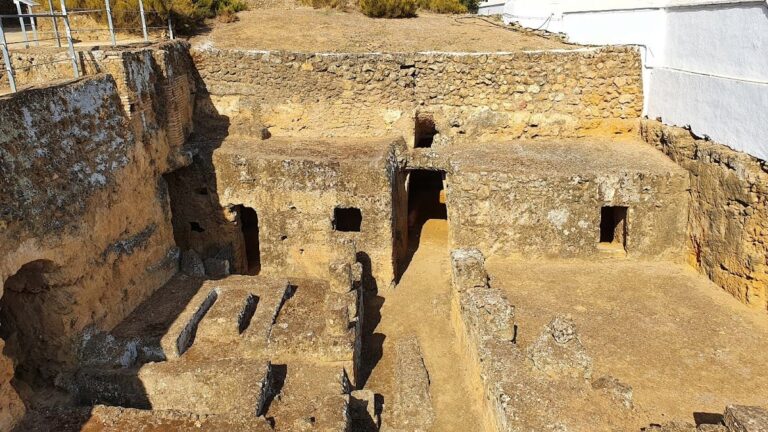
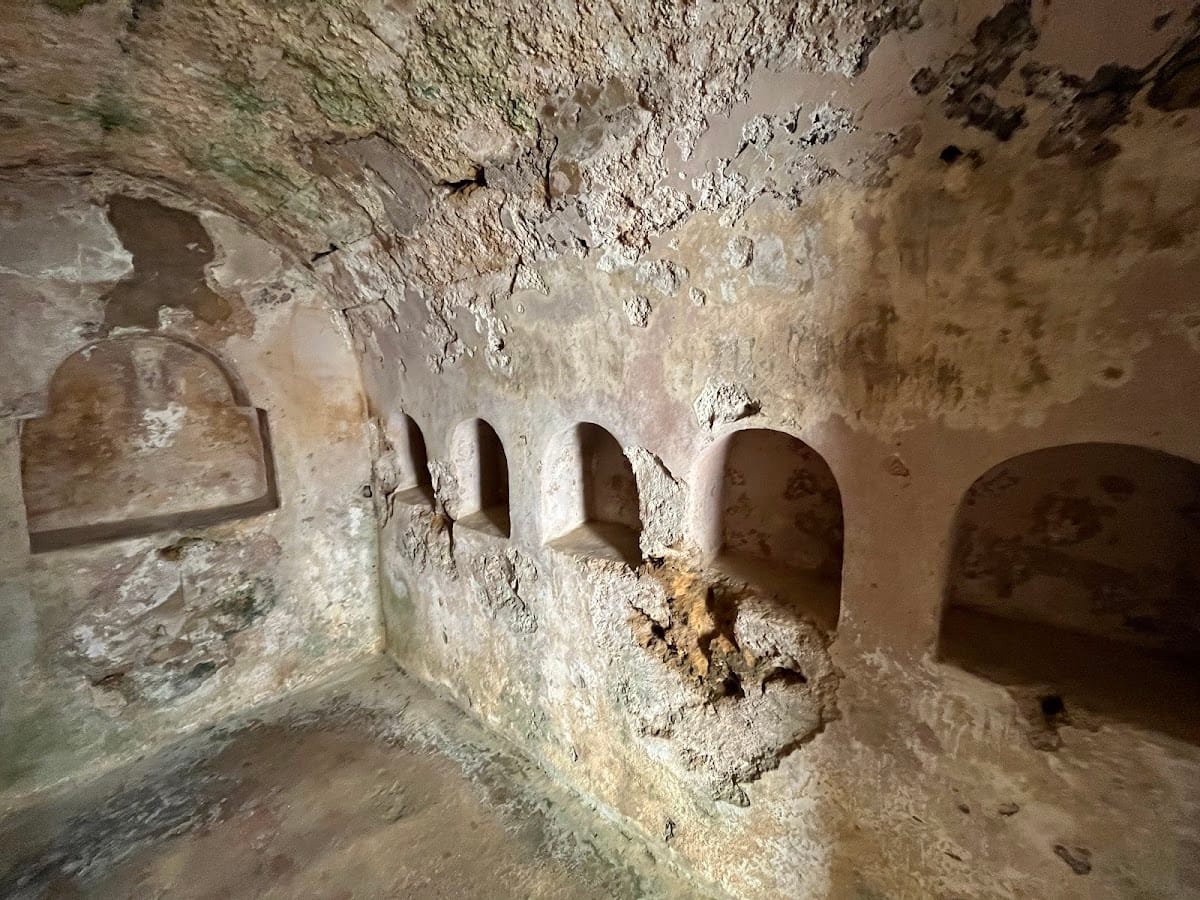
The necropolis contains funerary chambers cut into the rock alongside structures built or reinforced with ashlar blocks. Several tombs preserve benches and wall niches, while others retain stucco, painted decoration, architectural elements, or evidence of burial and cremation practices.
Amphitheatre
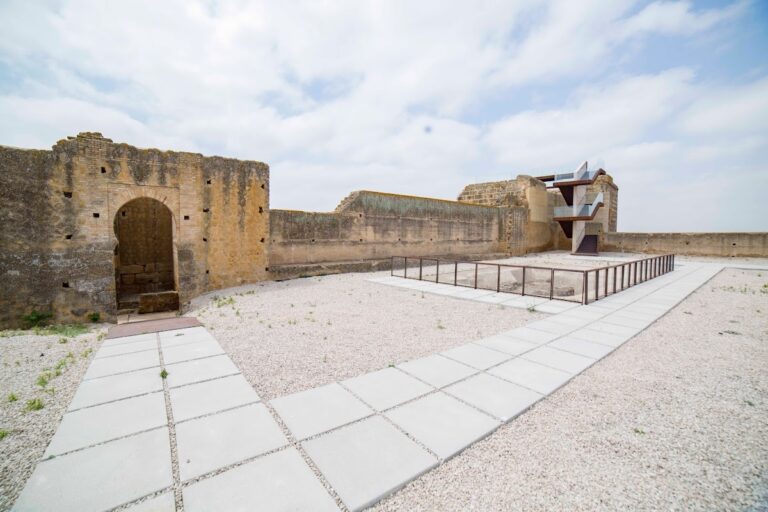
The amphitheatre forms the ensemble’s other principal area. It was discovered during excavations that resumed in the Civil War period and is considered the first amphitheatre built in Spain.
Major tombs and funerary features
Circular Mausoleum Tomb
The Circular Mausoleum Tomb is a solid round building made from ashlar blocks. Its rectangular funerary chamber was cut into the rock and has a barrel vault and eleven niches. It is the only mausoleum in the necropolis that retains both its chamber roof and part of its outer structure.
Elephant Tomb
The Elephant Tomb is arranged around a large courtyard with a central passage. Rock-cut spaces include a funerary chamber, kitchen, storeroom, dining chamber, and lateral chambers, while ashlar blocks were used in the courtyard. The complex had the character of a sanctuary dedicated to Attis and Cybele, deities associated with a religious cult that spread through the Roman world from the eastern Mediterranean. Cybele was represented by a betyl, an ovoid sacred stone regarded as a representation or embodiment of a deity. A sculpture of an elephant associated with this eastern cult was found inside, and traces of stucco survive in parts of the complex.
Four Departments Tomb
The Four Departments Tomb is a shaft tomb cut into the rock. A central passage leads to four matching rectangular compartments. Each has a continuous bench and five niches, and much of the white stucco covering the walls remains.
Garlands Tomb
The Garlands Tomb is a large rock-cut funerary chamber with thirteen niches and a continuous bench. A broad circular opening in the ceiling once linked the chamber to an exterior building that no longer survives. Its name comes from reddish garland designs painted on the interior walls.
Servilia Tomb
The Servilia Tomb combines rock-cut construction with large ashlar blocks to form a Roman house-like structure, or domus, around a broad courtyard with a portico. A subterranean gallery on the north side leads to a passage and then to the spacious principal chamber. This chamber was cut into the rock and has a dome with large ribs converging on a central oculus, a circular opening at the centre of a roof or dome.
Another underground chamber with a shallow vault opens in the middle of the northern boundary wall. It contains a sarcophagus originally found in the principal chamber. The access passage has mural paintings, including a female figure facing a balance. Some of the necropolis’s finest sculptures were found here, including the sculpture of Servilia and the sculpture of the Infant.
Square Mausoleum Tomb
The Square Mausoleum Tomb preserves part of its rectangular outer enclosure, constructed from irregular stones and mortar. A shaft provides entry to the rock-cut funerary chamber, which has a continuous bench and six niches.
Four Columns Tomb
The Four Columns Tomb is an underground chamber cut into the rock and reached by a staircase. Four pillars carved from the rock stand at its centre and form the chamber’s axis. Niches are arranged along the sides within a series of recesses.
Postumius Tomb
The Postumius Tomb is entered through a rock-cut courtyard containing traces of an ustrinum, a place used for cremating the dead. An altar was cut into one corner. Elaborate frescoes once covered the walls and ceiling, and surviving sections bear the signature of C. Silvanus. The tomb contains an inhumation burial.
Ustrinum
The Ustrinum is a rectangular pit cut into the rock, with a second rectangular cavity in its centre. It was built for cremation and was later used as a tomb. An urn containing ashes and associated grave goods was found inside, together with a covering of tiles or stone slabs. Stelae marked the exterior.