Castle of Csesznek: A Medieval Hungarian Fortress

Visitor Information
Google Rating: 4.7
Popularity: Medium
Google Maps: View on Google Maps
Official Website: csesznekivar.hu
Country: Hungary
Civilization: Unclassified
Remains: Military

History
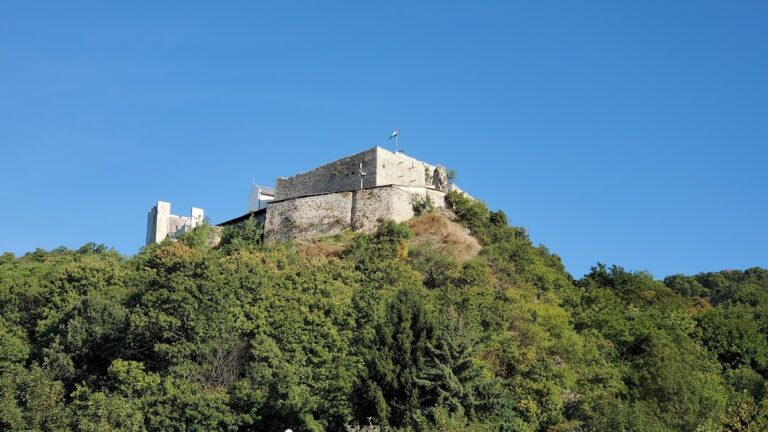
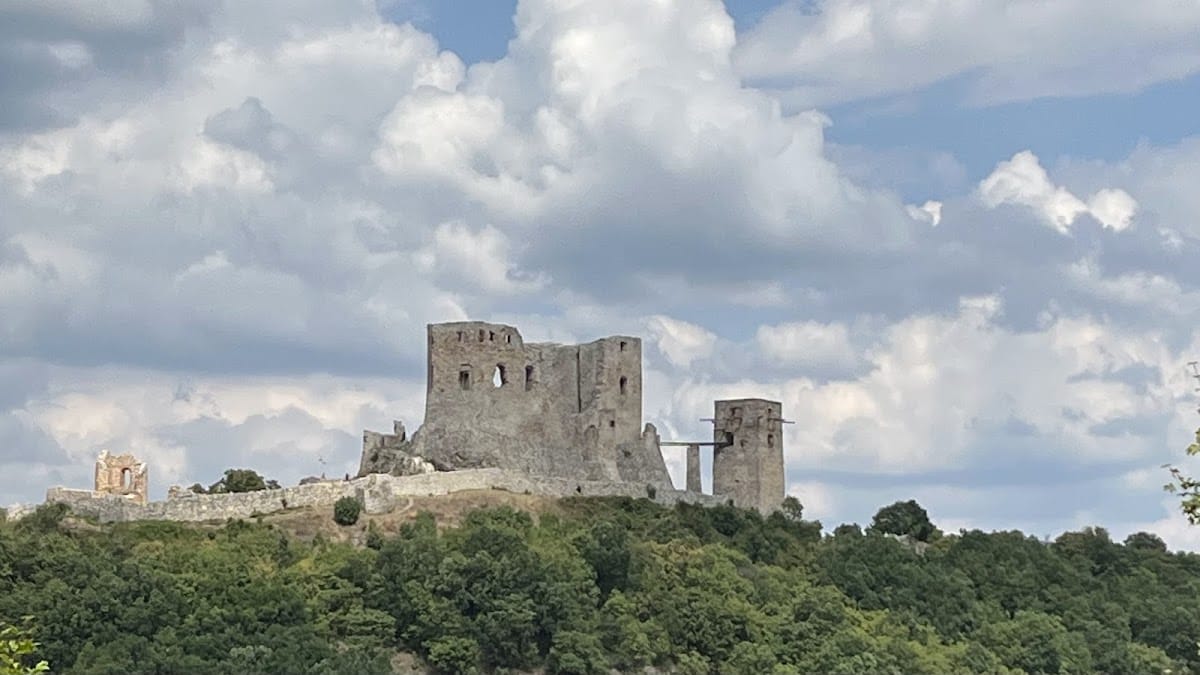
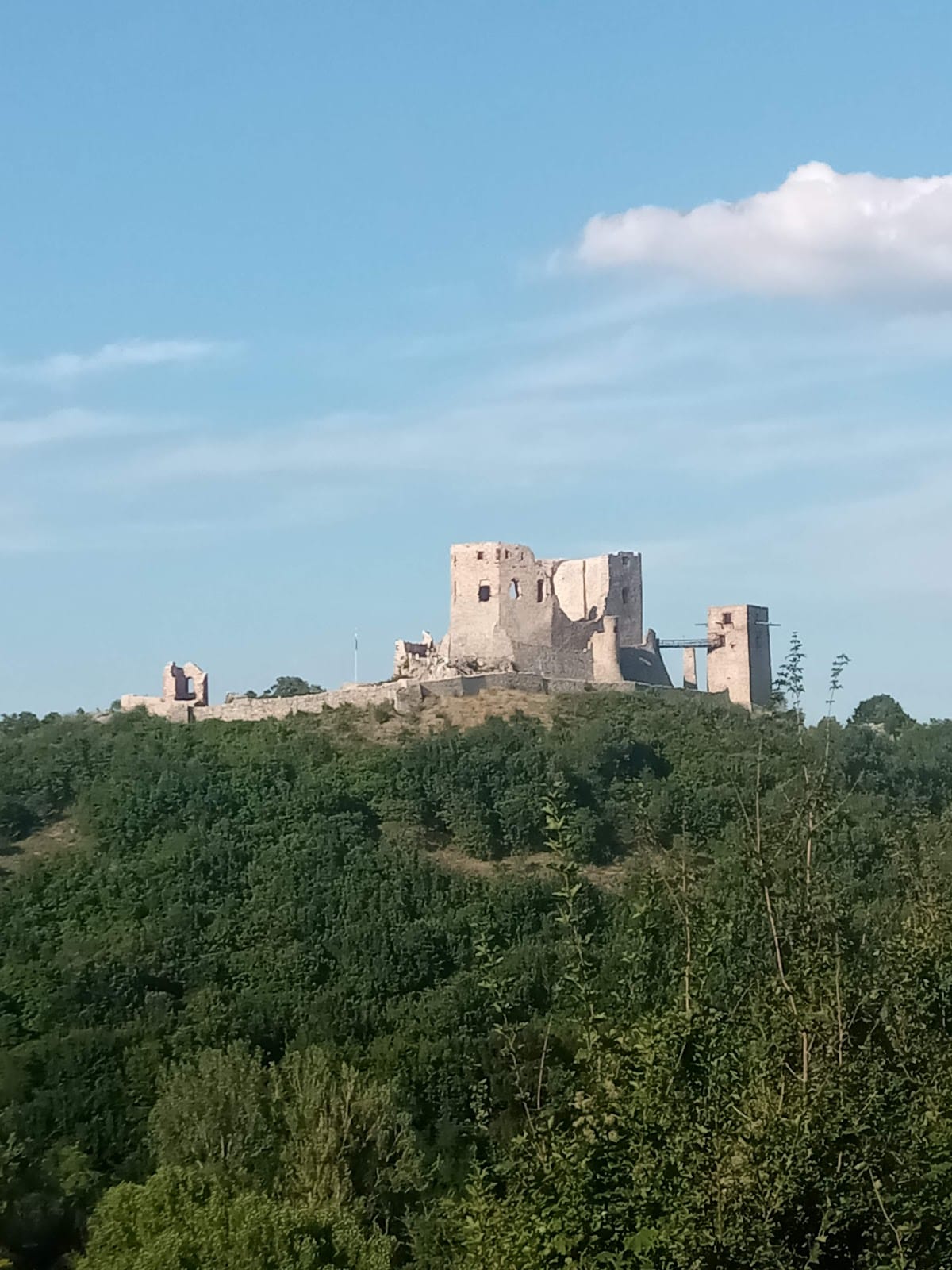
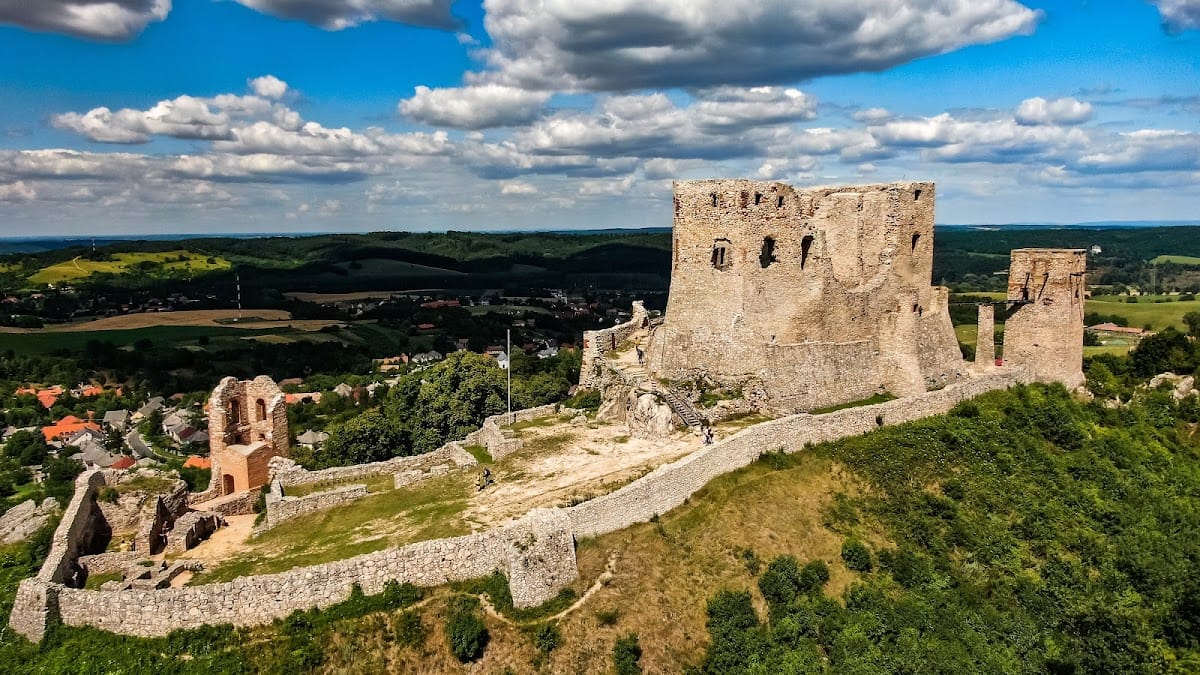
The Castle of Csesznek stands on a rocky hilltop above the village of Csesznek in Hungary, built by the medieval Hungarian kingdom in the mid-13th century. Its origins date to the aftermath of the Mongol invasion of 1241–42, a time when fortification construction became a priority across the region.
Around 1263, Jakab Cseszneki, a royal swordbearer connected to the Bána clan, founded the castle. This initial stronghold, positioned for defense, first appears in written records in 1281, which note its ownership shared among Jakab’s sons. In the early 14th century, control shifted briefly when the Csák clan took the fortress in 1315. However, by 1323, the Cseszneki family regained possession and subsequently sold the castle to members of the Csák clan for the village of Pázmándfalu and a payment of 100 silver denars.
The castle became part of the royal estate under King Charles Robert. Later, in 1392, King Sigismund granted Csesznek along with thirty-one nearby villages to the noble Garai family in exchange for their lands in the south. The Garai line maintained the castle until the male line ended in 1482. The following year, King Matthias transferred ownership to his treasurer, István Szapolyai.
By the early 16th century, the castle experienced a series of rapid changes in stewardship. After falling under Ferdinand I’s domain in 1527, it was given to Pál Bakics until his death in 1537. Subsequently, notable owners included Bálint Török, István Csaby—captain of nearby Eger—and later the families Csaby and Wathay. Under captain Lőrinc Wathay’s leadership, the fortress assumed an important military role as a border defense against the advancing Ottoman forces. Wathay died in 1573 from an accidental explosion which occurred when he ignited an old, powder-filled cannon while intoxicated.
Following the fall of the strategic city of Győr in 1594, Ottoman troops captured the castle. Hungarian forces reclaimed it in 1598. The early 1600s saw the fortress change hands multiple times, including surrender to the forces of the Hungarian noble István Bocskai in 1605 and being seized by commanders loyal to Gabriel Bethlen in 1619. With the Peace of Nikolsburg in 1622, the castle returned to royal authority.
During the early 18th century Rákóczi War of Independence, the castle served as a storage site for weapons and supplies, as well as a prisoner-of-war camp. It successfully resisted imperial sieges in 1708 but was overtaken the following year. Afterward, the Esterházy family, who acquired the castle, transformed it from its rough medieval state into a more comfortable Baroque residence. By 1780, the noble family had vacated the property, and servants continued occupancy until damage from an earthquake combined with a fire left the castle uninhabitable.
Excavations conducted between 1967 and 1969 uncovered aspects of the original 13th-century construction beneath the later structures, providing valuable insight into its early form despite the majority of ruins dating from the 16th century. The castle’s stone exterior was used in the 1947 film “Valahol Európában.” In recent years, climbing routes known as via ferrata were established nearby, and renovation efforts have been underway since 2017 as part of a national heritage program.
Remains
The Castle of Csesznek reveals a complex layout that evolved over centuries, with its earliest medieval foundations hidden beneath present visible walls. Archaeological work uncovered remnants of the original 13th-century fortress situated below the southwestern section of the upper castle. This earliest form consisted of a modest rectangular building, subdivided internally by cross walls into several smaller rooms. This initial structure was completely dismantled in the 14th century, making way for a new phase of construction.
In the 15th century, the castle was rebuilt upon a fresh base, combining a rectangular form with an adjoining pentagonal section that enclosed a central courtyard. The southern side hosted lower economic buildings that likely served practical functions such as storage or workshops, while the remaining walls formed residential areas. A notable element was a small semicircular tower on the castle’s southern edge, adding both defensive and architectural variety to the complex.
Entrance to the fortress was through the northwest side, where a gate protected by what was probably a drawbridge once stood. This is supported by the survival of a lintel stone bearing the coat of arms of the Garai-Cillei family, linking the castle’s grandeur to its influential 15th-century owners. Several finely carved stone fragments from this upper part of the castle, now preserved in the Hungarian National Museum, attest to the skill and wealth invested in its construction during the Garai family period.
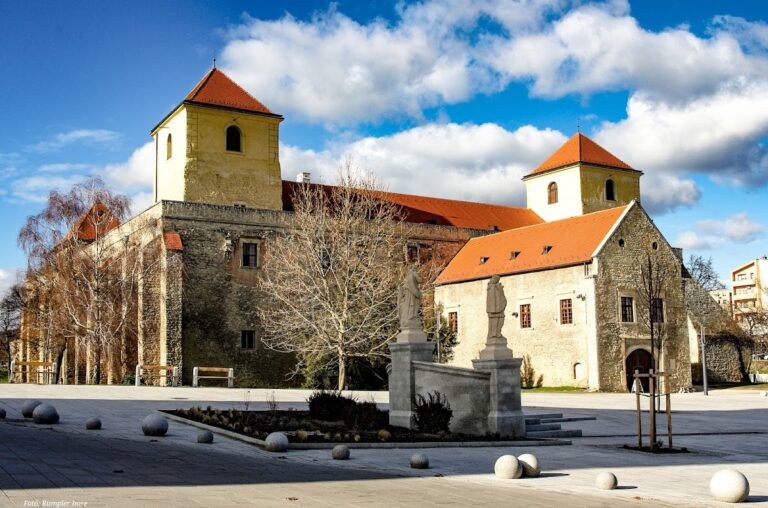
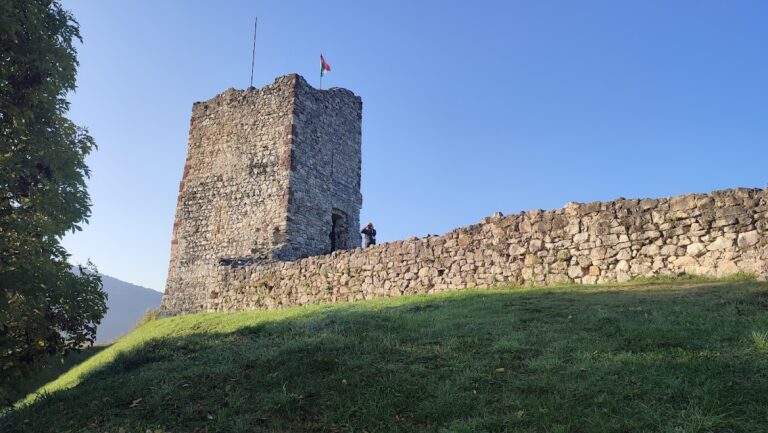
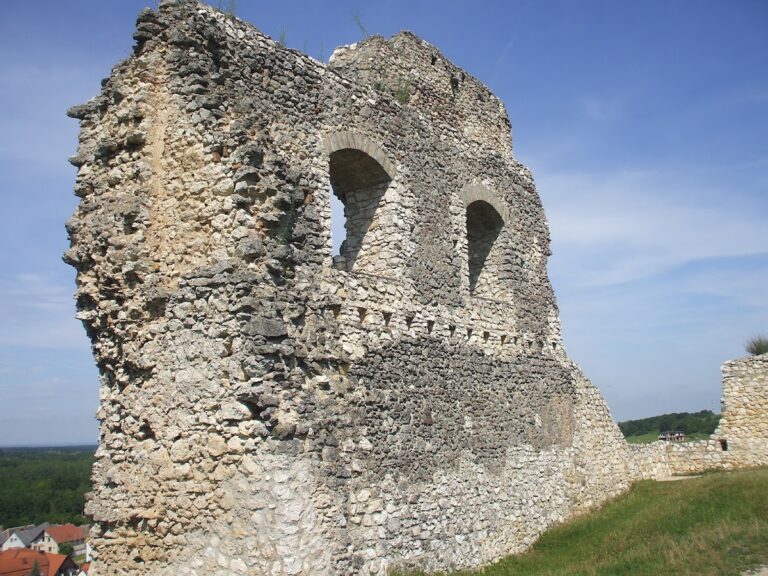
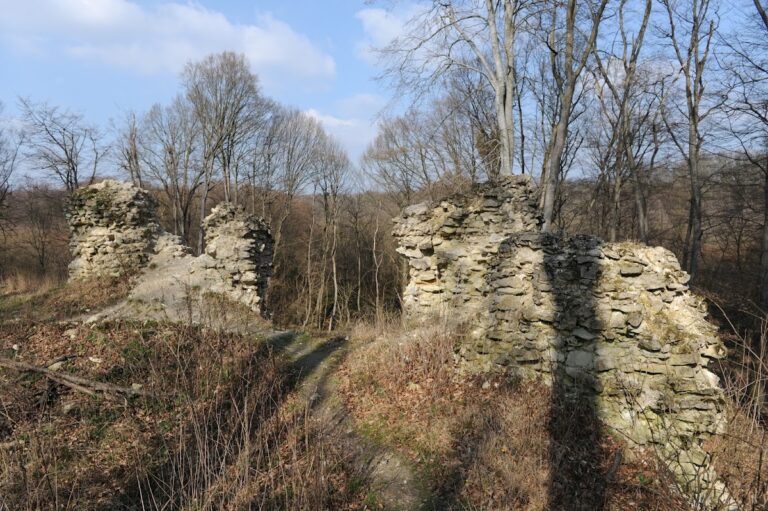
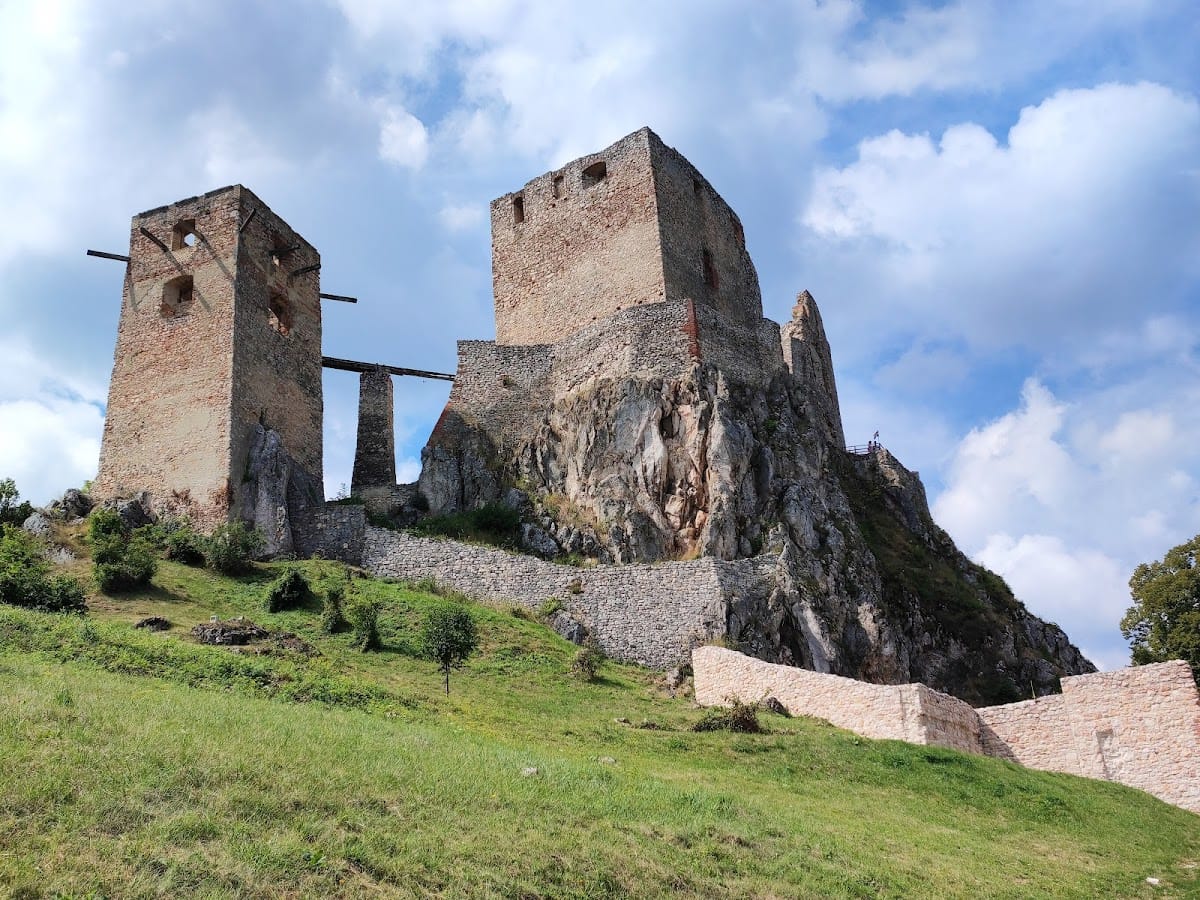
Most of the visible ruins date from the 16th century, reflecting modifications made to strengthen the castle’s defenses against Ottoman attacks. Rising atop a rocky peak, the castle’s position remains a dominant feature, emphasizing its strategic military role throughout history. Today, the remains retain a fragmentary yet evocative presence, revealing its layered past through surviving stone walls and architectural details that connect visitors to medieval Hungary’s turbulent centuries.
Nearby sites