Gerencsérvár: A Medieval Hungarian Residential Tower and Hunting Estate

Site at a Glance
- Rating
- 4.3
- Popularity
- Very Low
- Country
- Hungary
- Primary era
- Medieval
- External website
- Open
- Eras represented
- Medieval
- Civilizations
- Hungarian
- Site type
- Military
- Remains
- Castle
On this page6 sections
History
Gerencsérvár is a medieval Hungarian fortified residence in Oroszlány, Hungary, developed largely after the Mongol invasion as part of a stronger defensive system in the Vértes range. Together with Gesztes Castle and Oroszlánkő Castle, it helped protect the valley entrance toward Csákvár.
From Udvarhely to Gerencsér
The site appears in a 1231 will by Csák Miklós, brother of Ugrin, the Archbishop of Esztergom, Hungary’s senior Catholic ecclesiastical office. The castle was named Wdvorhel, or Udvarhely. After Udvarhely passed from the Csák family into royal hands, its name gradually became Gerencsér. The later name may have referred to potters who settled among the castle’s population.
By 1330, documents called the estate Gerencher. Its ownership and administration then involved both royal huntsmen and Pál, son of Györke of the Csák kindred, who served as a royal page. These references place Gerencsér within the network of royal and noble lands that shaped the medieval Vértes.
Royal hunting estate
For approximately two centuries, Gerencsér served as a royal hunting estate. Louis I of Hungary, also known as Louis the Great, especially favored it as a hunting lodge. The fish-rich Szépvíz stream and Fekete-víz Brook added to the appeal of the surrounding estate.
Gerencsér also hosted royal diplomacy. On 6 December 1366, Louis I held discussions there with envoys of the Republic of Venice about a planned campaign against the Turks.
The Holy Crown and later abandonment
Gerencsér became involved in the movement of the Hungarian Holy Crown during the succession crisis of 1440. The crown was the historic coronation object associated with the legitimacy of Hungary’s kings. After King Albert died on 17 October 1439, his widow, Elizabeth of Luxembourg, sought the throne for their unborn son, while the Hungarian estates invited Władysław III of Poland to become king.
Elizabeth entrusted her confidante Kottaner Jánosné with taking the crown from Visegrád. After it was smuggled out and the party departed Komárom, the group spent its first night at Tata before reaching Gerencsér. Kottaner Jánosné later remembered the hunting lodge as a very cold and poorly provisioned shelter.
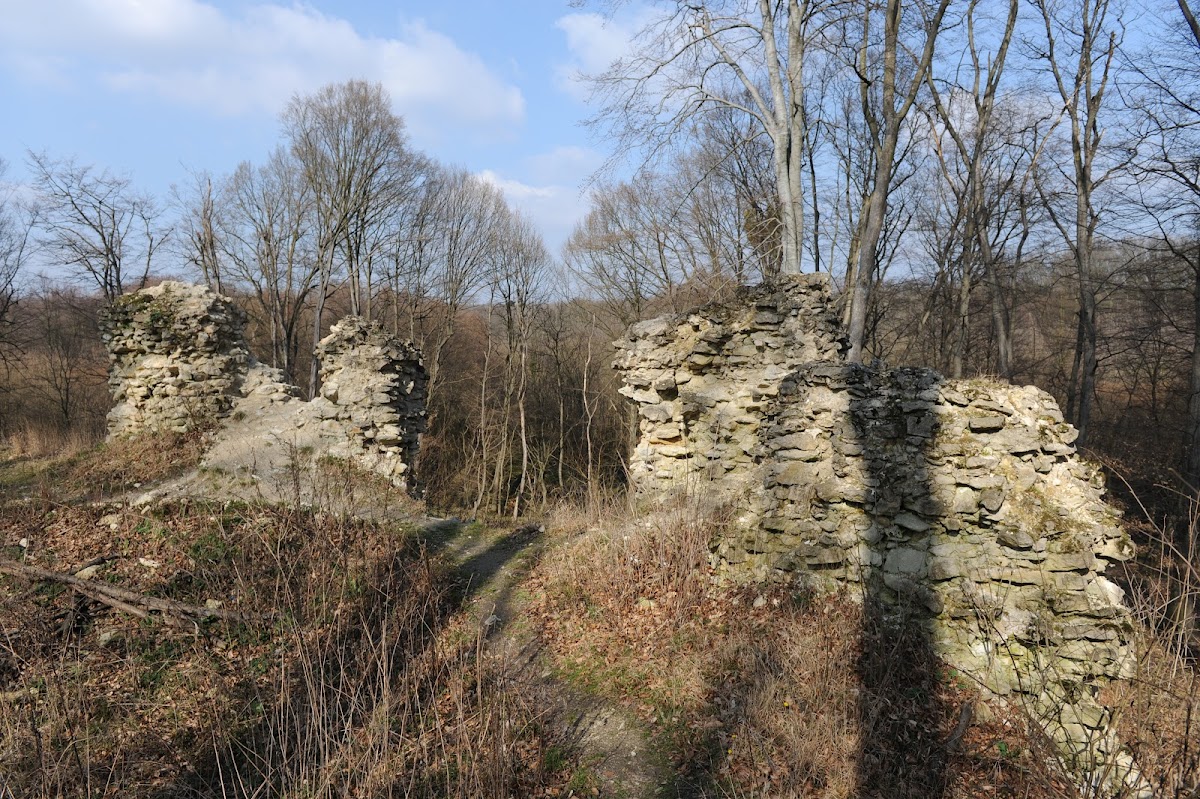
During the Ottoman period, a village was attached to the castle. The settlement later disappeared, and the castle was abandoned during the sixteenth century. The surviving ruins now face severe deterioration.
Remains
Tower and setting
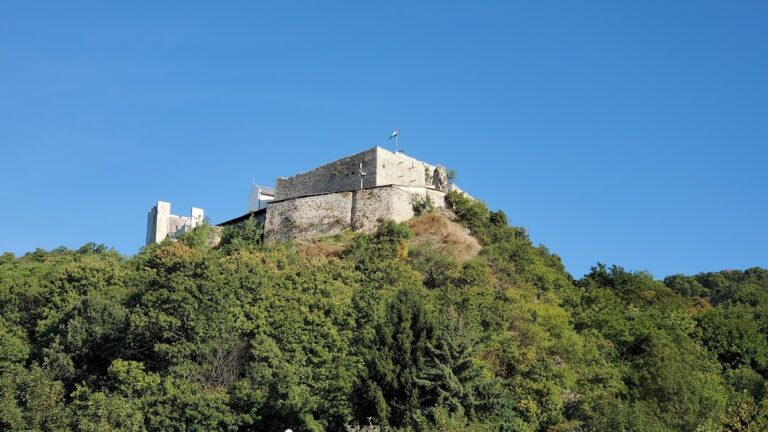
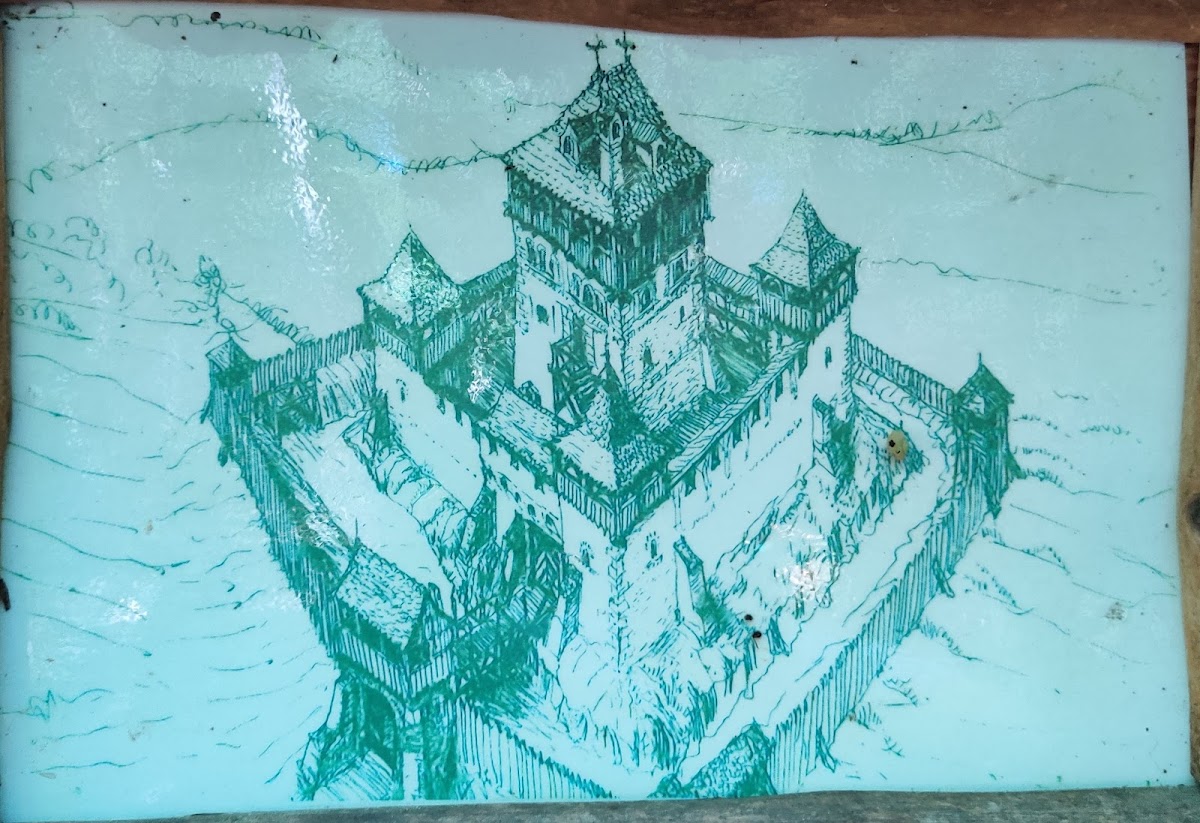
Gerencsérvár occupies a wooded plateau of the Vértes at approximately 240 metres above sea level, west of Oroszlánkő Castle. Its eastern-facing facade overlooks the Szépvíz stream below, while the site is also associated with Fekete-víz Brook. The surviving structure is best understood as a substantial aristocratic residential tower rather than a large castle complex.
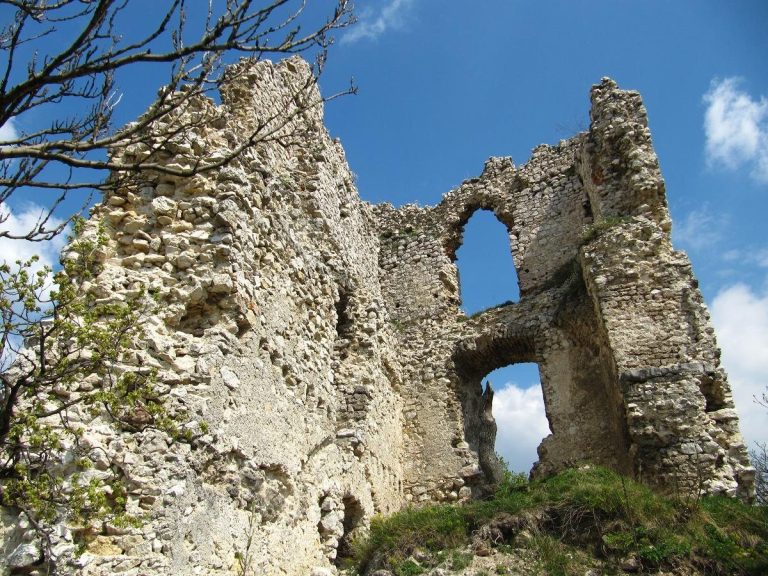
The stone tower measured approximately 13 metres in length and 8.7 metres in width. Its large, thick walls supported probably two or three storeys. The building provided a refuge for the castle lord and his family, while soldiers were stationed there as part of the site’s defensive role.
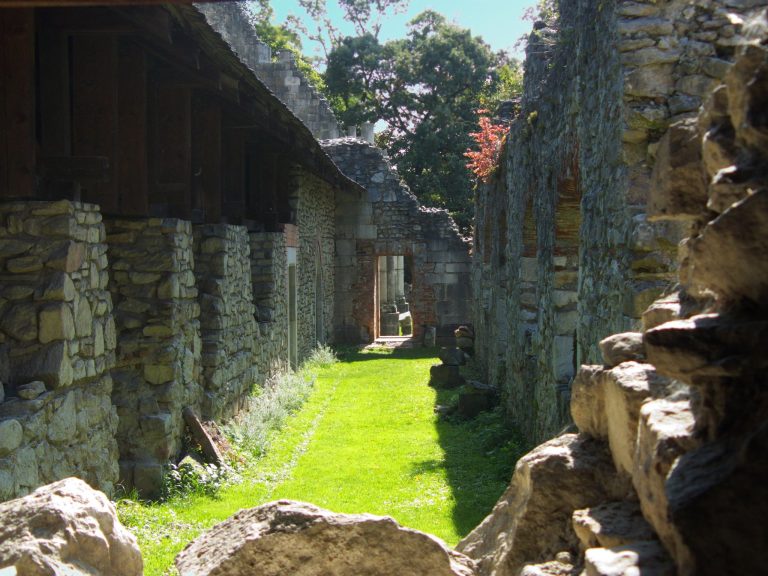
Each storey had a separate stairway that could be closed off, allowing the occupants to control movement within the tower. The former tower now survives as strongly crumbling stone ruins, preserving the main physical trace of Gerencsér’s residential and defensive function.