Terme Taurine: An Ancient Roman Thermal Complex near Civitavecchia
Visitor Information
Google Rating: 4.2
Popularity: Low
Google Maps: View on Google Maps
Official Website: www.prolococivitavecchia.com
Country: Italy
Civilization: Roman
Remains: Sanitation

History
Terme Taurine, also known as the Baths of Trajan, is located near Civitavecchia in the province of Rome, Italy. This ancient Roman thermal complex sits on a hill overlooking the Tyrrhenian Sea, about four kilometers east of the modern town. The site was originally developed by the Romans, taking advantage of natural sulphurous hot springs in the area.
The earliest phase of the baths dates back to the Roman Republican period, around 86 BC. At that time, the complex was established near the settlement called Aquae Tauri. This name, meaning “Waters of Taurus,” likely connects to Titus Statilius Taurus, a Roman prefect and amphitheatre builder who may have been a patron of the site. The baths served local residents and travelers, benefiting from the natural thermal springs.
Between 123 and 136 AD, the complex underwent major expansion under Emperors Trajan and Hadrian. This enlargement transformed the baths into a larger, more elaborate facility, coinciding with the development of the nearby port of Centumcellae by Trajan. The baths became a favored stop for visitors arriving by sea, reflecting their importance in the region during the Imperial era.
The baths continued in use through late antiquity. They are mentioned in the early 5th century by the poet Rutilius Claudius Namatianus and again in the late 6th century by Pope Gregory the Great. However, during the Gothic-Byzantine wars, the site suffered from looting and the removal of valuable marble, which contributed to its decline and eventual abandonment.
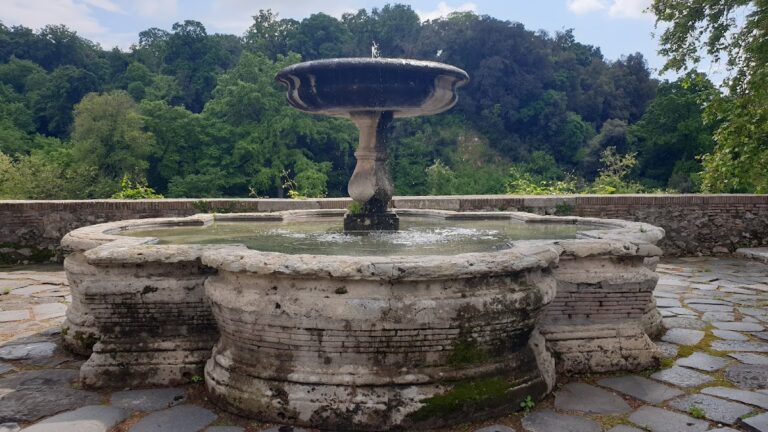
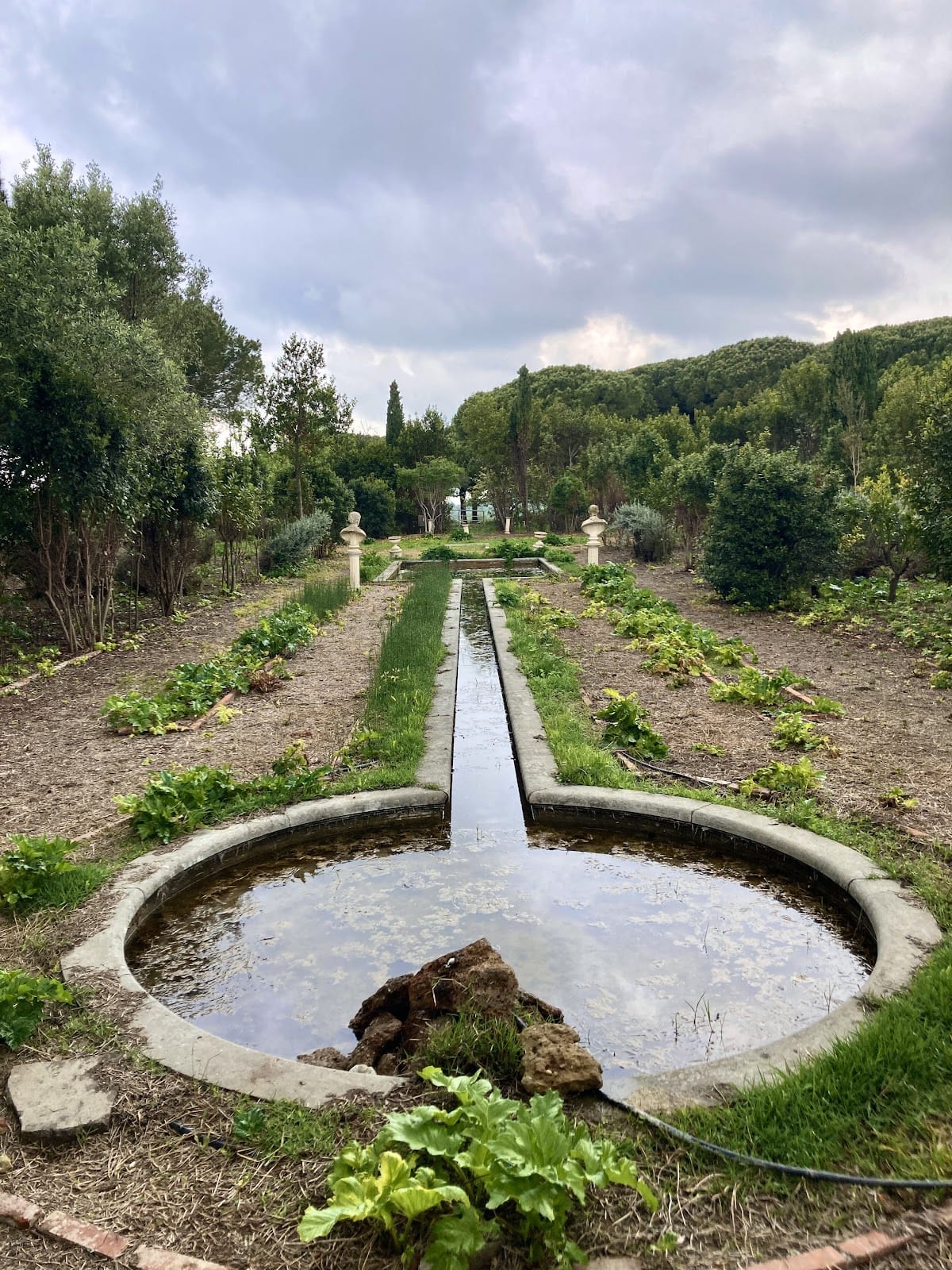
Excavations of Terme Taurine began in 1770 under the Papal States, who also created an Italian-style garden nearby. Archaeological investigations and restorations have continued into the 20th and 21st centuries. After extensive conservation, the baths reopened to the public in 2020. There are current proposals to nominate the site as a UNESCO World Heritage Site, recognizing its historical and cultural significance.
Remains
The Terme Taurine complex consists of two main sections: the earlier Republican baths and the larger Imperial baths built under Hadrian. The layout occupies a hilltop site with views of the sea, combining natural hot springs with Roman architectural design.
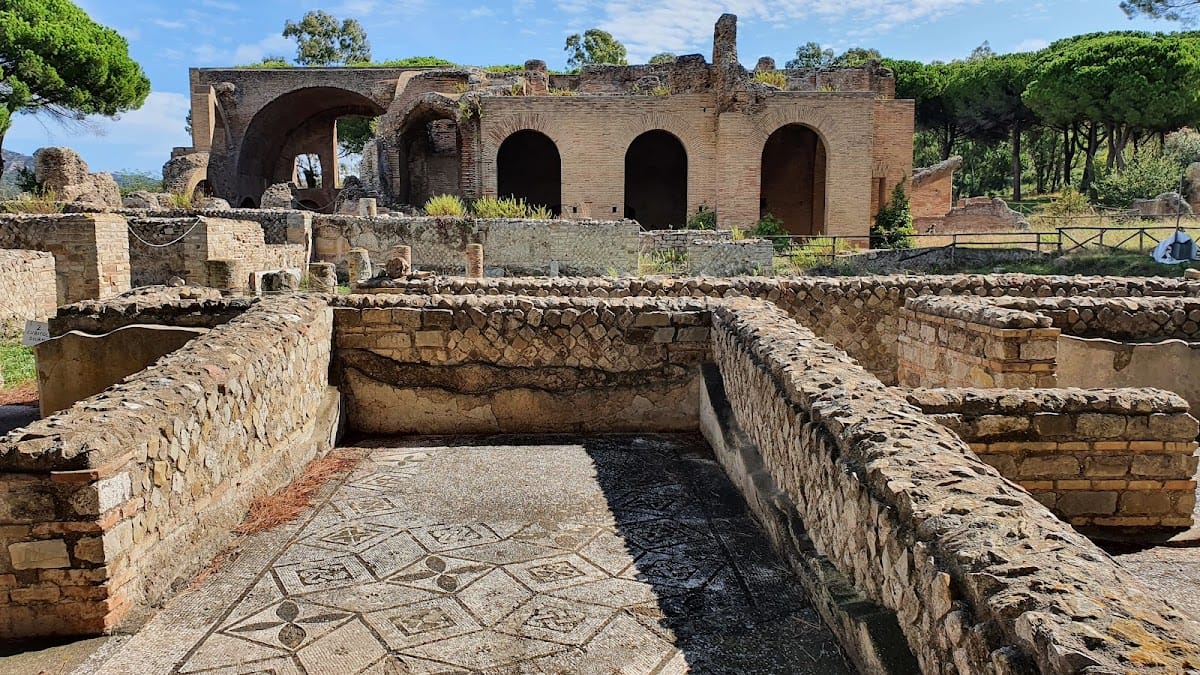
The Republican baths date from the 2nd to 1st century BC. This area includes an atrium with a mosaic floor featuring star and diamond patterns. A large semicircular exedra likely served as a space for changing clothes and exercise. A domed round bath originally supplied by hot springs was later converted into a dry heat room called a laconicum, with a raised marble floor supported by brick columns. Surrounding these baths is a peristyle garden with octagonal columns, adjacent to rooms with mosaic floors used for social and therapeutic purposes.
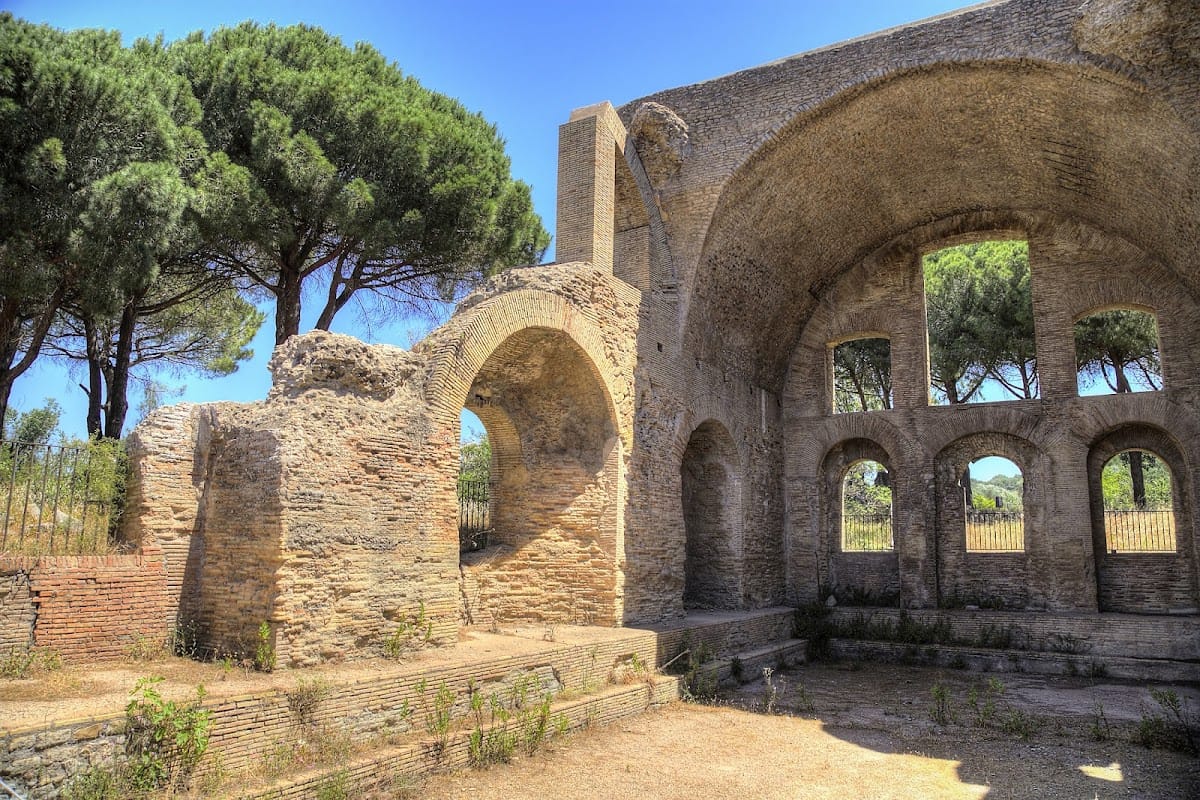
The Republican caldarium, or hot bath, has a basilica-like design with two rows of travertine columns. It contains a large central hot bath and three smaller tubs fed by sulfurous spring water. Under Hadrian, the original columns were replaced by embedded half-pillars supporting a vaulted roof decorated with Ionic capitals. At the end of the caldarium, a marble altar dedicated in Greek to the Nymphs by Alcibiades, a freedman of Hadrian, is set in an apse niche. Shelves nearby likely held votive columns representing water deities.
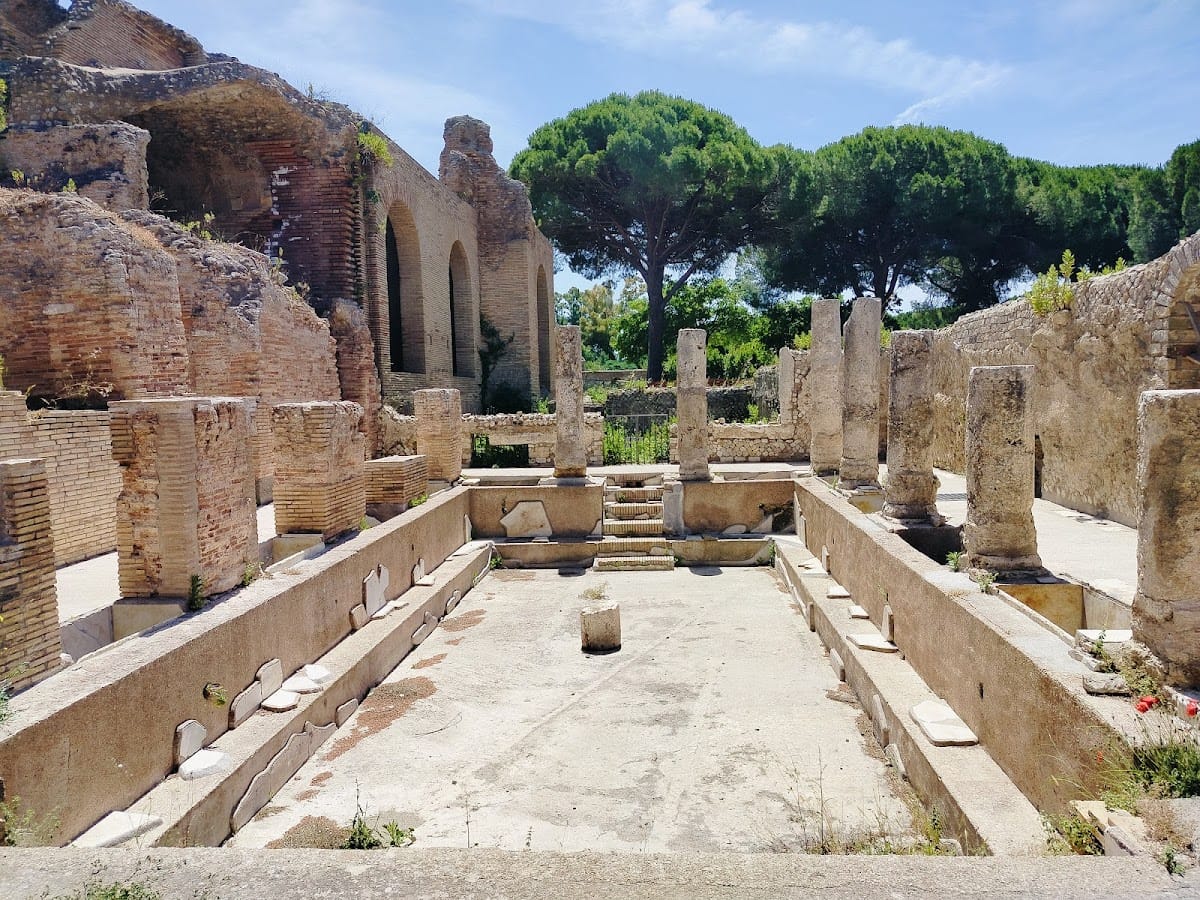
The Imperial baths, constructed between 123 and 136 AD, are larger and more elaborate. The calidarium measures approximately 23 by 9 meters and includes a large swimming pool lined with white marble slabs. The walls feature alternating square and semicircular niches that allow sunlight to enter through lead-anchored window panes. The pool was supplied with water heated to 47°C and insulated by piers beneath the floor, known as suspensura. A coffered vaulted ceiling with stucco decorations covers the space.
Adjacent to the Imperial baths is a suite of rooms designed for leisure and business activities. This includes a marble-decorated library with a porphyry floor and marble columns separating wall niches for scroll storage. Side rooms likely served as reading areas furnished with couches. The complex also contained shops and at least five individual latrines, similar to those found at Hadrian’s Villa. Some latrines were located near the large calidarium, the cryptoporticus (a covered corridor), and the winter triclinium, which had hypocaust heating to warm the room.
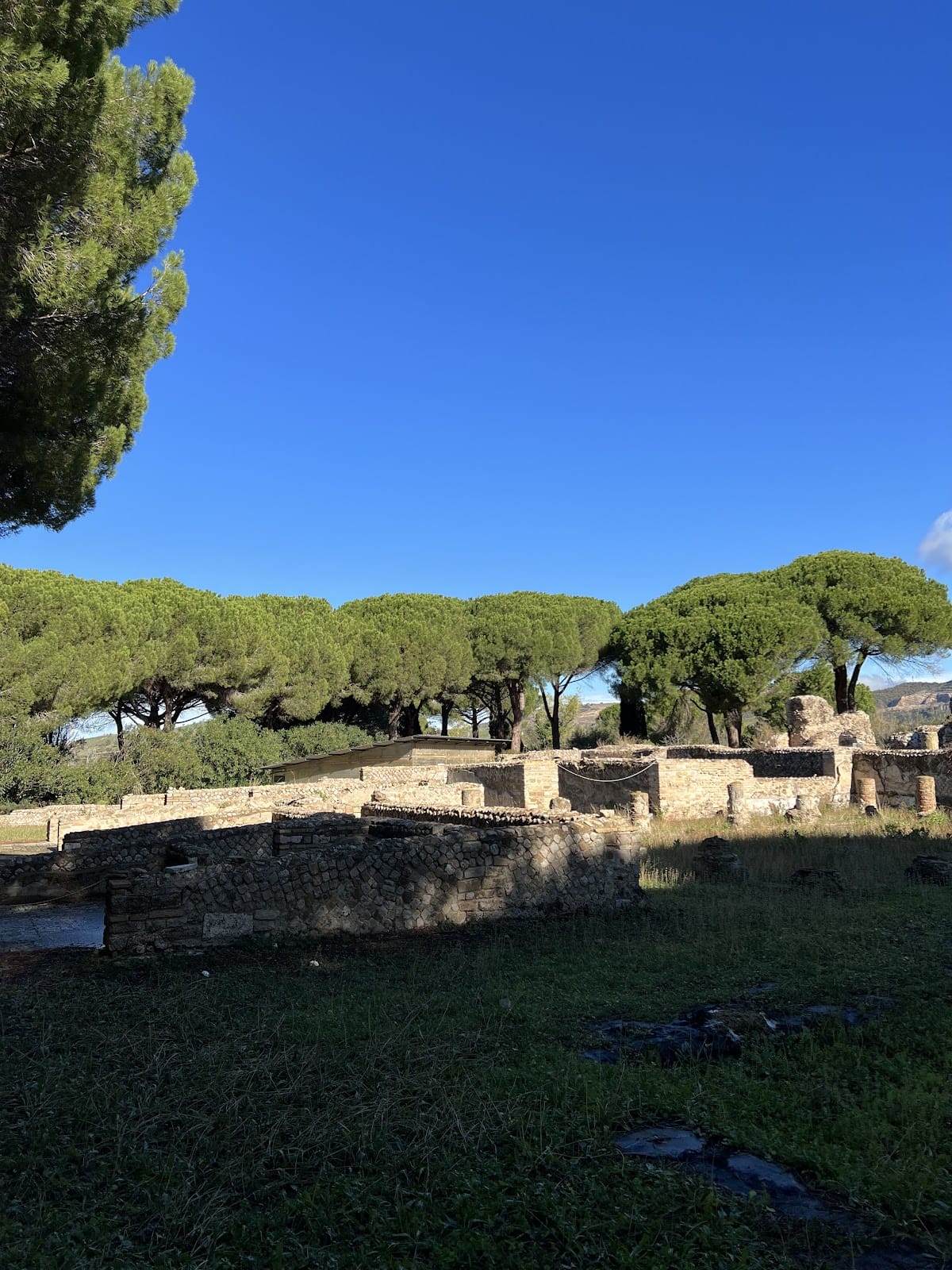
Today, many mosaics, marble decorations, vaulted roofs, and structural elements remain visible. The site functions as an archaeological park with ongoing conservation efforts preserving its historical fabric.
Nearby sites