Soběslav Castle: A Historic Fortress and Cultural Monument in the Czech Republic
Visitor Information
Google Rating: 4.6
Popularity: Very Low
Country: Czechia
Civilization: Unclassified
Site type: Military
Remains: Castle

History
Soběslav Castle is situated in the municipality of Soběslav in the modern Czech Republic. It was likely established in the 13th century by the Rožmberk family, a significant noble house in the region. The first recorded mention of the castle dates to 1385, marking the beginning of its documented history.
During the late medieval period, the castle played a notable role in regional conflicts. It served as a prison for King Václav IV after he was captured by Jindřich III of Rožmberk amid disputes among the nobility. The castle’s strategic position within the town’s defenses made it a key stronghold during the Hussite Wars in the early 15th century. In 1421, it successfully resisted an assault led by the renowned military leader Jan Žižka, and again in 1435, the castle withstood a siege by the Taborites. Despite the castle’s resilience, the adjacent town was set ablaze in both incidents. It is believed that the fortress itself suffered damage during a subsequent attack, although specific details are uncertain.
The mid-15th century brought further turbulence. In 1467, repairs were made to the town’s fortifications. A civil war followed in 1468 when Jan II of Rožmberk allied with the Zelená Hora faction. This affiliation resulted in the loss of the town, though the Rožmberks maintained control over the castle. The family regained possession of the town by 1481, restoring their influence in the area.
Between 1613 and 1615, Jan Jiří of Švamberk, acting on the wishes of Petr Vok of Rožmberk, transformed part of the castle into a Czech school. This period marked a shift from purely military use toward educational and civic functions. Following the devastation of the Thirty Years’ War, the castle’s role changed once again. It was repurposed to serve practical needs, first functioning as a granary and later being adapted into a brewery malt house, with operations continuing until 1951.
In the latter half of the 20th century, Soběslav Castle experienced significant decline. Restoration efforts began after 2001, aiming to preserve the structure and adapt it for contemporary use. By September 2010, the northern section of the castle was converted into a municipal library. Reflecting its historical importance, the castle has been protected as a cultural monument since 1963.
Remains
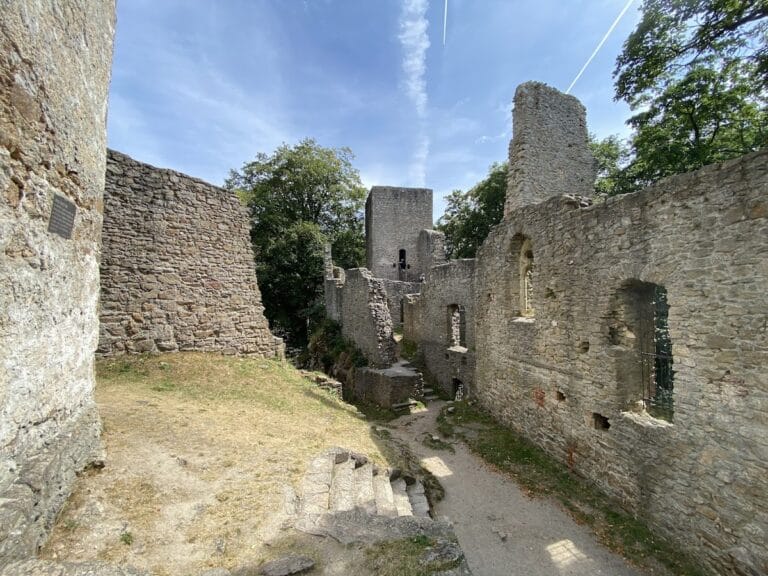
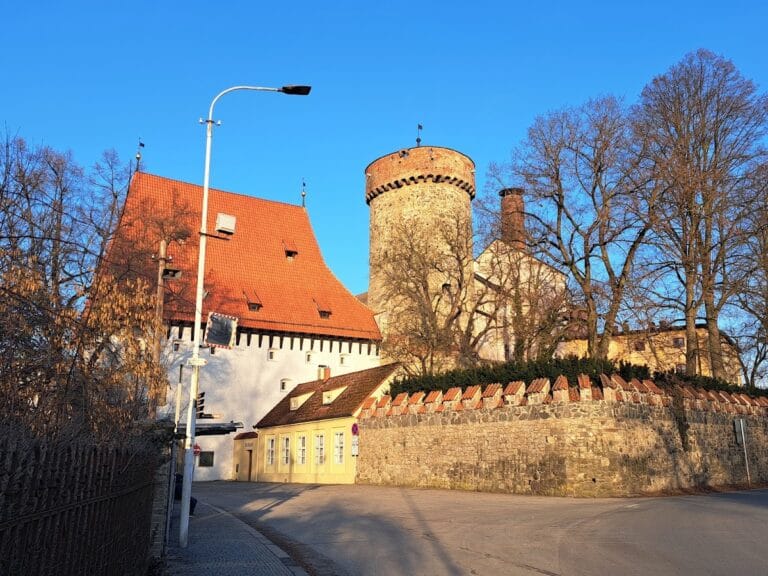
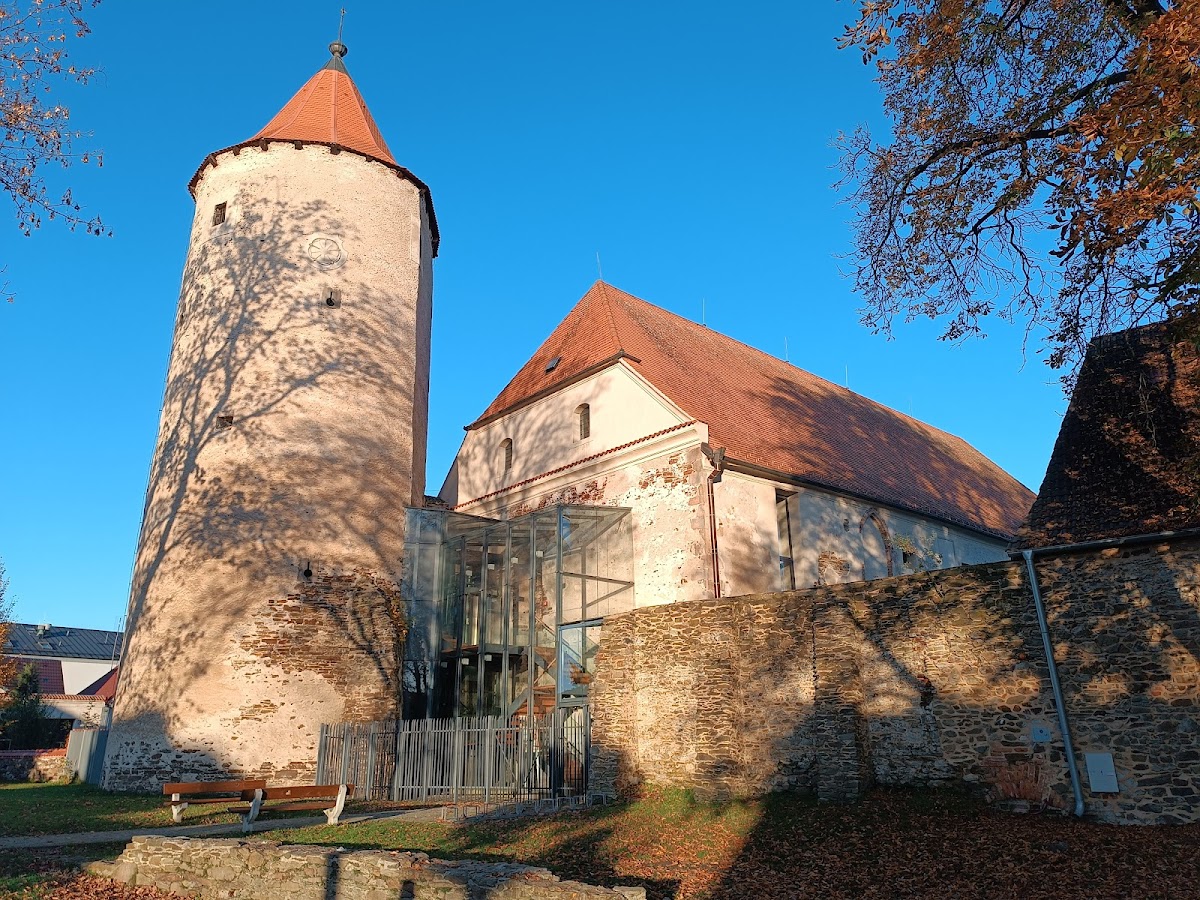
Soběslav Castle is integrally connected to the town’s defensive walls, forming part of the overall fortification system. Positioned in the northwest corner of the historic center, it stands at an elevation of 410 meters and displays architectural elements dating primarily to the medieval period and the Renaissance.
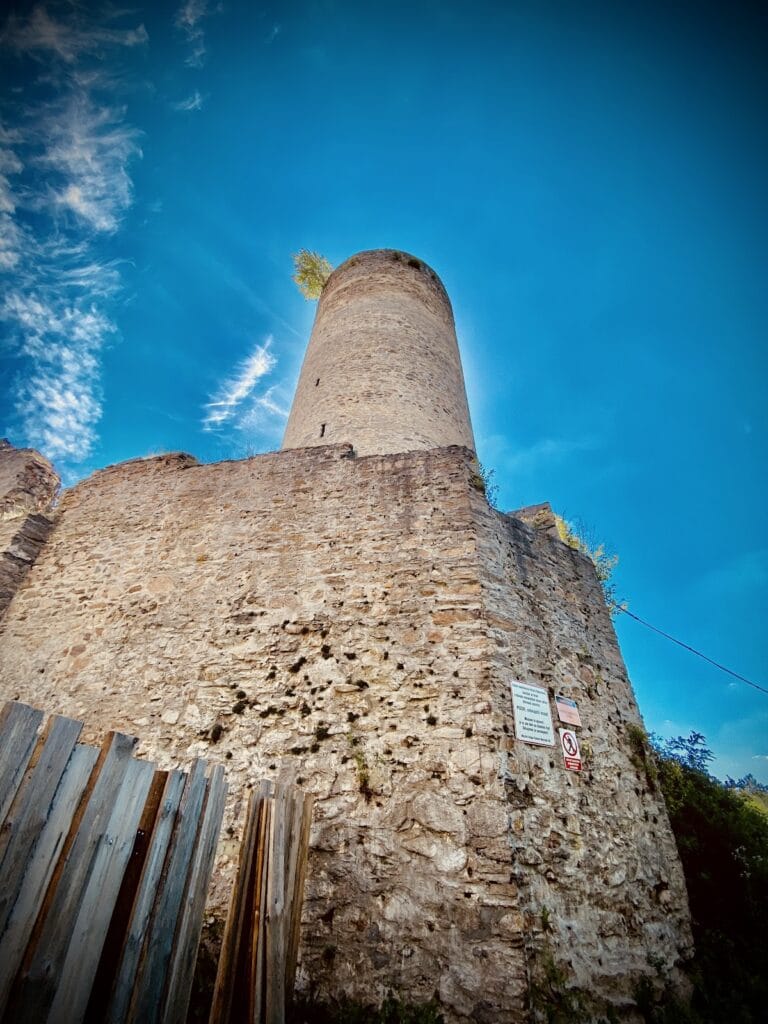
A prominent feature of the site is a three-quarter round tower characterized by a flat wall at the rear. This tower was likely built after the mid-15th century and was accessible through a stone portal shaped like a saddle, a curved and arch-like design providing both structural stability and defensive advantage. This tower would have been key in surveillance and defense.
Adjacent to the northern wall lies a rectangular palace with vaulted cellar spaces. The basement rooms are covered by barrel vaults—a type of curved ceiling resembling a tunnel—while the floors above have flat ceilings. The first floor includes a spacious hall, reachable through a preserved portal from a gallery on the courtyard side, accompanied by a smaller residential chamber dating from the late 14th century. These features indicate areas of noble residence and indoor activity.
On the southern side of the castle, a Renaissance-era building originally constructed as a school underwent several reconstructions over the centuries, reflecting its adaptive reuse from the early 17th century onward. The exact medieval layout of the castle’s exterior sections facing away from the town remains unclear.
Today, the castle’s surviving elements demonstrate a continuous evolution of form and function, from medieval fortress to educational and commercial use, with several parts preserved or restored to maintain their historical character.
Nearby sites