Roman Walls of Tongeren: Preserving Belgium’s Ancient Urban Fortifications

Visitor Information
Google Rating: 3
Popularity: Very Low
Google Maps: View on Google Maps
Official Website: www.tongeren.be
Country: Belgium
Civilization: Roman
Remains: Military

History
The Roman walls of Tongeren, located at Sabinuslaan 27 in present-day Tongeren-Borgloon, Belgium, were erected by the Romans during the 2nd century AD. Tongeren itself began as a Roman military encampment around 10 BC, situated on a plateau near the Jeker river. This settlement evolved into municipium Tungrorum, recognized as the earliest documented town in the region that later became Flanders. The walls were constructed to protect this important urban center, which served as a political, religious, and military hub in the area.
During the 2nd century AD, the walls formed part of an extensive defensive system, enclosing the city with a continuous rampart approximately 4.5 kilometers long. Tongeren maintained its significance through the late 3rd century, reflecting its role as a focal point of Romanization in the Low Countries. The town integrated local Celtic and Germanic traditions with Roman culture, evident in its urban layout and religious practices. The presence of dedications, such as the altar set up by the Menapian salt trader Catius Drousus to Jupiter and the city’s protective spirits, highlights the spiritual importance attributed to the site.
Following the Roman period, Tongeren transitioned into a bishopric, becoming a center for the spread of early Christianity in the region. Over subsequent centuries, many stones from the original walls were removed and repurposed for local construction projects, including churches. Despite this, a core section of the walls, featuring regularly spaced towers, has endured and is now recognized as a protected monument.
Remains
The Roman walls of Tongeren originally enclosed the city with a stone rampart extending roughly 4,544 meters in length. The fortifications stood about six meters tall and measured approximately two meters in thickness. The defensive structure included a series of evenly spaced towers, reflecting Roman military architectural principles. The city’s layout, including the walls, followed a Mediterranean-style grid plan characterized by straight streets, consistent with Roman urban design.
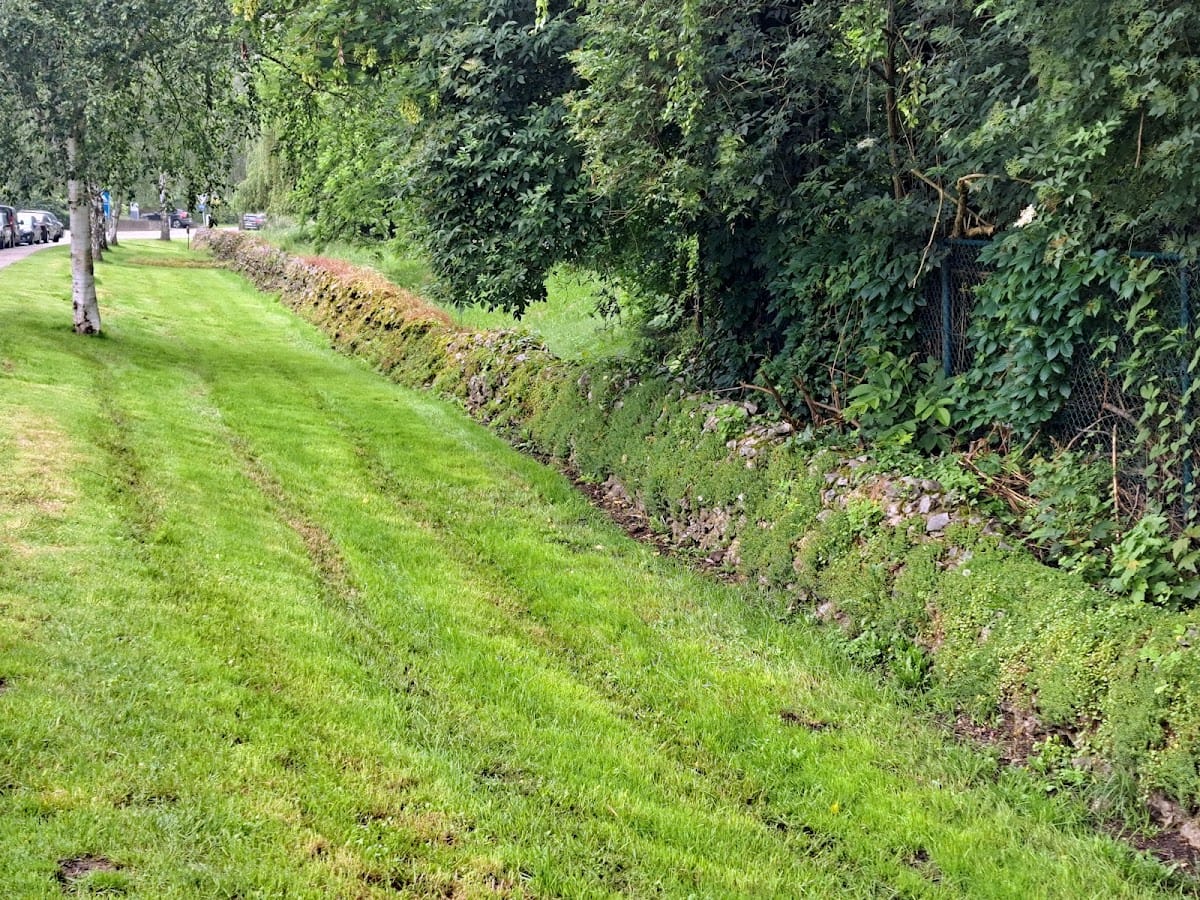
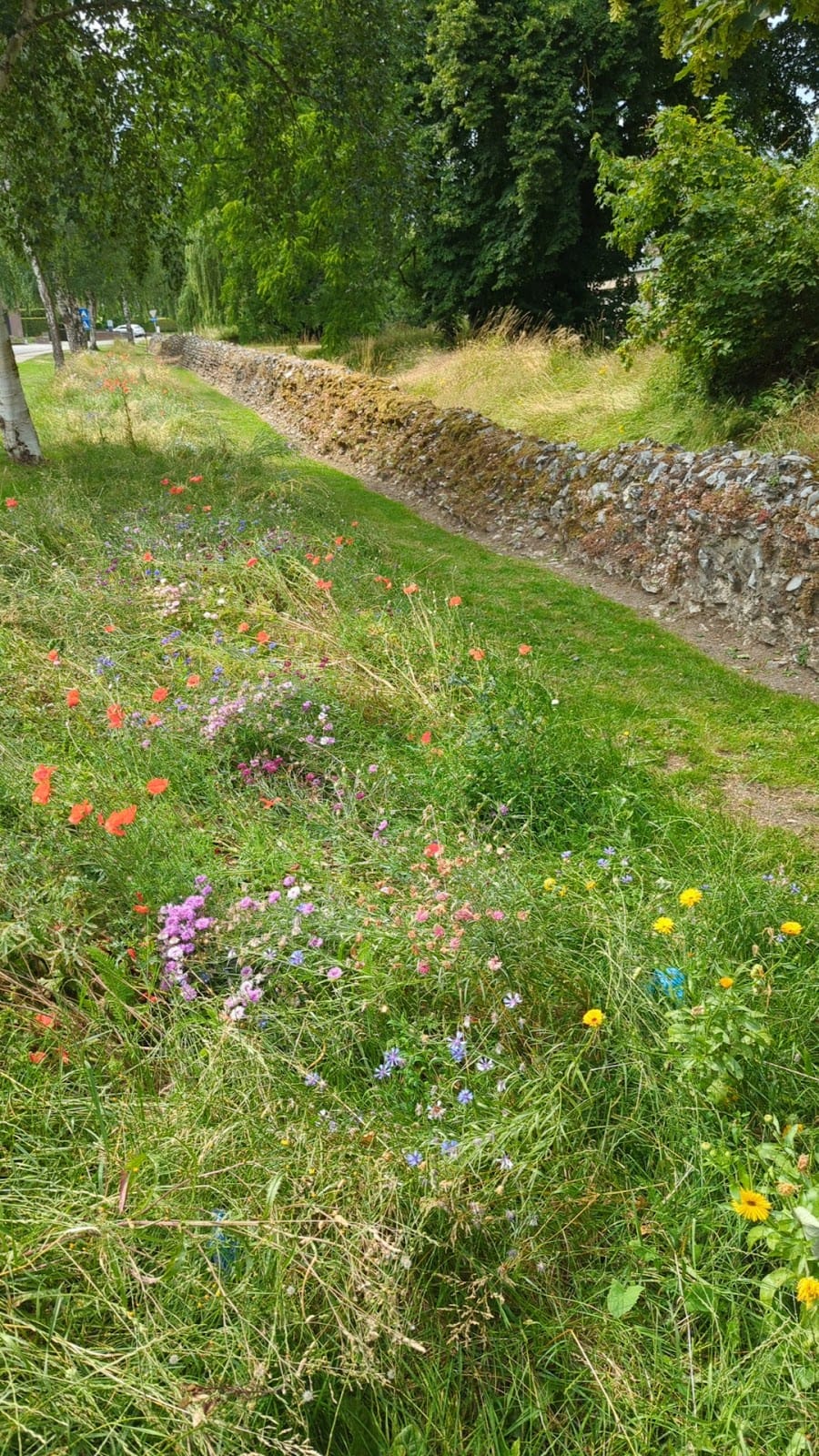
Constructed primarily from stone, the walls have lost many of their original materials over time due to reuse in local buildings. However, a core segment of about two kilometers remains intact and is legally protected. This surviving portion is visible along several streets, including Caesarlaan, Legioenenlaan, Cottalaan, and Sabinuslaan. The walls today exist largely in situ, preserving the original alignment and tower spacing.
Additional Roman archaeological features near the walls include a temple erected at the end of the 1st century AD on the northern edge of the city. Although the temple’s dedication is unknown, it signifies the religious dimension of the Roman settlement. A modern structure inspired by this temple stands nearby. Furthermore, a Roman aqueduct near Beukenberg has been identified, consisting of an artificial earth embankment that once housed wooden water basins. This aqueduct supplied drinking water to Tongeren, illustrating the infrastructure supporting the city.
Inscriptions found at the site, such as the altar dedicated by Catius Drousus to Jupiter and the town’s protective spirits, provide insight into the religious life of the inhabitants. Luxury earthenware discovered in the area indicates cultural connections with the broader Mediterranean world.
Nearby sites