Castle of Warfusée: An Eighteenth-Century Château in Belgium


Site at a Glance
- Rating
- 4.8
- Popularity
- Very Low
- Country
- Belgium
- Primary era
- Early Modern
- External website
- Open
- Eras represented
- Early Modern
- Civilizations
- Holy Roman Empire
- Site type
- Domestic
- Remains
- Palace
On this page7 sections
History
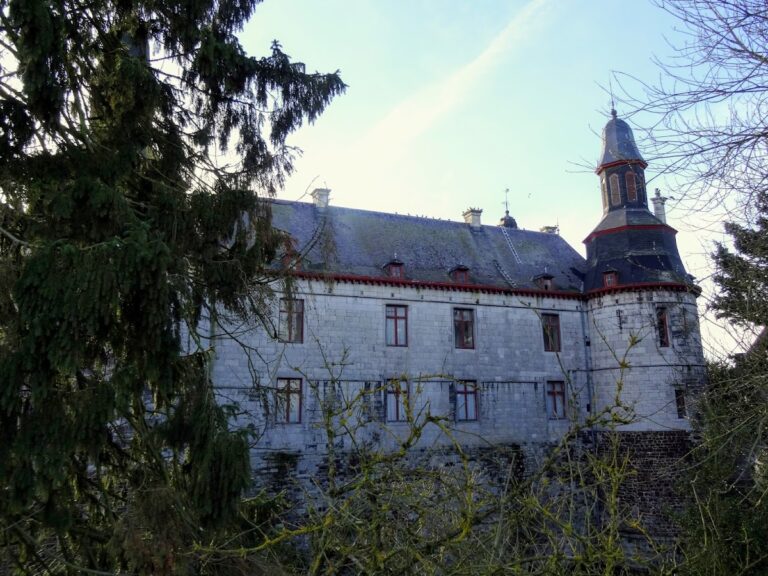
Castle of Warfusée is an historic château in Belgium, in the hamlet of Warfusée near Stockay in Saint-Georges-sur-Meuse. The lordship originated in the eleventh century, and its title is documented from the beginning of the twelfth century. A fortified principal tower, or donjon, reportedly stood here during that period to monitor the Meuse valley, but it has since disappeared.
Medieval Lordship and Changing Ownership
During the fourteenth and fifteenth centuries, Warfusée passed successively among the Haneffe, d’Enghien, de la Marck, de Corswaren, Hamal, Renesse, Thiennes, and Bavière-Schagen families. In 1707, Marie-Isabelle de Bavière-Schagen brought the estate into the d’Oultremont family through her marriage to Jean François Paul Emile d’Oultremont. Warfusée has remained associated with the d’Oultremont family since that union.
The Eighteenth-Century Rebuilding
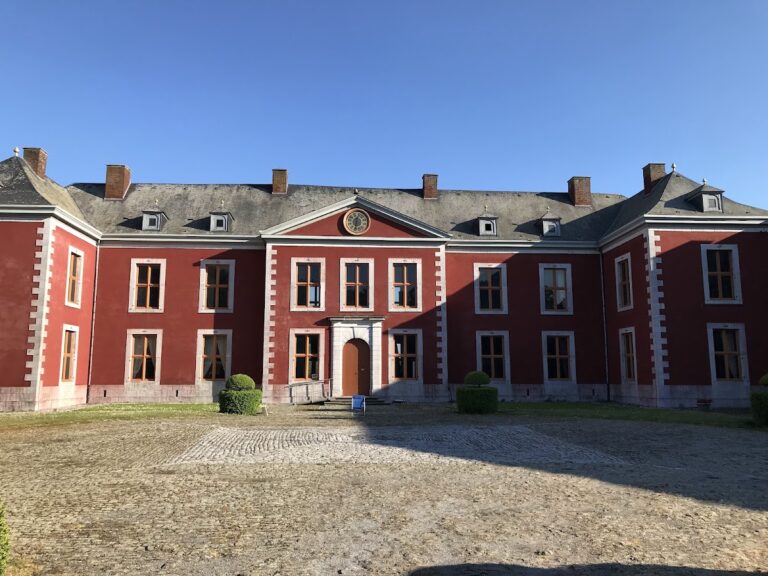
The present château was rebuilt in the mid-eighteenth century in the Louis XV style, an eighteenth-century French style known for refined ornament and curving forms. Florent Henri Emile d’Oultremont commissioned the work and entrusted its plans and construction to Jean-Gilles Jacob.
Florent d’Oultremont was the elder brother of Charles-Nicolas d’Oultremont, prince-bishop of Liège. A prince-bishop combined the religious authority of a bishop with the political authority of a territorial ruler. Charles-Nicolas was born and died at Warfusée and lived there throughout his life. During his rule, the château was enlarged and modernized, becoming a center of the social and political life of the ecclesiastical principality of Liège.
The D’Oultremont Family and Modern Protection
Warfusée remained connected with important members of the family in the nineteenth century. Émile d’Oultremont, a member of the National Congress of Belgium, died at Warfusée in 1851. His daughter, Blessed Émilie d’Oultremont, lived there until her widowhood in 1847 before founding the Society of Marie Reparatrice, a Roman Catholic religious congregation devoted to religious and reparative work.
The château, its annexes, the orangery, and the surrounding grounds have been protected as Walloon heritage since 1973. In 2009, the complex was recognized as exceptional heritage of Wallonia.
Remains
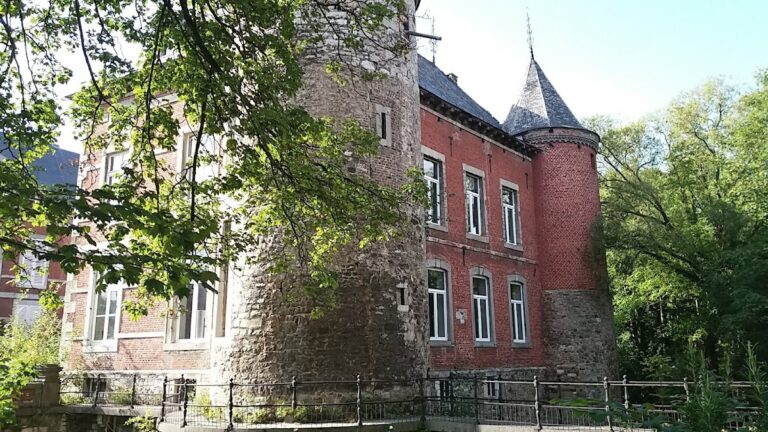
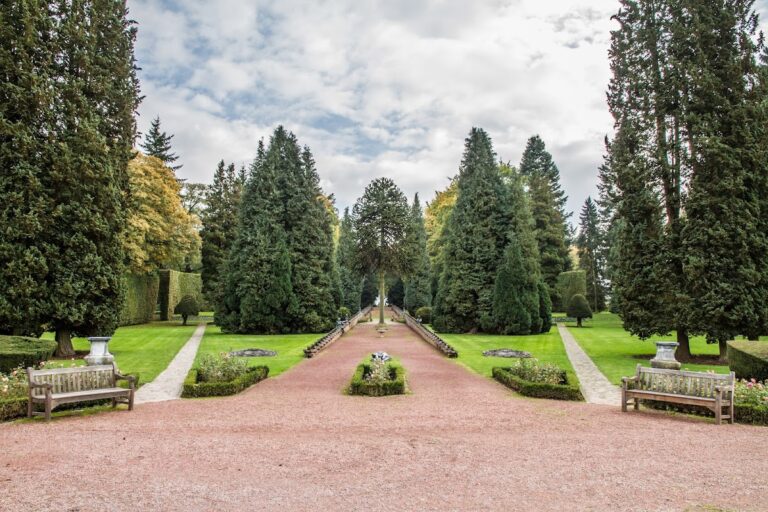
Castle of Warfusée is arranged around a square court, with its buildings forming a highly regular, parallel-sided plan associated with neoclassical architecture. The complex is enclosed by a park with a pond and sequoias planted around 1877. It stands about 130 metres above the Meuse, and the park provides a view toward the river, approximately two kilometres away.
Approach and Court
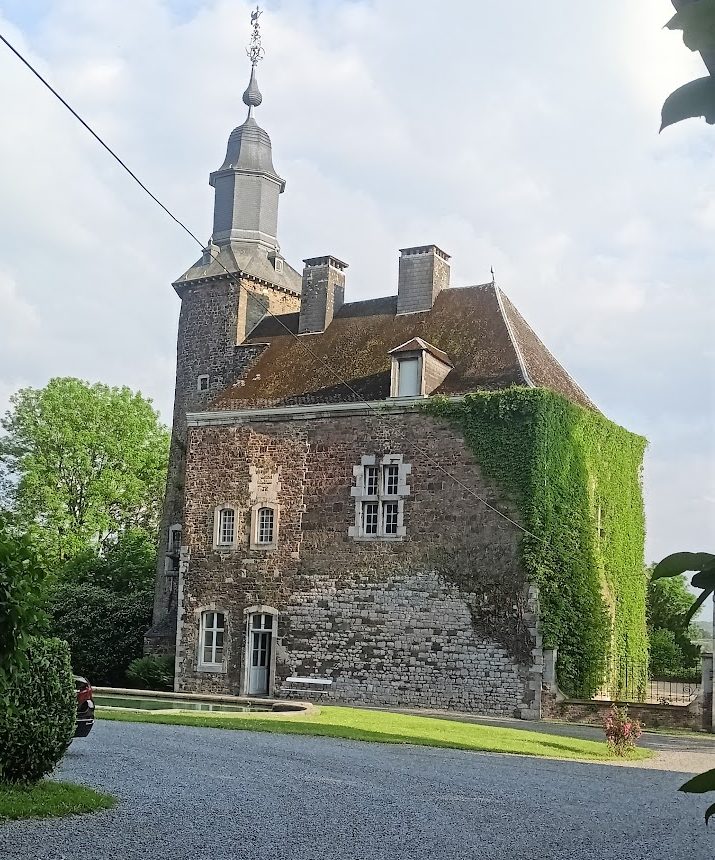
An avenue leads to a monumental donjon-porch dated 1622. This fortified principal tower provides access to the courtyard of honour and is distinct from the vanished medieval donjon. Facing the porch, the main château is topped by a small bell tower containing a carillon, a set of bells played by a keyboard or mechanical mechanism. Its façade opens toward the gently sloping park and pond.
Interiors and Artistic Features
The interior retains an eighteenth-century appearance. One complete wing contains the apartments and memorabilia of Charles-Nicolas d’Oultremont, including a four-poster bed, velvet-covered seating, and portraits of Louis XV and Louis XVI. The chapel has stucco decoration, while marble floor tiles cover the entrance hall. The salons contain tapestries and portraits, including Audenaerde tapestries depicting the adventures of Don Quixote. The château also contains works by Guillaume Evrard, an eighteenth-century sculptor associated with Liège and its artistic milieu.