Porta Pretoria in Aosta: A Roman City Gate from the Augustan Era
Visitor Information
Google Rating: 4.5
Popularity: Medium
Google Maps: View on Google Maps
Country: Italy
Civilization: Roman
Remains: Military

History
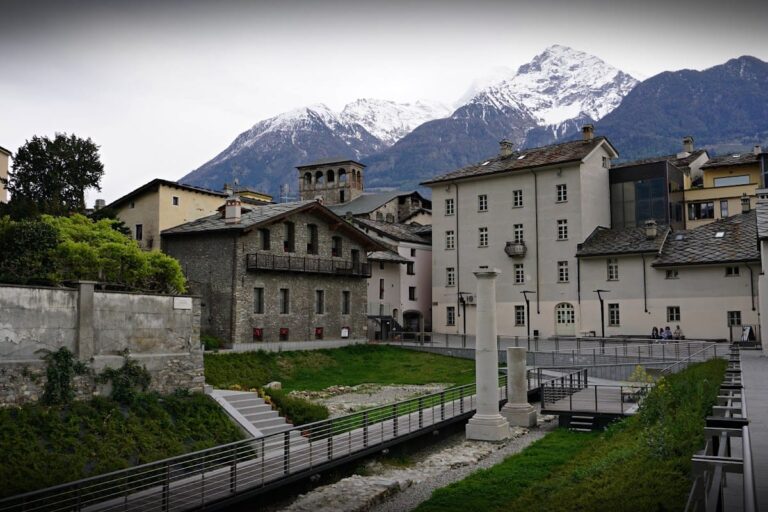
Porta Pretoria is located in the city of Aosta, within the province of Aosta Valley in northern Italy. The gate was built by the Romans shortly after the city’s foundation in 25 BC, during the late reign of Emperor Augustus. It formed part of the city’s northeastern defenses, near the main Roman road known as the Decumanus Maximus.
In the early Roman period, Porta Pretoria served as a principal entrance to the city, controlling access along the main thoroughfare. Its position close to the Roman theatre and amphitheatre highlights its role within the urban layout. The gate’s name, “Praetoria”, likely derives from its proximity to the praetorium, the official residence of the city’s governor or military commander, reflecting its administrative importance.
Throughout the Roman Imperial era, the gate remained a key feature of Aosta’s fortifications. Later, during the medieval period, the gate and surrounding walls were integrated into new civil buildings, which contributed to the preservation of the structure. Archaeological investigations beginning in the 19th century clarified its original function, correcting earlier misidentifications.
Remains
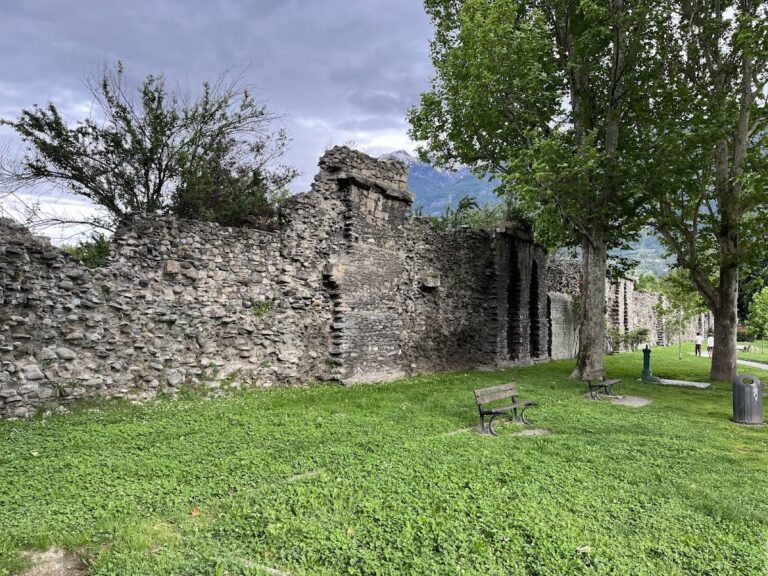
The remains of Porta Pretoria consist of a large Roman city gate situated along the ancient city walls of Aosta. Constructed in the late 1st century BC, the gate was built using local stone and Roman masonry techniques typical of the Augustan period. It stands near the Decumanus Maximus, the main east-west street of the Roman city.
The gate features a rectangular plan with multiple entrance arches at ground level, designed to control traffic into the city. Above these arches, there are three levels of windows or openings arranged in superimposed orders, which allowed light and possibly served defensive purposes. The southern façade of the gate survives up to 22 meters in height, supported by vertical buttresses spaced evenly.
During the Middle Ages, buildings were constructed against the gate’s southern side, which helped preserve its structure. The gate remains largely in situ and has undergone restoration and consolidation in the 20th and 21st centuries. Its proximity to other Roman structures, such as the theatre and amphitheatre, situates it within a well-preserved section of the ancient city’s northeastern quarter.