Plikenštejn: A Medieval Fortified Site in the Czech Republic
Visitor Information
Google Rating: 4.8
Popularity: Very Low
Country: Czechia
Civilization: Unclassified
Site type: Military
Remains: Castle

History
Plikenštejn is a historic fortified site located near the municipality of Rovná-Sokolov 1 in the modern Czech Republic. It was established by a medieval civilization during the period of regional colonization that took place roughly between the mid-13th and early 14th centuries.
The fortification most likely originated sometime between 1250 and 1300, during a wave of settlement activities connecting the nearby Kynžvart Castle with Plikenštejn itself. Some evidence suggests it could have been founded even earlier, within the first half of the 13th century. This small stronghold was associated with the noble family known as Plick or Plik, who gave their name to the castle and the surrounding estates. Konrád Plik, an important figure of this lineage who passed away in 1335, divided his lands among his sons. One of them, Petr Plik, inherited the castle of Nejdek along with several villages and the rights to mine tin ore in the area.
By the mid-14th century, the Plik family lost control of Plikenštejn, probably around 1360, transferring ownership to the lords of Kynžvart. Later documents from 1389 indicate the castle existed as a fief under the Leuchtenberg family, held by both the lords of Kynžvart and Albert Plik, who maintained a residence nearby on a modest family manor. During this time, Plikenštejn had already fallen into decline and was described as deserted, although records from 1390 still referred to it as a small castle near the settlement of Vranov.
The 16th century saw several changes in ownership. In 1538, the property was acquired by Heinrich of Plavna, and just a few years later in 1542, it passed to Count Jeroným Šlik. During this era, land registers record the castle under the name “Blickenstein near Fronaw,” reflecting variations in spelling linked to the locality now known as Vranov.
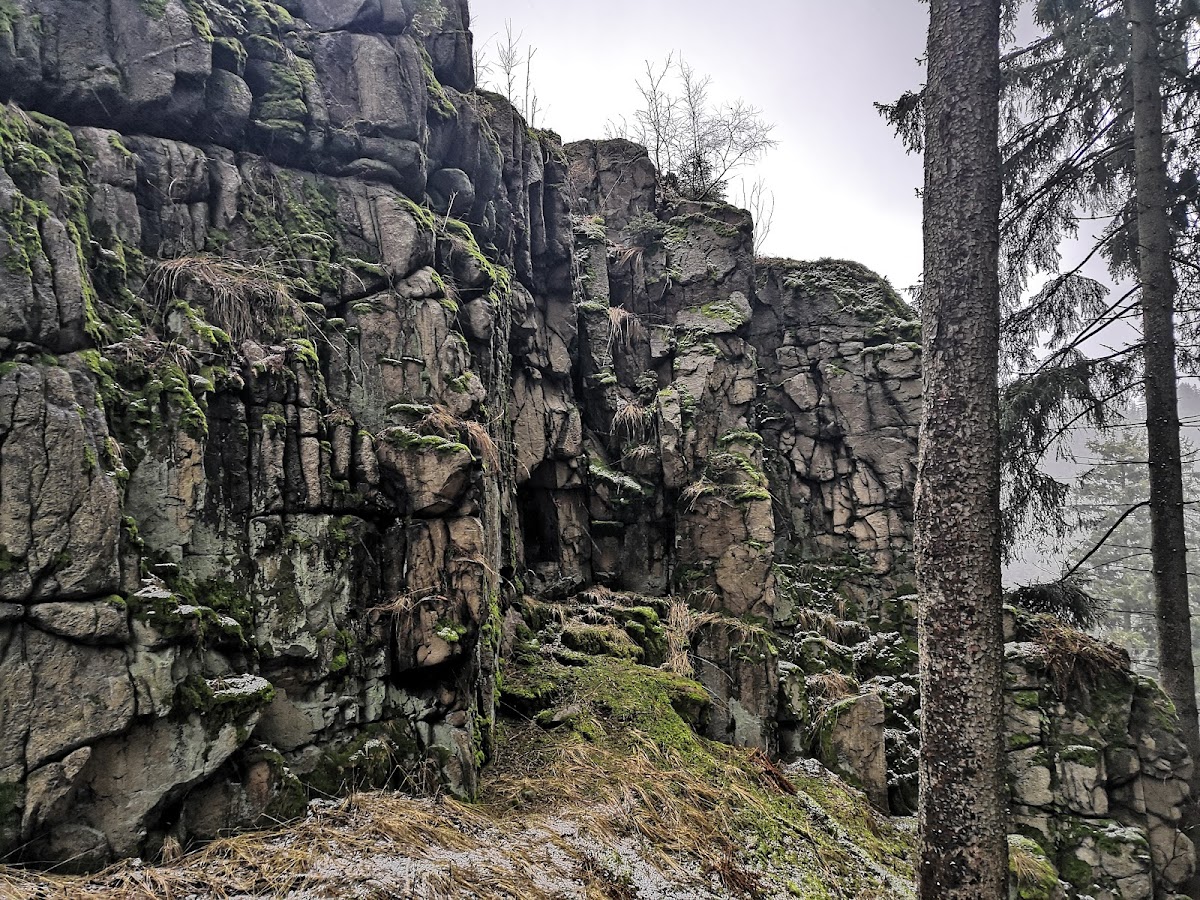
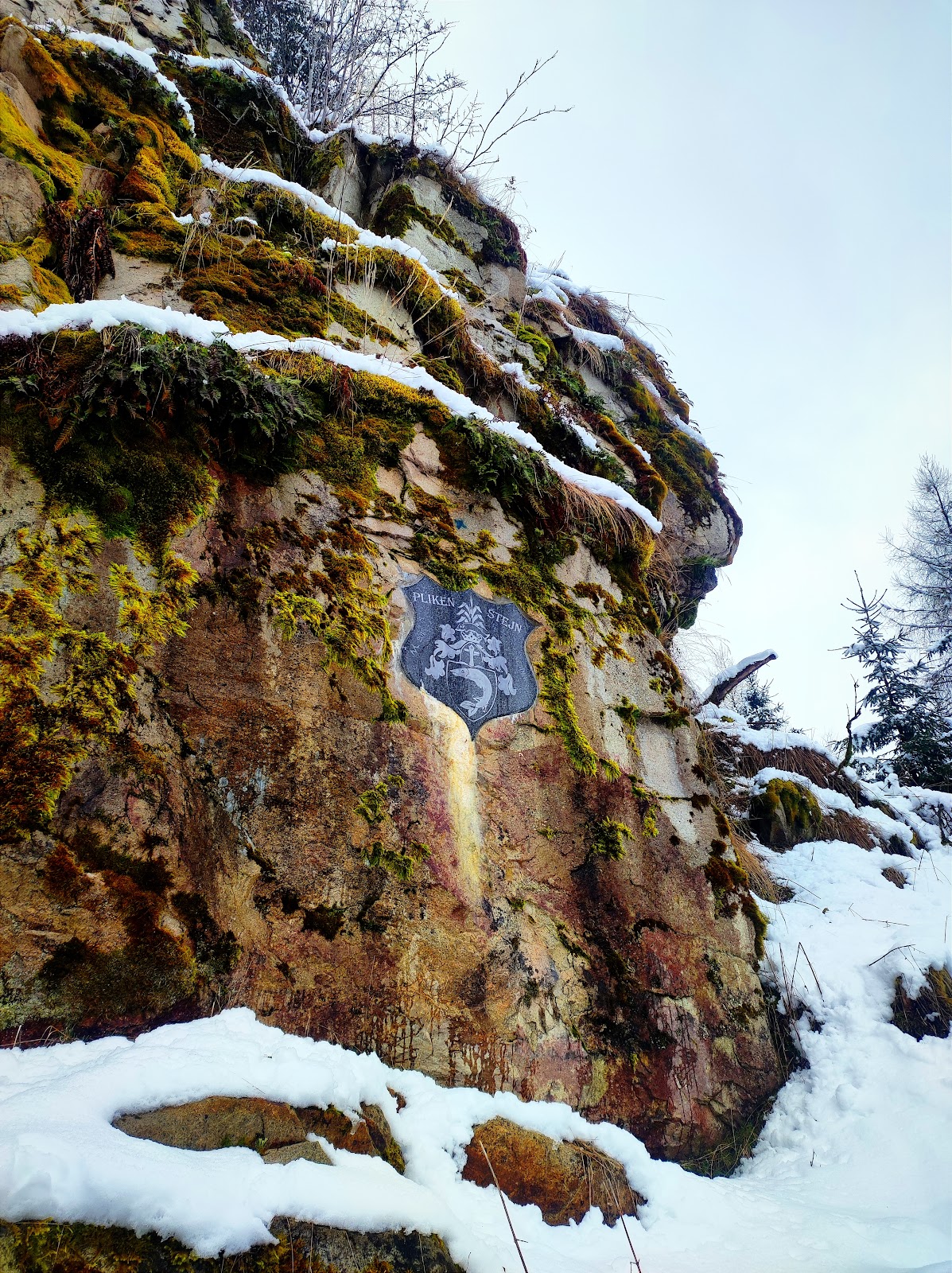
After centuries of neglect, archaeological work in 1993 confirmed the exact location of the castle on a rocky outcrop above the Lobezský stream valley. To honor the founding family, a stone plaque bearing the Plick family’s coat of arms was placed on the castle rock in 2016, commemorating their historical connection to the town of Nejdek.
Remains
The archaeological remains of Plikenštejn reveal a modestly sized fortified site carefully adapted to its rocky setting. The castle’s defensive layout concentrated on a roughly 10-meter-long core area built directly upon the rock surface. Excavations uncovered stone constructions within this core, demonstrating that masonry techniques were employed rather than purely wooden structures.
On the western side, the fortification was protected by a series of three ditches. These trenches, dug into the terrain, served as obstacles designed to slow or deter potential attackers. Additionally, investigations identified three distinct water moats surrounding the site, which would have enhanced the castle’s defense by creating wet barriers difficult to cross.
Today, the physical traces of Plikenštejn are largely limited to archaeological evidence. The ruins are fragmentary, with only a single anchoring hole visible above ground, marking where structural elements once stood. The original castle walls and buildings no longer survive in substantial form but were preserved underground until their modern rediscovery.
In 2016, a commemorative stone plaque featuring the coat of arms of the Plick family was installed on the castle rock. While not part of the medieval architecture, this memorial serves as a tangible link to the noble family responsible for founding the town of Nejdek and associated with the stronghold’s early history.