Château de Pimpéan: A Fifteenth-Century Fortified Château in France


Site at a Glance
- Rating
- 4.5
- Popularity
- Very Low
- Country
- France
- Primary era
- Medieval
- External website
- Open
- Eras represented
- Medieval
- Civilizations
- French
- Site type
- Military
- Remains
- Castle
On this page6 sections
History
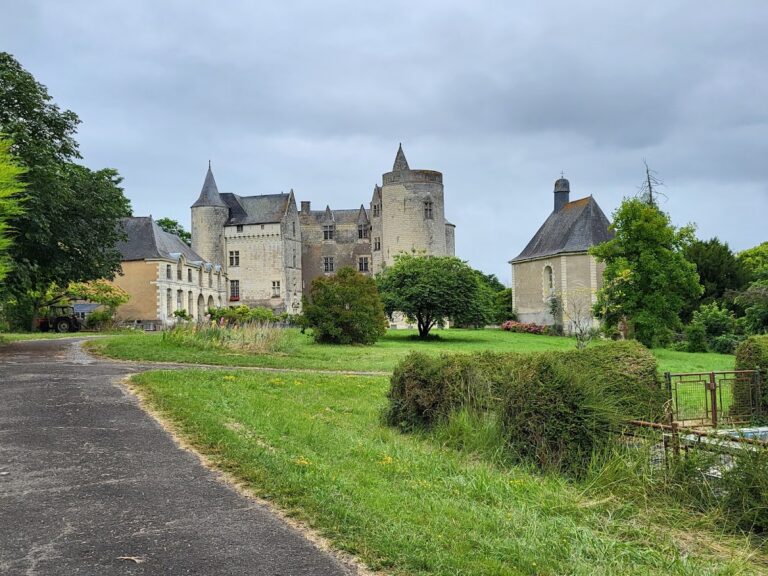
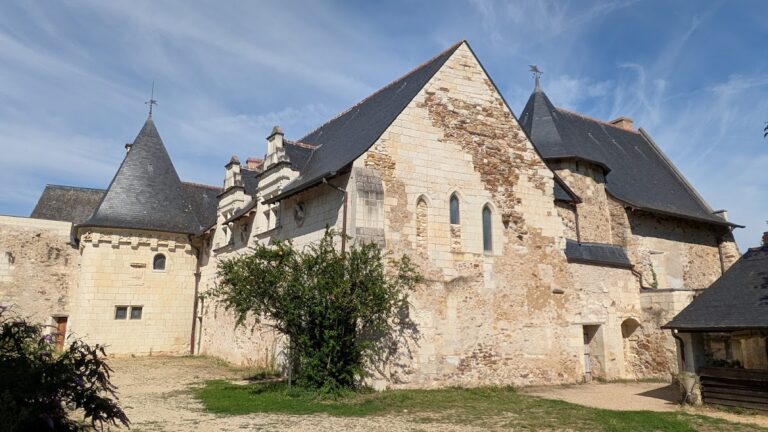
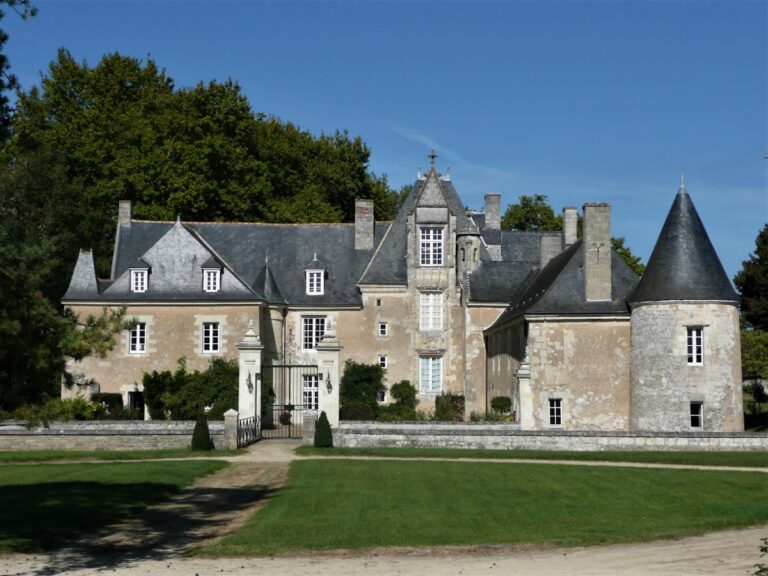
Château de Pimpéan is a fortified château in France, at Grézillé within Gennes-Val-de-Loire, whose present building was constructed in the fifteenth century by Bertrand de Beauvau de Pressigny. The estate formed part of a feudal lordship under the suzerainty of the baron of Trèves, the superior authority of an overlord over dependent lands.
Origins and the Beauvau building
The estate was called Pin Payen in 1435. The historian Célestin Port proposed that the name might derive from Péan du Pin, or from Paganus de Pinu, a figure who appears in twelfth-century charters associated with Vieil-Baugé. The name therefore connects Pimpéan with an earlier medieval history, although its precise origin remains uncertain.
On 5 May 1429, Macé de Tessé de Chandemanche transferred Pimpéan to Jean Galardin and his wife, Marie de Charnières. They later transferred it to Jean de Brézé, who sold the estate on 27 April 1435 to Bertrand de Beauvau de Pressigny, who lived from 1382 to 1474. Known for his building activity, Bertrand constructed the present château.
Bertrand also expanded the associated châtellenie, a feudal lordship organized around a château. On 12 February 1443, he added the lands of Forges and Clavières to Pimpéan. King René confirmed this acquisition on 13 May 1461 and authorized the erection of gallows on 7 June 1463, reinforcing the judicial rights attached to the lordship.
The Beauvau-Pimpéan succession
Bertrand de Beauvau was followed as lord by his son Antoine, then by Antoine’s son Louis, Louis’s son René, and René’s son André de Beauvau-Pimpéan. In 1578, André acquired the land of Cholet. He married Philippa, also called Philippe, de Naillac, who died in 1603. After becoming a widowed heiress, she married Claude III Barjot de Moussy in 1581.
André de Beauvau had sheltered Bussy d’Amboise at the château. After killing a recors, an assistant to a sergeant or other legal officer, André was condemned during the Grands Jours of Poitiers in September 1579. These were extraordinary judicial sessions held by French royal courts in provincial towns. André was beheaded at Poitiers, and his head was displayed on the pillory at Angers.
In 1582, the lordships of Pimpéan and Cholet were held by Philippe de Naillac and her husband, Claude III Barjot. In 1588, ownership passed to their children, Léonor I Barjot and Renée-Gabrielle de Beauvau-Pimpéan. Their son Léonor II Barjot died in 1644, after which the estates passed to his son René Barjot de Moussy, who died in 1677.
The Robin de La Tremblaye ownership
In 1662, René Barjot de Moussy became the oldest and principal heir of his grand-uncle René Barjot, the first Marquis of Cholet from 1643. A marquisate was a territorial lordship held by a marquis. René’s inheritance led to a six-year legal dispute with his cousin Robin de la Tremblaye.
A judgment in 1669 divided the contested possessions. René Barjot received La Jumellière and Chaudefonds, René François de Broon received Cholet, and Henri-René Robin de La Tremblaye became owner of Pimpéan and other estates.
Henri-René Robin de La Tremblaye, who lived from about 1623 to 1711, inherited rights through his mother, Renée-Eléonore Barjot, a sister of Léonor II. In 1690, he made an aveu, a formal declaration of lands and rights held from a feudal overlord, for Pimpéan, Grézillé, Alligny, Le Grollay, Clervaux, and La Bournée. At the beginning of the eighteenth century, he became Marquis of Alligny, a marquisate that included Pimpéan.
Henri-René was succeeded by his son Amable Robin, who lived from 1680 to 1747 and served as Grand Seneschal of Anjou. This was a high office connected with the administration and justice of Anjou. Amable was followed by his son Claude-René Robin.
Later private ownership and protection
On 17 October 1754, Claude-René Robin de La Tremblaye, Marquis of Alligny, sold his lands to Pierre de la Lande-Guyon. Claude-René was born in 1714 and died before 1776. Pierre was a wealthy Creole from Saint-Domingue and a councillor to the king.
Jeanne de la Lande, described as a widow and as being from Bordeaux, later sold the estate to Thomas Gendron on 12 March 1803. Gendron died on 7 August 1833. Château de Pimpéan remains privately owned and was both listed and classified as a French historic monument in 1959.
Remains
Château de Pimpéan is identified as a fortified château, and the present building belongs to the fifteenth-century construction campaign undertaken by Bertrand de Beauvau. Its physical identity is therefore tied to the fortified residence created after Bertrand acquired the estate in 1435. The documented building is the château itself, while the surviving information does not specify its measurements, materials, internal arrangement, entrances, or individual architectural features.