Paralio Astros Castle: A Historic Fortress in Greece

Visitor Information
Google Rating: 4.5
Popularity: Low
Google Maps: View on Google Maps
Country: Greece
Civilization: Crusader, Ottoman, Venetian
Remains: Military

History
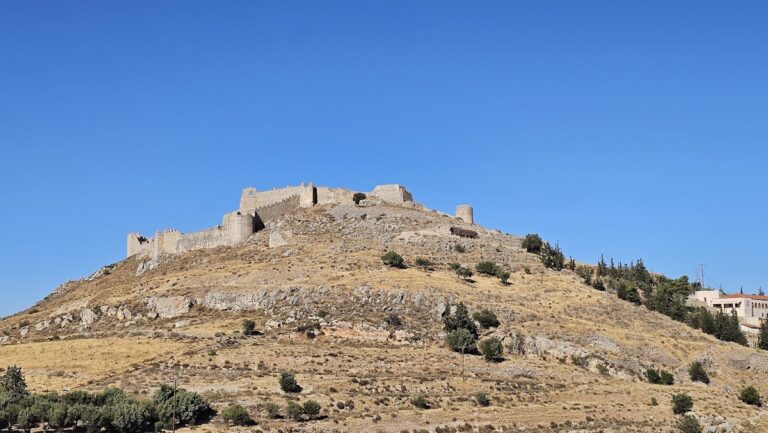
Paralio Astros Castle sits prominently on a hill near the town of Astros in Greece and was constructed by successive occupiers to control this part of the Peloponnese. Its history can be divided into two main periods that reflect the region’s turbulent political changes from Venetian to Ottoman and then to modern Greek rule.
The earliest significant phase of construction likely took place between the 17th century and the late 18th century. This period corresponds with the closing years of the Second Venetian Rule over the Peloponnese, which ended in 1715 when the Ottoman Empire reconquered the area. Following this reconquest, the Ottomans strengthened local fortifications, including Paralio Astros, to maintain control amid ongoing conflicts and the threat of Venetian attempts to regain territory. The castle served as a defensive outpost to secure Ottoman presence against local resistance and foreign ambitions.
During the Greek War of Independence in the early 19th century, the castle became a stronghold for local Greek leaders. Between 1824 and 1825, the fortress was owned and enhanced by the Zafeiropoulos brothers—Panagiotis, Konstantinos, and Ioannis—who were wealthy merchants and members of the secret society Filiki Eteria, which sought to overthrow Ottoman rule. They not only fortified the castle’s defenses but also established their homes within its walls, turning it into a center of resistance.
The castle’s defenses proved their worth on August 4, 1826, when approximately 1,200 fighters inside resisted a siege by the Egyptian forces led by Ibrahim Pasha, who commanded a vastly larger army. This successful defense underscored the strategic importance of Paralio Astros during the fragile moments of Greece’s fight for independence. Shortly after the war, in 1833, Panos Zafeiropoulos formally dedicated the castle to the new Kingdom of Greece and its monarch, King Otto, marking its transition from a military bastion to a symbol of the nascent Greek state. By the early 20th century, however, the castle was no longer maintained and gradually fell into ruin.
Remains
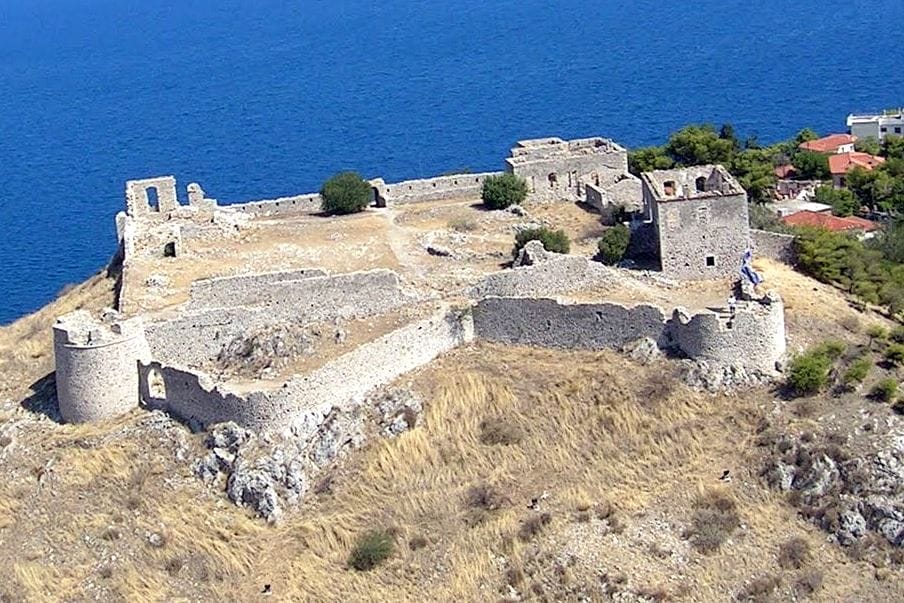
Paralio Astros Castle occupies an almost square-shaped area atop a narrow hill with steep cliffs facing west and the Aegean Sea to the east, which provided natural defenses that complemented its man-made fortifications. The overall design reflects adaptations made during its periods of use, blending natural geography with constructed elements.
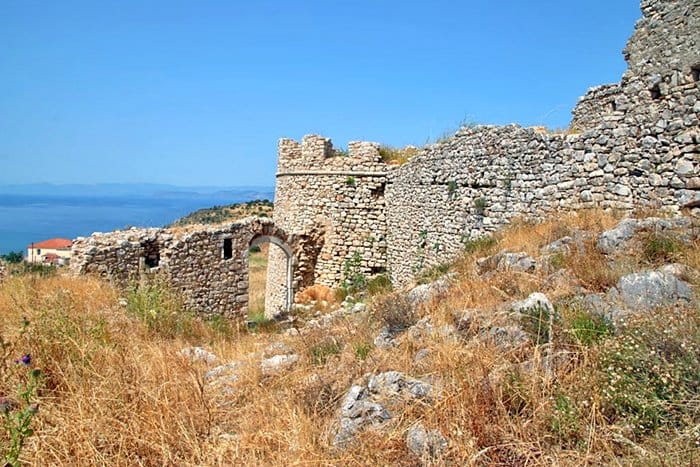
Two main gates provide access to the castle. The northwestern gate is notable for its protection by a large circular tower, enhancing defense against attackers approaching from that direction. The eastern gate opens toward the upper town of Paralio Astros, providing a second means of entry that was strategically important for controlling movement between the fortress and the surrounding settlements.
The castle walls, constructed from local stone, still rise up to six meters on the eastern side, with battlements and openings called embrasures designed for firearms along the southern walls. These features indicate a focus on defending against musket fire and artillery, consistent with the castle’s 17th to 19th-century military use.
At the highest point within the enclosure lie the ruins of several buildings tied to the castle’s operational functions and residential use during the 19th century. These include remains of storage spaces and water cisterns vital for holding supplies and sustaining occupants during sieges.
Three distinct residences attributed to the Zafeiropoulos brothers stand out among these ruins. Panagiotis’s house showcases a rectangular foundation built over older structures, suggesting it incorporated or replaced preexisting buildings. Konstantinos’s residence is better preserved and consists of four rooms accompanied by auxiliary spaces, a latrine, and cisterns, highlighting a well-planned domestic layout within the fortress. Ioannis’s home shares similarities with Konstantinos’s but is in poorer condition, preserving only fragments of its original form.
Together, these architectural elements paint a picture of a fortified complex that combined military strength with domestic needs, reflecting its importance during both Ottoman control and the Greek struggle for independence.