Castle of Geraki: Medieval Stronghold and Castle-Town in Greece


Site at a Glance
- Rating
- 4.6
- Popularity
- Low
- Country
- Greece
- Primary era
- Medieval
- External website
- Open
- Eras represented
- Medieval
- Civilizations
- Crusader, Principality of Achaea
- Site type
- Military
- Remains
- Castle
On this page13 sections
History
The Castle of Geraki is a medieval fortress in Greece, built under Frankish rule between 1209 and 1250. It became the center of the Barony of Geraki, a territory within the Principality of Achaea, the Frankish state established in the Peloponnese after the Fourth Crusade. Construction is associated either with Guy de Nivelet or with his son Jean de Nivelet, members of a Frankish noble family linked to Achaea.
Frankish and Byzantine Rule
The castle and its surrounding territory were governed by the Nivelets until the Franks surrendered the stronghold to the Byzantine Empire in 1262. It then became part of the Despotate of Morea, the Byzantine political territory that controlled much of the Peloponnese during the later medieval period.
Ottoman and Venetian Control
The Ottomans captured the castle in 1460, as they took control of most of Laconia. Venice held it from 1463 to 1468, after which Ottoman rule was restored. Venice controlled the site again from the late seventeenth century until 1715, when it returned once more to the Ottomans.
The Castle-Town and Its Abandonment
A settlement grew around the fortress and became the medieval population center of the Geraki area. This castle-town replaced the acropolis, the fortified or elevated central area, inherited from the ancient city of Geronthrai at the site of the modern village of Geraki.
The date when the castle-town was abandoned remains uncertain. The settlement may have been deserted in the fifteenth century or, at the latest, in the sixteenth century. Another possibility places the abandonment in the late eighteenth century, after the second Venetian period. Once the settlement was abandoned, habitation shifted back to the ancient site, where the modern village of Geraki developed.
The castle, its associated buildings, and its churches have been restored. The site is designated as an archaeological site in Greece.
Remains
Fortress and Settlement
Upper Castle
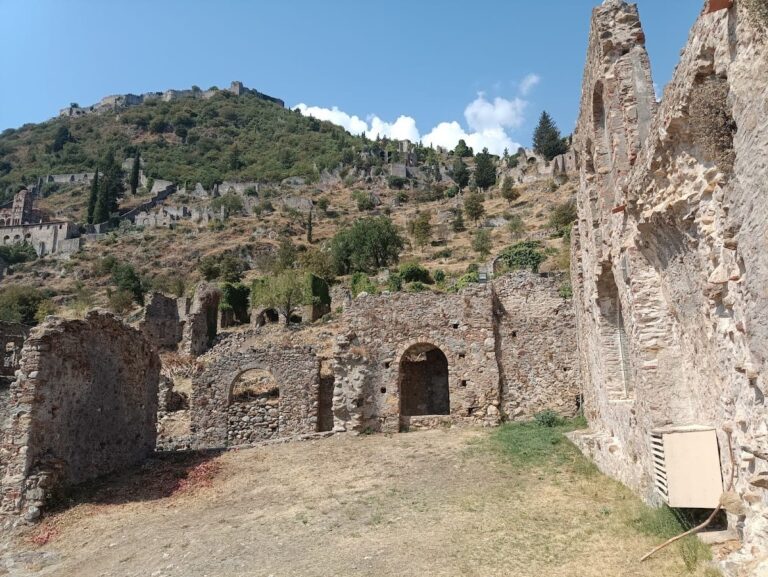
The fortress occupies the northern summit of Palaeokastro, meaning “Old Castle,” a hill connected with Mount Parnon. The summit stands about 400 metres above sea level and about 100 metres above the surrounding terrain. Surviving elements of the castle include ruined walls and towers.
Castle-Town
The lower settlement extends down the hillside, while further settlement remains occupy the southern summit. A ridge connects the northern and southern summits. Ruins across the fortified hill belonged to the castle-town and to buildings associated with it.
Churches and Religious Buildings
Churches on the Fortified Hill
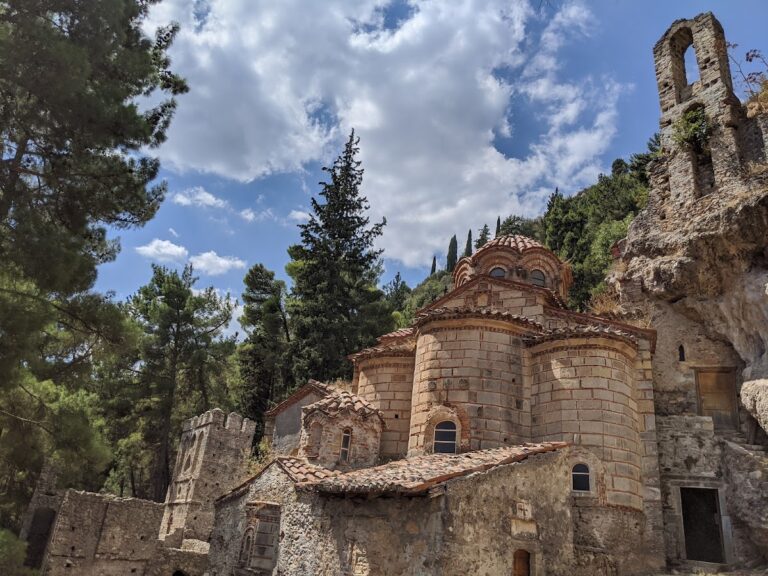
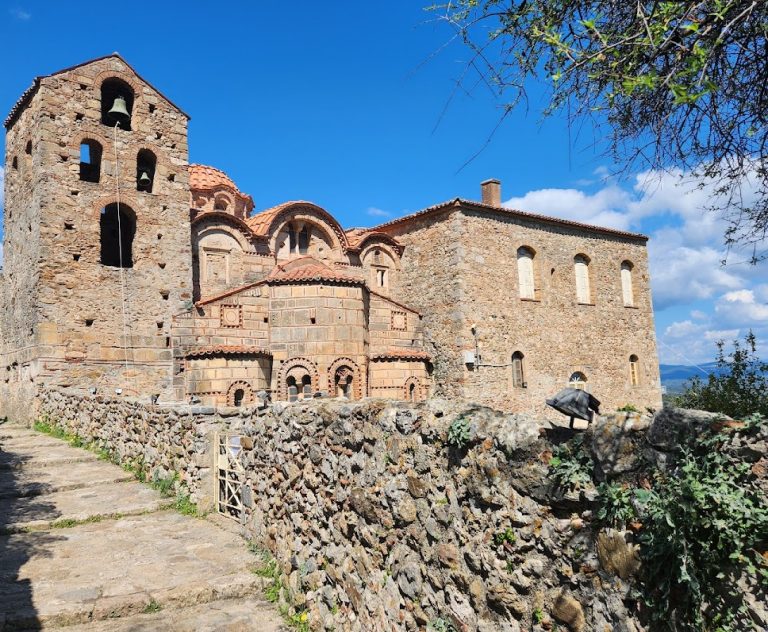
Approximately 30 churches or church ruins are located within the castle and on the hillsides. They include the churches of Saint Athanasius, Saint George, Saint John Chrysostom, Saint Nicholas, Saint Paraskeva, Saint Sozon, and Saints Theodore.
Church of the Annunciation
The Church of the Annunciation forms part of the group of religious buildings surviving within the castle-town landscape.
Church of the Life-Giving Spring
The Church of the Virgin Mary is also known as the Church of the Life-Giving Spring. In Byzantine and Orthodox Christian usage, this title refers to the Virgin Mary in connection with a sacred spring.
Further Churches
The group known as the “Further Churches” comprises the Church of the Archangels, the Church of the Baptism of Christ, and the Church of the Prophet Elijah. These buildings form part of the religious remains distributed through the castle and its hillsides.
Nearby sites