Oropesa Castle: A Historic Fortress and Palace in Spain

Visitor Information
Google Rating: 4.6
Popularity: Medium
Google Maps: View on Google Maps
Official Website: www.turismoropesatoledo.es
Country: Spain
Civilization: Unclassified
Remains: Military

History
Oropesa Castle is located in the town of Oropesa, in present-day Spain. Its earliest origins are tied to the Muslim rulers of the Iberian Peninsula during the 12th and 13th centuries. It is believed that the fortress was constructed over an earlier Roman foundation, reflecting a long history of settlement and strategic importance in the region.
The castle first appears in historical records during the reign of Alfonso X of Castile and León in the 13th century. In 1355, the fortress and the surrounding territory, including the lordship of Oropesa and neighboring villages, were granted to García Álvarez de Toledo. Previously master of the Order of Santiago, García Álvarez renounced this role to support King Enrique II of Trastámara, and his family would go on to hold the castle for centuries. Under their direction, the castle became a significant stronghold and administrative center within the domain known as the “Campana de Oropesa,” which encompassed several towns and villages.
Around the early 15th century, roughly 1402, the Álvarez de Toledo family expanded the complex by constructing a new palace adjacent to the original fortress. This addition evolved into the central seat of the County of Oropesa by 1475. Throughout its history, the castle was involved in several important conflicts. Notably, it supported Juana la Beltraneja during the wars over the Castilian succession and later resisted imperial forces during the Castilian War of the Communities. The fortress also housed notable figures such as Saint Pedro de Alcántara and Saint Teresa of Jesus, underlining its religious as well as military significance.
Ownership by the Álvarez de Toledo lineage continued uninterrupted for nearly four hundred years until the early 19th century. Following this period, control passed from the family to the local town authorities and subsequently to the Dukes of Frías. During the Spanish War of Independence, the castle sustained considerable damage in the 1808 French sack. In the years after, the structure saw varied uses, including functioning as a bullring and serving as barracks for the Guardia Civil. Recognition of its cultural value led to its designation as a Historic-Artistic Monument in 1923 and further as a National Monument in 1926. By 1930, it was converted into a national parador hotel, marking the first such transformation of a historic building in Spain, and has been preserved under protective heritage legislation since.
Remains
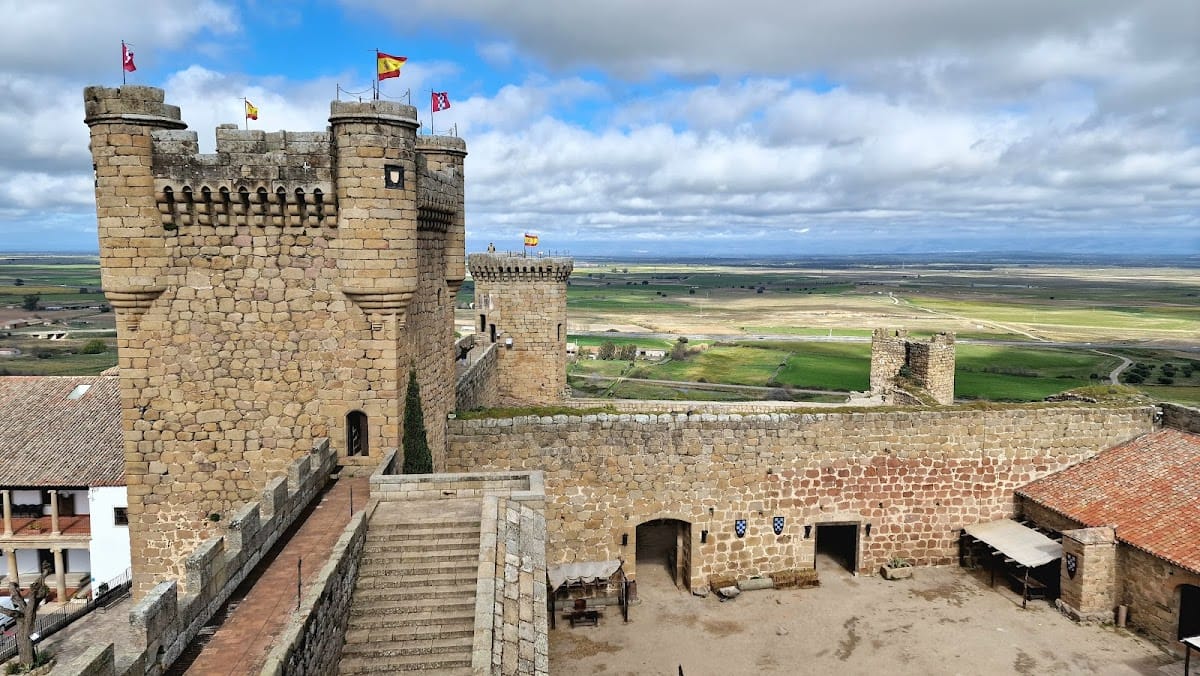
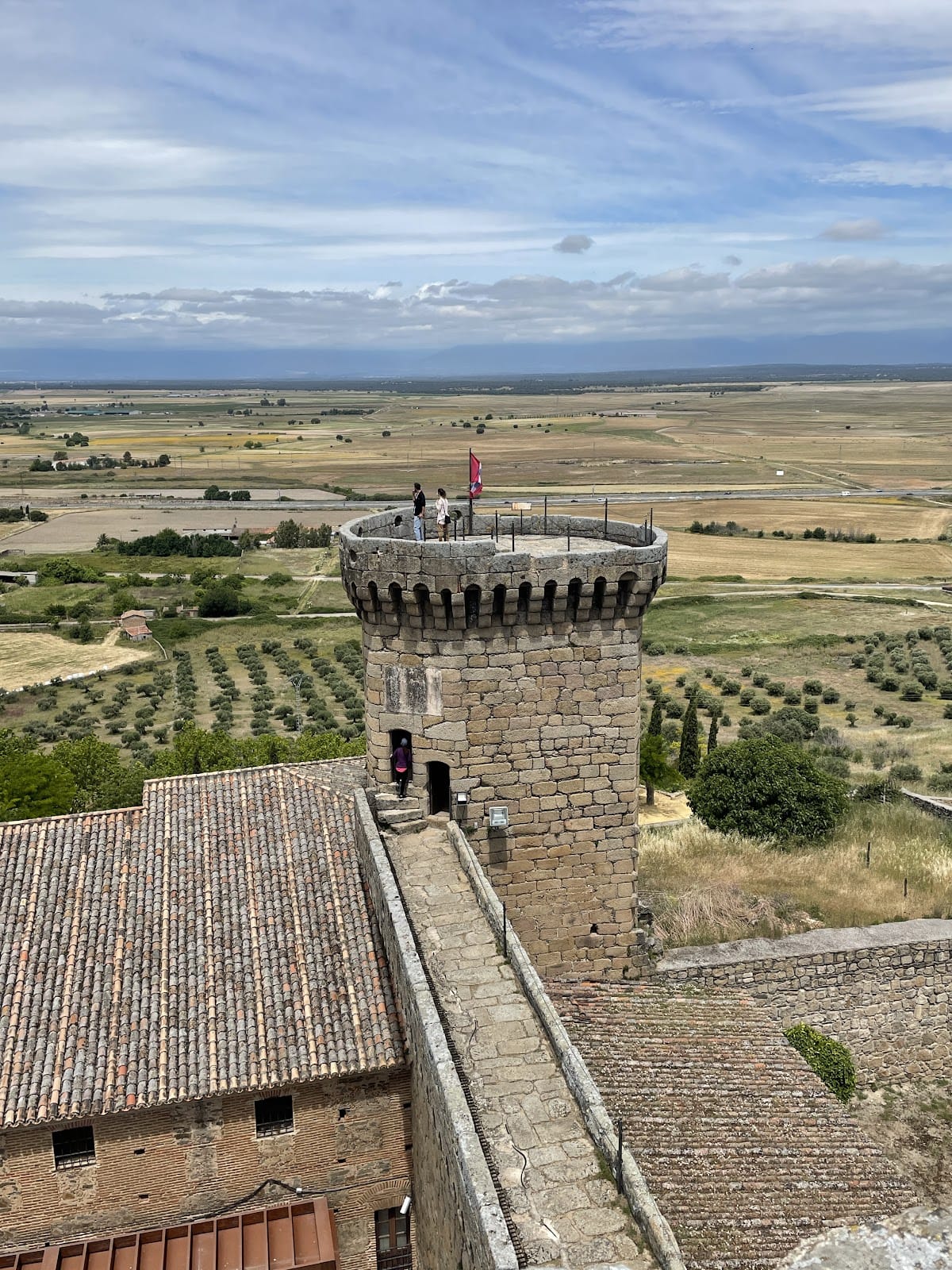
Oropesa Castle occupies a commanding hilltop at the northern edge of the town, surrounded by oak forests. The site is composed of two main interconnected structures: the original fortress referred to as the Old Castle, and the New Palace built by the Álvarez de Toledo family. The Old Castle maintains a rectangular footprint and was initially constructed by Muslim builders in the 12th or 13th century atop remnants of Roman construction. Its defensive design included four circular towers placed at each corner, though only two survive today. It is probable there was also an outer wall encircling the town with four smaller watchtowers, known as cubillos.
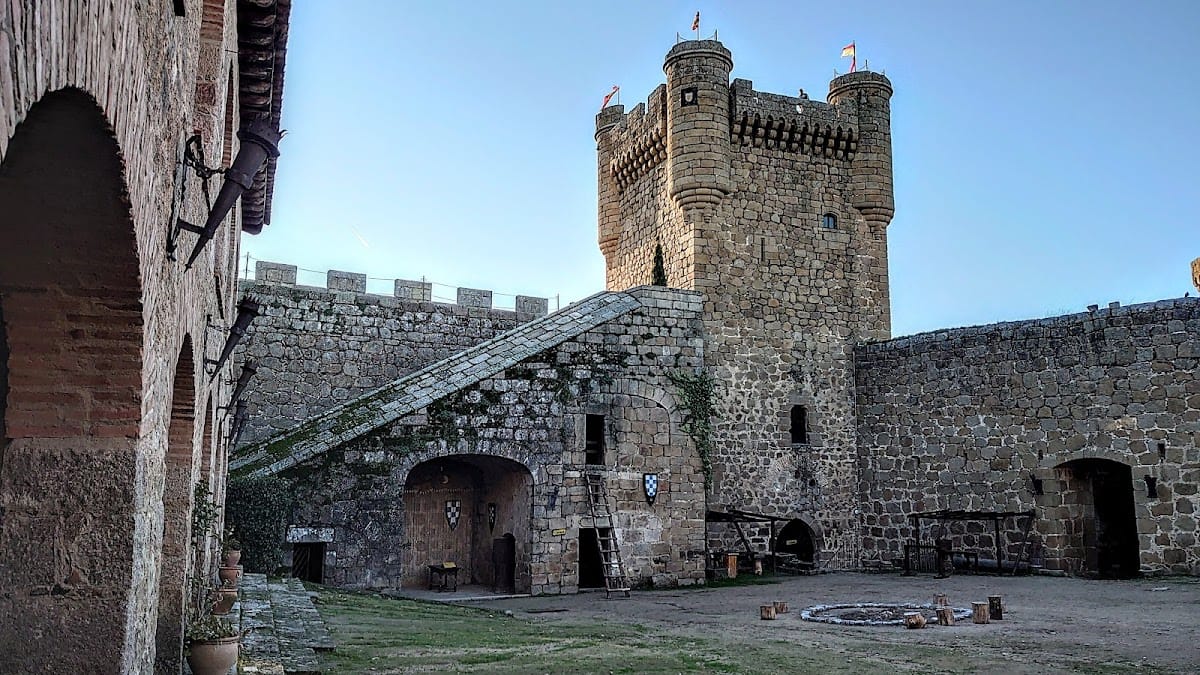
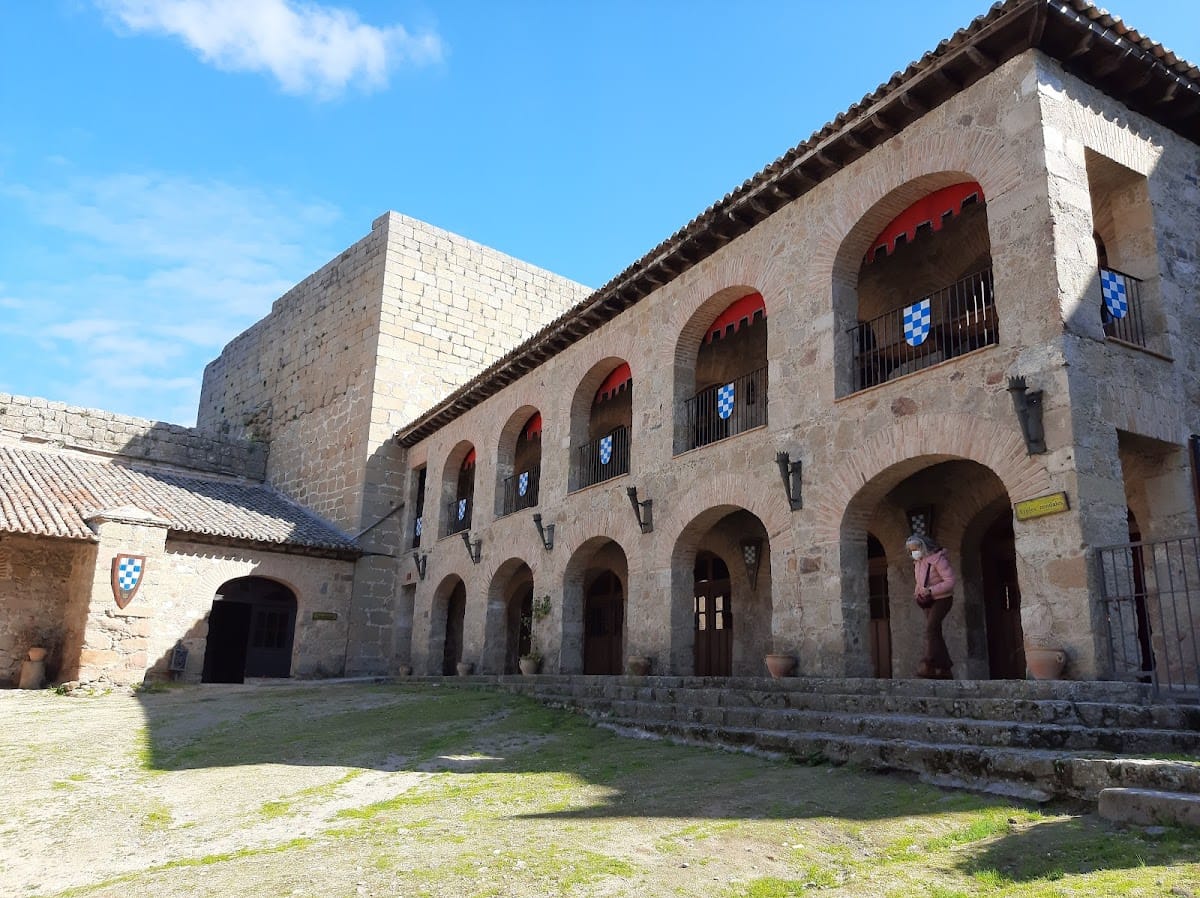
The palace built circa 1402 complements the medieval fortress with its own rectangular form and features towers of varying shapes at its corners. Some parts of this building were crafted using finely cut stone blocks, known as sillería, which provided structural strength and a polished exterior. The palace surrounds a spacious central courtyard that serves as the heart of the complex, entered through a single main gate fortified by the principal tower.
Dominating the castle’s silhouette is the imposing square keep, or torre del homenaje, which rises approximately 25 meters high. Each corner of this tower is topped with four small turrets called garitones, each featuring narrow cross-shaped openings designed for archers to shoot while remaining shielded. Beneath the battlements, a machicolation—a projecting stone band with openings—allowed defenders to directly attack anyone at the base of the walls. Within, the keep contains four floors connected by a series of intricate wooden staircases, creating a complex pathway intended for defense. Access to the upper walkway, known as the adarve, is via a broad stone stairway supported by a series of arches that rise from the courtyard below. The terrace of the keep is crenellated for protection and includes circular turrets. Carved coats of arms from the early 15th century honor Fernando Álvarez de Toledo y Herrera, the castle’s fourth lord and first count, and his wife Leonor de Zúñiga Manrique.
The fortress’s walls were mainly composed of roughly worked stone blocks termed sillarejo, with carefully shaped stones used where greater strength or visual appearance was needed. One of the towers on the northeastern side features a sturdy square base with an upper square section containing a stairway leading to the platform. Adjacent to this tower, defensive measures once included a moat and a drawbridge, enhancing security. The inner courtyard, or Patio de Armas, is large and rectangular, housing the functional spaces required for the fortress’s operation. Today, ongoing restorations tied to its use as a parador have preserved much of the castle’s historic fabric, maintaining its imposing presence and medieval character.
Nearby sites