Orino Castle: An Ancient Fortress in Italy



Visitor Information
Google Rating: 4.3
Popularity: Low
Google Maps: View on Google Maps
Official Website: www.comune.orino.va.it
Country: Italy
Civilization: Unclassified
Remains: Military

History
Orino Castle is an ancient fortress situated northeast of the town of Orino in Italy. Its origins trace back to the 3rd or 4th centuries BCE, when it was established by early inhabitants as a fortified site. Although the earliest remains from this initial period no longer survive, scholars believe its foundation served defensive and strategic purposes.
During the late Roman Empire, the fortress probably functioned as a military lookout point designed to monitor and communicate along the limes, or border defenses, of the Insubric region. However, physical evidence from this phase has not endured. The earliest recorded reference to the castle appears in ecclesiastical documents from March 1176, linked to the Plebana Church of San Lorenzo in Cuvio.
Throughout the Middle Ages, Orino Castle underwent significant changes. Likely reinforced during Lombard rule, it became entwined with local noble families. Control rested with either the Besozzi clan, who governed the entire valley, or the Cotta family, granted the Valcuvia parish by Francesco Sforza in 1450. The fortress played an active role in the 13th-century power struggles between the Guelphs and Ghibellines, factions supporting papal and imperial authorities respectively. Ultimately, the castle aligned with the Ghibelline Visconti family.
In the 15th century, the castle saw important rebuilding efforts, including the addition of a smaller fortress within its grounds known as the Rocchetta. With the rise of the Duchy of Milan, its military importance diminished as borders moved northward to the Alpine watershed. By this time, the fortress began to decline.
The early 16th century marked a turbulent period when Swiss forces occupied the site in 1512, temporarily absorbing it into Swiss-controlled territory. This occupation ended after the 1515 Battle of Marignano, where Captain Mondragon led troops to reclaim the castle. Subsequently, the fortress came under Spanish rule as part of the Duchy of Milan, which ordered its dismantling.
In the 20th century, Mario Sangalli, then owner of the property, undertook restoration and partial reconstruction to preserve the remnants of the castle.
Local legend connects Orino Castle with a religious narrative from late antiquity. It is said that Arian Christians, a sect deemed heretical by the Catholic Church, were expelled from Milan by Bishop Saint Ambrose and took refuge in the fortress until defeated in 389 CE. The apparition of Saint Lawrence is credited with driving them away, a story that gave rise to the nearby place name “San Lorenzo” in remembrance of the event.
Remains
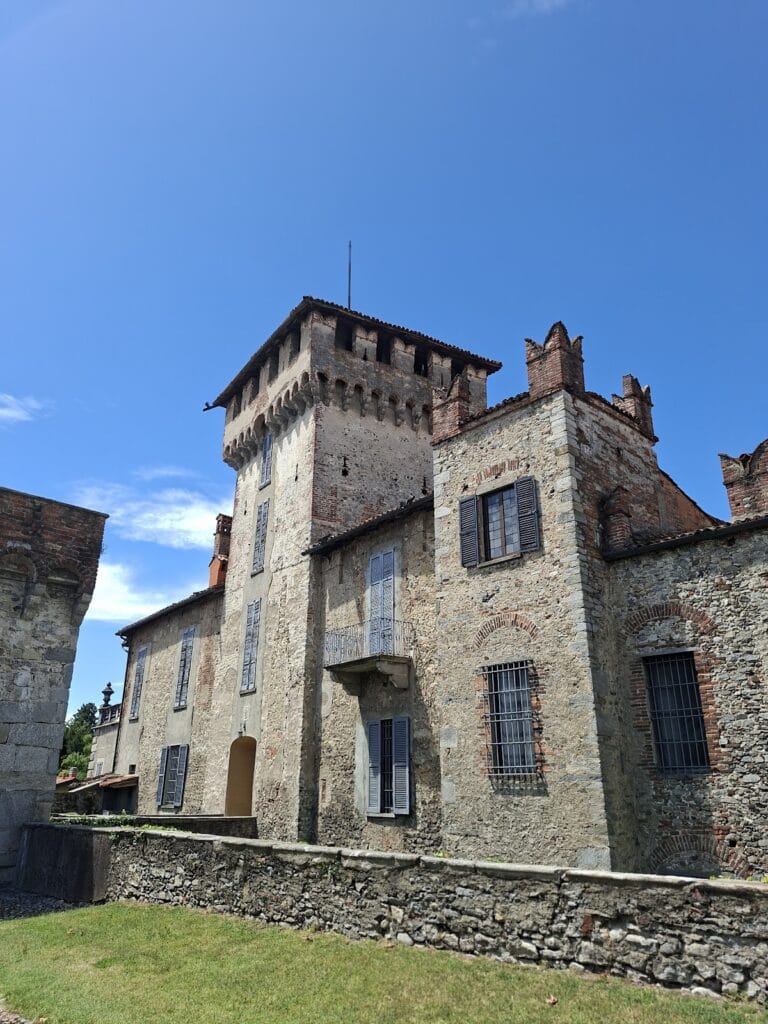
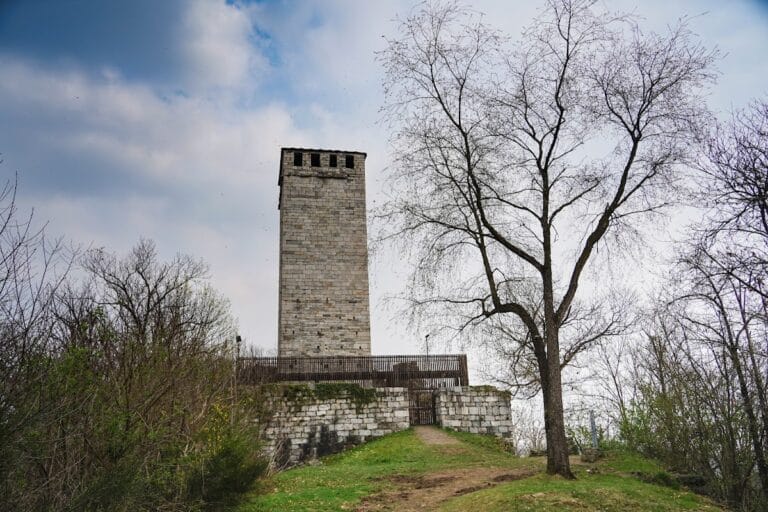
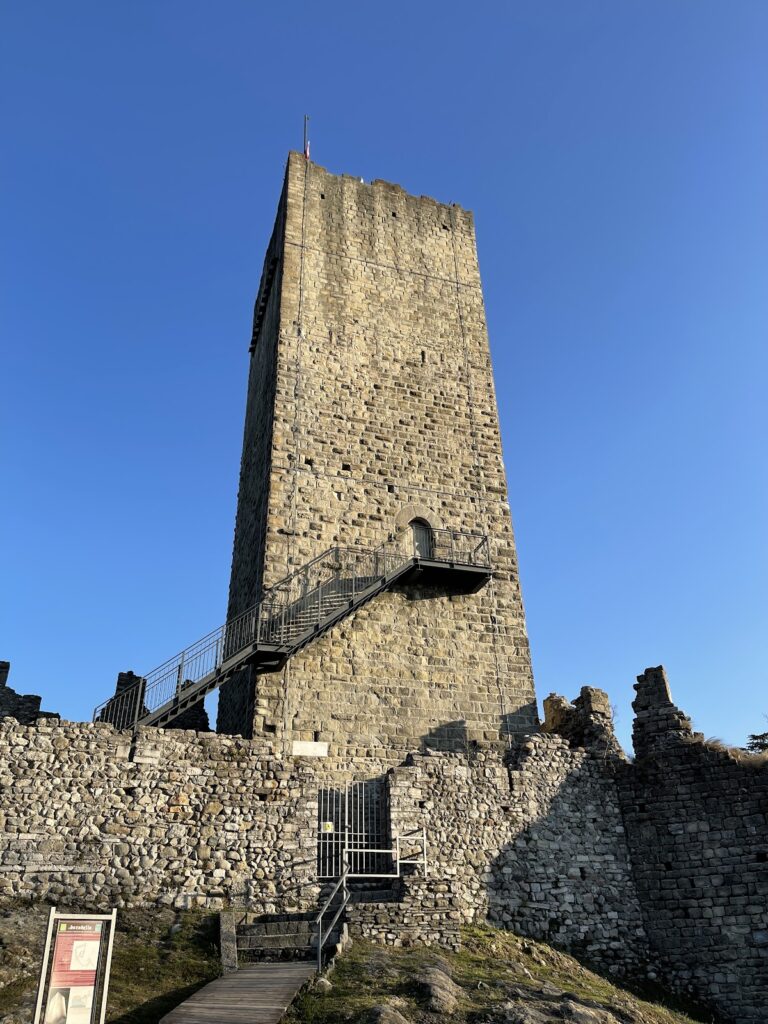
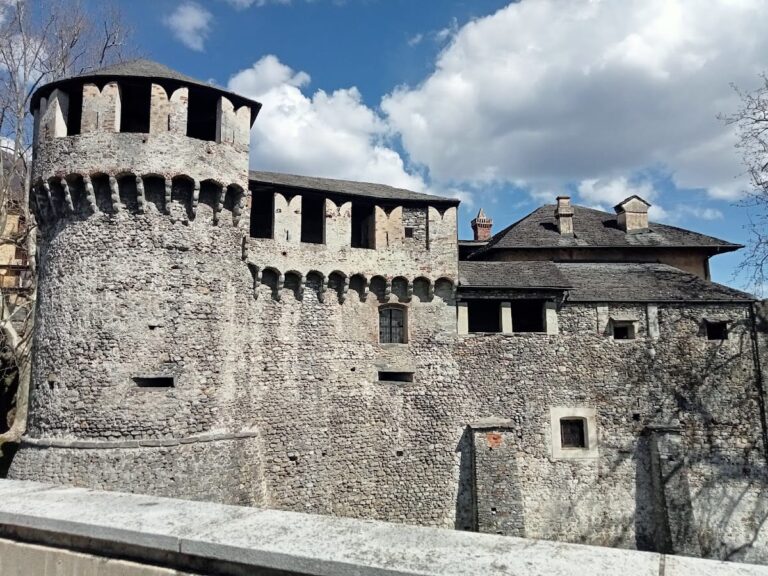
Orino Castle is laid out in a roughly quadrangular shape, enclosed by defensive walls and supported by several towers. The structure stands amid surrounding woodland atop a rocky promontory, offering expansive views over the Valcuvia valley. This elevated position affirms its historical role as an observation and communication point.
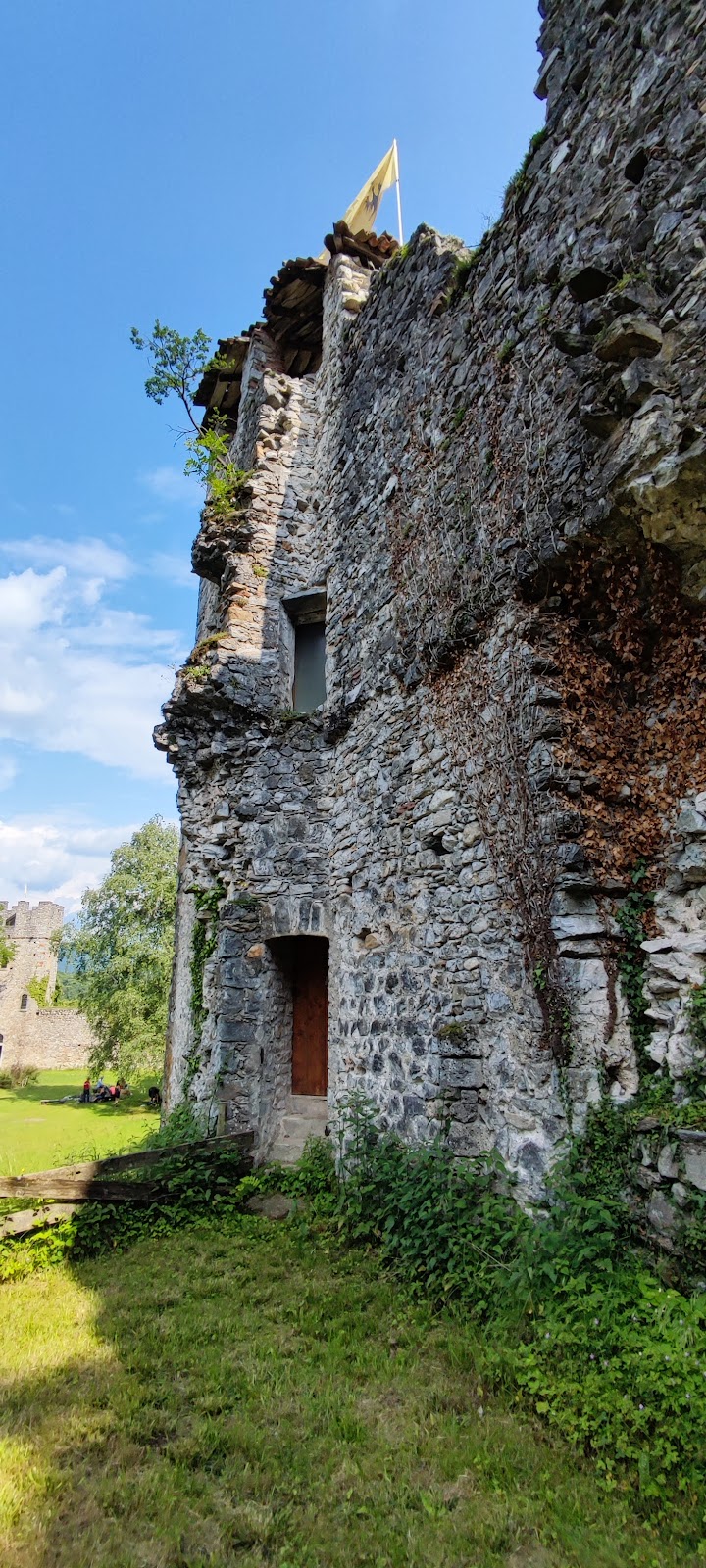
Within the castle’s broad courtyard lies a cistern used for water storage, reflecting the practical needs of those who lived and defended the site. In the northwest corner of the courtyard stands the Rocchetta, a smaller fortress built during the 15th-century renovations. Though it is largely in ruins, one tower at its southwest corner remains standing, providing a tangible link to the castle’s late medieval phase.
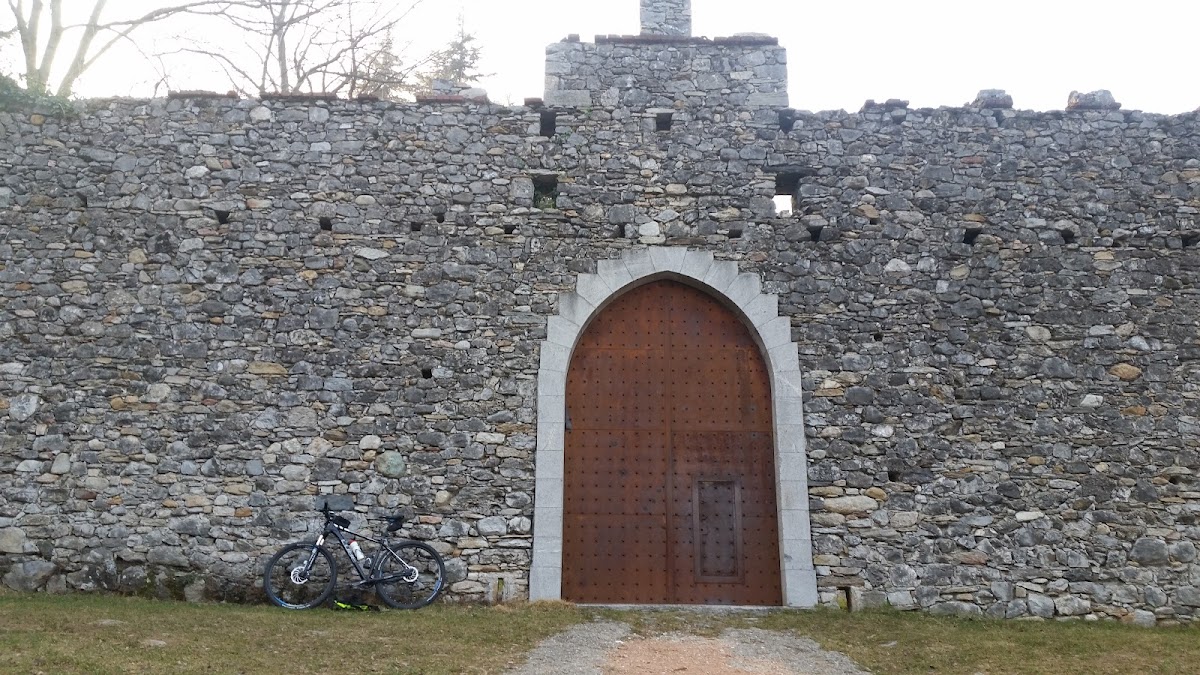
The defensive battlements along the main entrance walls are products of early 20th-century restoration efforts rather than original medieval construction. Similarly, significant parts of the tower at the northeast corner and the small breakwater tower on the northern wall date from this period. These restorations aimed to reconstruct and stabilize critical elements while maintaining fidelity to the site’s historic character.
Overall, the surviving features of Orino Castle bear witness to its long and varied military history, anchored in its commanding location and enduring presence over several centuries.
Nearby sites