Arbon Castle: A Medieval Castle and History Museum in Switzerland


Site at a Glance
- Rating
- 4.6
- Popularity
- Low
- Country
- Switzerland
- Primary era
- Early Modern
- External website
- Open
- Eras represented
- Medieval, Early Modern
- Civilizations
- Holy Roman Empire
- Site type
- Military
- Remains
- Castle
On this page8 sections
History
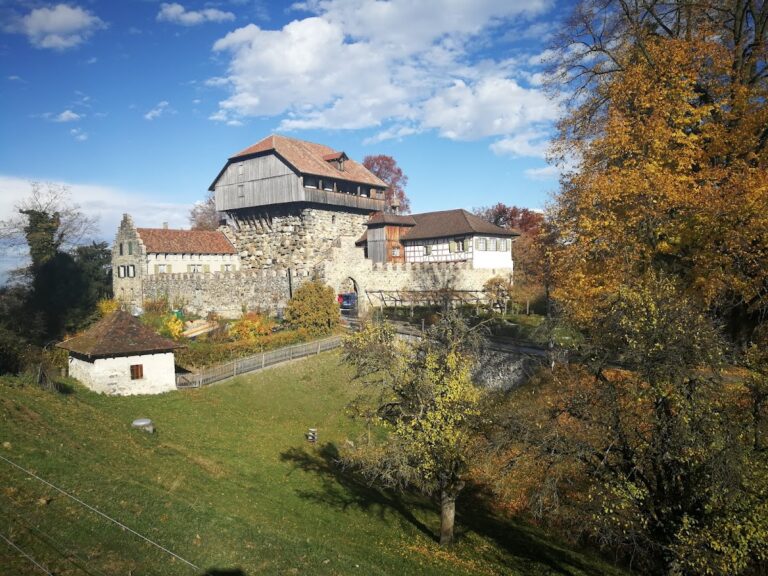
Arbon Castle is a former castle in Arbon, Switzerland, whose present structure includes a residential tower built in 1262 and a sixteenth-century reconstruction. Its history is linked to the Roman fortress of Arbor Felix, later Frankish rule, and the medieval Diocese of Constance. Since 1967, the castle has housed the Arbon History Museum.
Roman and Frankish foundations
The castle stands on or near the site of Arbor Felix, a Roman fortress built around AD 250. The fortress was abandoned after Roman rule south of the Alps ended around AD 400. A Frankish castle was probably established at Arbon sometime afterward, likely for the Frankish royal family.
By around 700, Arbon and probably its castle belonged to the Diocese of Constance, a major medieval church institution whose territories were administered by ecclesiastical officials and bailiffs. A castle at Arbon is first mentioned in 720, in a history of St. Gall Abbey. The settlement was ruled by the diocese’s ecclesiastical overseer or bailiff.
Medieval castle and episcopal rebuilding
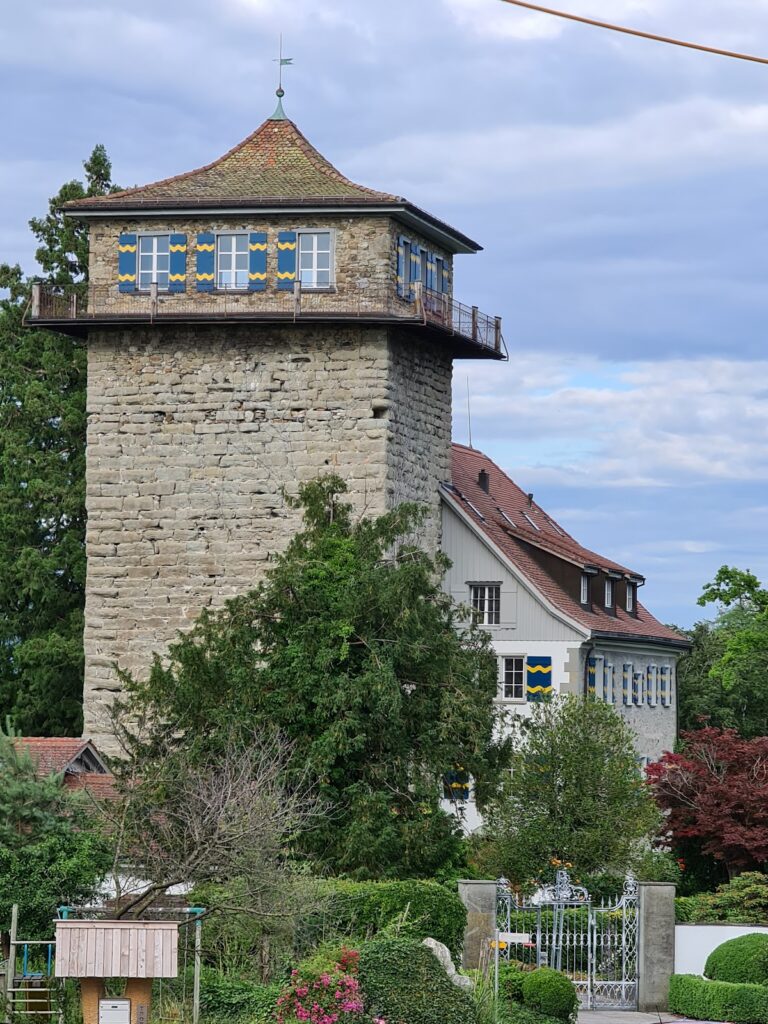
The oldest part of the present castle is a residential tower dating to the thirteenth century, specifically 1262. It may have been built on the foundations of an earlier structure. Between 1515 and 1520, Bishop Hugo von Hohenlandenberg rebuilt the castle into the form that largely defines it today.
Industrial and museum history
In 1807, Arbon district governor and later entrepreneur Franz Xaver Stoffel acquired the castle. In 1822, he established the Stoffel silk-ribbon weaving company there. The business later employed up to 200 people and continued operating in the castle until 1907.
Adolph Saurer, the founder of Adolph Saurer AG, bought the castle in 1911 and built workshops around it while experimenting with engines, trucks, and machinery. In 1944, his son Hippolyt sold the property to the city of Arbon for 150,000 Swiss francs. The city later renovated and enlarged the castle before opening the Arbon History Museum in 1967. Arbon Castle is listed as a Swiss cultural property of national significance.
Remains
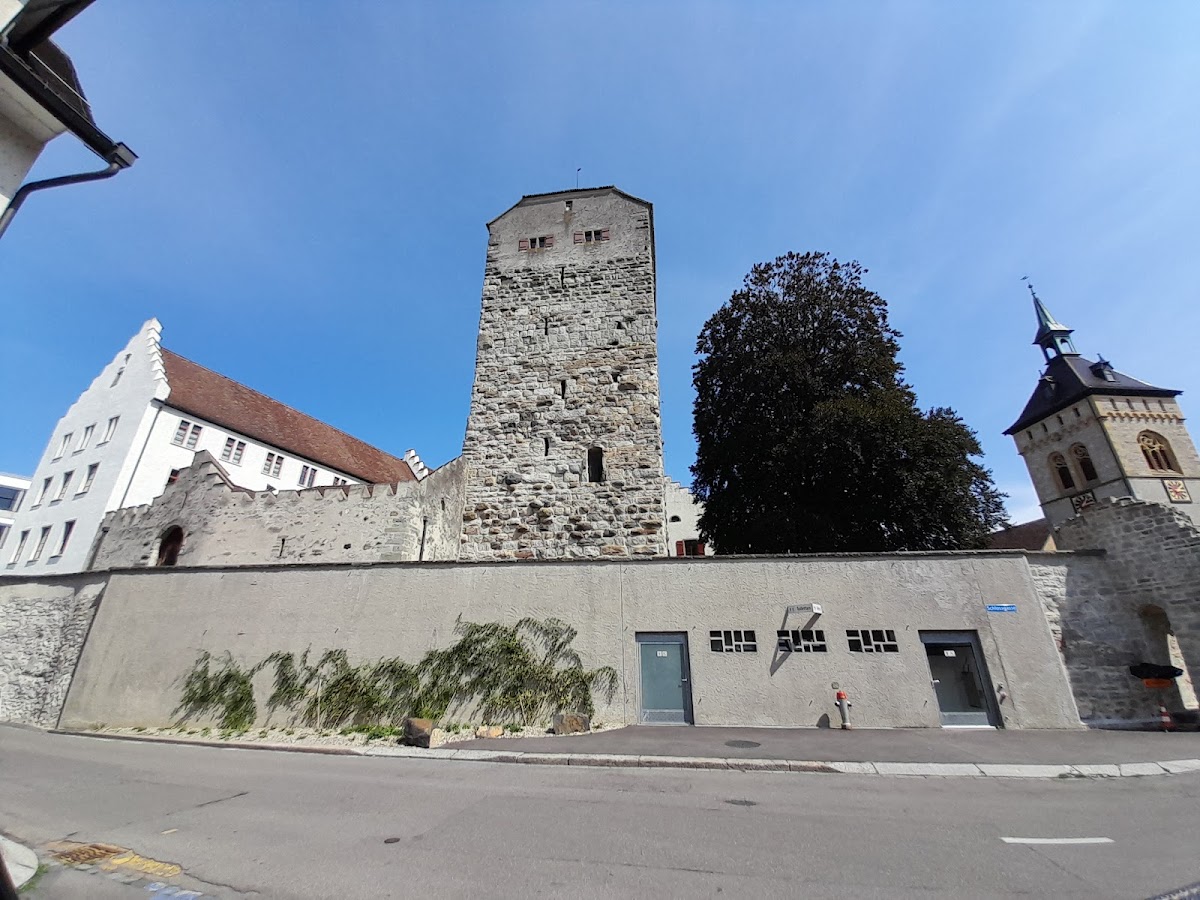
Arbon Castle is organized around a thirteenth-century residential tower that was incorporated into a U-shaped complex during the rebuilding of 1515 to 1520. The surviving fabric combines the heavy masonry of the earlier tower with the upper storey, gables, and hipped roof added during the sixteenth-century work. A hipped roof slopes on all sides rather than ending in vertical gables.
Residential tower and U-shaped complex
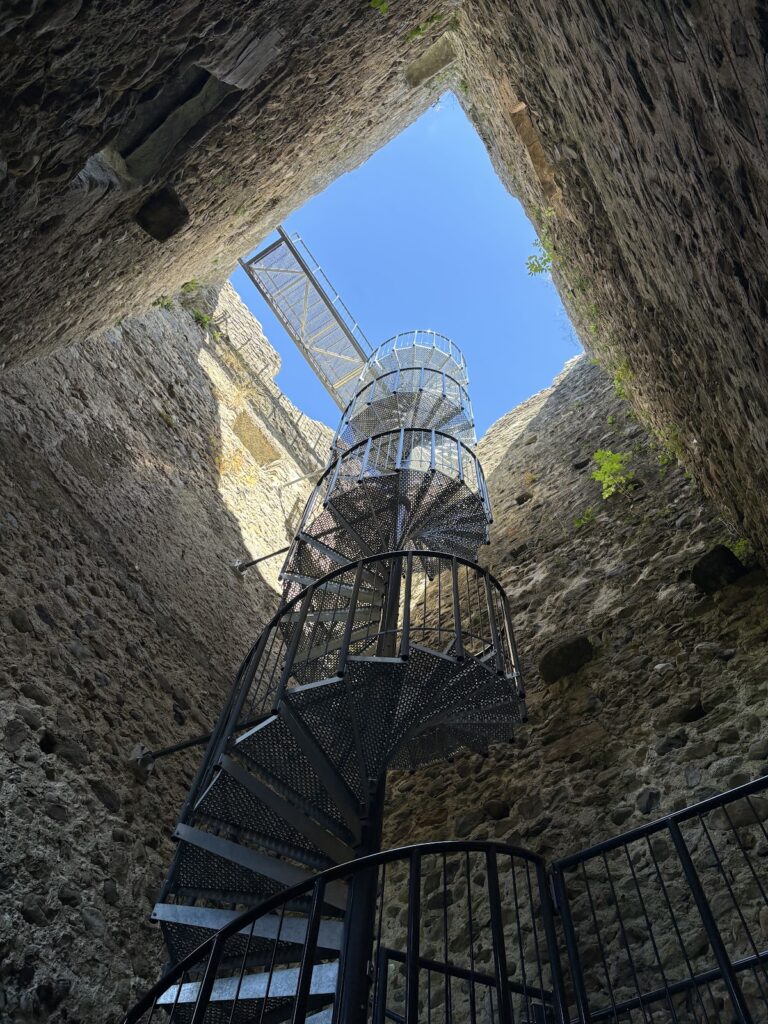
The originally freestanding residential tower forms the oldest part of the present castle. Its lower walls are up to 3.2 metres thick, reflecting the substantial construction of the thirteenth-century building. The sixteenth-century reconstruction joined the tower to other ranges, creating the castle’s U-shaped plan. The uppermost storey and gables belong to this rebuilding, as does the hipped roof.
Outer wall and Roman fortress remains
The castle’s outer wall was repositioned so that it now stands directly over the northwestern corner of the former Roman fortress of Arbor Felix. This alignment preserves a physical relationship between the medieval castle and the earlier Roman military site beneath or beside it.
Interior features
Two Romanesque fireplaces survive inside the castle. Romanesque architecture is a medieval style associated with heavy masonry, rounded forms, and substantial walls.