Old Slains Castle: A Medieval Scottish Stronghold near Collieston


Visitor Information
Google Rating: 4.2
Popularity: Low
Official Website: canmore.org.uk
Country: United Kingdom
Civilization: Unclassified
Site type: Military
Remains: Castle

History
Old Slains Castle is located near Collieston in Scotland and was originally built by the medieval Scottish civilization. Its origins date back to the 13th century when it was established as a stronghold for the Comyn family, who held the title of Earls of Buchan. This early period saw the castle serving as a noble residence and defensive site during a time of frequent conflict in Scotland.
Following the downfall of the Comyns in the 14th century, the castle changed hands when King Robert the Bruce rewarded Sir Gilbert Hay for his loyalty during the Wars of Scottish Independence by granting him ownership. This transfer marked the beginning of the Hay family’s long association with the castle. In 1453, Sir William Hay was elevated to the peerage as the Earl of Erroll by King James II, making Old Slains Castle the principal seat of the Earls of Erroll.
The late 16th century brought significant turmoil to the castle’s history. Francis Hay, the 9th Earl of Erroll, converted to Catholicism and became involved in a rebellion against the Protestant Scottish crown. His participation included engagement in the Spanish Blanks conspiracy, a plot involving secret communications with Spain, and fighting in the Battle of Glenlivet in 1594. In response to this uprising, King James VI stationed a royal garrison at the castle in 1589 to maintain control. After the rebellion was suppressed, the king ordered the castle’s destruction on November 1, 1594. The demolition was carried out using gunpowder and cannon, with Aberdeen Council providing the necessary materials and a stonemason named John Fraser overseeing the work.
Despite efforts by Elizabeth Douglas, Countess of Erroll, to restore the castle in 1595, the damage was too extensive, and the building was declared beyond repair. She moved to a nearby farmhouse called Clochtow, located about 800 meters northwest of the ruins, where she lived following the restoration of the family’s titles and lands. Eventually, Francis Hay abandoned Old Slains Castle altogether and constructed a new tower house known as Bowness on the site that later became New Slains Castle near Cruden Bay.
Since the late 20th century, archaeological excavations have taken place at the site, beginning in 1991 and continuing with further investigations in 2007. Today, the ruins of Old Slains Castle are protected as a scheduled monument, preserving its historical significance.
Remains
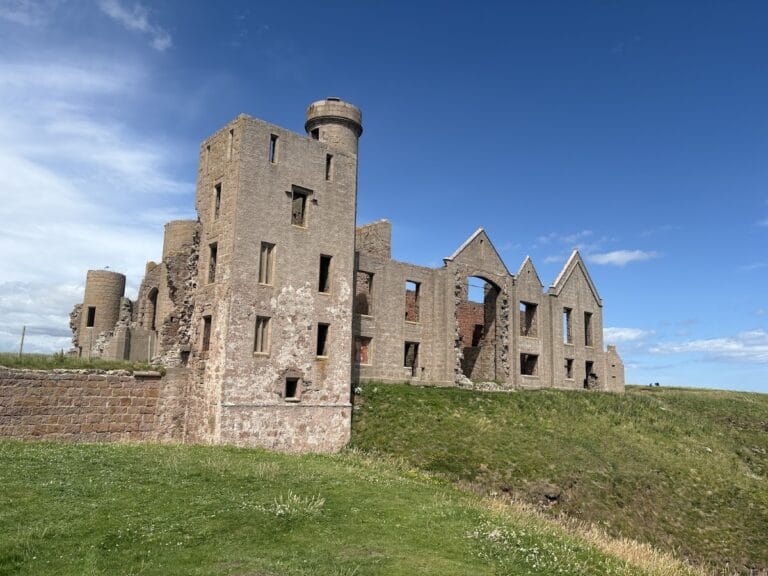
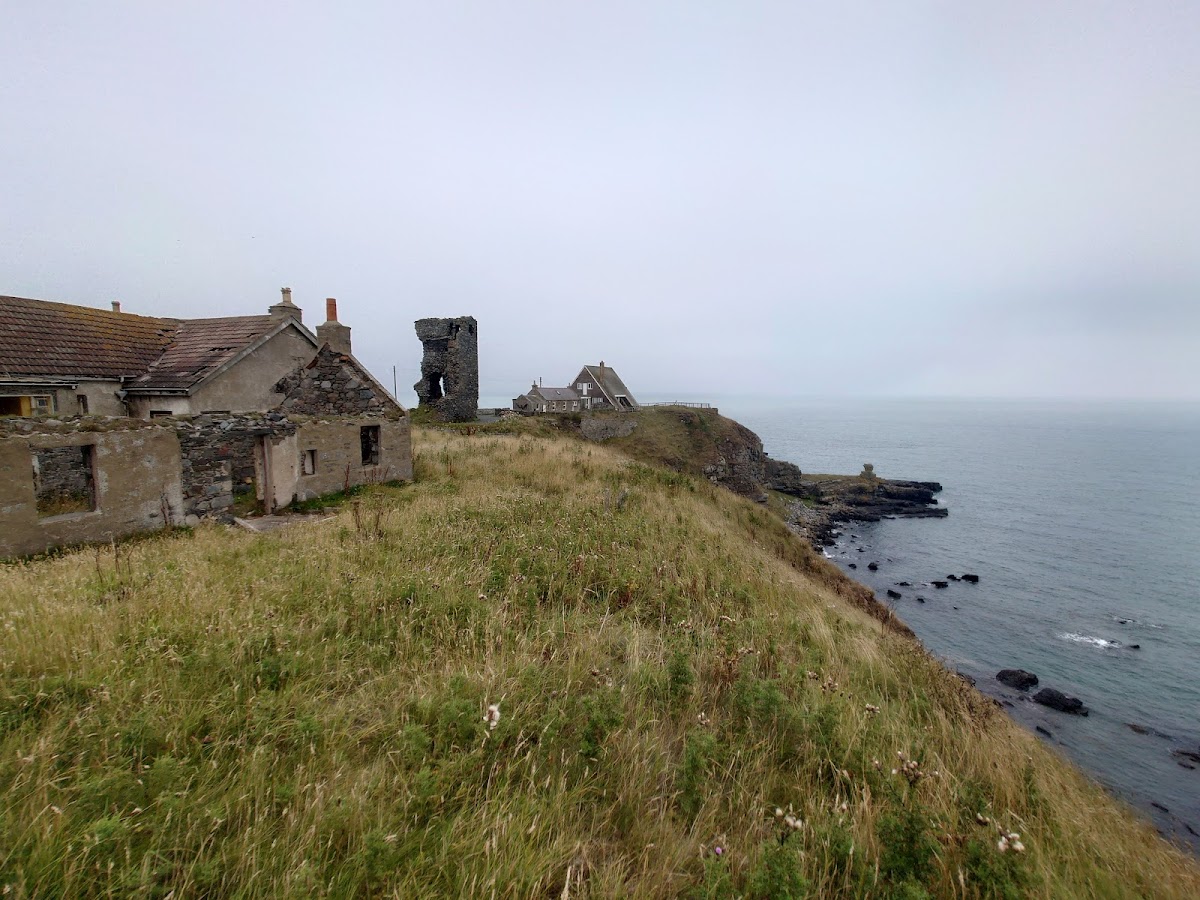
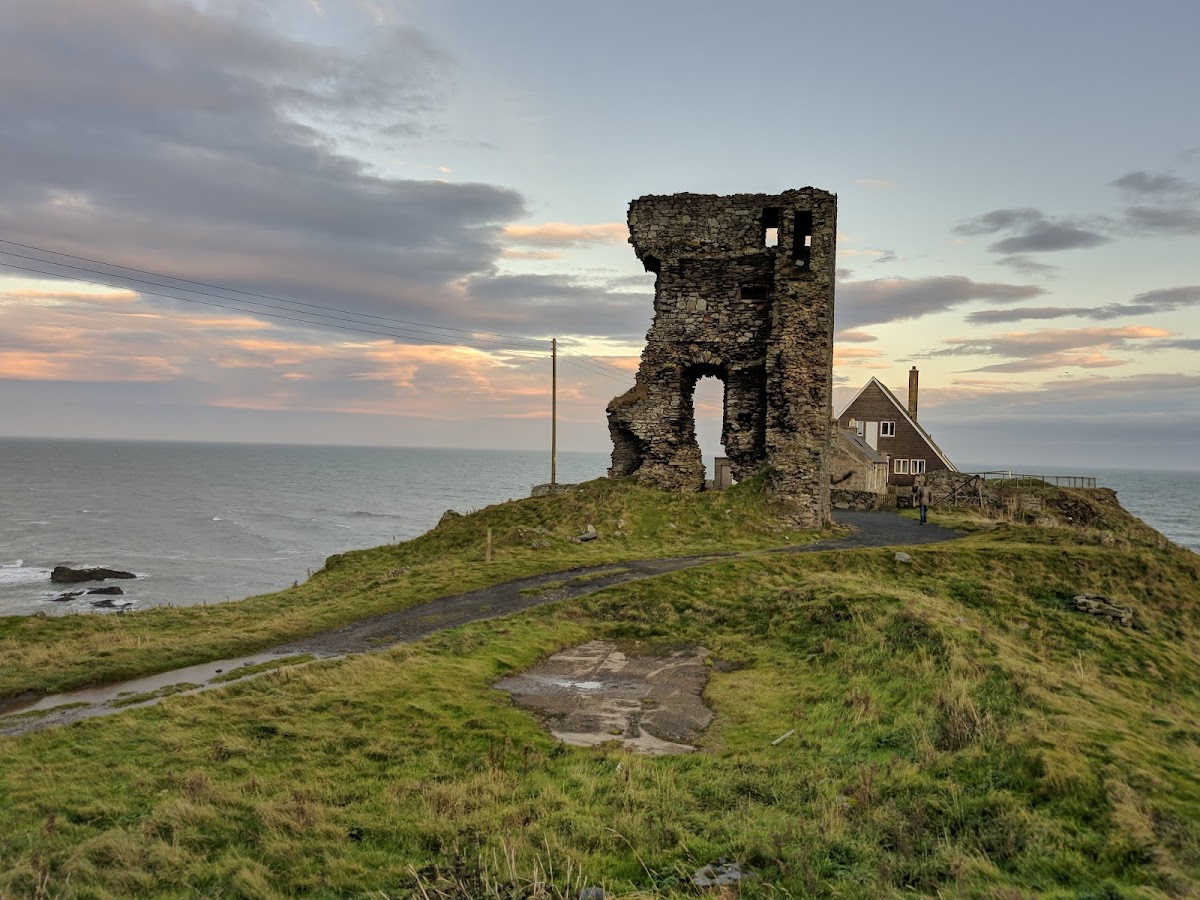
The remains of Old Slains Castle reveal a once formidable fortress built on a narrow rocky peninsula overlooking the North Sea. The original structure was a five-storey oblong keep, designed to provide strong defensive capabilities. This keep was separated from the mainland by a dry moat, a trench without water, which stretched across the width of the peninsula to hinder attackers approaching from the landward side. In the early 16th century, a defensive wall was added to further protect the castle’s vulnerable landward approach.
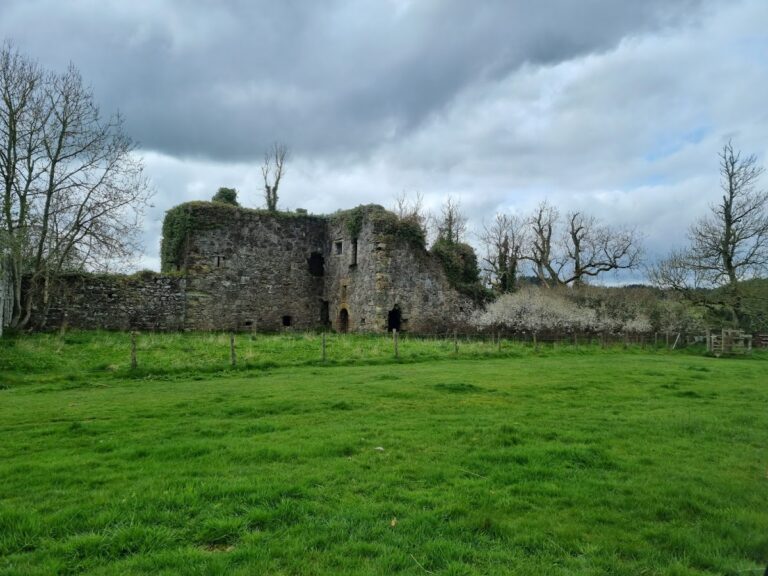
Today, only two sections of the castle’s walls remain standing, reaching heights of about 25 meters (82 feet). These surviving walls offer a glimpse into the castle’s imposing scale. On May 31, 1979, part of the south-facing wall partially collapsed, resulting in approximately 100 tons of rubble falling onto the road below, a dramatic event that altered the ruins’ appearance.
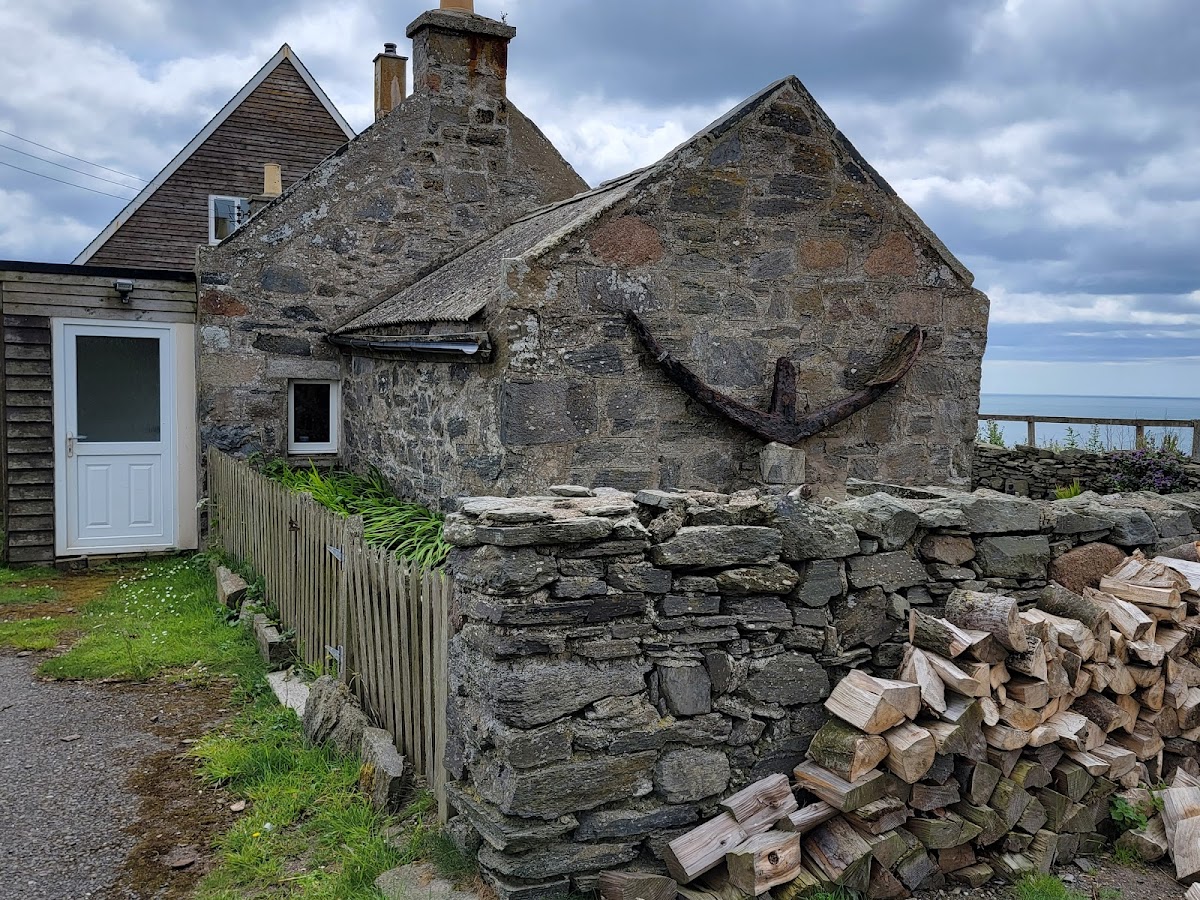
In the mid-20th century, specifically during the 1950s, a three-storey house was constructed within the castle’s ruins. This modern building adjoins an 18th-century fishing cottage, indicating a later phase of reuse of the site’s structures. The castle grounds have been the focus of several archaeological digs since 1991, which have helped to document and understand the layout and history of the site.
The ruins stand as a testament to the castle’s long and turbulent history, with the remaining walls and moat providing tangible evidence of its medieval defensive design and the dramatic events that led to its destruction and abandonment.
Nearby sites