Nero’s aqueduct: Ancient Roman Aqueduct in Rome

Visitor Information
Google Rating: 4.4
Popularity: Very Low
Google Maps: View on Google Maps
Country: Italy
Civilization: Roman
Remains: Infrastructure

History
Nero’s aqueduct is located in the Monti district of Rome, Italy. This aqueduct was built by the ancient Romans during the reign of Emperor Nero in the mid-first century AD. It served as a vital water supply system for imperial residences in the city.
Construction of the aqueduct began under Nero, who ruled from 54 to 68 AD. It functioned as a branch of the larger Aqua Claudia aqueduct, designed specifically to bring water to Nero’s Domus Aurea, also known as the Golden House, and the artificial lake that surrounded it. This connection highlights the aqueduct’s role in supporting the luxurious and expansive imperial complex that Nero established after the great fire of Rome.
Following Nero’s death, the aqueduct continued to be used and expanded. Emperor Domitian, who ruled from 81 to 96 AD, extended the water channel to supply his palace on the Palatine Hill. This extension indicates that the aqueduct remained an important infrastructure for imperial residences beyond Nero’s reign.
In the third century AD, Emperor Septimius Severus undertook restoration work on the aqueduct. These repairs helped maintain the structure’s functionality and contributed to the survival of some of the arches that can still be seen today. The aqueduct’s route, beginning at Porta Maggiore and passing through areas such as Via Statilia and near Via San Stefano Rotondo, reflects its integration into the urban fabric of ancient Rome over several centuries.
Remains
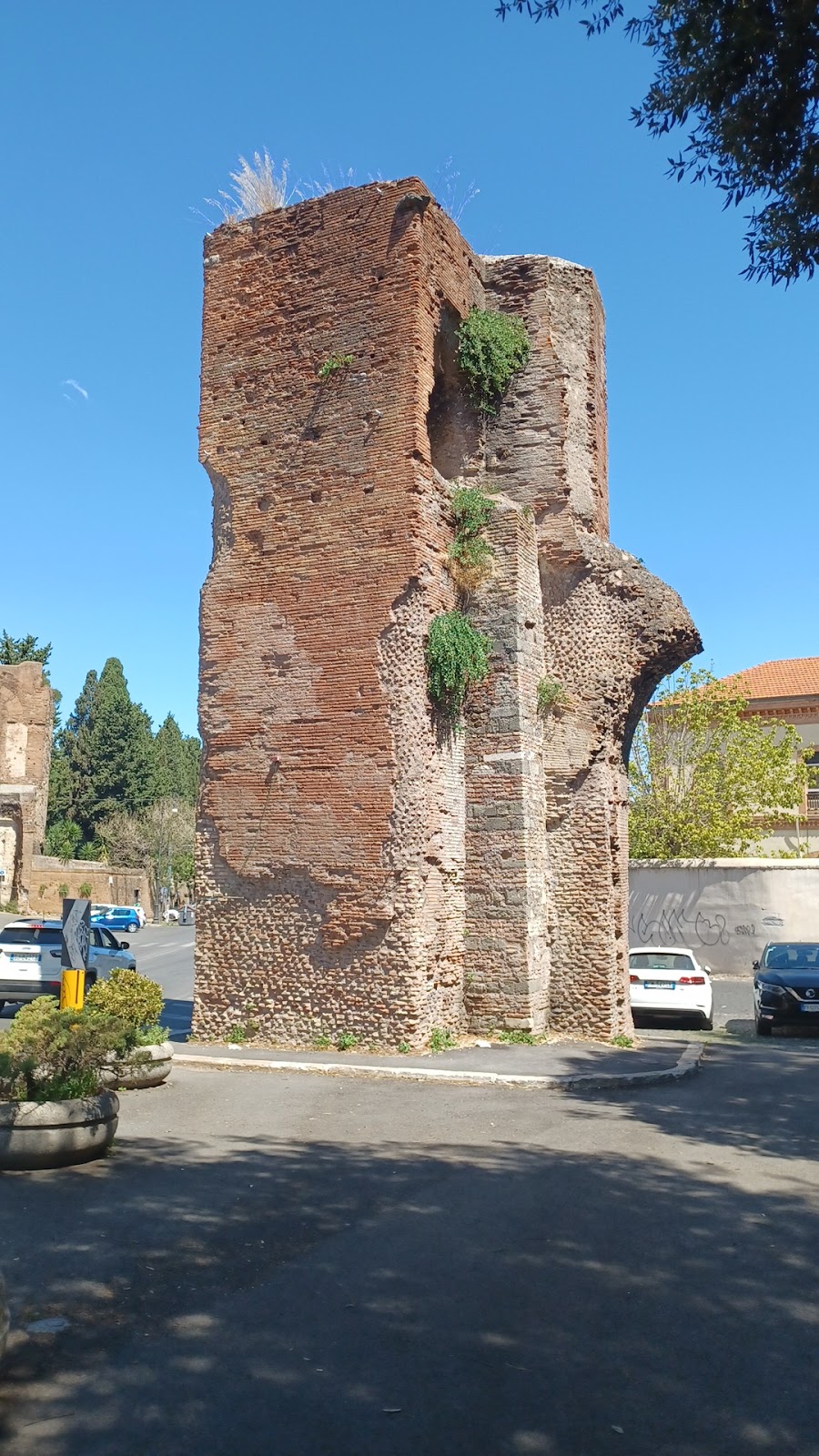
The visible remains of the aqueduct consist mainly of brick arches that once supported the elevated water channel. Along Via Statilia, these arches stand between 19 and 22 meters tall, demonstrating the impressive scale of the structure. A particularly striking section spans the valley between the Celio and Palatine hills, reaching a height of about 40 meters, showcasing the engineering required to maintain a steady water flow across uneven terrain.
The aqueduct follows the underground course of the Aqua Claudia before rising above ground and culminating at the Arch of Dolabella and Silano. This arch served as a key structural point where the water channel was carried over a roadway. The construction technique relied on brickwork, a common Roman building material, which provided durability and strength to the elevated sections.
Restorations carried out during the Severan period in the third century are evident in the surviving arches, which remain visible today along Via Statilia and near Via San Stefano Rotondo. These repairs helped preserve the aqueduct’s function and physical presence in the city.
Nearby sites