Loket Castle: A Medieval Fortress and Museum in the Czech Republic
Visitor Information
Google Rating: 4.7
Popularity: Very High
Official Website: www.hradloket.cz
Country: Czechia
Civilization: Medieval European
Site type: Military
Remains: Castle

History
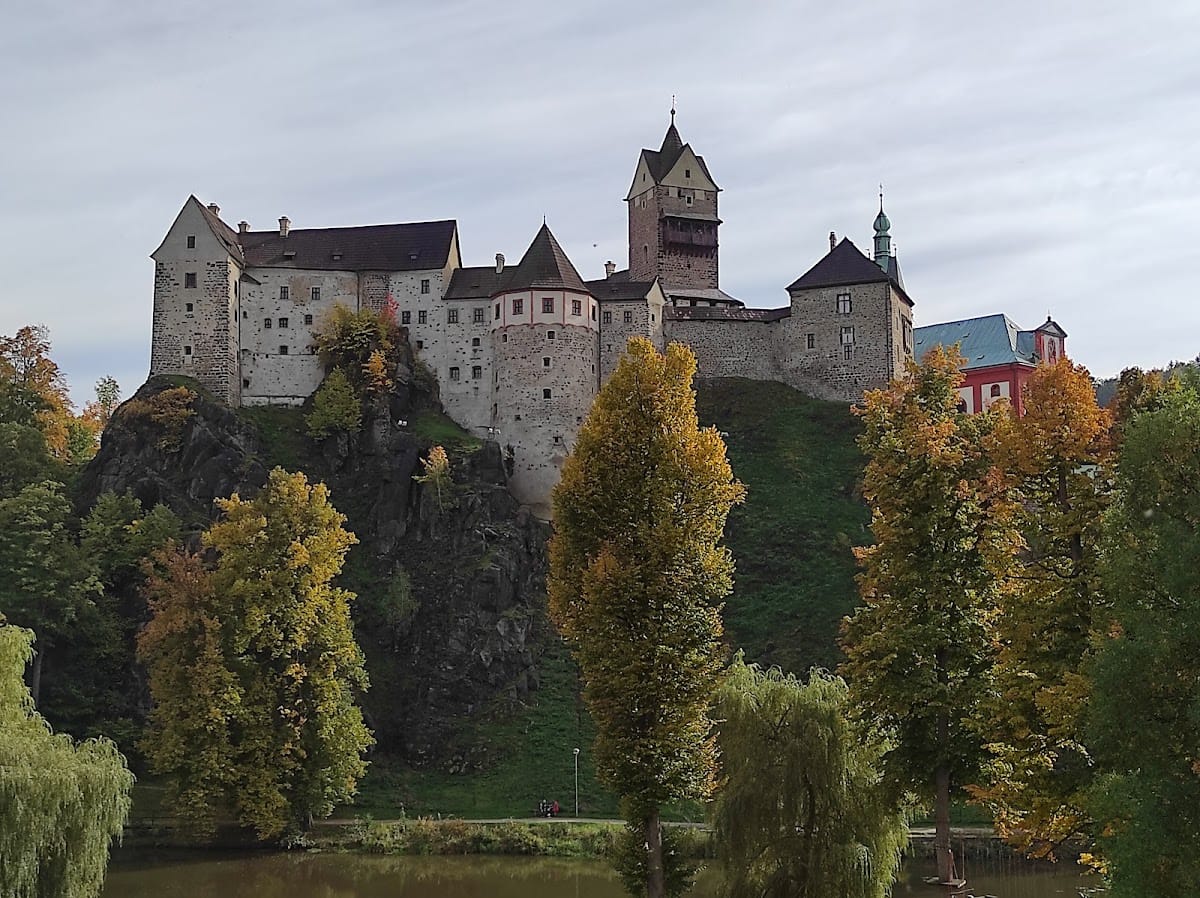
Loket Castle, located in the town of Loket in the modern Czech Republic, was built in the 12th century by the medieval Czech civilization. It originally bore the name Elbogen and was established on a large rocky outcrop encircled on three sides by the Ohře river, providing a naturally defensible position. Historical research indicates that its foundation likely took place during the reign of the Přemyslid king Ottokar I, possibly initiated by Czech prince Vladislaus I or officials serving Emperor Frederick I Barbarossa. Earlier accounts attributed the castle’s origins to Cheb ministeriales under the Staufer dynasty; however, the presence of a Romanesque rotunda with distinctively Czech architectural features suggests a Přemyslid origin rather than German.
The castle’s primary purpose was to protect an important trade route running from Prague through Cheb to cities like Plauen and Erfurt. Over time, Loket evolved from a frontier fortress into an administrative center for the surrounding region. By the 13th century, a settlement had emerged outside the castle walls, eventually developing into a recognized royal town. Written records mention Loket for the first time in 1227 during a meeting involving the king and a Dominican monk, and in 1234 the earliest known burgrave Sulislav is recorded. Under Přemyslid rulers such as Přemysl Otakar I, Václav I, and Přemysl Otakar II, the castle grew in importance, including the introduction of a manorial system that required local minor nobility to provide military service at Loket.
In the early 14th century, Loket played a role in the political struggles involving the Luxembourg dynasty. Queen Elisabeth of Bohemia sought refuge within its walls during tumultuous times, but in 1319 King John of Luxembourg seized the castle through deception. He imprisoned Elisabeth and held their young son Václav—later known as Charles IV—in a dark chamber for approximately two months. This event underscores the castle’s involvement in the high politics of the era.
By 1434, King Sigismund mortgaged the castle to Chancellor Kaspar Schlick, heralding over a century of ownership by the Schlick family. They transformed Loket into a prominent family residence and administrative hub, making significant renovations in late Gothic and early Renaissance styles. During the Hussite Wars of the 15th century, the castle stood firm under burgrave Půta of Illburk, who maintained loyalty to the Catholic side despite several unsuccessful sieges by Hussite forces.
The Schlick tenure was marked by tensions with the local townspeople and manorial tenants, leading to armed conflicts and court disputes throughout the 15th and 16th centuries. After the family’s involvement in the 1547 uprising against Emperor Ferdinand I, their lands including Loket were confiscated. Between 1551 and 1562, the castle was overseen by the Plauen nobility but management problems caused control to revert to the local burghers. In 1598, the castle officially became the hereditary property of the town and was chiefly used for administrative purposes thereafter.
In the early 17th century, nobleman Jiří Popel of Lobkovic died in the castle prison. The Thirty Years’ War brought sieges and occupations by Bavarian, Saxon, and Swedish troops. The town faced penalties from imperial authorities for acts of disobedience during the conflict. A destructive fire in 1725 devastated much of the castle, but key structures such as the Margrave’s House and the underground levels survived.
During the 19th century, Loket Castle was converted into a town prison, a role it served until 1948. In 1993, management passed to the Loket Castle Foundation. Since then, it has functioned as a museum and national monument, hosting various cultural events including an annual opera festival. The castle is also associated with the local legend of the goblin Gottstein, believed to be the protector of the Loket rocks and their underworld, commemorated by a bronze statue on the castle courtyard.
Remains
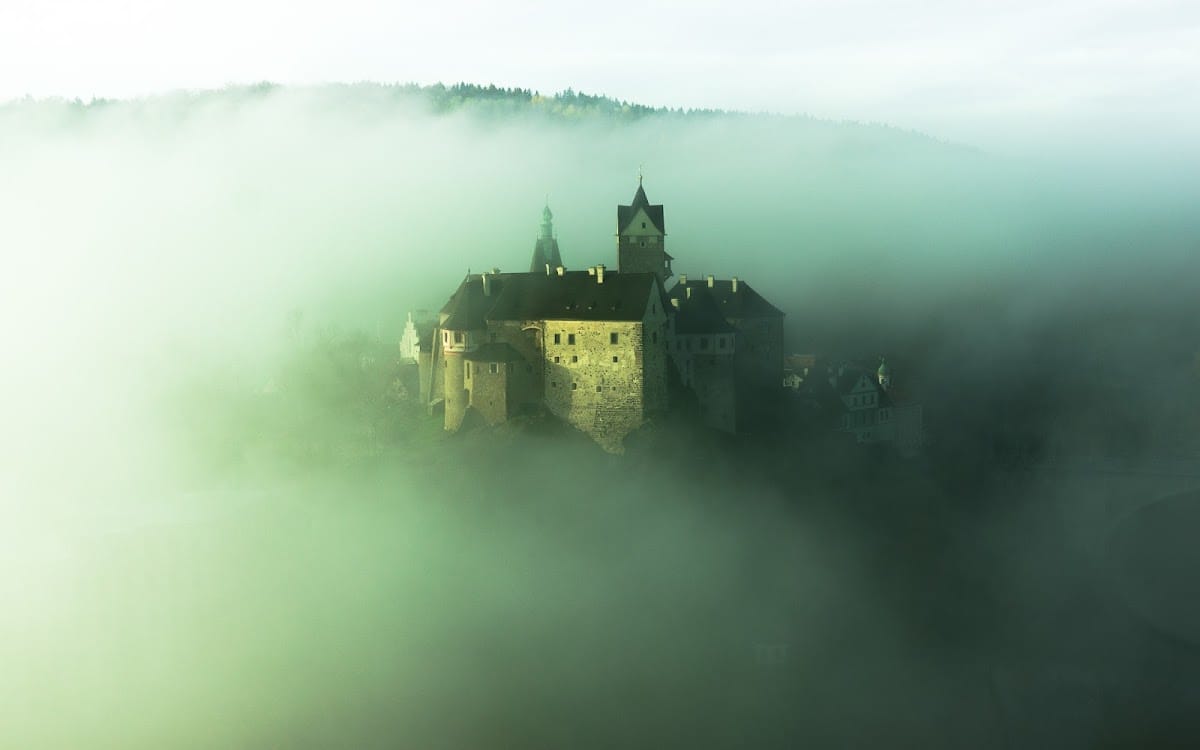
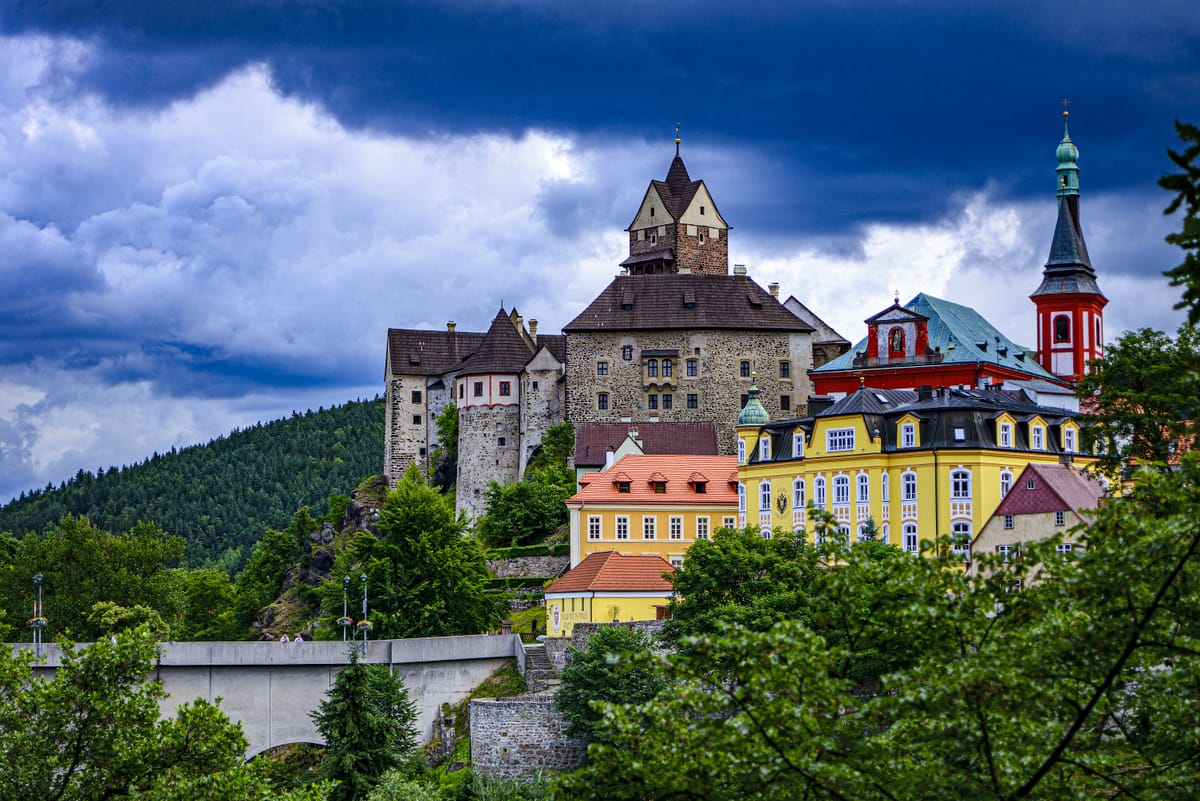
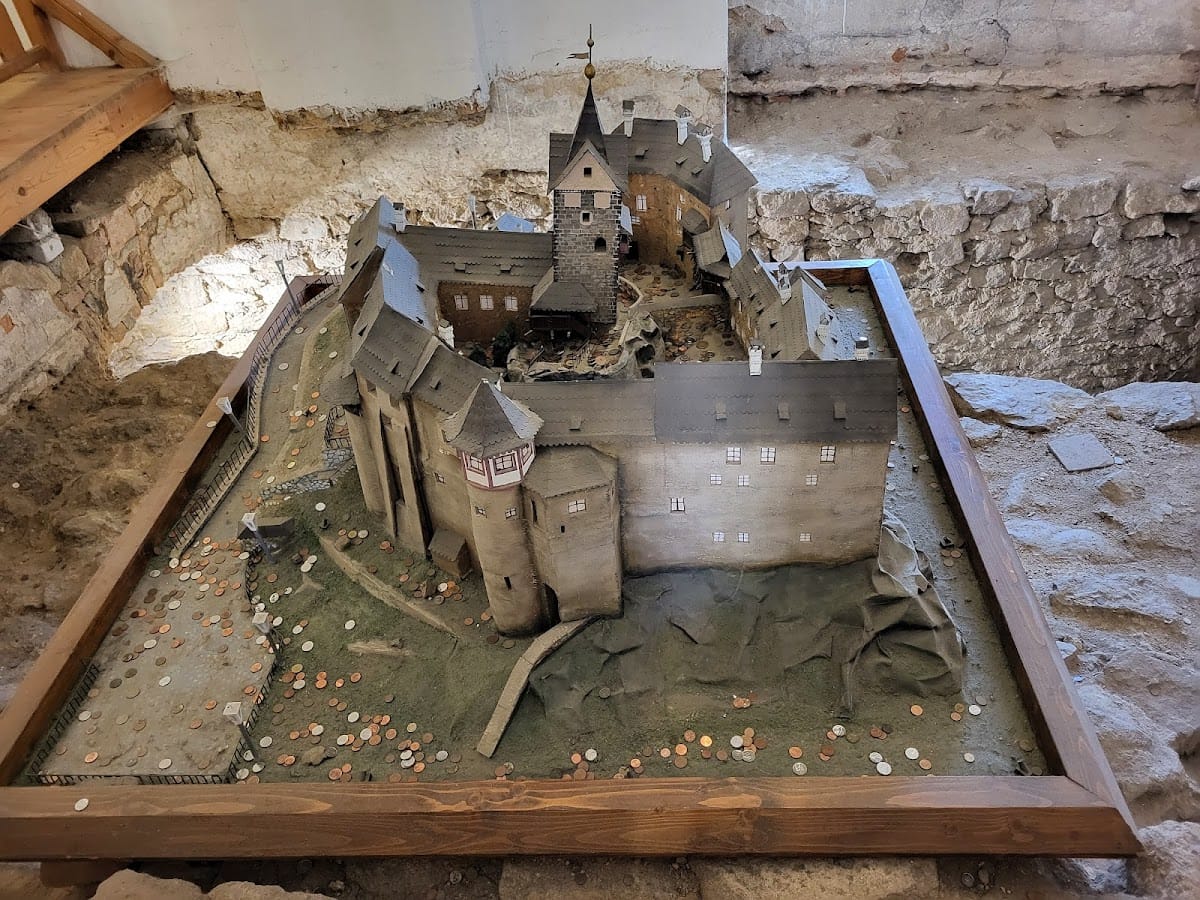
Loket Castle is situated on a rocky promontory surrounded by the Ohře river on three sides, creating a natural defense complemented by thick stone walls built directly on the rock. Its layout reveals multiple building phases and architectural styles reflecting its long history. The original 12th-century structure included two towers, a church, and what is now called the Margrave’s House. The church’s location corresponds to the current site of St. Wenceslaus Church. One of the original towers, northeast of the castle core, no longer exists.
Among the oldest surviving elements is a Romanesque rotunda—a small, round chapel with a cylindrical nave about 3.5 to 3.6 meters in diameter, and a surrounding wall approximately 75 to 80 centimeters thick. This rotunda was constructed from carefully cut granite blocks measuring roughly 30 centimeters high and between 42 and 64 centimeters long. Although it forms part of the main castle wall, its masonry distinctly differs from the rubble stonework of later fortifications, highlighting its earlier origin. This feature is a rare example of Czech Romanesque architecture integrated into a defensive complex.
In the 13th and 14th centuries, the castle underwent significant Gothic expansions which included building new fortification walls fortified with semicylindrical towers, commissioned during the reign of King Ottokar II. Later renovations in the 15th and 16th centuries by the Schlick family introduced large halls in a southern palace wing, converted an eastern palace into archival space, constructed a chapel, and added the burgrave’s residence. A well located in the courtyard side provided water via an underground tunnel system, a notable engineering feature.
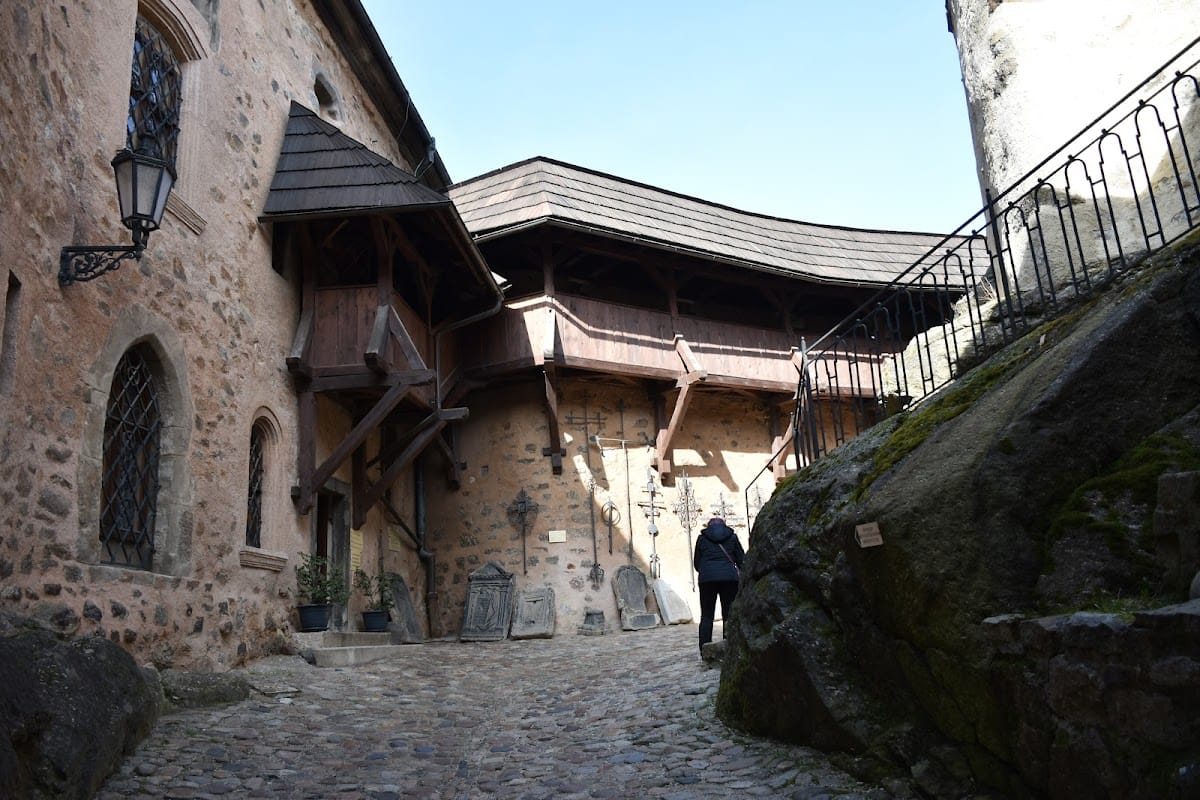
The Margrave’s House, initially built in Romanesque style, was refined into its current form by 1907. It now functions as a museum exhibiting local porcelain and includes several historical tombstones near its entrance. The castle complex is made up of nine distinctive sections: the Margrave’s House, the remains of the Romanesque rotunda, prison cells, a torture chamber, halls used for weddings and ceremonies, exhibits displaying historical arms and archaeological finds, a Romanesque polygonal tower, the burgrave’s house dating from the 15th century, the captain’s house, and a 16th-century two-winged palace with associated fortifications.
Following the devastating fire in 1725, parts of the castle were rebuilt at a lower height by one story, and a stone chamber near the tower was demolished. The Baroque cathedral now standing on the site of the original Gothic church was completed in 1734, designed by Wolfgang Braubock. Its altar paintings are credited to Petr Brandl, while side altars are attributed to local sculptor Jan Wild. The churchyard was restored and contains a monument commemorating Václav Popel of Lobkovice.
The castle’s transformation into a prison in the 19th century saw cells and a torture chamber installed, both of which are preserved today as part of the museum’s exhibits. Among the castle’s unique features is the display of the Elbogen meteorite, known locally as the “bewitched burgrave.” This meteorite, weighing originally about 107 kilograms, was found either in the castle well or courtyard, and remains the largest known to have fallen within the Czech lands.
Finally, a bronze statue of the mythical goblin Gottstein—believed to guard the Loket rocks and the castle’s underworld—stands on the rocky courtyard, symbolizing local folklore entwined with the castle’s deep history. Extensive archaeological excavations completed by 1993 revealed the castle’s thick walls, between 2.2 to 2.5 meters wide, formed of quarry stone directly laid onto the rock foundation, highlighting the formidable strength of the fortress through the centuries.