Plikenštejn: A Medieval Fortified Aristocratic Site in Czechia
Site at a Glance
- Rating
- 4.8
- Popularity
- Very Low
- Country
- Czechia
- Primary era
- Medieval
- Eras represented
- Medieval
- Civilizations
- Holy Roman Empire, Kingdom of Bohemia
- Site type
- Military
- Remains
- Castle
On this page8 sections
History
Plikenštejn, a medieval fortified aristocratic site in Czechia, occupied a rock above the Lobez stream near the former village of Frohnau. Usually dated to after 1250, probably between 1250 and 1300, it was associated with the Plick knightly family and served as the name-giving seat of one of the oldest families connected with Frohnau.
Foundation and the Plick family
The fortress was established during the medieval expansion of settlement between Kynžvart and Plikenštejn, although its precise founder and foundation date remain unknown. An origin in the first half of the thirteenth century is possible, but construction is generally placed in the second half of that century. The site is variously described as a small fortress, castle, fortified house, or rock castle.
The Plick family also held Nejdek and other properties in the surrounding region. Around 1300, a member of the family founded Nejdek Castle, after which this branch became known by the name Nejdek. Konrad Plik died in 1335 and divided his property between his sons Petr and Albert. In 1340, Petr received Nejdek and two nearby villages as a fief from John of Luxembourg, king of Bohemia from 1310 to 1346. The grant made him a holder of property in return for service or allegiance to the king.
In 1341, Petr stated that he had obtained all of his father’s property, including tin mines and mining rights. The family’s possessions also included Jindřichovice, which Petr bought from Beneda, abbot of the Teplá Monastery, in 1340. Albert Plik of Plikenštejn, then living at Nová Role, witnessed the transaction. Konrad and Jan Štumpf of Hroznětín, the previous owners, kept a contractual right to buy back the mines, but they did not exercise it.
Changing lordship and abandonment
Plikenštejn’s ownership during the middle and later fourteenth century is not certain. The estate was held at different times by the Plicks and by the lords of Kynžvart. A record from 1358 names Frenczel Plych of Plykenstein.
In 1389, Plikenštejn appeared as a Leuchtenberg fief held by Engehart, Vítek, Humprecht, and Jaroslav, lords of Kynžvart. A fief was property or a right granted by a superior lord in return for service or allegiance. The same record stated that the castle was deserted. It also noted that Albert Plik held the other half of Vranov and the Plikenštejn estate farm, while living in a fortified family house near Vranov. A Leuchtenberg record from 1390 nevertheless referred to a small castle at Plikenštejn near Vranov, and Gumpold of Kynžvart was named as the fief holder in 1396.
Numerous military artefacts indicate that the castle may have been stormed at the beginning of the fifteenth century. The Plicks lost Nejdek to the king in 1406, but that event does not establish when Plikenštejn was abandoned. By 1538, the wider estate had passed to Heinrich of Plauen. In 1542, Count Jerome Schlick acquired former Leuchtenberg possessions, and a May property record mentioned Blickenstein near Frohnau. The castle later survived only in the landscape as a field or forest name, while the date of its final disappearance is unknown.
Rediscovery and commemoration
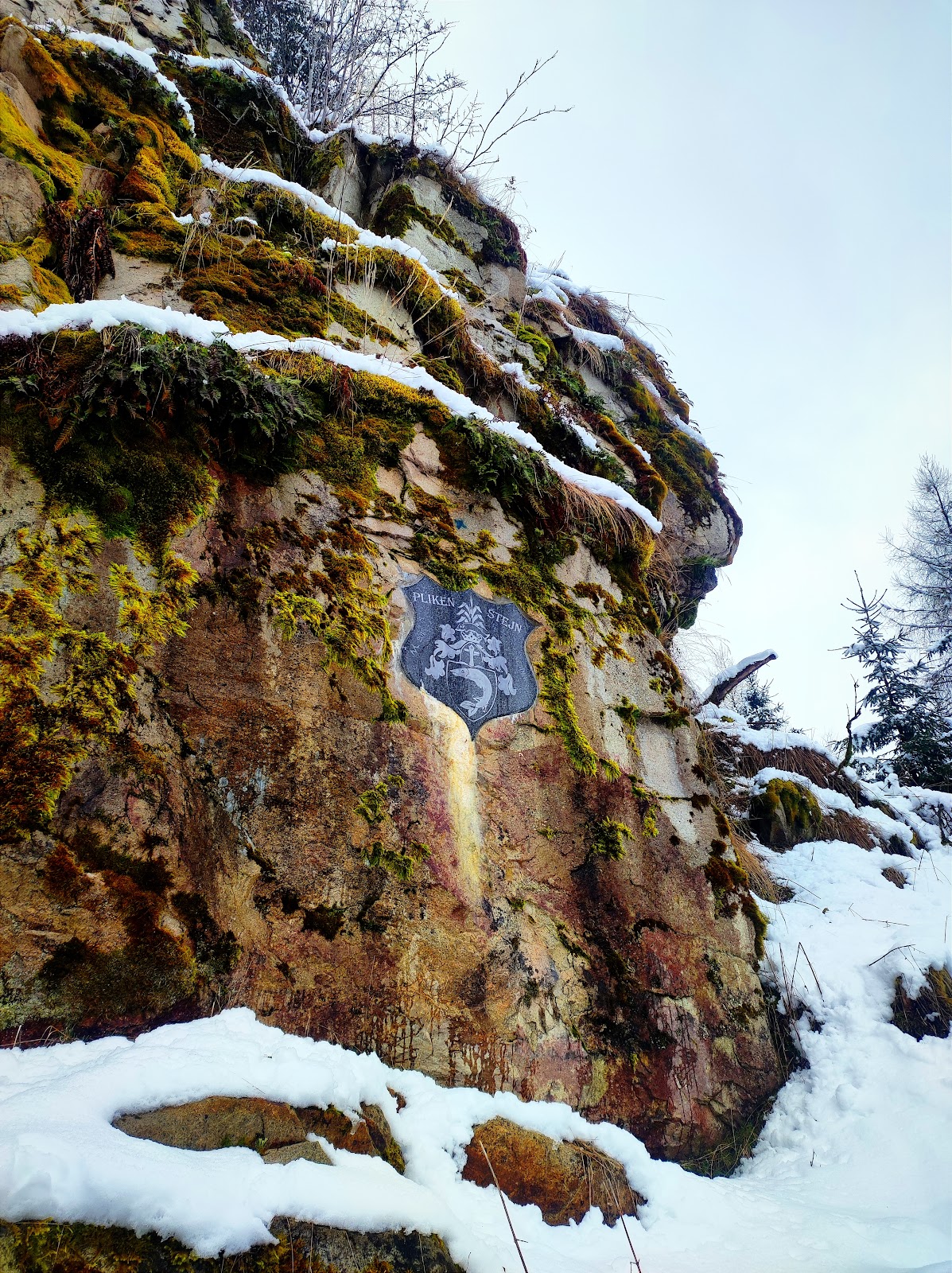
The location of Plikenštejn remained uncertain for many years. Archaeological investigation in 1993 confirmed the site and recorded its surviving remains. On 4 June 2016, a stone plaque bearing the Plick family arms was fixed to the castle rock as a tribute to the family regarded as the founders of Nejdek.
Remains
Rock castle and defenses
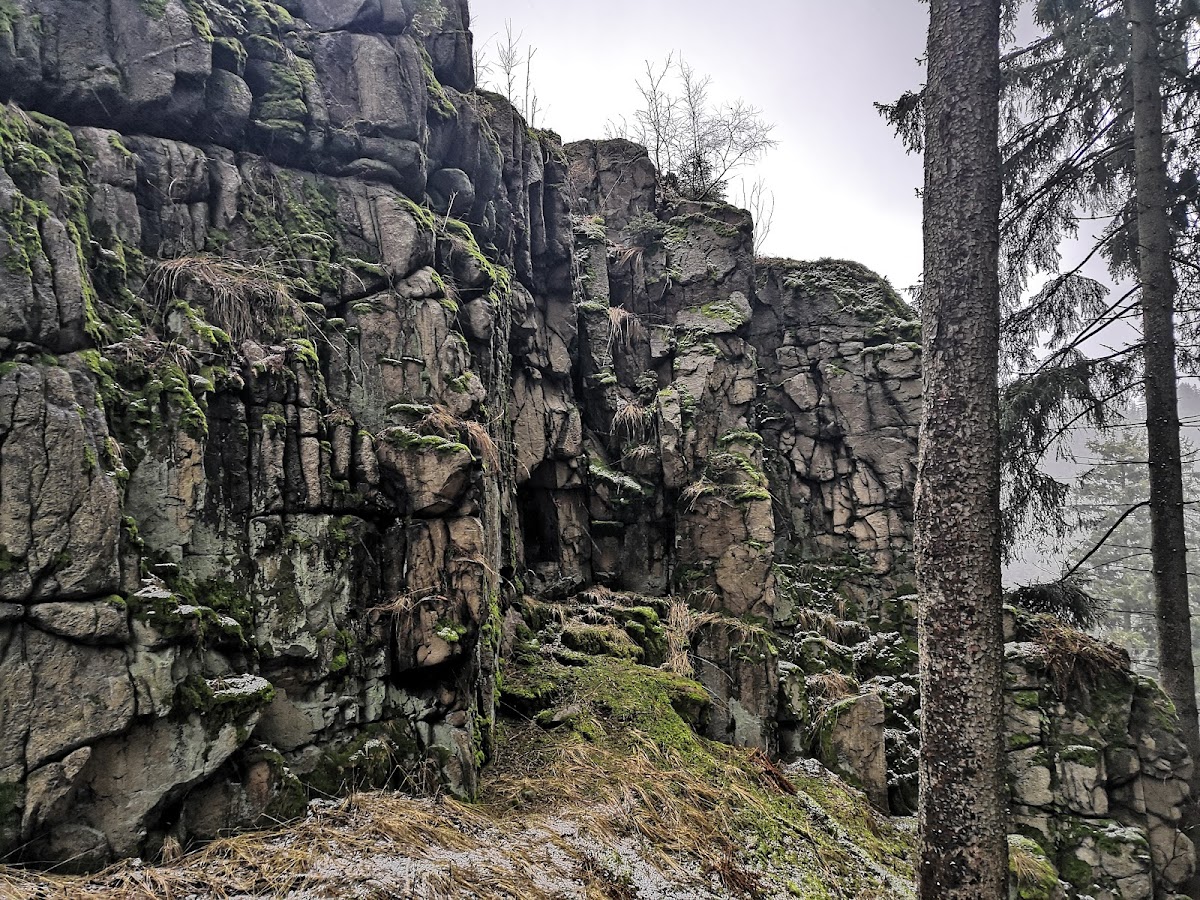
Plikenštejn is now a castle site rather than a standing castle. It occupies a rock above the valley of the Lobez stream, southwest of Krudum and near the former village of Frohnau in the Slavkov Forest. Three water ditches protected the western side, forming the principal surviving defensive earthworks.
Central enclosure
The central enclosure measured only about 10 metres in length. Archaeological work identified stone buildings within this restricted area and confirmed the presence of the three ditches. The former castle fabric is represented visibly by an anchoring hole, while other remains survive as archaeological traces rather than as standing walls.
Plick family plaque
A stone plaque attached to the castle rock in 2016 carries the coat of arms of the Plick family. Milan Litavský of Nejdek made the plaque, which commemorates the family’s association with Plikenštejn and its connection with the foundation of Nejdek.