Lochranza Castle: A Medieval Stronghold on the Isle of Arran, Scotland


Visitor Information
Google Rating: 4.5
Popularity: Low
Google Maps: View on Google Maps
Official Website: www.historicenvironment.scot
Country: United Kingdom
Civilization: Unclassified
Remains: Military

History
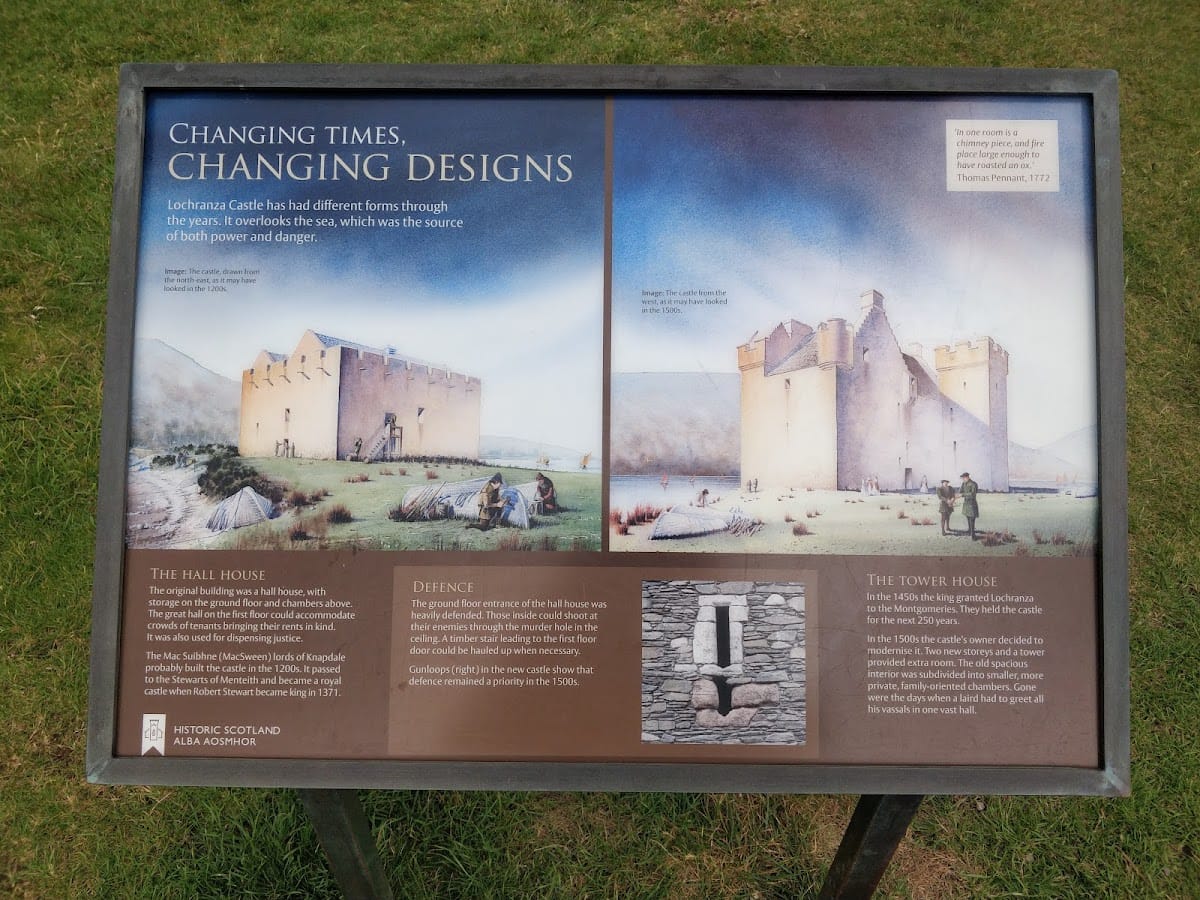
Lochranza Castle stands on the northern end of the Isle of Arran in Scotland, a stronghold built by medieval Scottish builders during the 13th century. Its original construction is credited either to the MacSweens or the Stewarts of Menteith, reflecting the shifting alliances and territorial claims of that era.
In the mid-13th century, King Alexander III of Scotland granted the castle and its surrounding lands to Walter Stewart, Earl of Menteith, establishing it firmly under Stewart family control. By the late 14th century, during the reign of King Robert II, it became royal property and was known to serve as a royal hunting lodge, a role highlighted by medieval chronicler John Fordun who recorded it as one of two royal castles on the Isle of Arran. This royal connection suggests the castle’s importance within the crown’s local holdings and interests.
Over subsequent centuries, ownership of Lochranza Castle transferred through several notable noble families. After the Stewarts, the property came into the hands of John de Menteith, and later, in 1433, it was acquired by Sir Duncan Campbell of Locawe. It then passed to the Montgomerie family during the 1450s. The Montgomeries undertook significant expansions in the late 1500s, transforming the original hall house into a tower house, reflecting changes in defensive needs and residential style at the time.
Lochranza Castle played a role in Scotland’s turbulent military history. King James IV used it strategically during campaigns against the MacDonalds, Lords of the Isles, in the late 15th century. Both in 1614 and during the 1650s, governmental troops were stationed there—first under King James VI and later soldiers loyal to Oliver Cromwell—indicating the castle’s ongoing military relevance. By the early 18th century, the castle’s status had declined; it was pledged as collateral in a loan to the Dukes of Hamilton and eventually abandoned. The roof was lost in 1772, leaving the structure exposed to the elements and accelerating its decay into ruin by the 19th century.
Since the late 20th century, specifically from 1994 onwards, efforts have focused on preserving the castle as an important historical monument under the protection of Historic Environment Scotland.
Remains
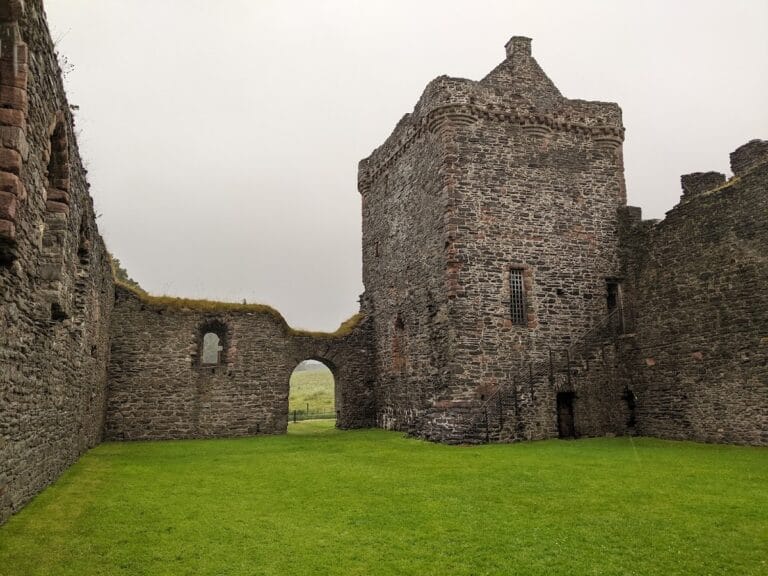
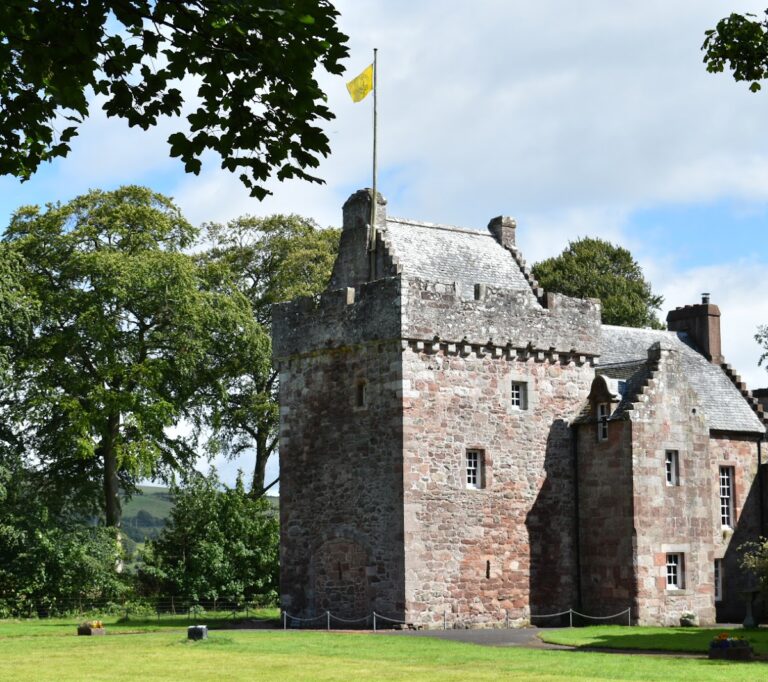
Lochranza Castle today presents the remains of a classic Scottish tower house, which grew from an initial 13th-century hall house. The main body of the structure is a rectangular four-storey building, constructed of grey rubble stone, measuring about 66 by 35 feet (20 by 10.5 meters). This solid core represents the castle’s medieval origins merged with later enhancements.
Attached to the southern corner of the main block is a five-storey square tower, smaller in footprint (measuring roughly 15.6 by 16.6 feet or 4.75 by 5 meters), featuring a battlemented walkway along its top. The basement of this tower likely functioned as a dungeon, a typical feature of tower houses, used for confinement or storage of prisoners. Its battlements would have served both defensive and vantage purposes.
The castle’s corners are constructed with red sandstone blocks called quoins, which reinforce the structure’s edges and provide a color contrast to the grey stone of the walls. The southwest side holds the principal entrance, introduced during the 16th century renovations. This doorway is safeguarded by a projecting machicolated parapet—a defensive feature that allowed defenders to drop objects or shoot vertically at attackers below. Originally, the castle’s entrance was on the first floor along the east wall, accessed by an external wooden stair, a common design in medieval residences to enhance security.
Internally, the ground level had vaulted ceilings, designed for sturdy storage space. Above, each floor was split into two zones: a large room on the southern portion and a series of smaller rooms on the northern side. On the first floor, the southern chamber served as a great hall, a sizable room measuring about 34.6 by 23 feet (10.5 by 7 meters), while the northern section comprised the kitchen and service areas, vital for castle life. Movement between floors was facilitated by a stone spiral staircase located near the southwest entrance, with an additional narrower stair in the northeast wall leading up to the second floor.
Remnants on the fourth floor include the base of a watchtower at the western corner, supported by stone brackets known as corbels, hinting at the defensive and surveillance functions of the upper levels. The castle’s roof was lost in 1772, exposing the structure and contributing to gradual deterioration. By 1897, coastal erosion had caused the collapse of part of the northern corner, which further impacted its preservation.
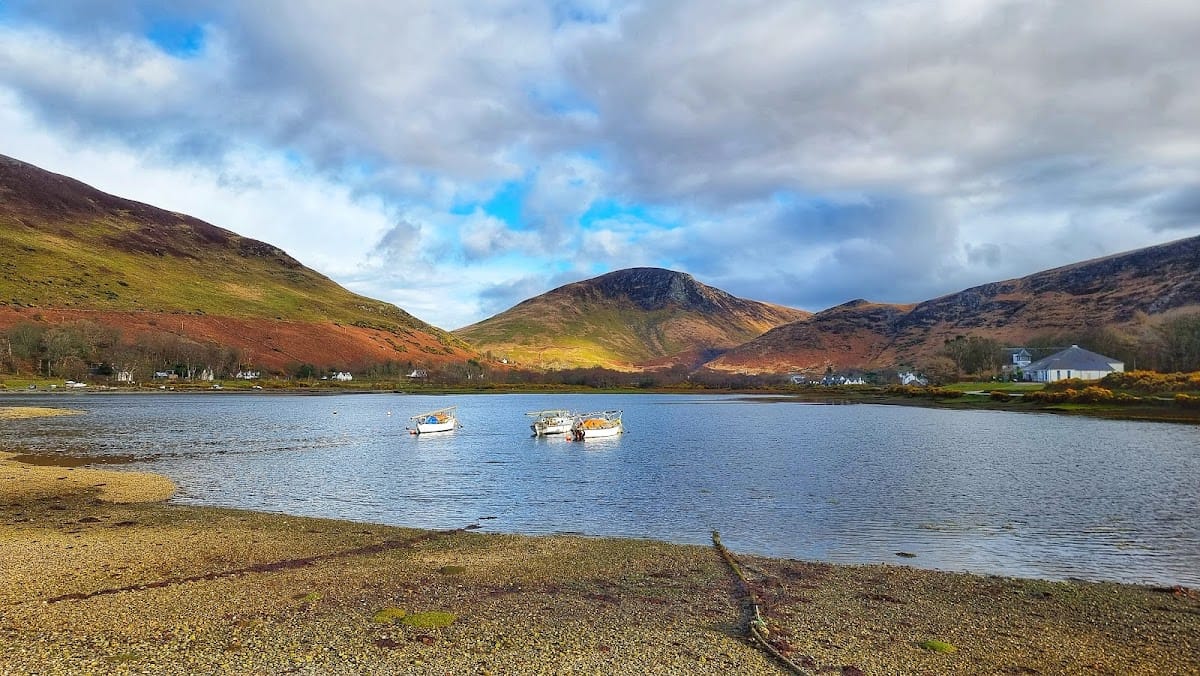
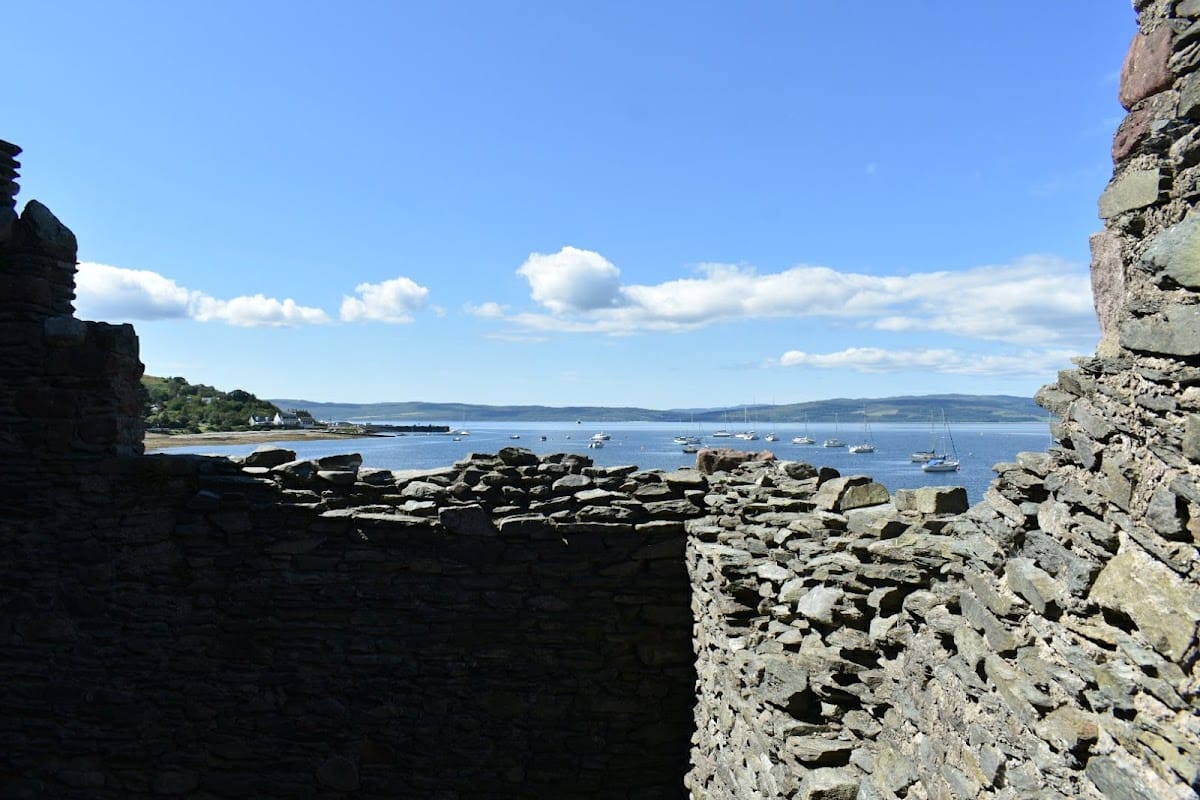
Sitting on a rocky promontory that juts into Loch Ranza bay, the castle’s location afforded both protection and command over the surrounding waters. The walls and structural remains seen today provide a clear indication of its layered history and the architectural developments from medieval fortress to Renaissance tower house.
Nearby sites