Le Grotte Roman Villa: An Ancient Roman Residence on Elba Island, Italy

Visitor Information
Google Rating: 4.2
Popularity: Very Low
Google Maps: View on Google Maps
Official Website: villaromanalegrotte.it
Country: Italy
Civilization: Roman
Remains: Domestic

History
Le Grotte Roman Villa is located on Elba Island, Tuscany, Italy. It was constructed by the Romans at the end of the 1st century BCE on a natural and partly artificial platform overlooking the bay. The villa reflects Roman residential architecture and was occupied during the late Augustan and early Tiberian periods.
The villa underwent a major renovation in the first half of the 1st century CE, which marked its second phase of use. This phase included expansions and enhancements that aligned with Roman tastes of the time. Archaeological evidence suggests the villa was abandoned by the end of the 1st century CE. The absence of valuable items and precious decorations indicates a deliberate removal of goods before abandonment.
Between the late 4th and early 6th centuries CE, the villa saw a new phase of occupation. Small monastic or hermit groups, common in the Tuscan Archipelago during Late Antiquity, likely adapted parts of the villa as simple refuges. After this period, the site fell into complete disuse and gradual decay, though some of its robust vaulted structures remained visible.
In the 18th century, the ruins attracted attention from travelers and scholars. In 1728, Antonio Sarri, an engineer serving Grand Duke Cosimo III de’ Medici, reported that statues, columns, and marble furnishings were still visible among the ruins. This suggests the villa’s structure remained identifiable despite centuries of abandonment.
During the 1799 conflict on Elba between French forces and the Kingdom of Naples, the villa’s promontory served as a strategic military position. It is likely that some walls were demolished to install artillery batteries, reflecting the site’s tactical importance during this brief military engagement.
The villa was officially recognized for its regional significance in 1901 by the Royal Superintendency. However, systematic archaeological investigations began only in 1960 under Giorgio Monaco, who directed research on Elba’s archaeological heritage.
Epigraphic evidence from the nearby rural area known as Piana di San Giovanni connects the villa to the Valerii Messallae family. This elite Roman family included Marcus Valerius Messalla Corvinus, a prominent senator and patron of the arts, and his son Aurelius Cotta Maximus Messallinus. The poet Ovid mentioned meeting Massimo Cotta on Elba in 8 CE, supporting the villa’s association with this distinguished lineage.
Remains
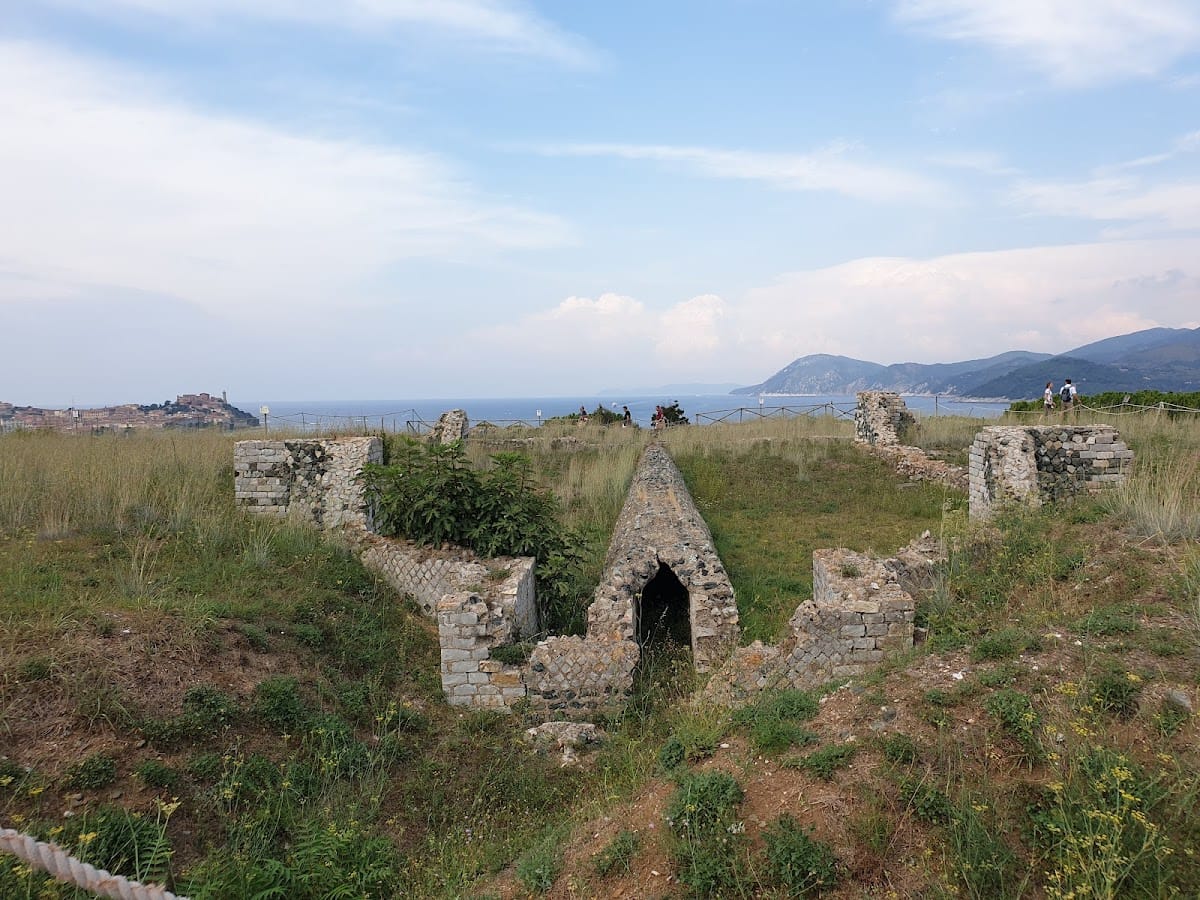
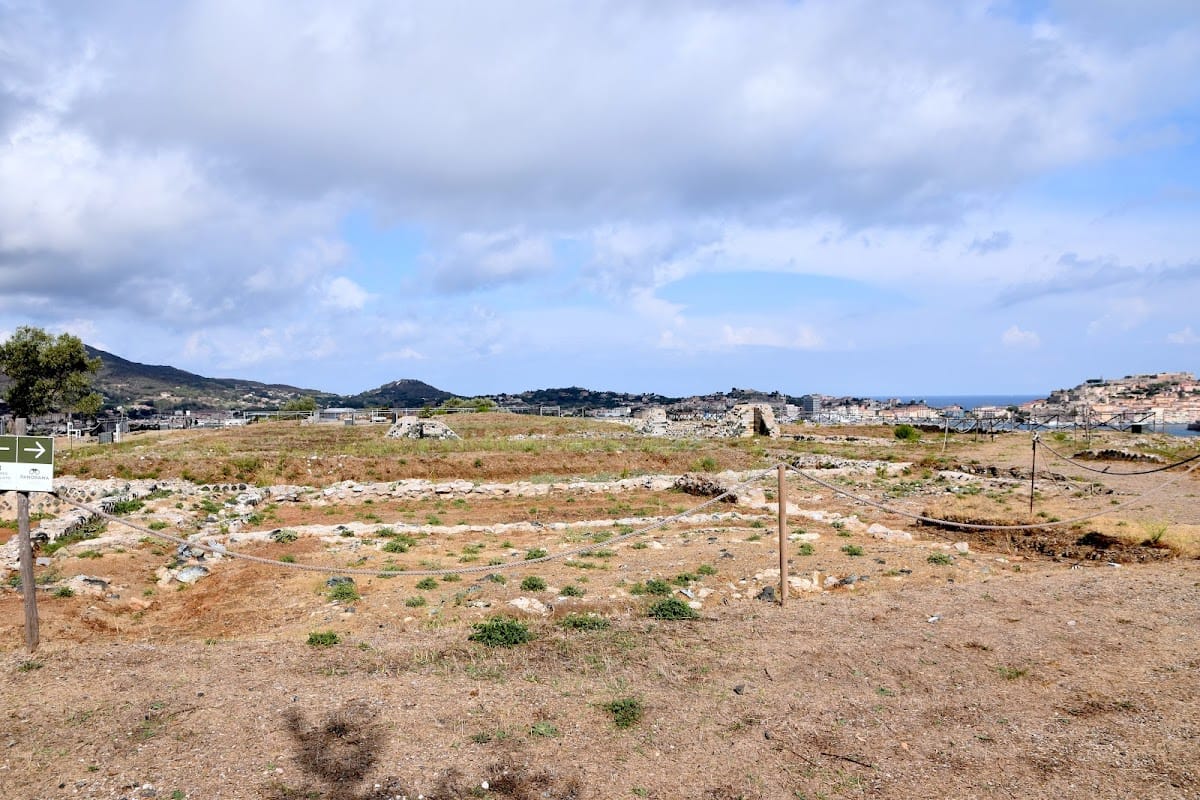
The villa covers about two hectares and is arranged on two levels. The upper level contains the main residential quarters, including a sea-facing section and a large garden facing the hillside. The lower level consists of a double-terraced structure with arches and porticoes on three sides, offering panoramic views.
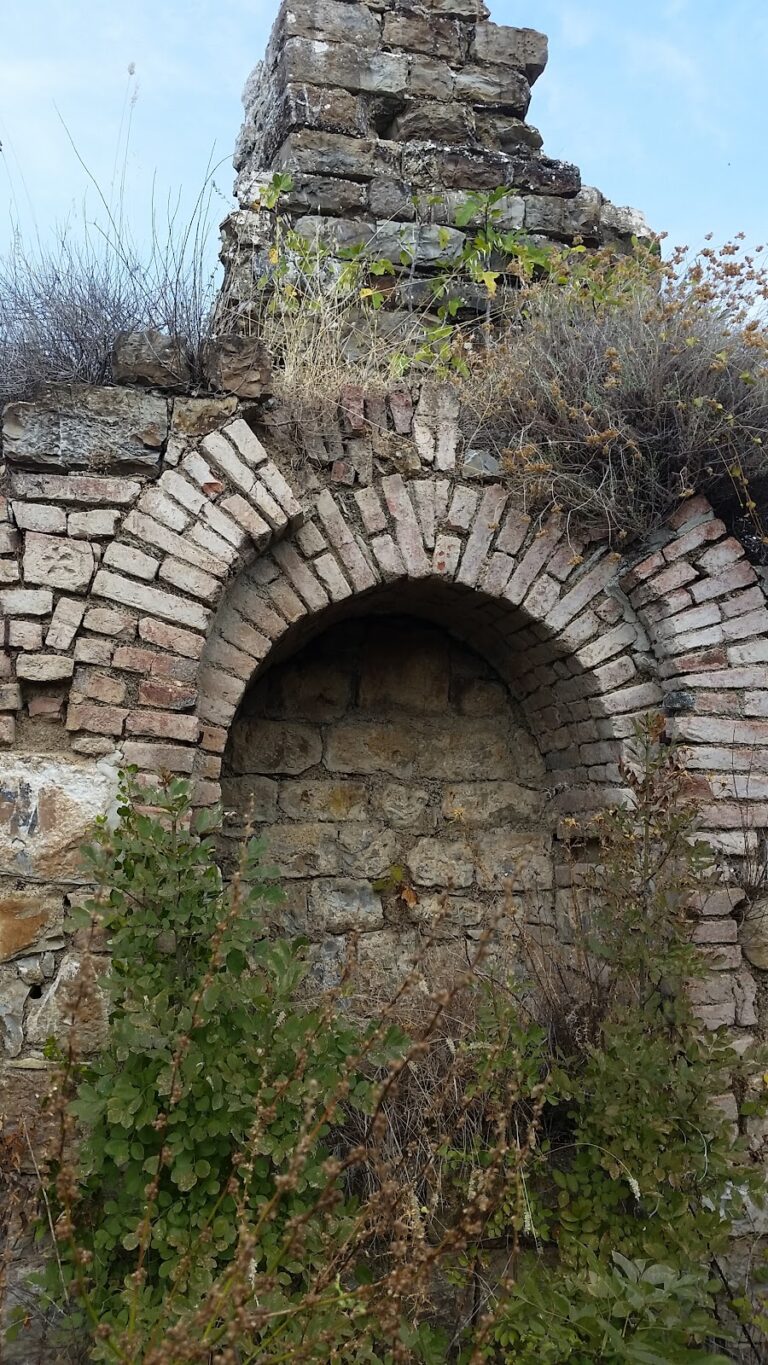
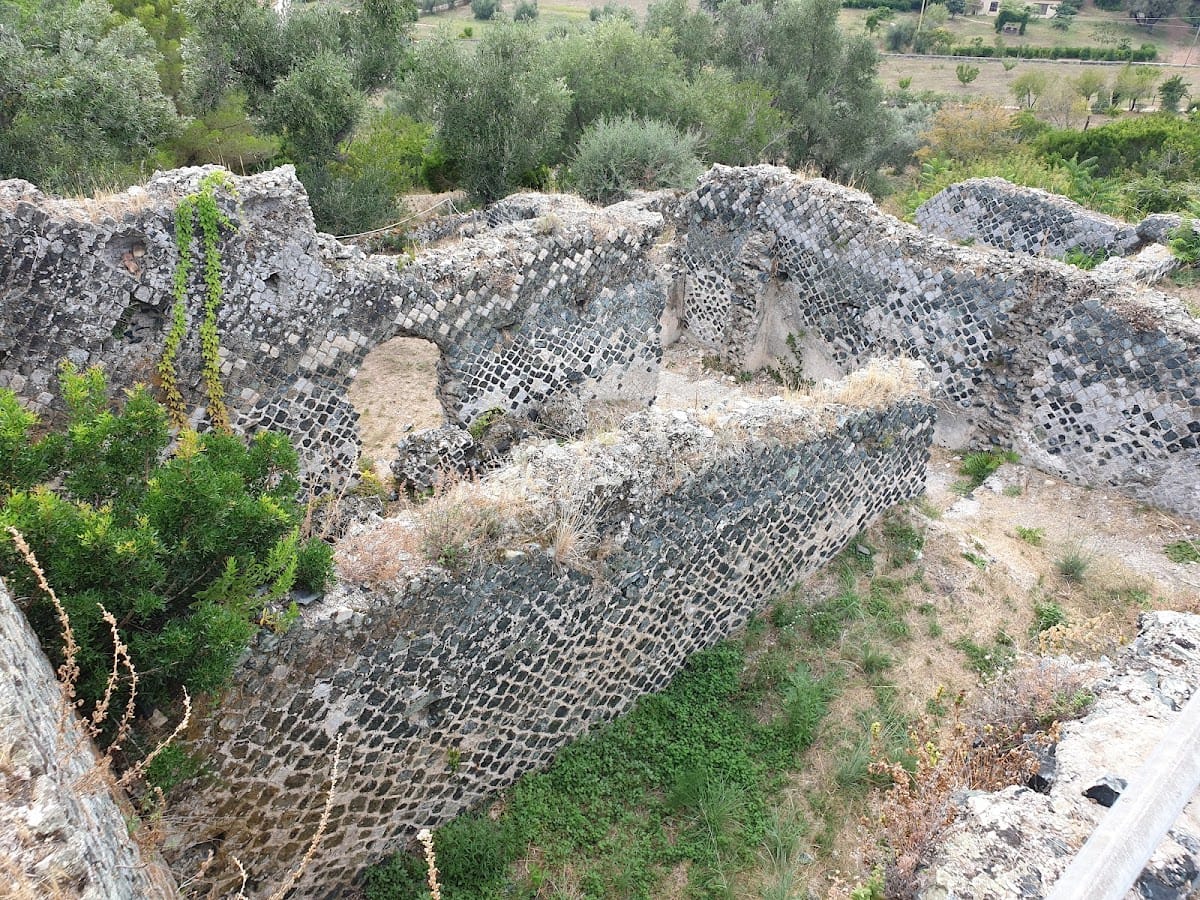
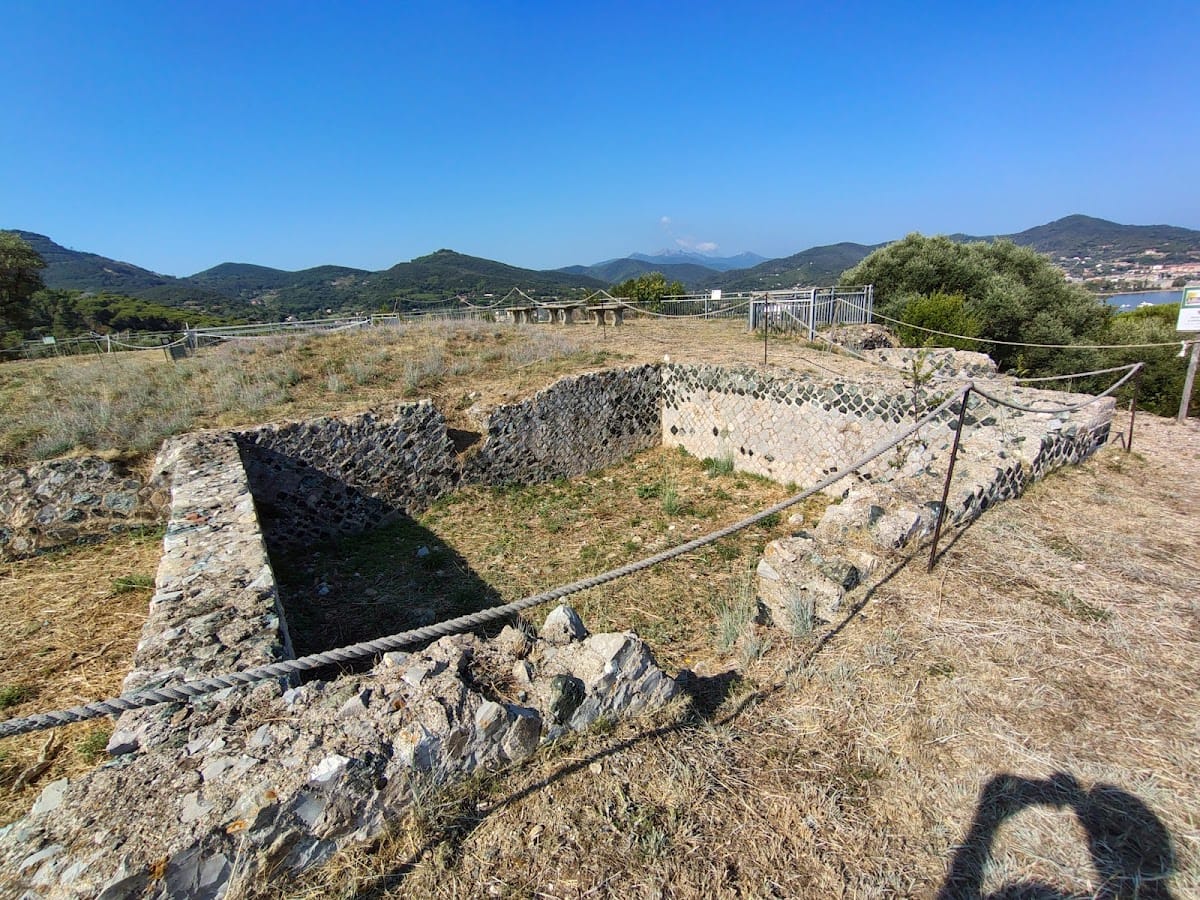
Construction employed opus reticulatum, a Roman technique using diamond-shaped stones. The villa’s walls alternate dark green blocks made from local ophiolitic rock with light gray limestone from the nearby coast, creating a striking color contrast.
The main entrance leads through a large rectangular garden bordered by a covered walkway designed to protect from sun and wind. Within the residential area, a large swimming pool is crossed by a masonry water channel. Surrounding the pool on three sides is a garden enclosed by a colonnade decorated with terracotta slabs depicting scenes of Psyche and musicians. Vegetal-themed plasterwork enhanced the garden’s lush appearance.
At the pool’s southern end, a semicircular exedra (a curved architectural niche) marks the termination of the water channel. Water was supplied from a cistern on Monte Orello via a terracotta pipe aqueduct. Water likely flowed into the pool from above and drained into a lower terrace garden featuring a central nymphaeum, a monument dedicated to water nymphs.
The northern end of the pool is flanked by symmetrically arranged rooms, probably serving as private living quarters for the villa’s owners. Walls in the residential area were richly decorated with frescoes and colored marbles, including white marble and local cipollino marble. The wooden roof was covered with bright red tiles, visible from a distance.
The attic featured a false ceiling made of plastered reeds supported by a wooden framework, with stucco moldings decorating the junctions between walls and ceiling. Wall plaster included painted perspectives and floral motifs, while some rooms displayed marble panels in palombino and cipollino varieties.
Floor decorations varied from black and white mosaics to geometric marble and stone tiles arranged in honeycomb, lattice, and star patterns. These used white, black, slate, and cipollino stones, highlighting the villa’s luxurious character.
In the first half of the 1st century CE, renovations added covered service areas or enclosed rooms on the lower terrace to support the upper residential spaces. New corridors and two staircases were constructed, forming the villa’s main entrance.
A small thermal complex was built during this phase, consisting of four rooms: a calidarium (hot bath) with a suspended floor, a frigidarium (cold bath) with a semicircular basin, and two intermediate rooms likely used as changing and transitional spaces. Water for the baths came from an underground cistern divided into three chambers and sealed with opus signinum, a waterproof mortar made from crushed bricks.
The villa’s external design integrated with the landscape. The sea-facing exedrae served as retaining walls and scenic architectural features. The alternating dark green and white stones of the terrace walls emphasized the villa’s prominence when viewed from sea or land.
Today, the remains include visible vaulted structures, walls, and decorative fragments preserved in situ or housed in the Archaeological Museum of Linguella. The site’s robust construction has allowed parts of the villa to survive despite centuries of abandonment and partial demolition.
Nearby sites