Gósol Castle: A Medieval Fortification in Spain


Visitor Information
Google Rating: 4.4
Popularity: Low
Google Maps: View on Google Maps
Official Website: invarquit.cultura.gencat.cat
Country: Spain
Civilization: Unclassified
Remains: Military

History
Gósol Castle is situated in the municipality of Gósol, Spain. Its origins date back to the 11th century, when it was constructed as a medieval fortification under the authority of the Counts of Cerdanya. This early phase is documented through records from 1068 to 1095, confirming the castle’s role within the regional power structure of that time.
Following the Counts of Cerdanya, control over the castle shifted to the Counts of Barcelona and later passed to the rulers of the Crown of Aragon. Throughout these changes, the noble family of Galceran de Pinós became vassals responsible for the castle and related fortifications. From the late 11th century into the 13th century, they maintained their allegiance through formal acts of homage to various counts and kings, establishing Gósol as part of the Barony of Pinós by the 13th century.
In 1273, a significant moment in the castle’s history occurred when Galceran de Pinós and his wife Esclamunda issued a charter granting privileges meant to encourage the growth of the local population. This charter relieved inhabitants from arbitrary taxation and compulsory labor related to the castle’s upkeep, promoting settlement in the area.
The early 14th century brought unrest. In 1312, a royal official was killed in a violent event linked to the castle, prompting a royal military inspection soon afterward. During this period, the Pinós family asserted their claim to hold the fortress as freeholders, independent of direct royal intervention. This claim reflects the complex dynamics between local nobility and royal authority during medieval Catalonia.
Later centuries saw challenges for Gósol. Between 1365 and 1381, records note a decline in the number of households, indicating demographic hardship. By 1414, the castle served as collateral for a debt involving the Pinós family, signaling changes in the family’s fortunes. During the Catalan civil war, the castle was commanded by Pere Companyó. At that time, revenues generated by the castle were redirected toward its maintenance and defense rather than benefiting the lords.
Remains
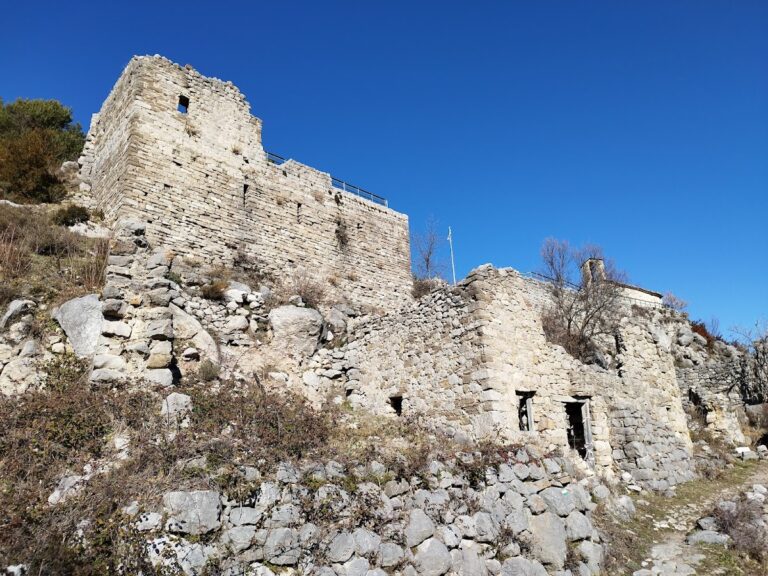
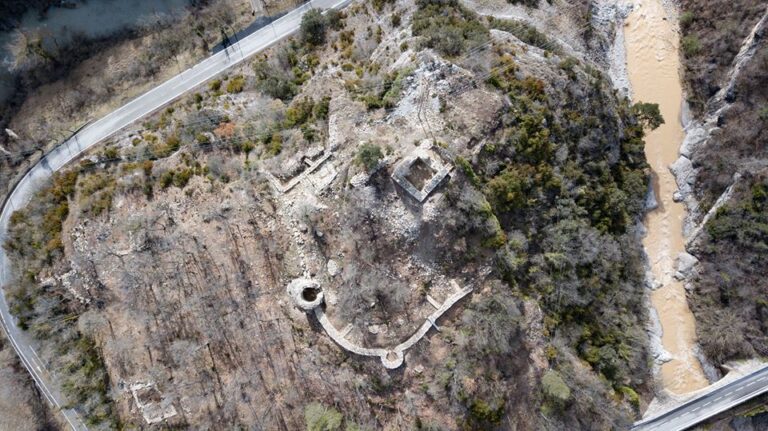
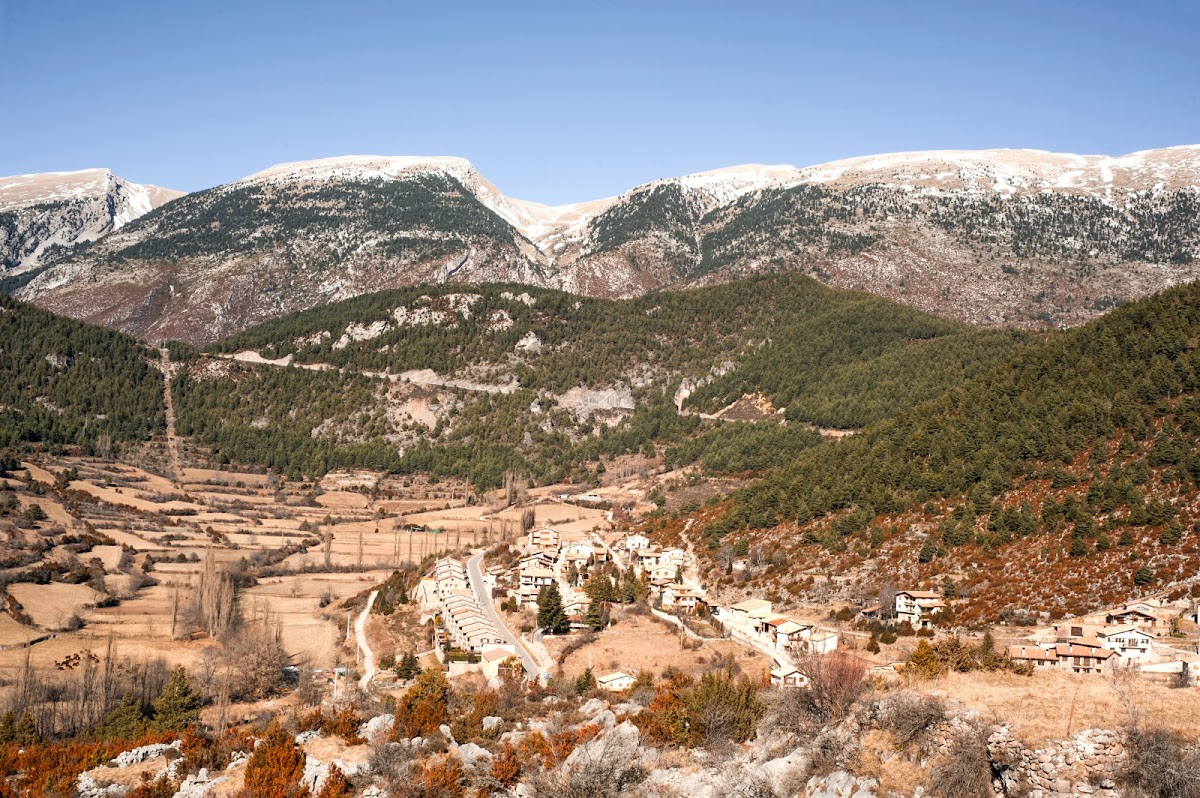
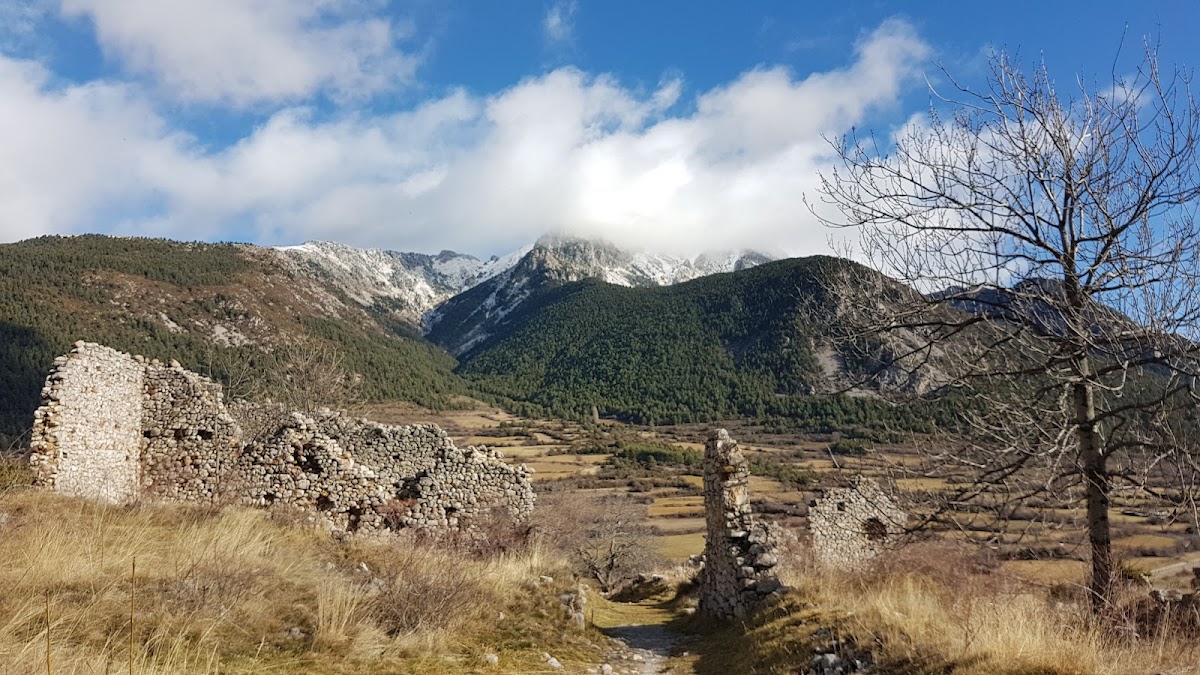
The castle occupies a hill overlooking the village of Gósol, where the remains form a roughly rectangular fortress. The footprint of the eastern side, adjacent to the church of Santa Maria, measures approximately 18 meters wide by 21 meters long. This area also contains traces of an earlier population center called “Vila Vella,” which was eventually abandoned in favor of a newer settlement at the hill’s base.
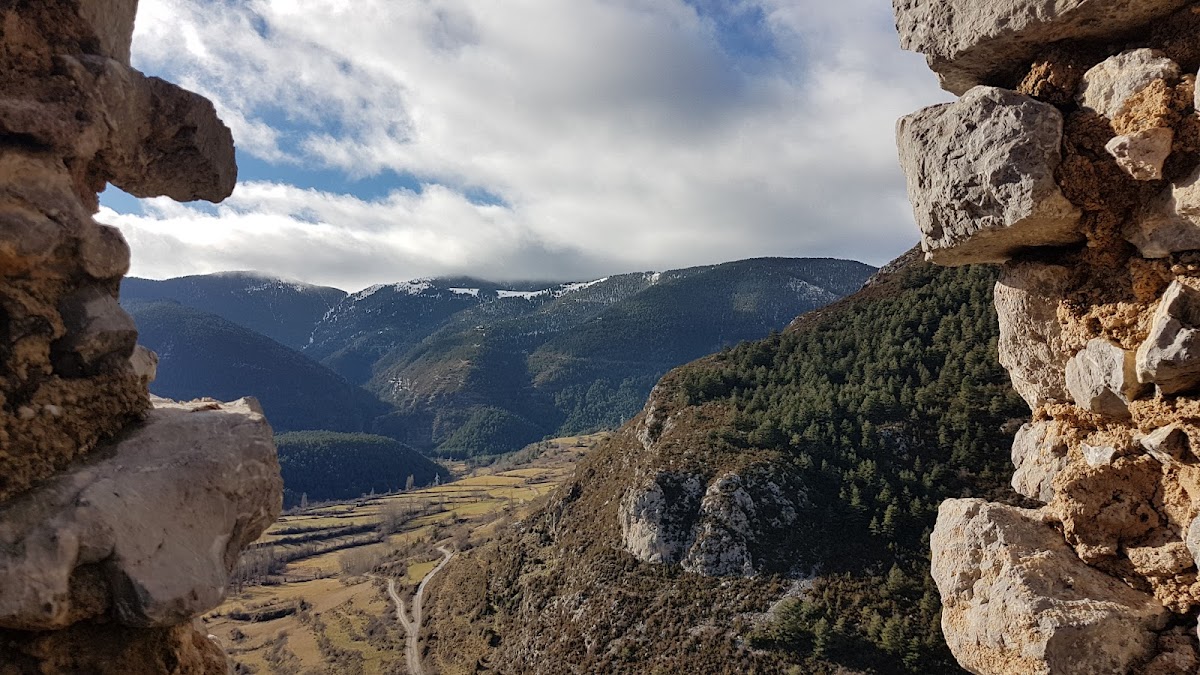
The masonry consists primarily of small, roughly shaped stone blocks placed in horizontal layers and bound with mortar. Among the surviving elements are several openings topped by partially collapsed semicircular arches, which were typical structural features used to distribute weight. Surrounding the enclosure, parts of the defensive wall remain intact; the most substantial section is a northern curtain wall built from broken limestone cut blocks, or ashlar, that likely dates from the 12th century or later.
One of the castle’s most prominent surviving structures is an irregularly shaped tower on the northern side of the site. It has a somewhat truncated pyramidal form and measures roughly 4.12 by 4.05 meters inside, with walls nearly one meter thick. The northern and northwestern faces of this tower still display plaster covering up to midway along their height, providing insight into the original surface treatments.
This tower predates the nearby church and probably dates from the 11th or 12th century. It includes at least three doorways: a ground-level entrance, a second-floor door facing south toward the church, and a third-floor door on the north side. These doorways were sealed with horseshoe arches, distinguished by their curved shape that narrows toward the bottom, a style often associated with medieval architecture.
Inside the tower, there are remnants of wooden beams known as trespols, which once supported floor levels. Although the castle’s roofs have not survived, structural elements like arches and remaining wall plaster provide valuable information about its construction techniques and appearance.
Nearby sites