Château de Bouligneux: A Medieval Fortified Manor in France




Visitor Information
Google Rating: 4.2
Popularity: Very Low
Official Website: www.ain-tourisme.com
Country: France
Civilization: Unclassified
Site type: Military
Remains: Castle

History
The Château de Bouligneux is located in the municipality of Bouligneux, France. It was built by medieval French nobility as a fortified manor house and administrative center during the Middle Ages.
The origins of the château date back to the early 14th century. Initially tied to the nobleman Vaucher de Commarrain in 1280, the estate later passed through several prominent families, including the Villars and Thoire-Villars. Around 1306, Girard de La Palu obtained the fief with authorization to erect a castle or fortified dwelling, marking the formal beginning of the château’s construction as a defensive stronghold and lordly residence.
Throughout the 14th and 15th centuries, the seigneurie of Bouligneux remained connected to the La Palu family. The particular branch managing the estate ended in 1413, leading to the property returning to the senior La Palu line. Subsequently, ownership changed hands through various inheritances, marriages, and agreements involving individuals such as François de La Palu, Marguerite de Charny, and Louis de Savoie. These transfers illustrate the estate’s continued importance and the complex relationships among local nobility during this period.
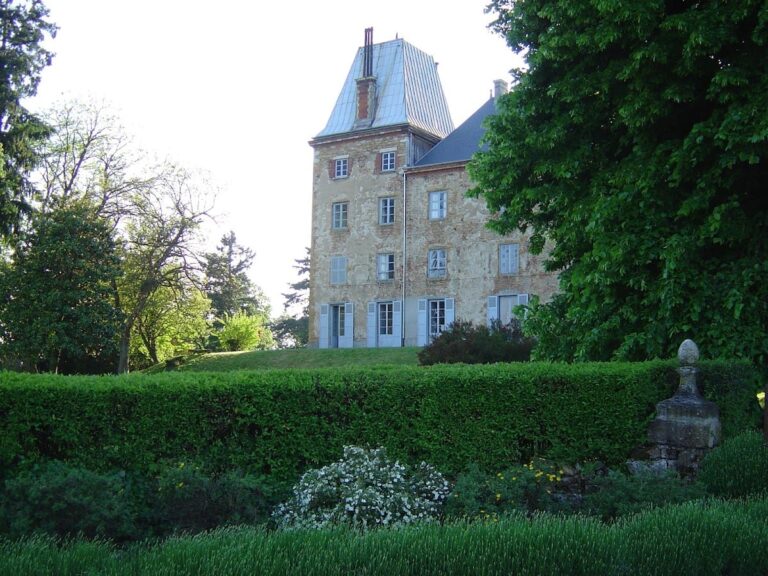
In the 16th century, Richard de La Palu acquired the château, and his descendants maintained the property into the 17th century. The line ended with the death of Jacques-Claude de La Palud late in the century, after which the estate passed to Marie-Henriette de Fay de La Trousse, and then to Paul-François Le Hardi. In 1721, Le Hardi sold the château to Agésilas-Gaston de Grossole, known as the marquis de Flamarens.
During the French Revolution in the late 18th century, local authorities opposed plans to demolish the château. Instead, it was repurposed as a farm building. However, the circular tower, which was an important symbol of feudal authority, was shortened by at least one level, reflecting revolutionary efforts to diminish the visual presence of noble power. Later, the property came into the possession of the comte de Rességuier, who served as a deputy to the National Assembly. Since November 15, 1926, the château has been officially recognized and protected as a historic monument.
Remains
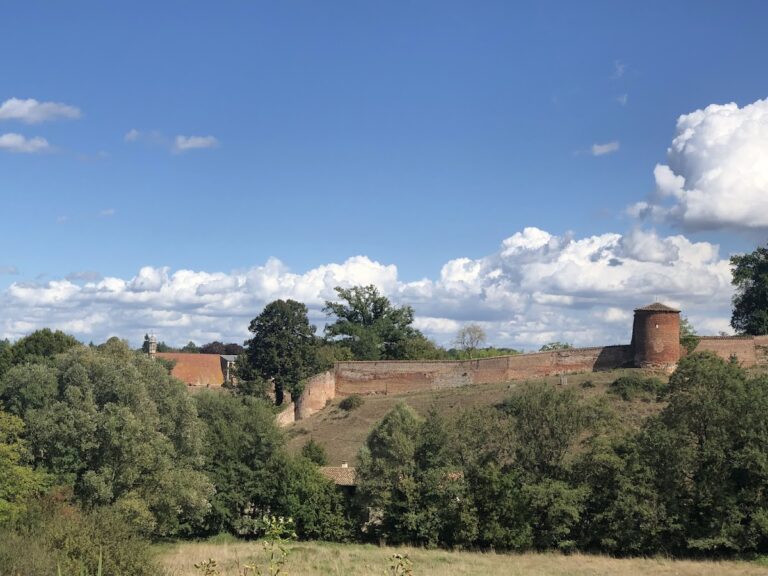
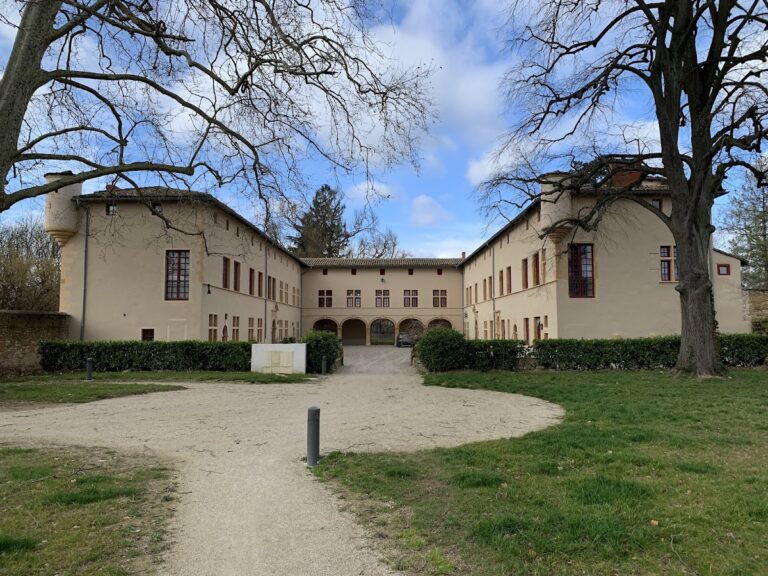
The Château de Bouligneux presents as a quadrangular enclosure constructed primarily of brick, a common building material for fortified houses in the 14th century within the nearby Dombes and Bugey regions. Its layout features a central residential building arranged in an L-shape inside the courtyard, providing both living quarters and defensive capabilities.
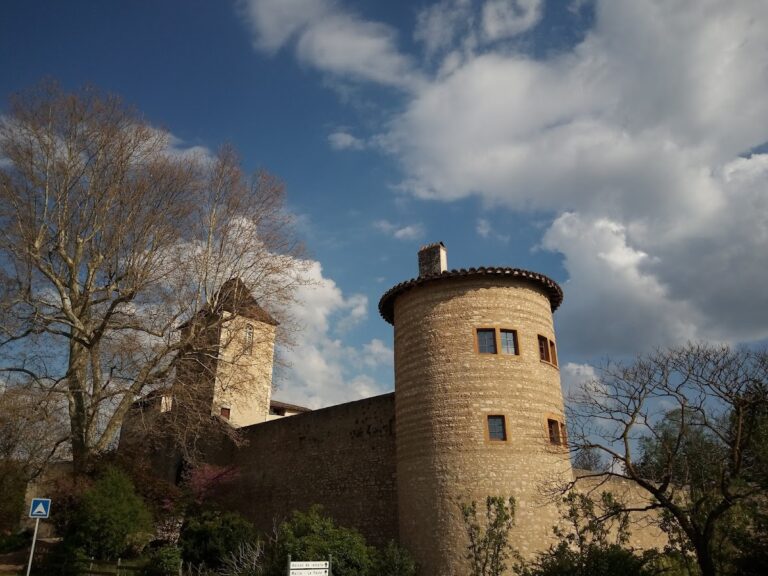
At each corner of this rectangular enclosure rises a round tower, connected by curtain walls—solid defensive walls linking the towers. Among these round towers, one served as the donjon, or keep, which is the principal stronghold within the château. Surrounding the base of the enclosure are lower defensive walls known as braies; these walls were equipped to accommodate firearms, signaling adaptations made to respond to the growing use of gunpowder weaponry in warfare.
Originally, a water-filled moat encircled the castle, serving as an additional layer of defense. Access to the interior was controlled by a drawbridge spanning this moat, allowing inhabitants to regulate entrance and exit effectively.
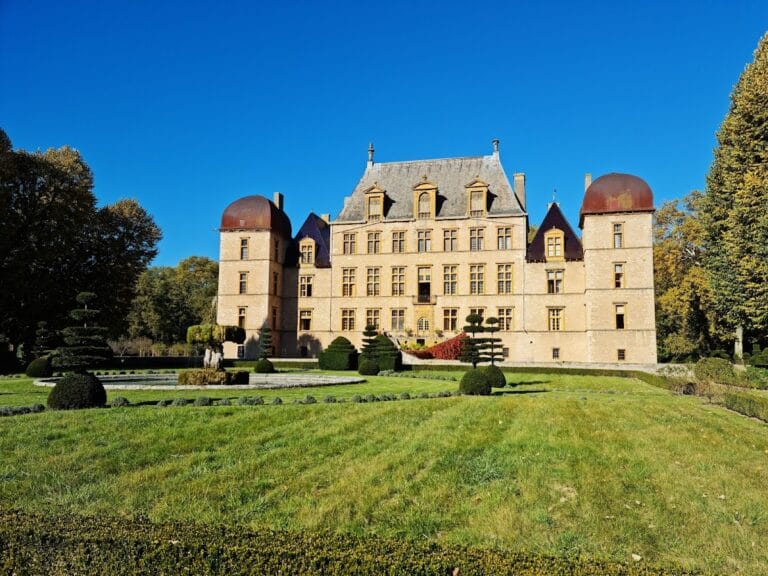
Over time, architectural changes were introduced, reflecting evolving needs and tastes. Two wings were added against the curtain walls, expanding the living space. A gallery featuring arcades was also constructed, indicating a shift towards incorporating more residential comfort and aesthetic design.
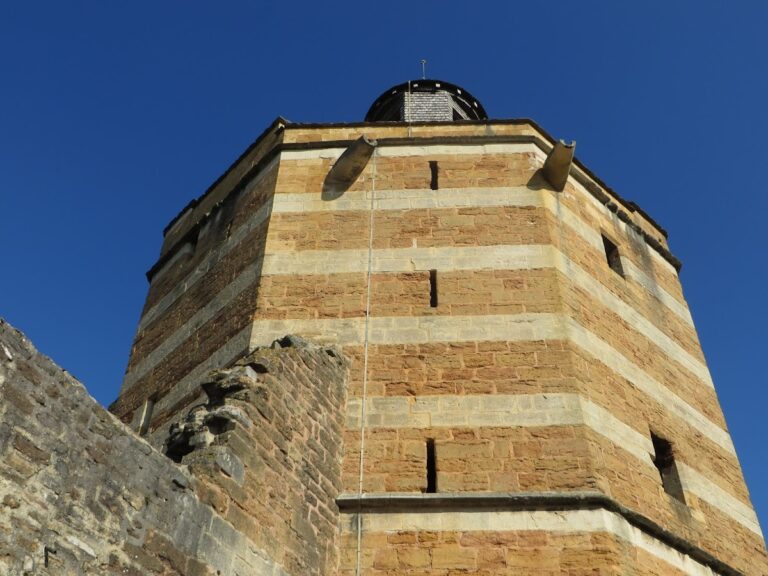
Notably, the circular tower underwent a significant alteration during the revolutionary period when it was reduced by at least one story. This change altered its original silhouette and is considered a physical testament to the political transformation of the time, as features symbolizing noble authority were deliberately diminished.
Today, the château stands as a preserved monument showcasing these layered historical phases through its well-documented architectural features.
Nearby sites