Cesvaine Castle: A Medieval Fortress in Latvia


Visitor Information
Google Rating: 4.6
Popularity: Medium
Google Maps: View on Google Maps
Official Website: www.visitmadona.lv
Country: Latvia
Civilization: Unclassified
Remains: Military

History
Cesvaine Castle is located in the municipality of Cesvaine in Latvia and was originally built by the Riga Archbishopric during the medieval period. Its earliest known mention dates back to 1209, when control of the site passed from the local Jersika principality to the church authority of Riga.
Initially, the site was marked by a wooden fortress constructed by the Latgalian people on the left bank of the Sula River. By the early 15th century, this wooden structure was replaced by a stone castle. Although exact records of construction are unclear, references to a stone fortress at Cesvaine appear by 1410, with some historical accounts placing the start of stone construction in the late 14th century. This transformation reflected the castle’s growing importance as a fortified center controlling key trade routes between Koknese and Alūksne, functioning both as a military stronghold and an economic hub in the eastern part of the Riga Archbishopric.
Throughout the 15th and 16th centuries, Cesvaine Castle was caught in a turbulent geopolitical landscape, changing hands multiple times due to ongoing conflicts in the region. In 1479, it faced one of several sieges connected to struggles between the Livonian Order and neighboring powers. The castle remained a contested site during the mid-16th century, notably in 1559, when a large Russian army engaged archbishopric defenders nearby. Although the fortress was not captured in that battle, it succumbed to Russian forces in 1577 during a subsequent campaign. The Russians executed many of the defenders upon taking the castle and inflicted partial destruction on its structures.
In 1582, control of Cesvaine returned to the Polish-Lithuanian Commonwealth. Over the following decades, the castle shifted between Polish-Lithuanian and Swedish possession amid the ongoing Polish-Swedish conflicts and later the Russo-Swedish wars. These changing rulers and military battles caused successive damage to the fortress. By the year 1656, during the Second Northern War, Cesvaine Castle had been thoroughly destroyed and was abandoned, ending its military and administrative use.
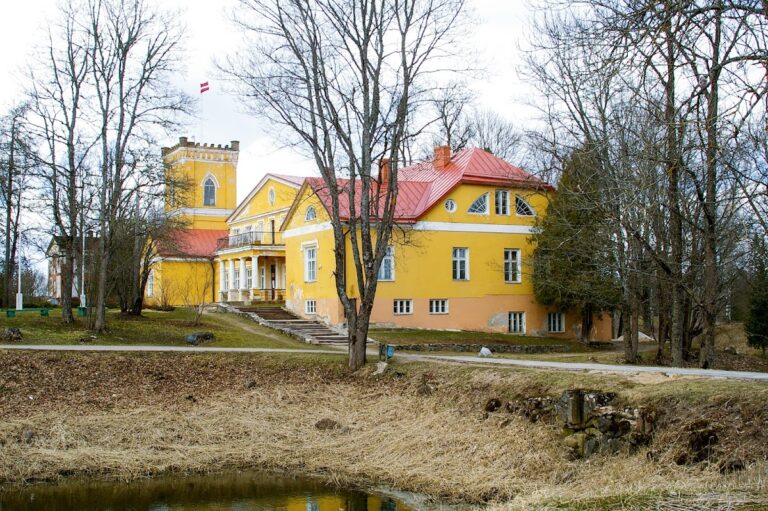
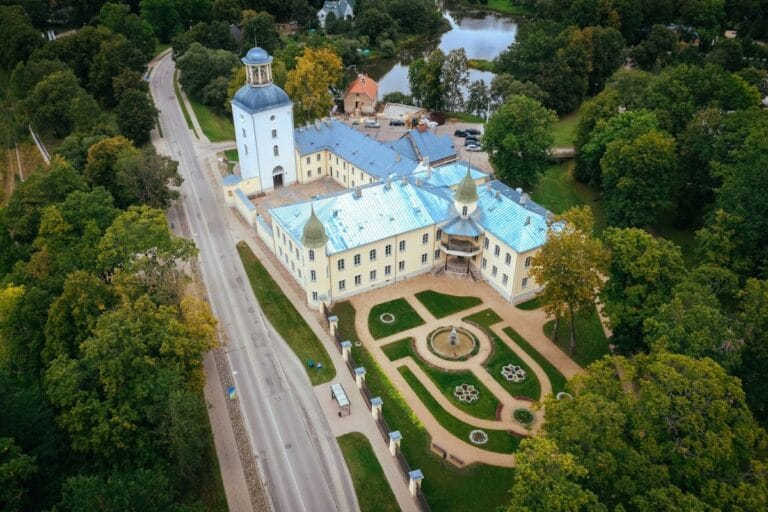
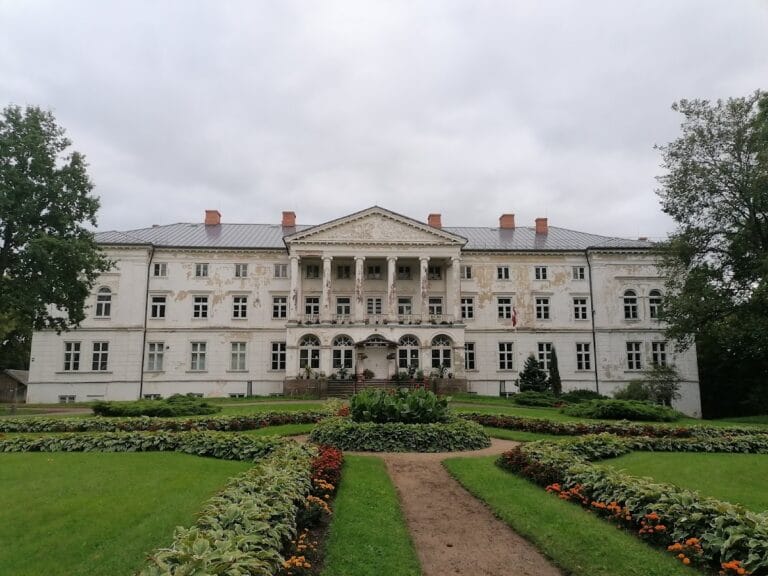
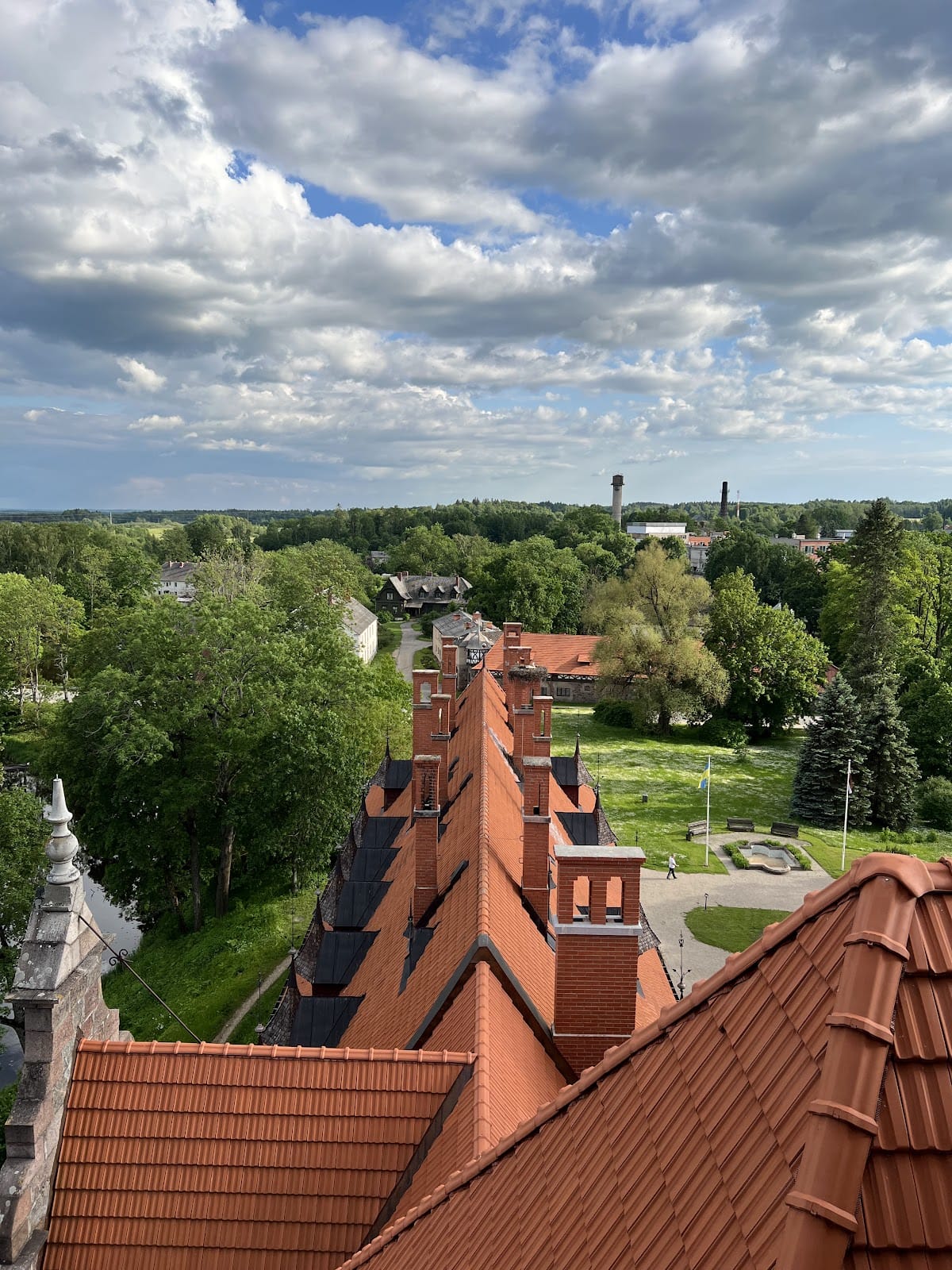
Centuries later, from 1894 to 1897, the remnants of the medieval castle were largely dismantled to procure building materials for a new manor house erected on the original site, known as the Cesvaine hunting castle. Archaeological efforts carried out in the early 21st century, between 2001 and 2003, uncovered and studied surviving structures beneath and around the manor’s grounds. The manor suffered a significant fire in 2002 that damaged the upper floors and roof; partial restoration was underway by 2013, although some central parts remained exposed.
Remains
Cesvaine Castle occupied a naturally defended position on a high plateau about 160 meters above sea level, with a deep and wide valley formed by the Sula River providing steep natural barriers to the west and north. The eastern side was protected by steep banks and human-made fish ponds, while the southern approach was guarded by a hand-dug moat. The fortress’s layout consisted of a roughly square main enclosure measuring approximately 70 by 75 meters, accompanied to the north by an outer bailey (an additional defensive courtyard) measuring about 70 by 90 meters.
The principal entrance was located in the southwestern corner of the outer bailey, marked by a semicircular gate tower. This tower contained three successive gates, controlling access first into the outer bailey and then through a northern central gate into the main castle area. Castle walls, constructed of stone and approximately 1.5 meters thick, encircled both the main castle and the bailey, featuring multiple gates and defensive towers. During the 16th century, the fortress was modified to accommodate cannon defense by adding low semicircular bastion towers at the northern corners of the outer bailey.
A notable architectural element was a distinctive tower positioned above the main gate, a hallmark of castles belonging to bishops. This feature aligns with similar constructions found in episcopal castles such as Haapsalu Castle, reflecting a building tradition distinct from that of the Livonian Order. The internal arrangement of the castle is not thoroughly documented, but historic plans indicate four wings surrounding a central courtyard inside the main enclosure. It is believed that the village church was situated within the castle grounds.
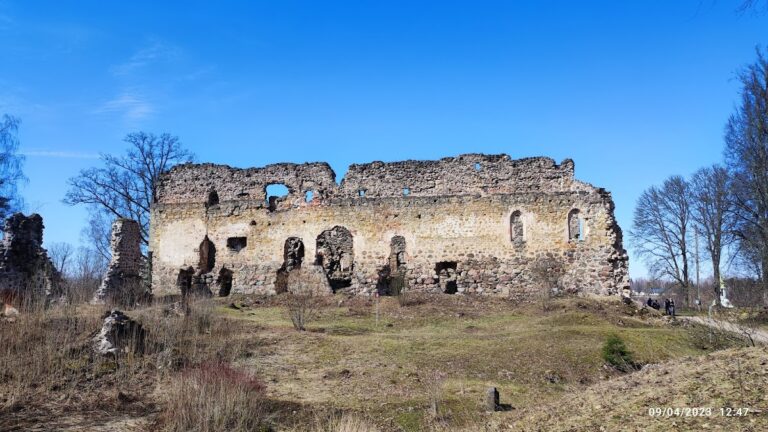
At present, only low ruins remain visible. Along the western wall of the outer bailey, about 50 meters long and 1.5 meters wide, remnants survive reaching heights of one to two meters. The semicircular gate tower at the bailey’s southern end is also partly preserved. Most of the main castle’s remains now lie beneath the later manor house and its forecourt, with some original features still observable, including two ponds on the eastern side and a surviving portion of the southern moat. The stones used to build the 19th-century manor house were taken from the dismantled medieval castle ruins, showing how the site’s fabric was repurposed over time. Following the manor’s 2002 fire, restoration focused on rebuilding the roof and upper floors, though some central sections were left without roofing by 2013.
Nearby sites