Castle of Zamora: A Medieval Fortress in Spain


Visitor Information
Google Rating: 4.4
Popularity: Medium
Google Maps: View on Google Maps
Official Website: www.romanicozamora.es
Country: Spain
Civilization: Unclassified
Remains: Military

History
The Castle of Zamora stands in the municipality of Zamora, Spain. It was built by Christian forces during the medieval period, most likely in the mid-11th century, serving as a fortified stronghold amid the shifting frontiers of the Iberian Peninsula.
Although some historical accounts have credited Alfonso II of Asturias with founding the castle, modern scholarship generally attributes its construction to King Ferdinand I of León. During the Reconquista, the castle played an important role as a military bastion on the frontier between Christian and Muslim territories. Its capture from Moorish control was noted in contemporary chronicles as a significant defeat for Muslim forces, emphasizing the fortress’s strategic value in the Christian reclamation efforts.
In the centuries following its establishment, the castle continued to hold military and political importance. During the 18th century under King Philip V, the fortress underwent major renovations to meet the demands of evolving military technology. Earthworks were added, and artillery defenses were installed to adapt the castle to modern warfare conditions of that period.
In the twentieth century, the Spanish government recognized the castle’s cultural and historical importance. A decree in 1949 officially protected the site, and it came under the care of the Ministry of Education, Culture and Sports. Over time, parts of the castle served educational purposes, housing institutions focused on art, design, and languages until 2007. After restoration efforts completed in 2009, the castle was reopened to the public and partly dedicated to honoring the local artist Baltasar Lobo, integrating an exhibition space within the historic fortifications.
Remains
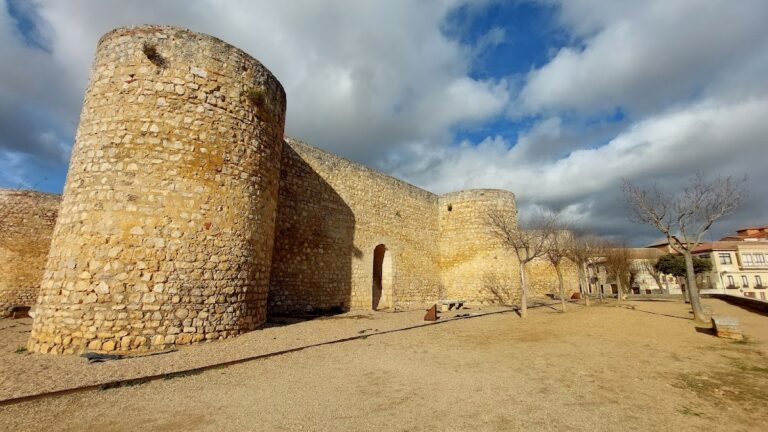
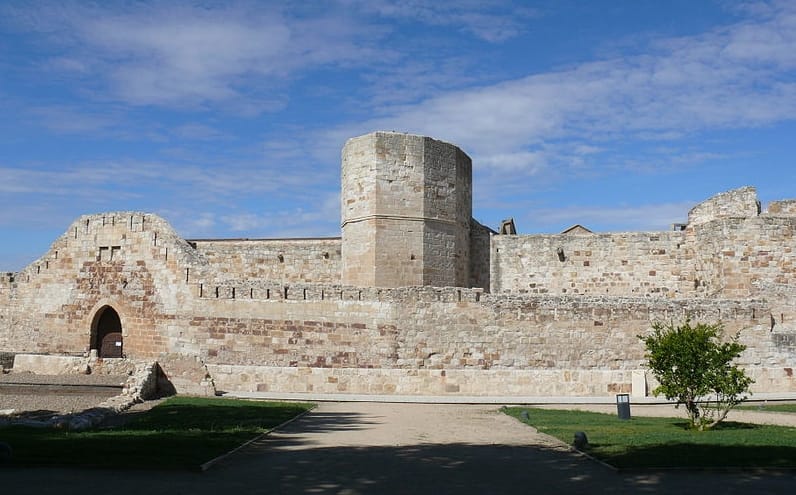
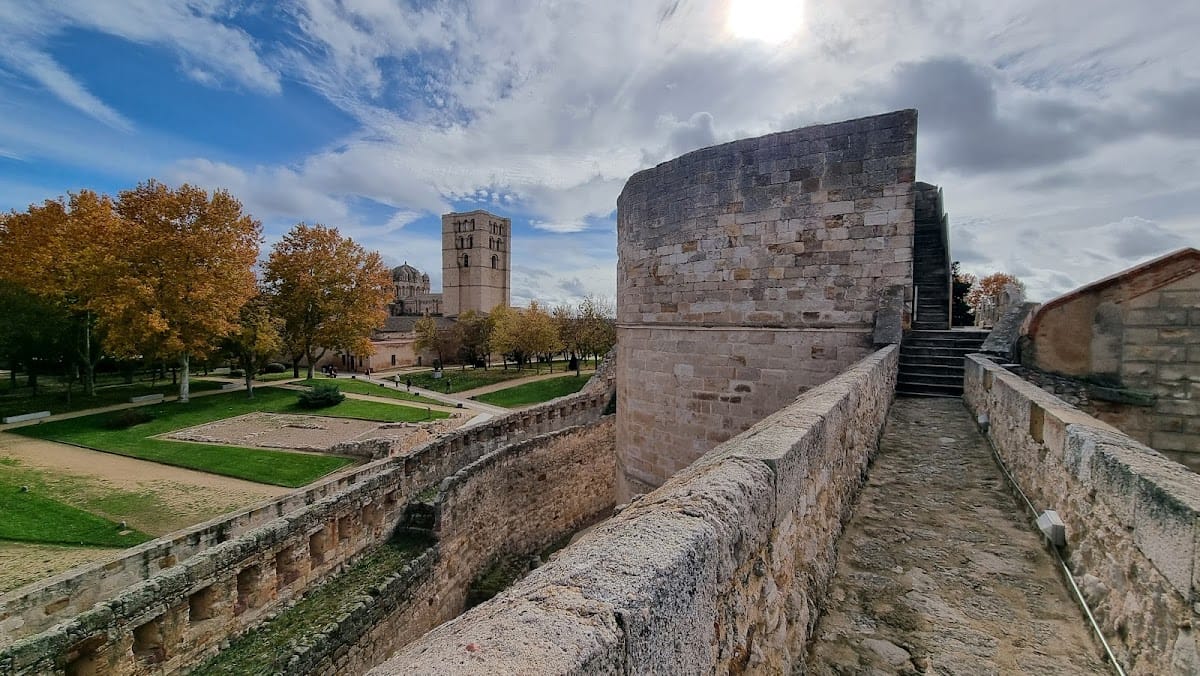
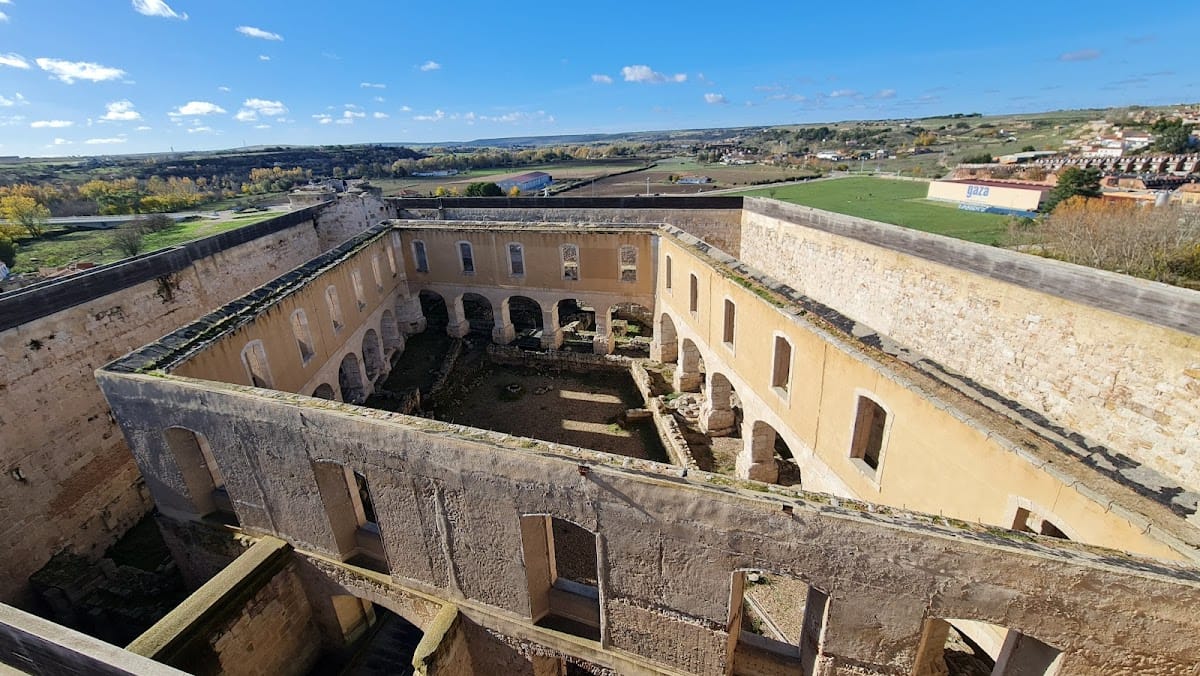
The Castle of Zamora is built upon a natural rise approximately 250 meters north of the Duero River, a location that once marked the dividing line between Christian and Muslim lands during the Reconquista. Its layout is unusual for medieval fortresses, following a rhomboid or diamond-shaped plan. The stone walls that enclose the castle are impressively thick, over two meters in average, and constructed with precisely cut ashlar blocks, a technique reflecting skilled medieval masonry.
Three major towers punctuate the fortification: two are pentagonal, each with five distinct faces, and one tower is heptagonal, featuring seven sides. These unique shapes contributed to improved defensive capabilities. A deep moat surrounds the fortress, remaining almost entirely intact. This ditch, or foso in Spanish, would have provided an additional obstacle against attackers.
Entry into the castle is gained by crossing a bridge that once operated as a drawbridge, leading to a gateway characterized by a pointed arch, typical of medieval military architecture. The defensive complex itself is composed of three separate enclosures. The innermost is a rhomboidal courtyard enclosed by seven pentagonal towers and includes the Torre del Homenaje, or keep, located along the eastern wall, facing toward the town.
Beyond this inner ward lies a second, irregularly shaped outer enclosure forming part of the city’s defensive walls to the west and north. This area also contains the Santa Columba gate, constructed in the 12th century, providing a key passage on the western side. Further out, beyond the moat, a third defensive ring exists in the form of a ravelin—an isolated triangular fortification designed to protect the main walls from direct assault.
Medieval craftsmanship is evident throughout the castle, as demonstrated by the hundreds of mason’s marks discovered carved into the stones. Approximately 600 marks of 142 different types were documented on walls within the middle enclosure, while the outer enclosure bears 155 marks of 60 varieties, indicating extensive work by various stonemasons over time.
Architectural changes continued well beyond the medieval period. The castle’s courtyard and other areas underwent updates in both the 16th and early 18th centuries, reflecting the changing needs and styles of those eras. Adjacent to the fortress is the “Parque del Castillo,” a garden and viewpoint created between the 16th and 18th centuries, featuring an integration of design elements from multiple architectural periods that complement the castle’s historic presence.
Nearby sites