Castle of Santo Stefano: A Medieval Fortress and Monastic Site in Monopoli, Italy


Visitor Information
Google Rating: 4.5
Popularity: Low
Google Maps: View on Google Maps
Country: Italy
Civilization: Unclassified
Remains: Military

History
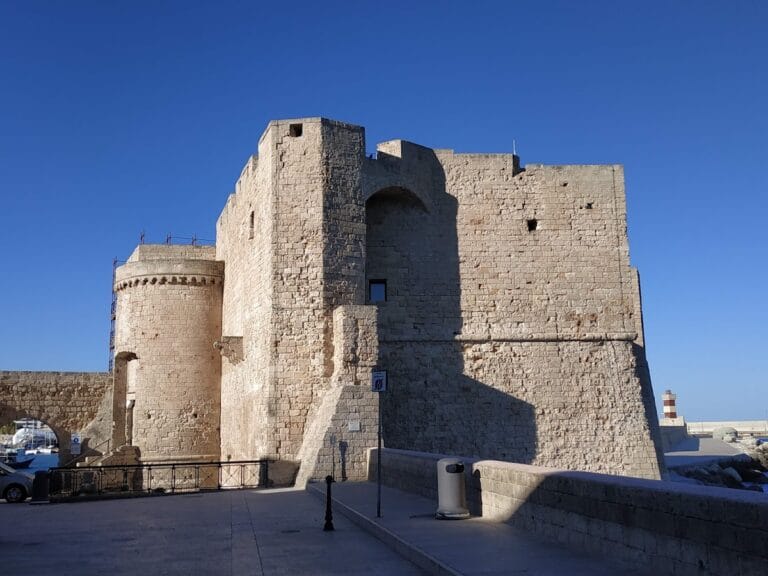
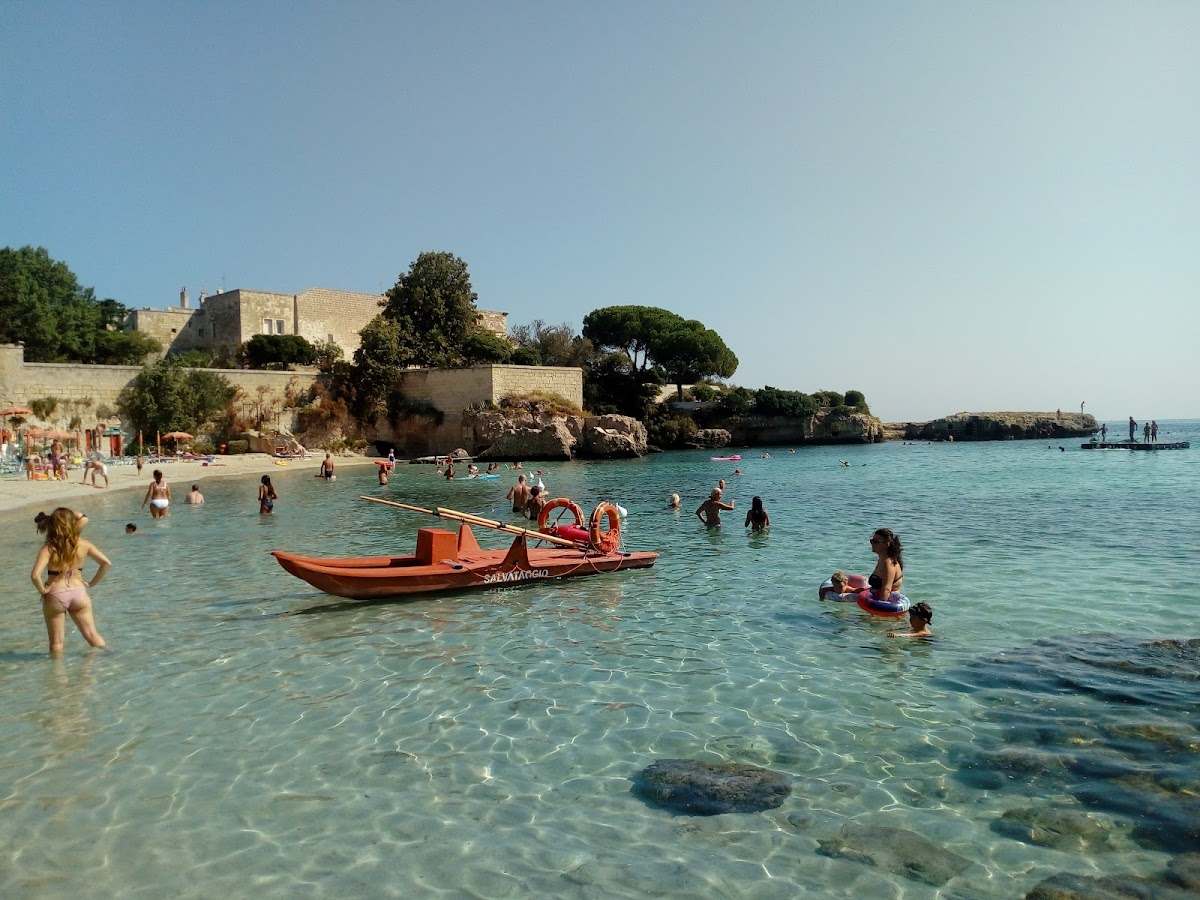
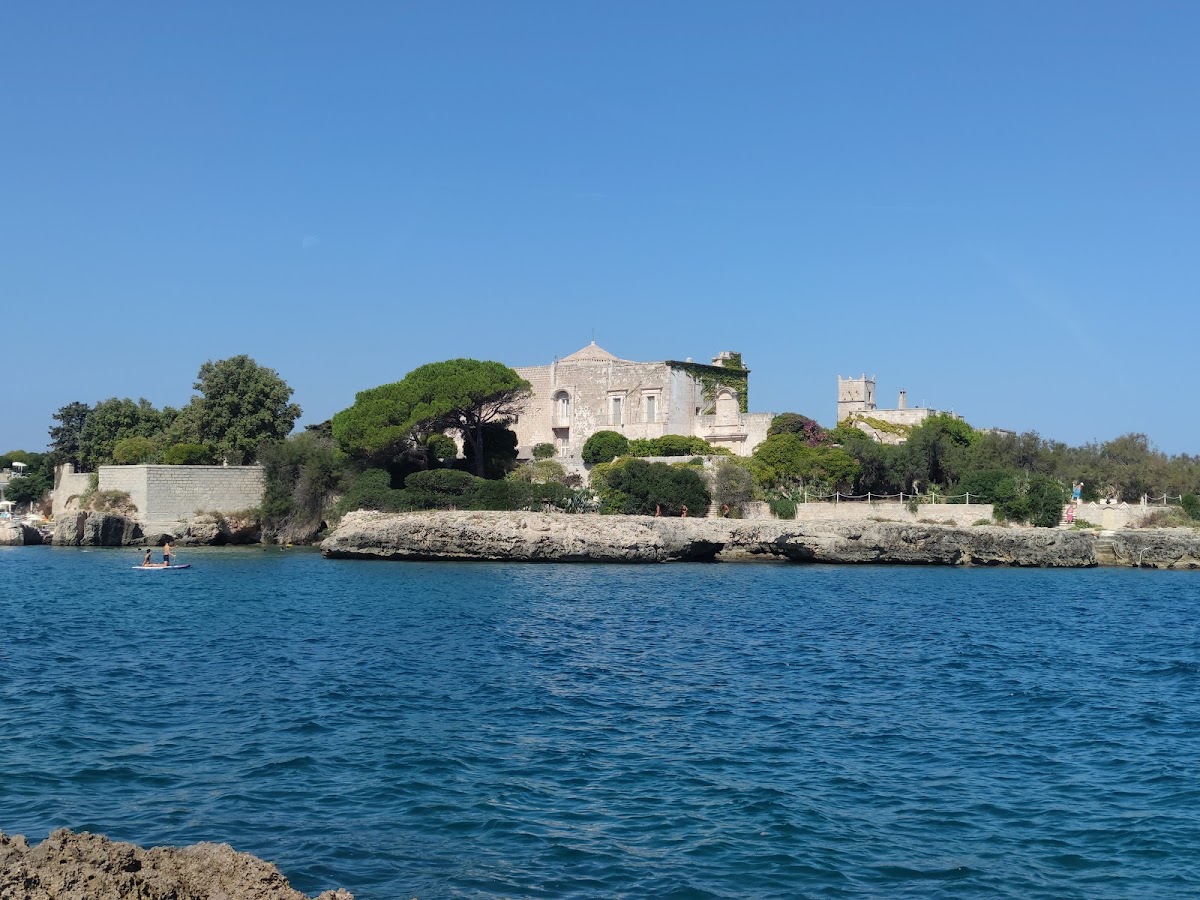
The Castle of Santo Stefano is located just outside the city of Monopoli in Italy and was originally established by medieval European settlers. Founded in 1086 by Goffredo, Count of Conversano, the fortification occupied a peninsula bordered by two natural bays. These bays, later known as the beaches of Santo Stefano and Ghiacciolo, offered safe harbor for ships and helped define the site’s strategic importance along the Adriatic coastline.
Before the medieval fortress was built, the area carried considerable significance in late antiquity. It was called “Rocca” or “Turris Paola,” names that hint at its defensive role. Archaeological evidence, including remains of opus reticulatum—an ancient Roman masonry technique using small square stones arranged in a net-like pattern—found beneath the abbey indicates that a castrum, or military camp, and port were part of a settlement connected to the nearby ancient city of Egnazia. This points to the site’s long-standing function as a coastal stronghold.
During the early medieval period, the location became home to a Benedictine monastery dedicated to Saint Benedict. The monastery gained particular religious importance due to the presence of Saint Benedict’s relics, which remained here until December 26, 1365. These relics were moved from Monopoli to Putignano to safeguard them from frequent assaults by Turkish and pirate forces navigating the Mediterranean.
Around the late 13th century, the Knights of Malta took up residence in the abbey. Having already operated a hospital within Monopoli’s city walls, they relocated to this coastal fortress to exert greater control over maritime traffic heading toward the Holy Land. In 1435, they formally created the Bailiwick of Santo Stefano of Monopoli, strengthening and reinforcing the existing fortress to better protect pilgrims and maintain authority over this crucial route.
During the 18th and 19th centuries, the surrounding lands became incorporated into the ecclesiastical chapter of Monopoli’s cathedral. The abbey, its estates, and the castle eventually came under Bourbon rule following Monopoli’s voluntary annexation. Today, ownership of the castle belongs to the De Bellis family, descendants of Saverio De Bellis, preserving the site as a family inheritance. The castle’s historic features were also captured in detailed photographs taken by Paolo Monti in 1970, contributing to the modern understanding of its past.
Remains
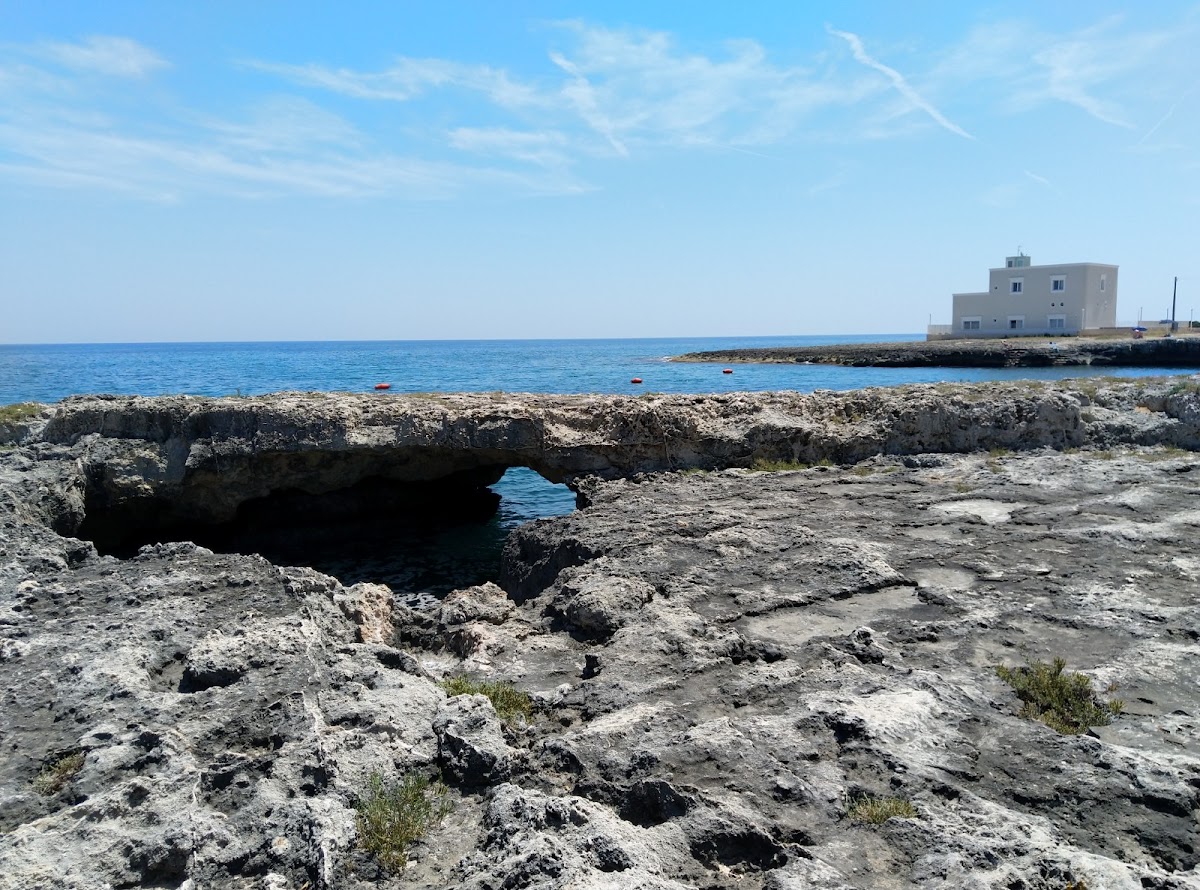
The Castle of Santo Stefano occupies a peninsula flanked by two natural harbors, which were adapted during its use to serve as small docking and repair areas for multiple ships at once. These bays, named Santo Stefano and Ghiacciolo, played an essential role in maritime logistics, allowing vessels to moor simultaneously on either side of the fortress. This setup was particularly important for sailors traveling between Bari and Brindisi, especially when winds from the Greek or Greco-Levantine directions made coastal stops necessary.
One notable defensive feature constructed under the Knights of Malta is the moat surrounding the fortress. This trench, still visible today, was designed to enhance protection against potential attacks by land or sea. It represents a key modification that reflects the military strategy during the period of the castle’s reinforcement in the 15th century.
The fortress also included a well to provide fresh groundwater, supporting the Benedictine monastic community that once lived there. This access to water was crucial not only for daily monastic activities but also for sustaining the site during sieges or long periods of isolation.
Beneath the visible structures, fragments of late Roman opus reticulatum masonry remain in the underground areas. This style of construction, characterized by a diamond-shaped pattern of small stones, confirms the site’s continuity of use since ancient times and points to its origins as a fortified port linked to Egnazia. These ancient walls and foundations form the archaeological core beneath the later medieval abbey-fortress complex.
Together, these features provide a layout that reflects the site’s evolution from a late antique military port, through a monastic center, to a fortified stronghold controlled by the Knights of Malta. The remains are preserved in varying states but continue to illustrate the layering of historical periods and the site’s adaptive reuse over many centuries.
Nearby sites